
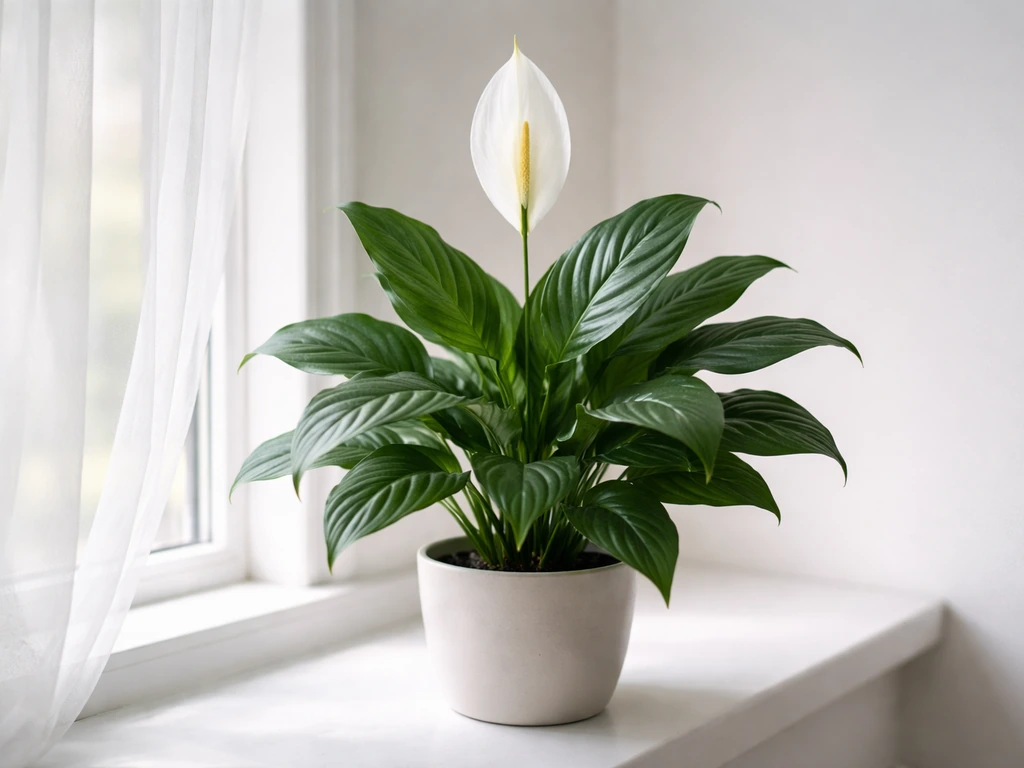
Peace lilies (Spathiphyllum) can grow anywhere from about 1 foot tall to a genuinely impressive 6 feet, depending almost entirely on which variety you have and what conditions you give it. Most standard houseplant varieties land between 1 and 3 feet tall indoors. The giant cultivar 'Sensation' can hit around 6 feet in the right setup, while compact varieties like 'Domino' typically top out at 24 to 30 inches. So if your peace lily is sitting at a modest 12 inches and you want it bigger, the good news is that there is real room to grow, you just need to address a few key variables.
How Big Can Peace Lilies Grow Indoors and Out
Marcus Hendricks
7 Apr 2026
How big peace lilies actually get: the real numbers
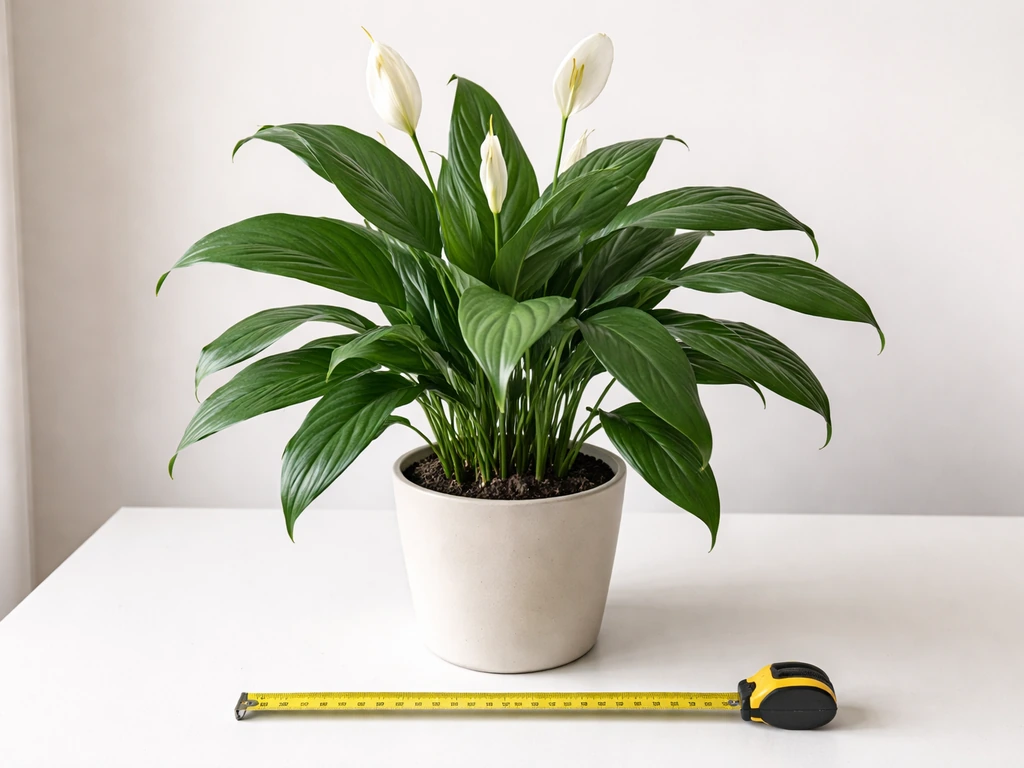
The species most commonly sold as a houseplant, Spathiphyllum wallisii, has an ultimate height and spread of roughly 0.1 to 0.5 meters (about 4 inches to just under 2 feet) over 5 to 10 years. In practice, most healthy indoor specimens of this type reach around 60 cm (about 2 feet) tall with a spread of roughly 30 cm. The popular 'Domino' variety typically measures 1 to 3 feet tall and 1 to 2 feet wide at maturity. And 'Sensation,' the giant of the group, is listed with a mature height of around 6 feet indoors when grown in optimal conditions.
It is worth being clear: we are talking about Spathiphyllum here, the classic indoor foliage and flowering plant. Peace lilies are not true lilies and are completely different from calla lilies, water lilies, or Asiatic lilies in terms of care requirements and expected size. If you want to dig into exactly how big peace lily plants get across all the main cultivars, there is a lot more variety-specific detail worth knowing before you pick one.
| Variety | Mature Height (Indoors) | Mature Spread (Indoors) | Best For |
|---|---|---|---|
| Spathiphyllum wallisii (standard) | Up to ~24 inches (60 cm) | ~12 inches (30 cm) | Small spaces, windowsills |
| 'Domino' (variegated) | 24–30 inches | 12–24 inches | Medium rooms, desks, shelves |
| 'Mauna Loa' | Up to ~36 inches | Up to ~24 inches | Statement indoor plant |
| 'Sensation' (giant) | Up to 6 feet | 3–4 feet | Large rooms, floor placement |
Why your indoor peace lily stays small
Indoor peace lilies almost always grow smaller than their listed maximum, and there are four main reasons for that. Light is the biggest one. Low light slows growth noticeably and reduces flowering, even though peace lilies are marketed as shade-tolerant plants. Tolerance for low light does not mean thriving in it. The second constraint is pot size: a plant in a tight pot simply cannot build the root system it needs to push out big leaves. Third is temperature, peace lilies grow best between 65 and 90°F, and indoor environments that drop below that range (especially near drafty windows in winter) put the brakes on growth. Fourth is neglected fertilizing. Most people never feed their peace lily at all, which keeps it alive but not growing toward its potential.
Understanding how peace lilies grow in general helps explain why these constraints hit so hard. They are naturally understory plants from tropical environments where warmth and humidity are consistent. Replicate those conditions indoors and you will be amazed at the difference.
Getting the light right for maximum size
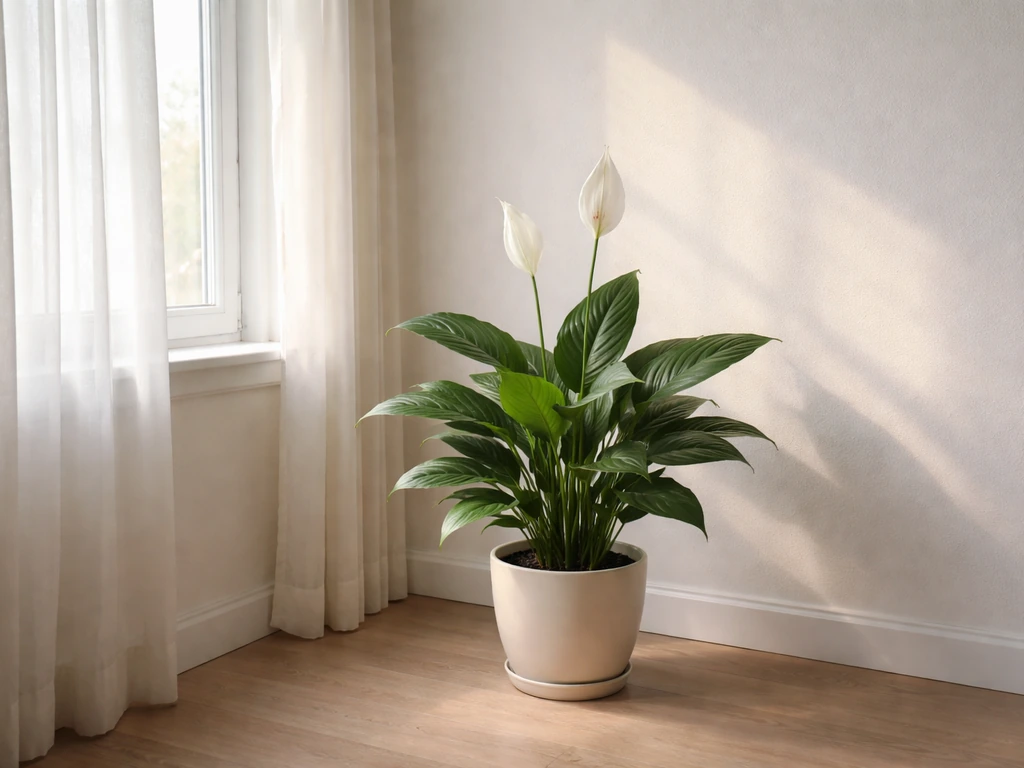
The sweet spot for peace lily growth is bright, indirect light. Think a spot 3 to 6 feet from a north- or east-facing window, or set back from a south- or west-facing window where direct sun cannot hit the leaves. Direct sun causes leaf scorch and actually stops flowering, which is frustrating when you're trying to grow a bigger, healthier plant. On the other end, genuinely low light (the far corners of rooms, hallways with no natural light) will keep your plant alive but stunted. Plants in dim spots tend to go leggy: long, stretched stems reaching toward any available light source, with smaller leaves spaced further apart.
If your space doesn't have a bright window, a grow light placed 12 to 18 inches above the plant works well. Keep it on a timer for 12 to 14 hours per day. Don't place it too close though, brown, burned patches on leaves are a sign the light source is too intense or too near. Good light is probably the single fastest fix if your peace lily has stopped growing or isn't flowering.
Water, humidity, and temperature: getting the environment right
Peace lilies are famously good at telling you they need water: the leaves droop dramatically, and you water, and they bounce back within an hour or two. That's fine occasionally, but consistently letting the plant wilt stresses it and slows growth over time. A better approach is to water when the top 2 inches of soil have dried out. You can also simply check: if the soil feels dry to the touch an inch or so below the surface, it's time to water. Do not let it dry out completely, but do not keep it soggy either.
Water quality matters more for peace lilies than most houseplants. Tap water chemicals can cause browning leaf tips, which is cosmetically annoying but also signals that the plant is dealing with low-level stress. Filtered or distilled water, or plain rainwater, makes a real difference. I switched to collected rainwater for mine and the brown-tip problem disappeared within a few weeks.
Humidity is a genuine growth driver. Peace lilies are tropical plants and they do better with humidity above 50%. Central heating dries out indoor air significantly in winter, which is why you often see crispy brown leaf edges even when watering looks correct. A humidity tray (a shallow tray of pebbles and water under the pot), grouping plants together, or a small humidifier nearby all help. Misting leaves directly is less effective and can invite fungal issues.
Temperature should stay between 65 and 80°F (18 to 27°C) for consistent growth. UF/IFAS production data suggests the optimal growth window is 70 to 90°F, so if you can keep your space on the warmer side of that range, growth will be noticeably faster. Keep peace lilies away from cold drafts, air conditioning vents, and cold windowpanes in winter. Below 55°F, you risk stunted growth and leaf damage.
Pot size, soil, and when to repot
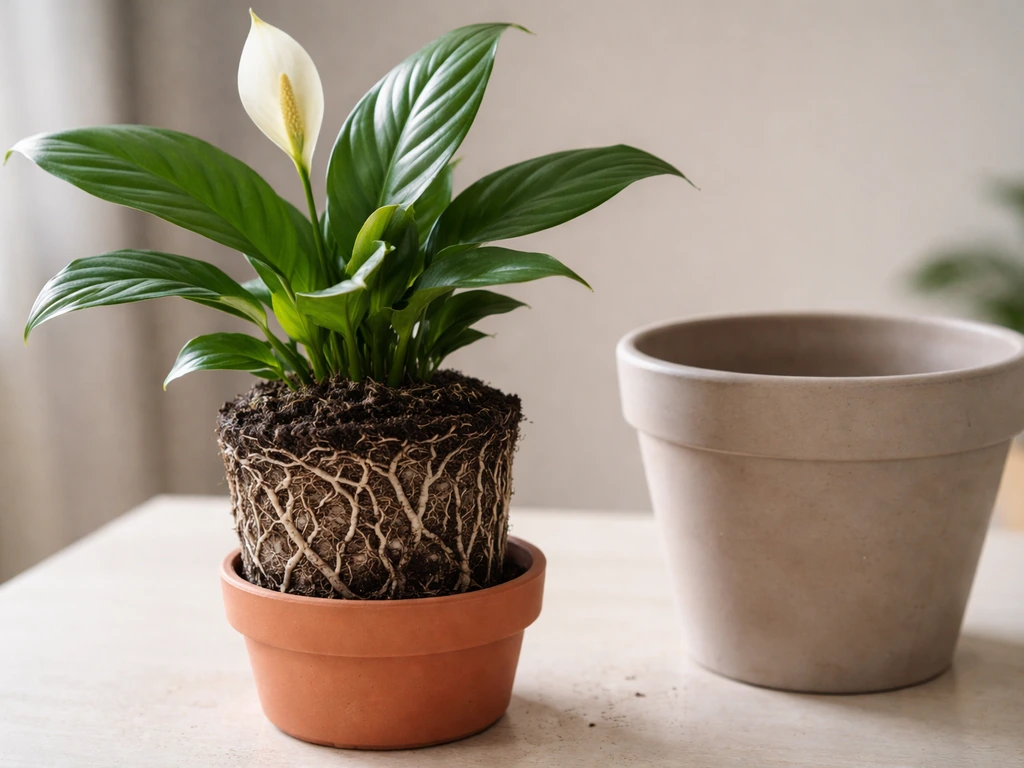
Pot size directly limits how big a peace lily can get. A plant in a 4-inch pot will not grow to 3 feet no matter how good your light and watering are. The roots need room to expand before the plant can push out larger leaves and taller stems. Signs you need to repot: roots circling the bottom of the pot, roots poking out of drainage holes, noticeably smaller new leaves, or growth that has simply stalled for months. Peace lilies typically need repotting every 12 to 18 months depending on how actively they are growing.
When you do repot, go up only 1 to 2 inches in diameter from the current pot. It's tempting to jump to a much larger container, but excess soil holds moisture longer and raises the risk of root rot. A well-draining mix is essential. Peace lilies in small pots can survive, but they will never reach their top-end size without the right amount of root space.
For soil, the goal is a mix that holds some moisture but drains freely and stays aerated. Commercial Spathiphyllum production uses 50 to 60% Canadian peat by volume combined with pine bark, vermiculite, or coir. You can replicate this at home by mixing a standard potting mix with about 20 to 30% perlite or coarse vermiculite. This gives roots the air pockets they need to stay healthy and grow aggressively. An OSU Extension-style recipe approach of sphagnum peat moss plus perlite or vermiculite works well for home growers and keeps the mix light without sacrificing moisture retention.
Feeding your peace lily to push maximum growth
Peace lilies are light feeders compared to many houseplants, but they absolutely respond to regular fertilizing. The right fertilizer ratio leans toward balanced or slightly nitrogen-heavy, commercial Spathiphyllum production uses an N-P2O5-K2O ratio of roughly 3-1-2. For home growers, a balanced liquid fertilizer (like 20-20-20) or one slightly higher in nitrogen works well. A 10-10-10 or similar balanced general-purpose houseplant fertilizer applied monthly during the growing season (roughly April through September) gives consistent results without risk of buildup.
Hold off or reduce feeding in winter, when growth naturally slows and the plant simply doesn't need as much. Fertilizer that isn't absorbed just accumulates in the soil as salts, and those salt buildups can burn root tips and actually reduce the plant's ability to grow. If you see a white crusty deposit on the soil surface or pot edges, flush the soil thoroughly with plain water to clear the buildup before fertilizing again.
Slow-release granular fertilizer is another option and works well for low-maintenance growers. Apply it at the start of the growing season and it will release nutrients gradually over three to four months. Just don't layer it on top of liquid fertilizing as well, that combination is a quick path to over-fertilization.
Common growth problems and how to fix them fast
If your peace lily isn't growing toward its potential size, one of these issues is almost certainly responsible. Work through the list and you will usually find the culprit quickly.
- Leggy, stretching growth with small leaves: almost always a light problem. Move the plant closer to a bright window or add a grow light. The plant is literally stretching toward the nearest light source.
- No new growth for months: check the pot. If roots are circling or escaping the drainage holes, the plant is root-bound. Repot into a container 1 to 2 inches wider and use fresh, well-draining mix.
- Yellow leaves: most often overwatering or waterlogged soil. Let the top 2 inches dry before the next watering, and check that the pot has drainage holes. If yellowing is widespread, check for root rot — soft, brown roots should be trimmed back and the plant repotted in fresh media.
- Brown leaf tips: tap water chemicals, low humidity, or fertilizer salt buildup. Switch to filtered or rainwater, boost humidity, and flush the soil if you suspect salt accumulation.
- Brown patches on leaf surfaces: too much direct light or a grow light placed too close. Move the plant back or raise the light source.
- No flowers since purchase: usually insufficient light. Peace lilies need reasonably bright indirect light to bloom. If yours has never reflowered, light is the first thing to fix.
- Drooping despite moist soil: check temperature. Below 55°F or near a cold draft can cause wilting that looks exactly like underwatering.
If you have worked through all of the above and still aren't seeing progress, it's worth asking whether the issue is something more fundamental about how the plant was established. Why a peace lily won't grow can sometimes trace back to problems that started at propagation or planting, and those need a different approach to fix.
How fast should you expect to see results?
Peace lilies are not speed demons. Whether peace lilies grow fast depends heavily on the time of year and how well their conditions are dialed in. During active growing season (spring and summer) with good light, proper watering, regular fertilizing, and the right temperature, you should see a new leaf every few weeks and noticeable height gain over a couple of months. In winter, growth slows dramatically and that is completely normal, don't start troubleshooting if things quiet down from October through February.
Reaching maximum height for a given variety takes years, not months. The RHS estimates mature size is reached over roughly 5 to 10 years for standard varieties. The Royal Horticultural Society (RHS) lists Spathiphyllum wallisii with an ultimate height of about 0.1 to 0.5 metres and an ultimate spread of about 0.2 to 0.6 metres, with time to ultimate height of 5 to 10 years. But you don't need to wait that long to have a noticeably large, impressive plant, with good conditions, a 'Sensation' can easily hit 3 to 4 feet within 2 to 3 years. The key is getting the fundamentals right and staying consistent.
A note on propagation and variety selection
One thing worth knowing before you get too deep into maximizing your current plant: if you want a big peace lily, start with a variety that gets big. Growing a standard wallisii to its absolute maximum will still only get you to about 2 feet. If 6 feet is the goal, you need 'Sensation.' And unlike some plants, peace lilies do not grow from bulbs, they are propagated by division, which means the easiest way to get more plants (or start fresh with a large variety) is to split a mature clump at the roots.
Pick the right variety for the size you want, set it up with bright indirect light, warm temperatures, humidity above 50%, well-draining soil, a reasonably sized pot, and monthly feeding from spring through summer. That combination is genuinely all it takes to grow a peace lily to the top end of its potential.
FAQ
How long does it take for a peace lily to reach its biggest indoor height?
Even with ideal care, most cultivars take years to approach mature size. For standard types, plan on roughly 5 to 10 years, but you can often see a jump to around 3 to 4 feet within 2 to 3 years if you have the right variety (like 'Sensation') and consistently provide bright indirect light, warmth, and humidity above 50%.
Why is my peace lily not getting taller even though I feed it?
If height is flat but leaves look mostly healthy, the most common cause is insufficient light or root restriction. Low light leads to smaller, slower growth without immediate obvious yellowing, and a pot that is too small limits root expansion. Check light first (move closer to a bright north or east window) and inspect the roots at the drainage holes or by repotting if growth has stalled for months.
Should I trim or prune my peace lily to make it grow bigger?
Pruning does not directly make the plant taller, because new growth comes from the crown and requires good conditions. You can remove fully browned leaves or spent flowers for appearance, but avoid cutting healthy green leaves back aggressively. If you want bigger size, focus on light, humidity, temperature, and feeding rather than “forcing” growth with pruning.
Does watering more frequently help a peace lily grow faster?
Usually no. Peace lilies grow best with consistent moisture, not constant wilting or constant saturation. Water when the top 2 inches of soil dry out, then water thoroughly until excess drains. Frequent “small sips” can leave uneven moisture, which stresses roots and slows leaf expansion.
What water should I use to prevent leaf tip browning while trying to grow bigger?
If you see brown tips, switch water rather than just watering more carefully. Tap water minerals and chemicals can cause low-level stress on peace lilies, filtered or distilled water, or plain rainwater, often reduces tip browning within a few weeks.
Can I keep my peace lily outdoors to make it larger?
Yes, during warm weather, but only if it stays out of direct sun and cold spells. Place it in bright shade, protect it from drafts and temperatures below about 55°F, and bring it back indoors before nights get cold. Outdoor growth can be bigger if humidity and warmth are stable, but sudden sun exposure can scorch leaves and stop flowering.
What humidity level is “enough” for maximum growth?
Aim for above 50% for noticeable vigor, with a humidifier or pebble tray helping most in winter. Avoid relying on daily leaf misting alone, since it is less effective at raising ambient humidity and can increase the risk of fungal issues if leaves stay wet.
Do peace lilies flower more when they’re bigger, or can they flower without reaching full size?
They can flower before reaching maximum height. However, flowering is light sensitive, direct sun can scorch and suppress blooms, and low light often leads to fewer flowers even if the plant survives. If you want both size and blooms, prioritize bright indirect light and consistent warmth.
Will a bigger pot make my peace lily grow to its maximum faster?
Not faster, and sometimes slower. Going up more than 1 to 2 inches in diameter can keep soil wet longer, raising root rot risk. Use a slightly larger pot when you see root crowding or stalled growth, and make sure the mix drains well.
How do I know whether my peace lily is pot-bound or just struggling with care?
Pot-bound signs include roots circling the bottom, roots emerging from drainage holes, and noticeably smaller new leaves or months of stalled growth. If roots look healthy but growth is slow, the issue is more likely light, temperature, humidity, or inconsistent fertilizing. If you are unsure, gently check the root ball during repotting.
Is it normal for growth to slow in winter, even if I want maximum size?
Yes. From roughly October through February, growth commonly slows dramatically due to lower light levels and shorter day length. Don’t overhaul the setup immediately in winter, instead keep stable temperatures, avoid cold drafts, and resume stronger fertilizing and more active support when spring growth starts.
Can I propagate or split my peace lily to get a larger plant sooner?
Splitting a mature clump can quickly give you new plants, and choosing a division from a big, established clump can jump-start your “size timeline.” Peace lilies are propagated by division, not bulbs, so the best way to multiply or refresh size is to divide the crown and pot each division into a suitable, well-draining mix.
Next Articles
Can Calla Lilies Grow in Ponds? How to Set Up Successfully
Yes, with the right setup: water depth, substrate, anchoring, light, and overwinter care for pond or marginal calla lili
Are Calla Lilies Hard to Grow? Easy Guide for Success
Get a clear answer on are calla lilies hard to grow, plus exact light, temperature, watering, planting, and fixes.
Can Calla Lily Grow Outside? Outdoor Care by Climate
Yes, calla lilies can grow outside. Learn climate, light, soil drainage, planting timing, and fixes for no growth.