
Peace lilies do not grow from bulbs. Full stop. They grow from a rhizome-based root clump, and the new growth you see (leaves, offshoots, flower stalks) comes from buds at the crown, which is the junction between the roots and the shoots. If someone sold you "peace lily bulbs," you almost certainly have the wrong product. The good news is that propagating peace lilies is actually easy once you know what you're working with.
Do Peace Lilies Grow From Bulbs? How They Actually Grow
Marcus Hendricks
3 May 2026
Quick answer: peace lilies and bulbs
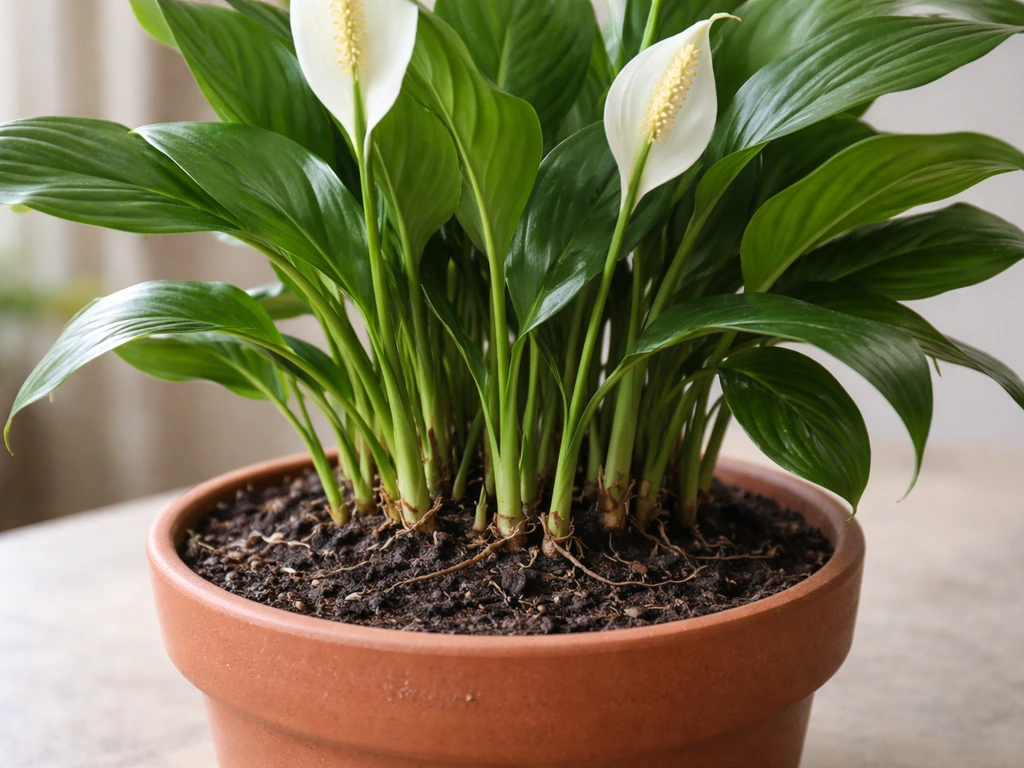
Spathiphyllum (the botanical name for peace lilies) has no bulb stage whatsoever. There is no dormant underground bulb waiting to sprout. The plant is rhizomatous, meaning it spreads and grows from a horizontal underground stem called a rhizome, with roots growing downward and shoots pushing upward from buds along the crown. You propagate peace lilies by dividing that clump, by growing from seed, or (at the commercial scale) through tissue culture. Planting a true bulb into a pot and expecting a peace lily to emerge is not going to work.
How peace lilies actually grow
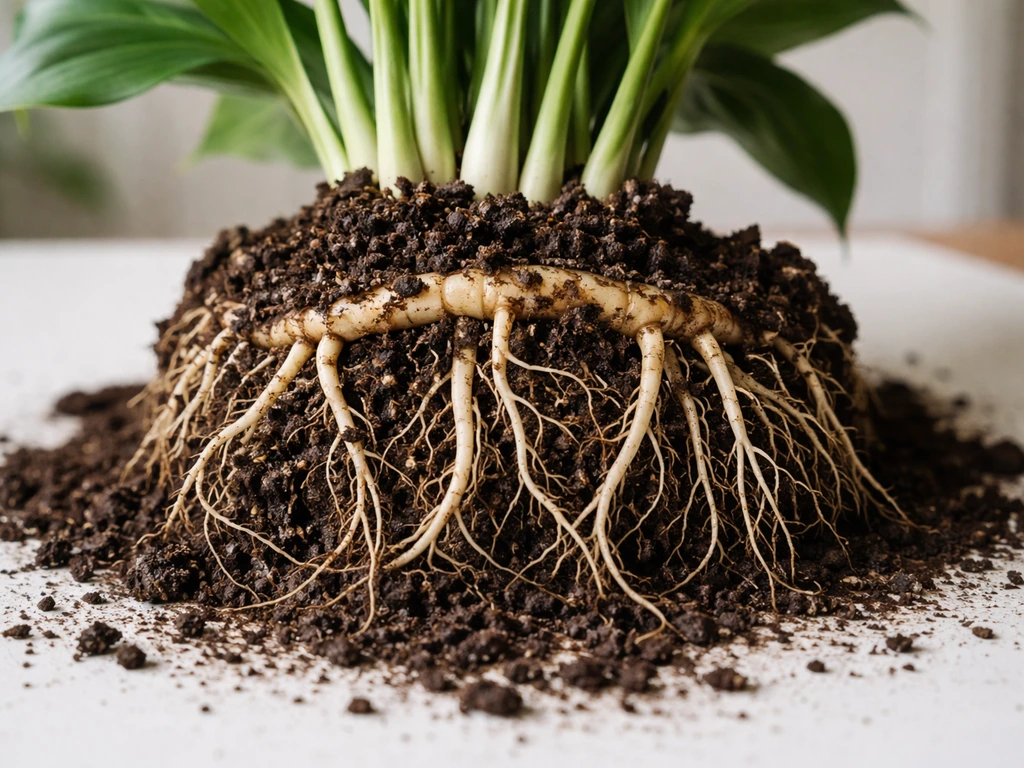
Picture a dense clump sitting in a pot. If you're also curious about size, check how big can peace lilies grow to compare typical mature growth to what you see in your clump. Underneath the soil is a network of roots and rhizomes. The rhizome is basically a thickened underground stem that stores energy and anchors the plant.
Along that rhizome, at the point where it meets the shoot system (called the crown), you'll find buds or "eyes. " Those buds are where every new leaf and flower stalk originates. As the plant matures, it pushes out offshoots around the edges of the main clump, each with their own roots and crown buds. That's the whole growth mechanism: rhizome, crown, offshoots.
No bulbs involved anywhere in the process.
This is important to understand because it changes how you handle the plant. When you repot or propagate, you're working with a living, actively growing root mass, not a dormant storage organ like a tulip bulb. You can't just tuck it into dry soil and wait for spring. Peace lily divisions need consistent moisture, warmth, and indirect light right away to establish and recover.
Why the confusion happens: peace lily vs. true bulb lilies
The word "lily" causes a lot of trouble in the gardening world. True lilies (genus Lilium, which includes Asiatic lilies, Oriental lilies, and other garden lilies) belong to the family Liliaceae and do grow from true bulbs. A true bulb is a compressed underground stem with a basal plate, fleshy scales, and everything the plant needs to sit dormant and then burst into growth when conditions are right. Peace lilies are in an entirely different plant family: Araceae.
UGA Extension county care-card materials explain that peace lilies (Spathiphyllum) are an Araceae houseplant and describe related botanical structures like the spathe that surround the flower cluster[. ](https://extension. uga. edu/content/dam/extension-county-offices/paulding-county/anr/2018%20Care%20Cards%20for%20Perennials%20and%20Herbs.
pdf) They're more closely related to pothos and philodendrons than they are to any true lily. The "lily" in their common name is purely a nod to the white, elegant flower shape, not their biology.
Online marketplaces have made this worse. Search for "peace lily bulbs" and you'll find listings that either mislabel rhizome divisions as bulbs, or worse, sell actual bulbs from a completely different plant. If you're comparing species across this site, just keep in mind: Asiatic lilies and other true lilies need bulb-planting guidance, while peace lilies need division and rhizome-management guidance. They are not interchangeable growing methods.
How to propagate peace lilies at home
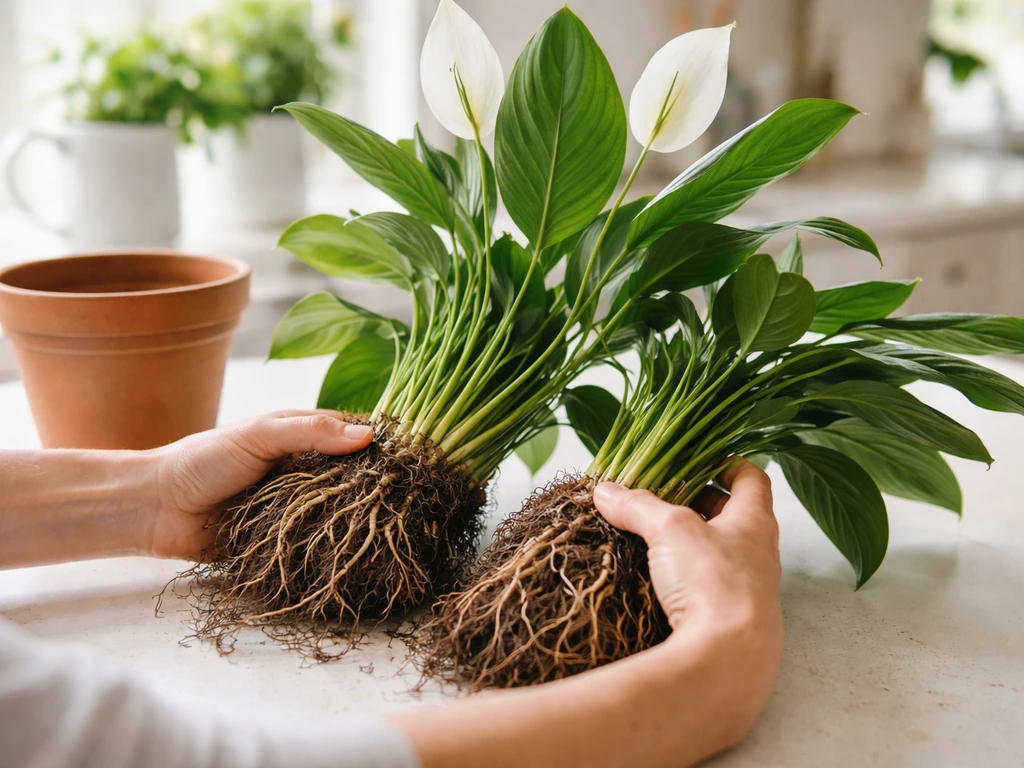
Division is the easiest and most reliable method for home growers. The best time to do it is spring, just as the plant is entering active growth, and ideally when it's not currently flowering. Dividing a blooming peace lily stresses it and often causes the flowers to drop. Wait until after blooming is done or do it before flowers appear.
Step-by-step division
- Remove the entire plant from its pot. Tip it sideways and ease it out gently, or run a knife around the inside edge if it's root-bound.
- Shake or brush off loose soil so you can see the crown and root structure clearly.
- Identify natural separation points where offshoots have developed their own roots and crown buds (eyes). These are your divisions.
- Pull apart sections by hand where possible. If the root ball is dense, use a clean, sharp knife to cut through. Each division needs at least two or three leaves and a visible set of roots.
- Pot each division into fresh mix immediately. Don't let the roots dry out while you work.
- Water thoroughly right after potting and place in a warm, bright (but not sunny) spot.
Expect a recovery period of about 4 to 6 weeks before you see confident new growth resuming. The plant puts its energy into re-establishing roots first, so don't panic if it looks a little sulky in the first few weeks. That's normal. Seed germination is also possible but slow and inconsistent for home growers; division is almost always the better route unless you're experimenting.
What to do if you already bought "peace lily bulbs"
First, figure out what you actually have. Genuine peace lily planting material should look like a small rooted clump with a few leaves (even tiny ones), visible roots, and a crown with growth buds. It will not look like a smooth, papery, onion-like bulb. If what you received looks like a traditional bulb, with a rounded shape, dry scales, and no active roots or shoots, it is almost certainly not a peace lily. It could be a calla lily, an Asiatic lily, or another bulb-forming plant entirely.
If you have a true bulb mislabeled as a peace lily, don't plant it expecting a peace lily to grow. Research what the bulb actually is before planting. If you have a small, bare-root rhizome division with some roots but no pot, treat it like a fresh division: pot it up immediately in moist, well-draining mix, keep it warm (above 60°F), and give it indirect light while it establishes. Do not let it dry out, and do not let it sit in waterlogged soil. Those are the two fastest ways to lose it.
Getting new growth going: light, water, soil, and pot size
Whether you've just divided a peace lily or potted up a new plant, the conditions you create right after planting make a huge difference in how quickly it establishes. Here's what actually matters:
| Growing Factor | What Peace Lilies Need | Common Mistake |
|---|---|---|
| Light | Bright, indirect light. No direct sun. | Placing in a dark corner or a south-facing windowsill with direct afternoon sun |
| Watering | Water when the top layer of soil feels dry; water thoroughly until it drains from the base | Keeping the soil constantly soggy, or waiting until the plant wilts badly |
| Soil mix | Well-draining mix, ideally with peat or coir, bark, and perlite or vermiculite for aeration | Using dense, compacted garden soil that retains too much water |
| Pot size | Only one size up from the root ball; too large a pot holds excess moisture | Overpotting into a much larger container than the roots can fill |
| Temperature | Above 60°F at all times; prefers 65 to 85°F | Placing near cold windows, air conditioning vents, or drafts |
| Drainage | Pots must have drainage holes; never let the plant sit in standing water | Using decorative pots without holes, or letting water pool in saucers |
On the soil front, the commercial approach uses mixes with peat, pine bark, vermiculite, or coir for a reason: peace lilies need moisture retention balanced with excellent aeration. A standard indoor potting mix works for most home growers, but if you're finding your plant stays wet for days after watering, mix in some perlite to open it up. This becomes especially important right after division, when the reduced root system can't pull water efficiently and root rot is a real risk.
Troubleshooting after planting or division
Things don't always go smoothly, especially after dividing a plant or establishing a new one. Here are the most common problems and what's actually causing them:
Yellow leaves
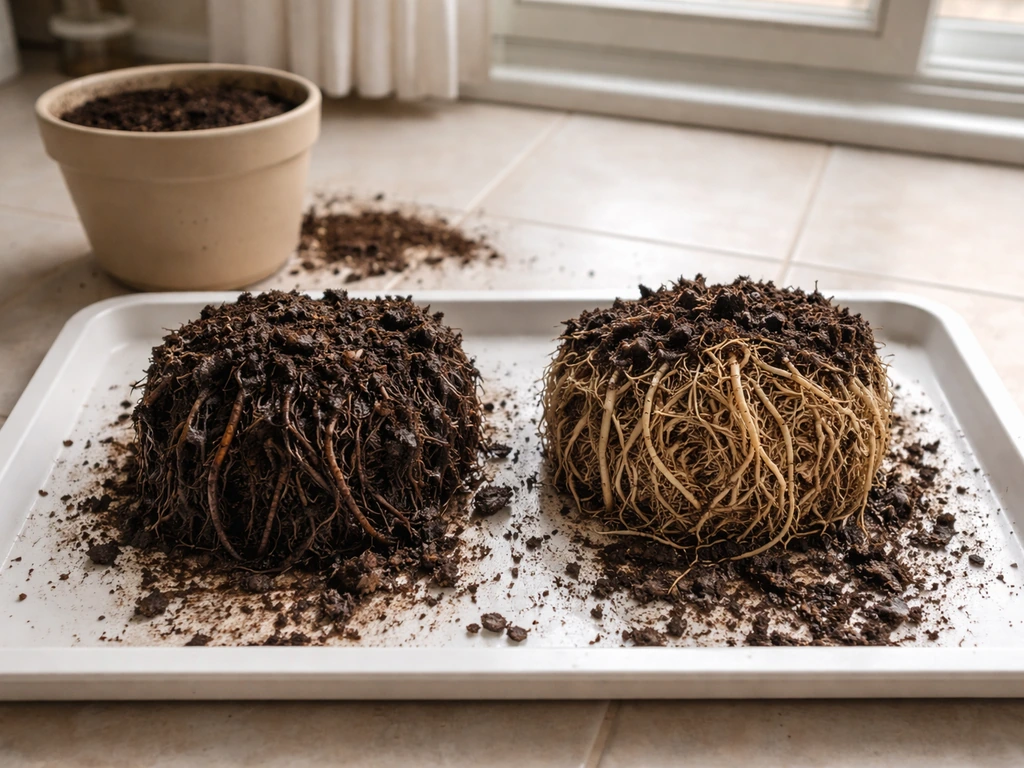
This is the most common complaint after repotting or division. Some yellowing of lower leaves is normal transplant stress and will resolve once the plant re-establishes. If the yellowing is widespread, check the soil: if it's consistently soggy, you're overwatering. If the soil is bone dry, you've underwatered. The fix sounds obvious, but a lot of growers overcorrect by watering more aggressively after they see yellow leaves, which makes overwatering-induced yellowing significantly worse. Check the soil moisture before you water, every single time.
Wilting even after watering
Wilting that doesn't resolve within a day or two of watering usually means one of two things: root rot (from overwatering and poor drainage) or severe transplant shock. Pull the plant out of the pot and check the roots. Healthy roots are white to cream-colored and firm. Rotten roots are brown or black, mushy, and may smell bad. If you find rot, trim off all affected roots with a clean knife, let the roots air-dry for an hour or two, then repot into fresh dry mix and ease back on watering. Peace lilies can recover from moderate root rot if you catch it early.
No blooms after dividing
Don't expect flowers for a while after division. The plant is spending all its energy on root establishment. Give it the full 4 to 6 week establishment window before you start worrying. After that, peace lilies bloom most reliably with bright indirect light (not a dark corner), slightly rootbound conditions (another reason not to overpot), and once they've had a chance to mature.
Yes, peace lilies can grow in small pots, as long as you repot carefully and avoid keeping the soil soggy can peace lily grow in small pots. If you're also wondering why your peace lily has stopped growing altogether, that's a different problem worth looking into separately, often tied to light levels or pot size.
If you’re seeing no new leaves or slow growth after division, check the light, pot size, and watering routine to pinpoint why your peace lily has stopped growing.
Recovery timeline: what to expect week by week
- Week 1 to 2: Plant may look droopy or pale. This is normal transplant stress. Keep conditions consistent and resist the urge to move it around.
- Week 2 to 4: Wilting should ease. Leaves may still look a little dull but the plant is stabilizing underground first.
- Week 4 to 6: New leaf growth should start to appear. This is your sign that roots have re-established and the plant is ready to grow again.
- Week 6 and beyond: Normal care resumes. Fertilize lightly once new growth is clearly underway (a balanced liquid fertilizer at half strength works well).
The biggest mistake I see is giving up too soon or overcompensating with water and fertilizer during those first few weeks. Peace lilies are actually quite forgiving once they're established, but they do need patience right after division. A lot of people ask how quickly they will bounce back, so if you're wondering does peace lily grow fast, the real answer is that it typically needs weeks to establish after division.
If you're also curious about how large your peace lily will get over time, the mature size depends on growing conditions and the plant's growth habit peace lily how big do they grow. Peace lilies are usually grown to a moderate size indoors, but the final height depends on light, pot size, and how long the plant has been allowed to mature how big can peace lilies grow.
Give them stable, consistent conditions, keep the temperature above 60°F, and let the soil guide your watering rather than a fixed schedule. Do that, and you'll have a thriving plant within a couple of months.
FAQ
How can I tell the difference between a peace lily “division” and a real bulb someone might be selling?
Look for a clump with a crown (where shoots emerge), visible roots, and multiple growth points. A bulb tends to look like a dry, papery, onion-like structure with no obvious crown buds or active roots. If it arrives without roots, it should still look like a fresh rhizome-based section, not a dry bulb.
If I planted what was labeled “peace lily bulb,” what should I do now that I suspect it’s wrong?
Don’t keep treating it like a bulb planted for a dormant spring sprout. First identify the plant material by shape and label context, then adjust care to what it actually is. If it’s a true bulb, it needs different timing and planting depth, while peace lily divisions need immediate potting, warmth, and consistent lightly moist conditions.
Do peace lilies ever go dormant underground the way tulips do?
No. Peace lilies do not have a true dormant bulb stage. Growth can slow when light is low or temperatures drop, but the plant does not “sleep” with an underground storage bulb. Letting the soil dry out completely is still risky, especially for newly divided or freshly potted plants.
What’s the best way to plant a bare-root rhizome division I received?
Pot it up immediately in a well-draining mix, position the crown at the same level it was growing before (don’t bury it deep), water thoroughly once, then keep the mix lightly moist. Provide warmth above 60°F and bright indirect light to help it start forming new roots.
Should I remove flower stalks after dividing my peace lily?
If you’re dividing an actively flowering plant, removing flowers or cutting the stalk back can reduce stress and redirect energy to root recovery. If you can wait, the article recommends dividing after blooming, but if you must divide now, expect flower drop and consider trimming blooms to help re-establishment.
How often should I water a newly divided peace lily if I’m worried about root rot?
Water based on the mix’s moisture, not a fixed schedule. Check the top layer before watering, then water until excess drains, and wait until the mix is no longer staying wet for days. If your potting mix holds water too long, add perlite to improve aeration.
My peace lily yellowed after repotting, is that always overwatering?
Not always. Mild yellowing of lower leaves can be normal transplant stress. If leaves yellow while the soil stays soggy consistently, that points to overwatering. If the soil is dry and pulling away from the sides, it’s more likely underwatering or root loss limiting uptake.
When will my peace lily start growing again after division?
Expect a pause while it rebuilds roots, often around 4 to 6 weeks for confident new growth. During that window, the plant may look sulky even if conditions are correct. Focus on stable light, warmth, and properly moist (not wet) soil rather than forcing fertilizer.
Why won’t my peace lily flower after I divided it?
After division, the plant prioritizes root recovery, so flowers are usually delayed. Also, insufficient bright indirect light, an overly large pot that stays wet, or inconsistent watering can reduce flowering. Once new leaves establish, aim for brighter indirect light and a pot size that keeps conditions from staying soggy.
Can I propagate peace lilies from seed at home, and will it resemble “bulb” growth?
Seed propagation is possible but typically slow and inconsistent for home growers. Seed-grown plants do not produce bulb structures, they still form via rhizome and crown growth. For most people, division is faster and more predictable.
Next Articles
Why Won’t My Peace Lily Grow or Bloom? Fix It Fast
Troubleshoot why a peace lily won’t grow or bloom: fix light, watering, roots, pot size, and feeding fast indoors.
Peace Lily How Big Do They Grow Mature Height and Spread
Mature peace lily size ranges and the factors that control height and spread, plus checks, troubleshooting, and next ste
Does Peace Lily Grow Fast? Growth Speed and Fixes
Find out how fast peace lilies grow indoors, what controls speed, and step fixes for slow growth in weeks to months.