
Blue lotus grows natively in Egypt and across a wide band of East and Southern Africa, rooted in the muddy bottoms of warm, slow-moving freshwater bodies like rivers, lakes, ponds, and wetlands. In your garden, you can grow it wherever you can replicate those conditions: warm water (around 75–85°F), full sun, and either a proper pond or a large container of water. If you're in USDA Zone 10 or 11, you can do this outdoors year-round. Anywhere cooler and you're either overwintering the plant or growing it indoors under lights.
Where Does Blue Lotus Grow and How to Grow It
Marcus Hendricks
11 Apr 2026
What gardeners mean when they say "blue lotus"
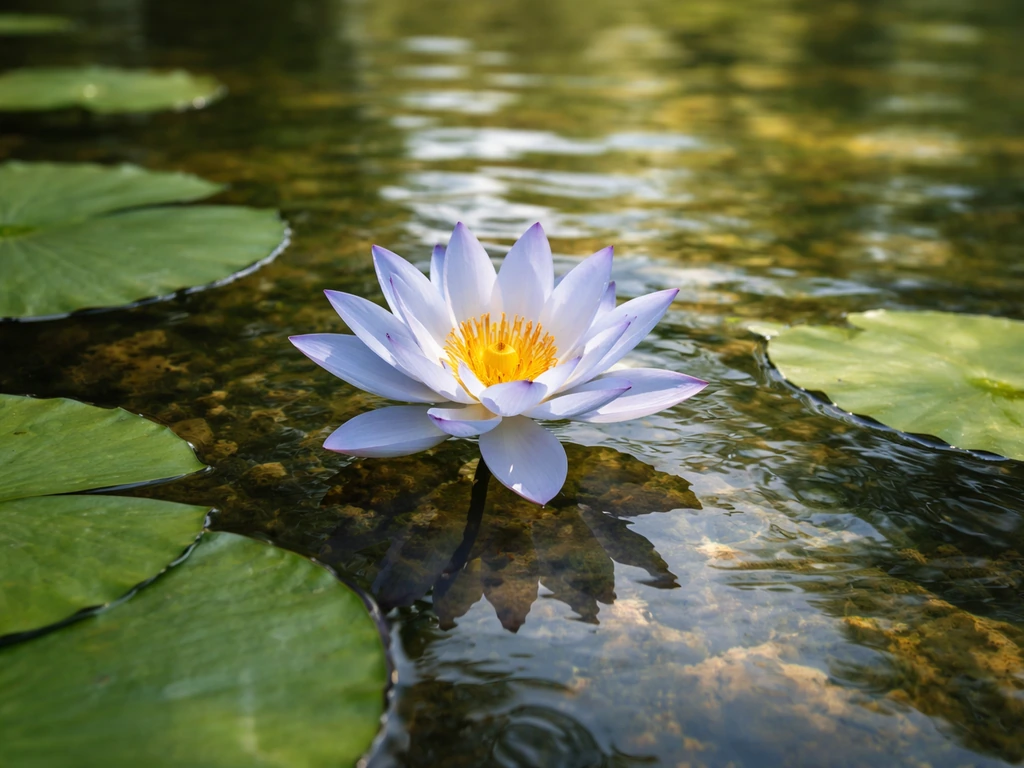
This is worth clearing up before anything else, because the name "blue lotus" gets applied pretty loosely. In most gardening and plant-sales contexts, it refers to Nymphaea caerulea, a blue-violet water lily also sold as "Egyptian blue water lily," "Blue Lotus of the Nile," or just "Egyptian lotus. " It's a true aquatic plant with floating leaves and striking pale blue-to-lavender flowers. Some sellers also list Nymphaea nouchali var.
caerulea under the same common name, and the two are sometimes treated as the same plant taxonomically depending on the source. For practical growing purposes, they're close enough that the same guidance applies to both. If you want to compare it with the broader lotus family, where the lotus flower grows more generally covers some helpful context on how these aquatic plants differ from one another.
Where blue lotus grows in the wild
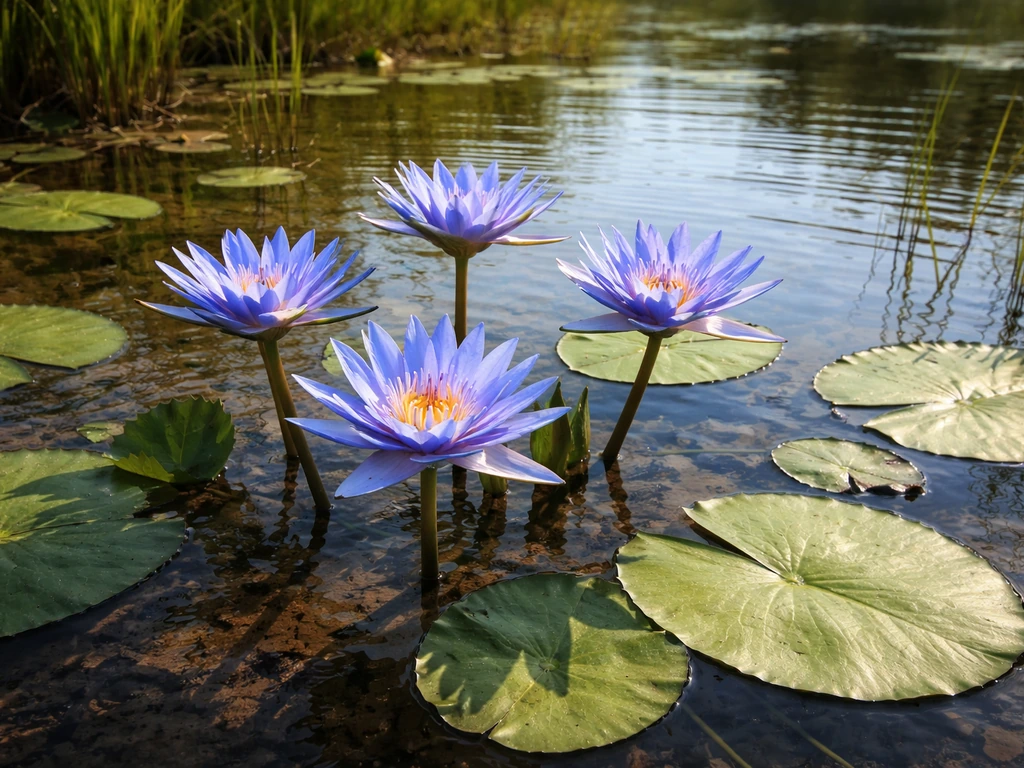
Nymphaea caerulea is native to Egypt (hence the "Egyptian" in its common name) and has a documented wild range that stretches through much of East and Southern Africa. Missouri Botanical Garden’s Plant Finder describes Nymphaea caerulea (Egyptian blue water lily or blue lotus) as native from North Africa south through Central and Eastern Africa and southern portions of the Arabian Peninsula to Southern Africa [Nymphaea caerulea is native to Egypt](https://www. missouribotanicalgarden. org/PlantFinder/PlantFinderDetails.
aspx? gen=Nymphaea&isprofile=1&taxonid=282908). That includes Eritrea, northern Ethiopia, Somalia, Sudan, Kenya, Tanzania, Uganda, the Democratic Republic of Congo, Angola, Malawi, Mozambique, Zambia, Zimbabwe, Botswana, Namibia, and South Africa, as well as parts of southwest Asia. In all of these places, it grows in freshwater habitats: rivers, lakes, natural ponds, lagoons, wetlands, and slow-moving waterways where the water is warm, still or gentle, and relatively clear.
It's also classified as an escaped or weedy species in some regions outside its native range, which tells you something useful: it's vigorous enough to establish itself when conditions are right. The flip side is that it fails completely when conditions are wrong, especially when water is too cold or light is insufficient. If you want a broader picture of where lotus flowers grow in the US, that article breaks down the regional suitability map in more detail.
Climate and temperature: this is a warm-weather plant
Blue lotus is a tropical water lily, and that classification matters a lot. It thrives in water temperatures of roughly 75–85°F (24–29°C) and struggles when things cool down significantly below that range. From a USDA hardiness zone perspective, it's generally treated as a Zone 10–11 plant for outdoor cultivation, which means the southern tip of Florida, Hawaii, and parts of Southern California are your best bets for leaving it outside year-round.
If you're in Zone 9 or below, the plant will likely survive mild winters with some protection, but don't expect it to keep blooming through a cold snap. Most gardeners in temperate climates treat it as a seasonal container plant, moving it indoors before water temperatures drop below about 65°F. I've heard from plenty of growers who tried to push it through a mild Zone 9 winter in an outdoor pond and ended up with a dormant, struggling plant that took half the following summer to recover. The seasonal timing matters too: blue lotus really gets going in late spring and peaks through summer when day length and temperatures are both high.
Water setup: pond or container, here's what actually works
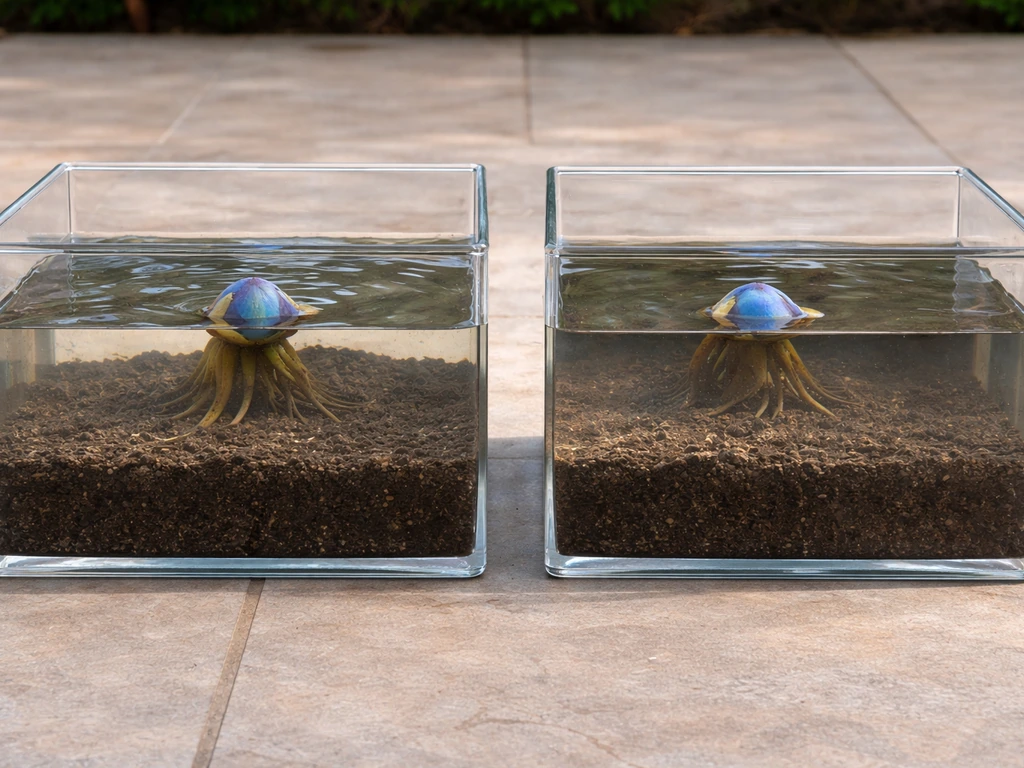
In the wild, blue lotus roots into the muddy sediment at the bottom of still or slow-moving freshwater bodies. At home, you replicate that by planting the rhizome in an aquatic basket or container filled with pond soil, heavy garden loam, or an aquatic planting mix, and then submerging that container in your pond or water tank. You don't free-plant it loose in the water. The rhizome needs something to grip and root into, and loose media will just cloud the water and make a mess.
For a pond setup, place the container so the top of the rhizome sits about 6–18 inches below the water surface to start, moving it deeper as the plant establishes. For a container water garden (a large pot, half-barrel, or stock tank), the same planting-in-a-basket approach works well. Just make sure your outer container holds at least 15–20 gallons so the roots have room to spread. Use unchlorinated or dechlorinated freshwater, and never let stagnant salt water or heavily treated tap water sit without aging it first.
One thing worth knowing: unlike where lotus pods develop on the more upright sacred lotus (Nelumbo), the blue lotus flower sits right at or just above the waterline on a flexible stem. That's a good visual cue that your water depth is roughly right when the plant starts producing blooms.
Light: more sun than you think you need
Blue lotus needs full sun, and I mean proper full sun: at least 6–8 hours of direct sunlight per day. This is non-negotiable for blooming. You can keep the plant alive with less light, but if it's getting fewer than 6 hours of direct sun, expect little to no flowering. I've seen growers get frustrated because their plant looks healthy, leaves are floating nicely, and then nothing. Nine times out of ten the pond or container is in partial shade or gets afternoon shade that cuts the daily sun total down below the threshold.
If you're growing it indoors or in a spot that doesn't get enough natural light, you'll need to supplement with full-spectrum grow lights positioned close enough to the water surface to deliver equivalent intensity. This is also the solution for cool-climate growers who want to keep the plant productive through winter indoors. Position it near a south-facing window and supplement with grow lights if the sun hours drop below 6.
Can you grow blue lotus where you live? A quick way to check
Here's the honest, practical breakdown by situation:
| Your Climate | Outdoor Growing | What You Need to Do |
|---|---|---|
| USDA Zone 10–11 (Southern FL, Hawaii, parts of SoCal) | Year-round outdoor growing possible | Pond or container in full sun; maintain warm water naturally |
| USDA Zone 8–9 (mild coastal climates) | Spring through fall only | Move container indoors before first cold snap; overwinter in heated water |
| USDA Zone 7 and below (most of continental US) | Seasonal container growing only | Grow in moveable container; bring indoors by early fall; heat and light required |
| Any zone, indoors | Year-round with equipment | Heated aquarium or water tank; full-spectrum grow lights; 6+ hours light equivalent |
To find your USDA zone quickly, search your zip code or postcode on the USDA Plant Hardiness Zone Map. If you land in Zone 10 or 11, you're in the sweet spot. Zones 8–9 are workable with planning. Zone 7 and below, you're committing to a container setup you can move and protect.
Indoor growing: when and how it works
Growing blue lotus indoors is completely doable, but you have to take the conditions seriously. The plant doesn't know it's inside. It still needs warm water in that 75–85°F range, which means using an aquarium heater in your container or tank. It still needs 6–8 hours of strong light, which almost certainly means grow lights unless you have an exceptionally sunny south-facing window. And it still needs the same basket-in-water planting setup, just scaled to your indoor container.
A large stock tank or a 30+ gallon aquarium works well for an indoor setup. Keep the water clean by doing partial water changes every couple of weeks, and avoid overfeeding with fertilizer since excess nutrients in a closed indoor setup can cause algae problems fast. If you're curious how long it typically takes before you see real results, how long lotus flowers take to grow gives a realistic timeline from rhizome to first bloom.
Why it's not blooming (and what to fix)
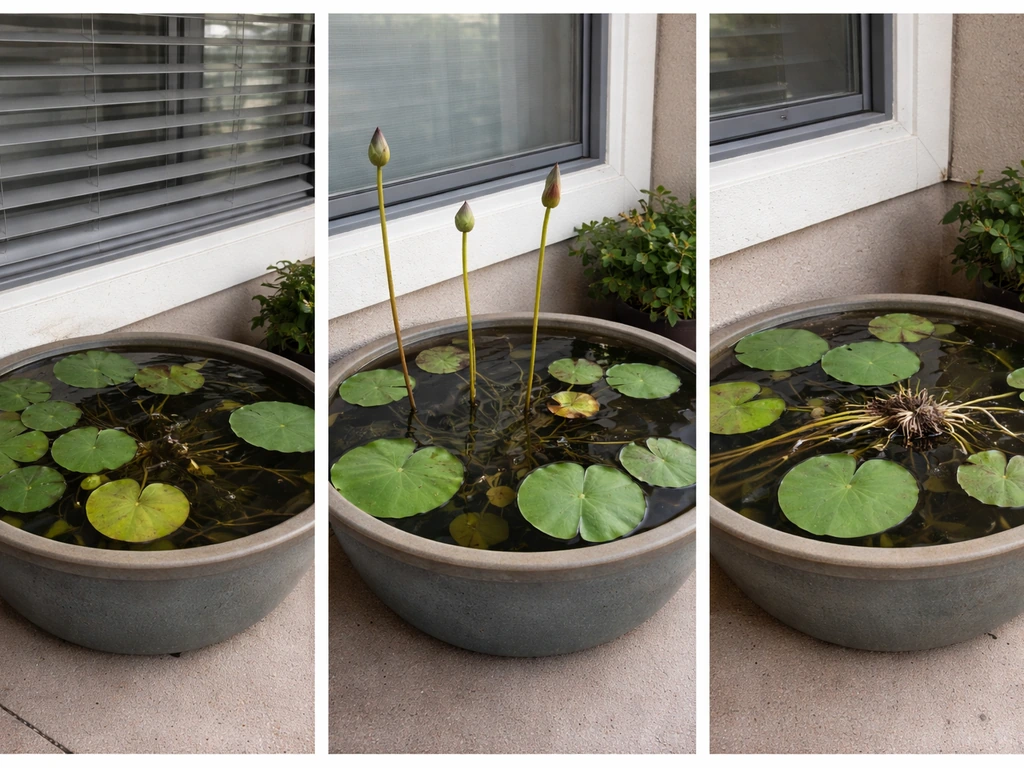
The two most common reasons blue lotus fails to bloom at home are insufficient light and incorrect planting setup. If the plant is getting fewer than 6 hours of direct sun (or equivalent grow-light intensity), flowers just won't happen. Fix that first before changing anything else. The second issue is planting the rhizome incorrectly: either burying it too deep in the media (crown should be just at or slightly above the soil surface in the basket), not submerging the basket to the right depth, or planting in loose soil that doesn't anchor the roots. A rhizome that can't anchor properly won't put energy into blooming.
Water temperature is the third culprit. If your pond water is running below 70°F for extended periods, growth slows significantly. In cooler climates, this is often what stalls the plant in early spring even when light is fine. Give it time once temperatures rise, or use a pond heater if you're trying to push the season.
How blue lotus compares to other lotus varieties you might be considering
If you're drawn to blue-flowering aquatic plants but aren't locked into Nymphaea caerulea specifically, it's worth knowing how it stacks up against some related options. The white lotus, for example, has a somewhat different native range and growing character. You can read more about where white lotus grows to see how the climate and water requirements compare. And if you're interested in terrestrial blue-flowering plants sometimes called "blue heart lilies," those grow in very different conditions entirely. Understanding where blue heart lilies grow can help you figure out which blue-flowering plant actually suits your setup.
Replicating the conditions where blue lotus grows
The short version: blue lotus grows in warm, sunny, freshwater environments in Africa and Egypt. blank" rel="noopener noreferrer">Wikipedia associates Nymphaea caerulea (blue lily) with being native to East Africa and widely cultivated, reflecting a broader tropical range Africa and Egypt.
To grow it at home, match those conditions as closely as possible. That means full sun (6–8 hours minimum), water temperatures in the 75–85°F range, a proper aquatic planting basket with pond soil or loam, and either a pond or a large water container with enough volume to keep conditions stable. If your climate is Zone 10–11, you're set for outdoor growing.
Everyone else should plan for a container they can move, or commit to an indoor setup with heating and grow lights. Get the light and the water temperature right first, and the rest tends to fall into place.
FAQ
How do I make sure the plant I’m buying is actually the one that grows in Egypt and East and Southern Africa?
Blue lotus is usually sold under a few overlapping common names, so check the Latin name on the label. If it is Nymphaea caerulea, it is the plant described in the article, and the growing targets apply. If a seller lists a different Nymphaea species or only “lotus” without the Latin name, treat it as a different plant until you confirm, because temperature and bloom timing can vary.
Why does my blue lotus grow leaves but never bloom, even though the plant looks healthy?
If you plant the rhizome too deep in the basket, you can get leaves but no flowers. Aim for the crown to sit just at or slightly above the soil surface inside the basket, then keep the basket submerged so the rhizome sits roughly 6–18 inches below the water surface at the start. After you see healthy anchoring growth, you can adjust depth a little, but avoid burying the crown.
Can I keep blue lotus outdoors year-round in a container, even in a warm Zone 10–11?
Yes, you can keep blue lotus in a container year-round in warm climates, but you still need to plan for winter nights. A cold snap can drop water temperature quickly in small containers, and blooming may pause even if the plant survives. In Zone 10–11, use insulation around the container or a cover to limit temperature swings if temperatures regularly dip.
Do I need special water besides temperature and sunlight?
If you have soft water and your tap water is chlorinated, you should not rely on it untreated. Let chlorinated water sit out (or use dechlorinator) before adding it, so the root zone and new growth are not stressed. For best results, match whatever water chemistry your system has been using to avoid repeated swings.
What happens if I plant the rhizome directly in the pond bottom instead of using an aquatic basket?
A basket is not optional, because the rhizome needs an anchored planting medium. If you skip the basket and put loose pond soil directly into the pond, you can end up with clouding and poor root grip, which reduces bloom energy. Use a pond soil or heavy loam in the basket, then set the whole basket in water.
How can I tell if my “blue lotus” is the correct plant if the flowers look different?
Blue lotus and other lotus-like aquatic plants can look similar from a distance, but their flower placement differs. Blue lotus flowers sit near the waterline on flexible stems, so if you see flowers appearing much higher above the surface on rigid stems, you may have a different plant. Use that visual cue along with the Latin name to confirm you have the right species.
What’s the most common mistake when using a heater for indoor blue lotus?
In indoor setups, the water heater you choose should be sized for your tank volume and target temperature range. If the heater is undersized, the temperature may stay below the ideal 75–85°F range, which leads to weak growth and delayed or missing blooms. It is better to maintain stable warmth than to chase the temperature back up after it drops.
If I start planting in late summer, should I expect flowers right away?
Growing is very seasonal, but you can reduce frustration by tracking when conditions change. Blue lotus typically ramps up in late spring and peaks through summer, so if you install it in early fall, you may see leaves first and blooms later or not at all. Plan your first season when temperatures and day length are rising, and expect recovery time if you bring it in or move containers.
How should I fertilize blue lotus in a stock tank or indoor container?
You can overfeed, especially indoors, because excess nutrients that would be diluted in open ponds can fuel algae blooms in a closed container. Use little to no fertilizer unless you have good light control and you can observe algae growth, and pause feeding if you notice heavy algae or cloudy water. When in doubt, underfeed and focus on light and temperature first.
My blue lotus seems to stall after I repotted it, what should I check first?
If the rhizome does not anchor, it often shows up as stalled growth or a weak plant that never commits energy to flowering. Recheck three things: crown placement in the basket, basket depth in the water, and whether the medium is heavy enough to hold the rhizome firmly. After repositioning, give it time for new anchoring before assuming it is temperature or light-related.
Next Articles
Where Does the Lotus Flower Grow and How to Grow It
Discover where lotus grows naturally and how to set pond, mud, sunlight, and temperature for home blooms.
Can Calla Lilies Grow in Ponds? How to Set Up Successfully
Yes, with the right setup: water depth, substrate, anchoring, light, and overwinter care for pond or marginal calla lili
Are Calla Lilies Hard to Grow? Easy Guide for Success
Get a clear answer on are calla lilies hard to grow, plus exact light, temperature, watering, planting, and fixes.