
Wild lilies grow across an enormous swath of the Northern Hemisphere, from the wet mountain meadows of Appalachia to the blank" rel="noopener noreferrer">coastal prairies of northern California, from European woodlands to the forests of Japan and the Philippines. If you want the short answer: true wild lilies (genus Lilium) are native to temperate Asia, Europe, and North America, and each species has carved out a very specific niche, whether that is a shaded forest floor, a sun-drenched prairie, or the boggy edge of a stream. Once you understand where a lily comes from, replicating those conditions in your garden becomes much more straightforward.
Where Do Wild Lilies Grow? Native Habitats by Region
Marcus Hendricks
6 Apr 2026
What "wild lilies" actually means (and what it doesn't)
Before we get into habitats, this is worth clarifying: not every plant called a "lily" is actually a lily. True lilies belong to the genus Lilium. Daylilies belong to a completely different genus, Hemerocallis, and are not true lilies at all. Calla lilies belong to Zantedeschia, also unrelated to Lilium.
This matters because their wild habitats are completely different. When most people ask where wild lilies grow, they usually mean one of two things: they are thinking about true Lilium species growing in natural landscapes, or they are curious about a specific popular type like a tiger lily or a Canada lily they spotted on a hike. This article focuses on true Lilium species and their wild habitats, but draws the distinctions where they count for your garden planning.
You will also encounter some common names that blur the lines further. Fire lilies, for instance, can refer to several different species depending on where you are in the world, and the habitat varies significantly between them. Always try to track down the Latin name before making a growing plan.
Where in the world wild lilies are actually found

The native range of the genus Lilium is impressively broad. In the Old World, lilies occur across much of Europe and most of Asia, extending east to Japan, south to India, and into Indochina and the Philippines. In the New World, they are native to North America, with the richest diversity of species found in the eastern United States. There are no truly native Lilium species in South America, Africa, or Australia, which is worth remembering if you are in one of those regions and planning a "native" garden.
North America has several fascinating regional species. Lilium canadense (Canada lily) is native to eastern Canada and the eastern US. Lilium philadelphicum (wood lily) ranges widely across North America from the eastern states into the prairies. Lilium occidentale (western lily) is one of the more restricted species, occurring in scattered coastal populations from Humboldt Bay in California up to Coos Bay in Oregon, always staying within about 6 kilometers of the ocean. Lilium grayi (Gray's lily) is entirely endemic to a handful of Appalachian states: North Carolina, Virginia, and Tennessee.
Habitat by lily group: forests, meadows, and wetlands
Forest and woodland lilies
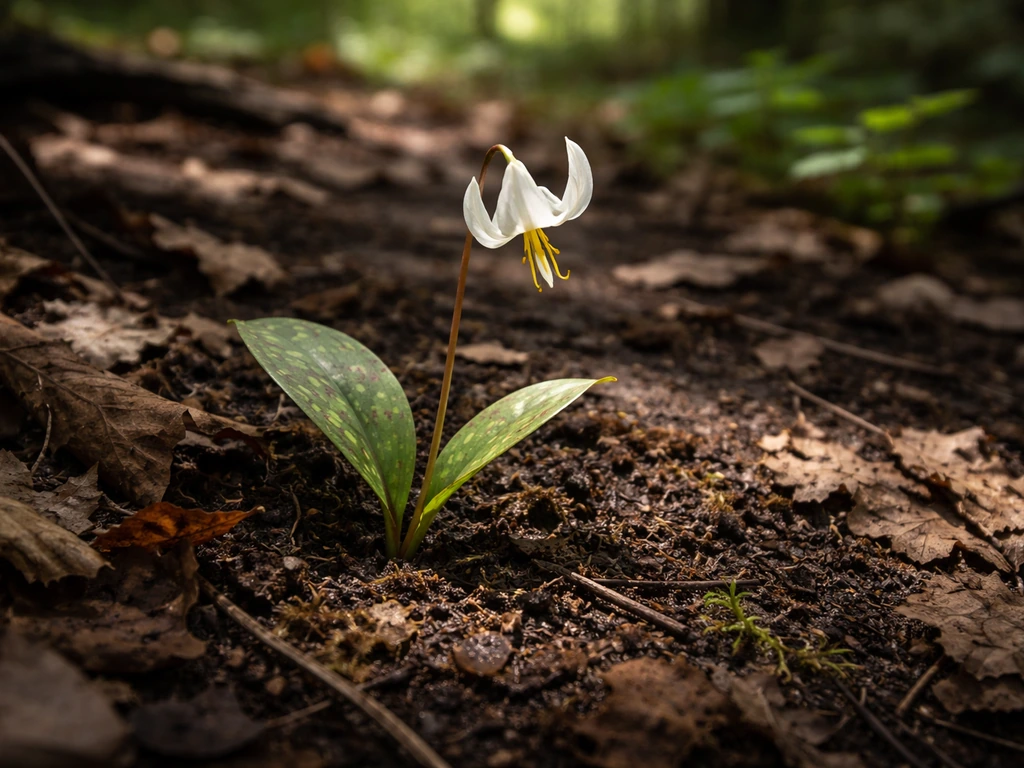
Many Asian lily species evolved under or at the edge of forest canopies. These lilies are adapted to dappled light, rich humus-laden soil, and the moisture-retaining leaf litter of a forest floor. In your garden, these translate into part-shade conditions, well-amended soil with plenty of organic matter, and protection from harsh afternoon sun. Japanese and Chinese native species like Lilium speciosum and Lilium auratum fall broadly into this camp, which is why they perform well on the shadier side of a mixed border.
Meadow and grassland lilies
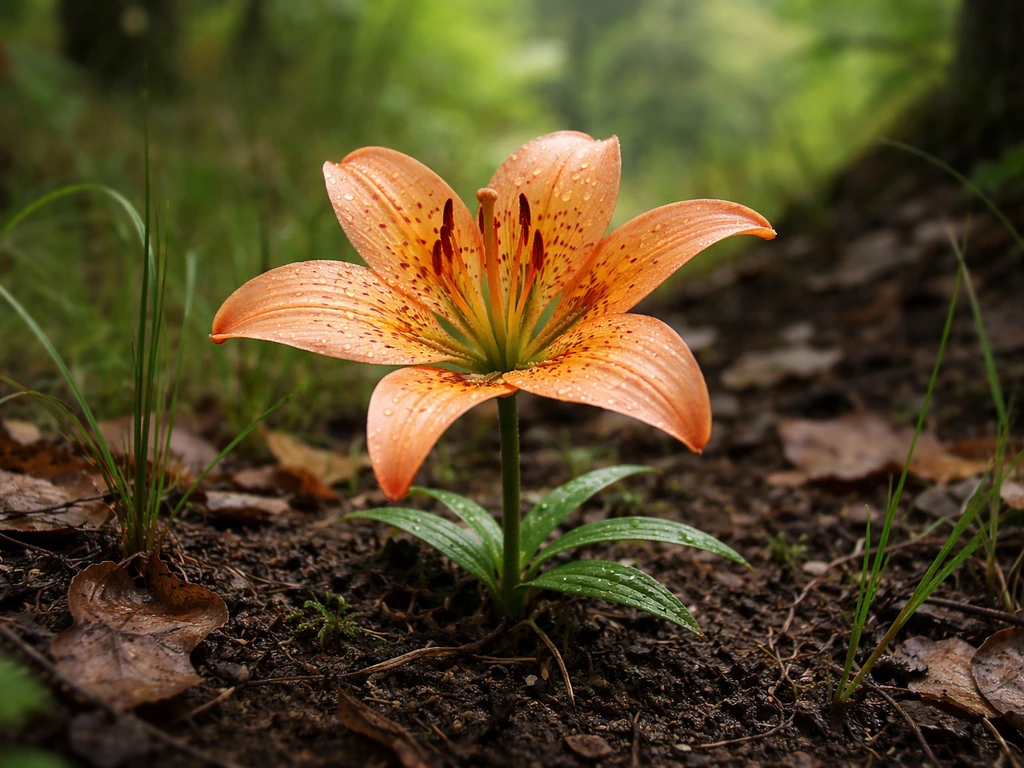
Lilium philadelphicum is a textbook meadow lily. Its typical wild habitat is low grassy vegetation in tall- and midgrass prairies and mountain meadows, which means it is used to full sun, relatively lean soil, good air circulation, and dry-to-moderate moisture. It blooms July through August in the wild. Tiger lilies also tend to favor open, sunny conditions, which is why they naturalize so readily along roadsides and in open fields across much of North America and Asia. If you are growing these types, resist the urge to plant them in rich, heavily amended soil: they actually do better when conditions are a bit leaner.
Wetland-edge and bog lilies
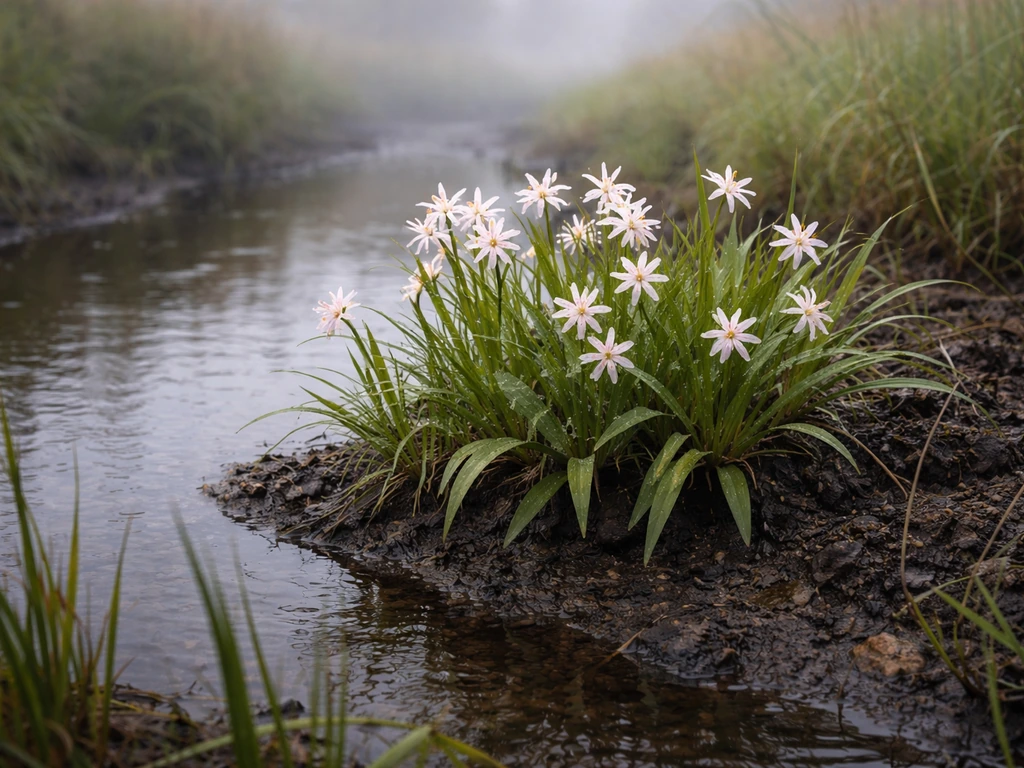
Some of the most spectacular native lilies in North America are wetland-associated species. Lilium canadense thrives in open, moist environments: wet meadows, stream margins, and forest edges where soil stays cool and well-drained but never stagnant. Lilium canadense (Canada lily) is described by Flora of North America as growing in wet meadows, moist rich woods (especially edges), streamside and river alluvia, bogs, marshes, swamps, and even along wet roadsides and railroads wet meadows, stream margins, and forest edges.
It starts blooming in late June to early July. Lilium grayi is even more moisture-specific, growing in moist, acidic soil in Appalachian high-elevation meadows, bogs, and seeps, and is actually associated with seepage or groundwater-fed wetland communities. It blooms from mid-June through July depending on elevation. Lilium occidentale on the West Coast occupies coastal prairies and the margins of coastal bogs in Oregon, tightly tied to the cool, foggy Pacific microclimate.
What the soil and moisture look like in wild lily habitats
Across all wild lily habitats, a few soil principles hold true almost universally. Lilies do not tolerate waterlogged, compacted, or heavy clay soil. Even the wetland species like Lilium canadense and Lilium grayi need soil that drains between rain events. What they want is consistent moisture combined with good drainage, the kind of soil you find at a stream bank where water moves through but never pools. Soil pH matters too: many North American species prefer slightly acidic to neutral conditions, and Lilium grayi specifically favors moist, acidic soil.
In woodland and forest habitats, soil tends to be high in organic matter from decaying leaf litter, which creates a loose, airy structure that drains well but holds moisture longer than sandy soil. In meadow habitats, the soil is often leaner and sandier with fewer nutrients. If you try to grow a prairie lily like Lilium philadelphicum in the same rich compost-heavy bed you would use for a woodland lily, it tends to produce lush foliage but poor flowering and becomes more disease-prone. Match the soil type to the habitat, not just to general "lily care" advice.
Light, seasonality, and when wild lilies go dormant
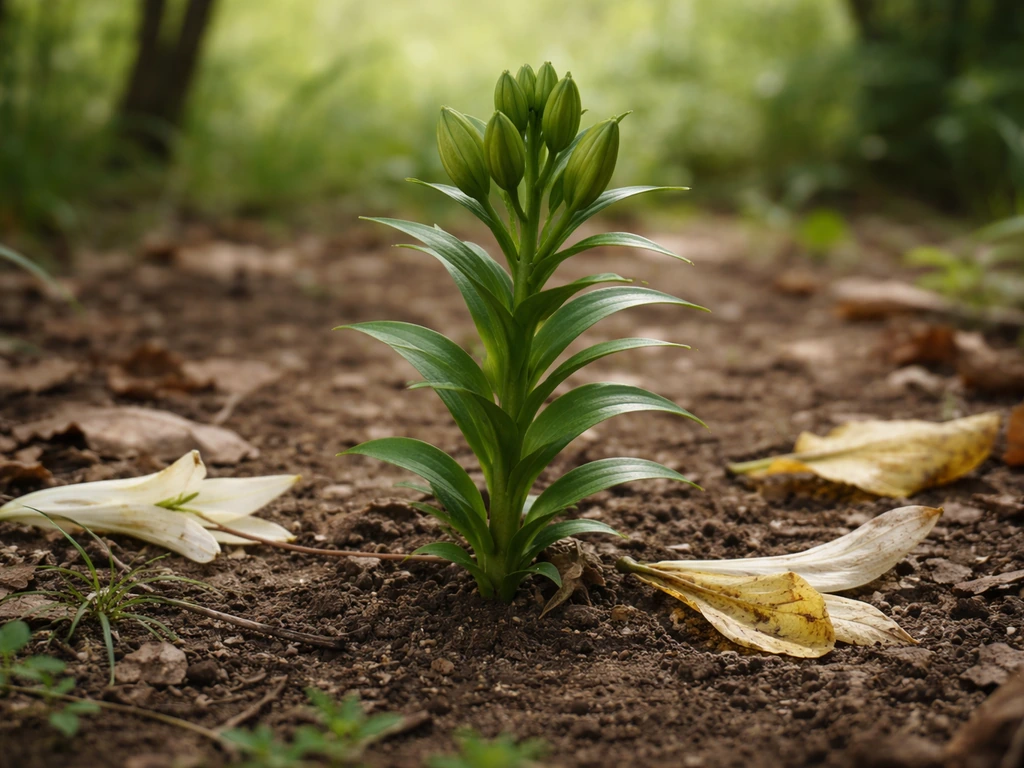
Wild lilies are almost universally summer-blooming plants that emerge in spring, bloom between June and August depending on species and elevation, then go completely dormant by fall. This dormancy is not a sign of trouble: it is hardwired into their biology. The growing window is relatively short, which means they pack a lot of energy accumulation into the period between emergence and the first frost.
Light requirements split pretty cleanly along habitat lines. Meadow and prairie species want 6 or more hours of direct sun per day. Forest-edge and woodland species do fine with 4 to 6 hours of morning sun and afternoon shade. Wetland-edge species like Lilium canadense and Lilium grayi can handle full sun if moisture is consistently available, but they also tolerate partial shade better than pure meadow species. The one thing that almost no wild lily tolerates well is deep, all-day shade: even the woodland types need some direct light to bloom reliably.
Seasonally, wild lilies emerge after soil temperatures warm in spring, typically once you are past the last hard frost. They build up their bulbs through the growing season, bloom, set seed if pollinated, and then the foliage dies back. In your garden, resist cutting back the foliage immediately after bloom: the leaves are still feeding the bulb for next year's flowers. Let them yellow and die naturally.
How to figure out which wild lilies grow near you
This is where things get genuinely useful. If you want to grow native wild lilies or identify one you spotted in the field, here is a practical workflow that actually works:
- Start with GBIF (the Global Biodiversity Information Facility). Search for "Lilium" and filter by your country or region. The occurrence maps show you exactly which species have been recorded near you, with GPS-level precision in many cases.
- Cross-reference with your regional flora. In North America, the Flora of North America (FNA) database provides detailed habitat descriptions for every native Lilium species, including soil type, moisture, and associated plant communities.
- Use iNaturalist to see photos of wild lily sightings near your location. You can filter by taxon (Lilium) and map view to see recent verified observations within your county or state.
- Once you have a species name, look it up through Plants of the World Online (POWO from Kew) for its confirmed native range, or check USDA PLANTS for North American species.
- Note the habitat type associated with your local species (woodland, meadow, or wetland edge) and use that as your starting point for garden conditions.
If you are in the eastern US and you have spotted a tall, nodding orange or yellow bell-shaped lily near a stream, it is almost certainly Lilium canadense or a close relative. If you are in the Southeast and see a smaller, deep red lily on a sunny mountain slope, you may be looking at Lilium grayi, which is actually a species of conservation concern tracked by the U.S. Fish and Wildlife Service, so do not dig it up. Out on the West Coast near the Oregon or northern California coast? The restricted range of Lilium occidentale means any lily sighting within that 6-kilometer coastal band is worth properly identifying.
Turning wild habitat clues into your garden plan
Once you understand where a lily comes from, matching your garden to its needs becomes a process of translation rather than guesswork. Here is a quick comparison of the major wild lily habitat types and what each one means for your garden setup:
| Habitat type | Example species | Sun needed | Soil type | Moisture level |
|---|---|---|---|---|
| Mountain/prairie meadow | Lilium philadelphicum | 6+ hours direct sun | Lean, well-drained, sandy-loam | Dry to moderate |
| Moist forest edge / stream margin | Lilium canadense | 4–6 hours, morning preferred | Humus-rich, well-drained but moist | Consistently moist, never stagnant |
| High-elevation bog / seep | Lilium grayi | 4–6 hours, tolerates part shade | Moist, acidic, mineral-rich | High moisture, seepage-fed |
| Coastal prairie / bog margin | Lilium occidentale | Full sun to part shade | Well-drained coastal soil | Moderate, fog-influenced |
| Asian forest / woodland edge | Lilium speciosum, L. auratum | Dappled to morning sun | Rich humus, loose, organic | Moderate, even |
The single most common mistake I see gardeners make is buying a lily based on flower color or catalog appeal without checking what habitat it evolved in. A woodland Asiatic species planted in a hot, dry, full-sun border will struggle. A prairie lily planted in a cool, shaded, richly amended border will rot or fail to bloom. Spend five minutes confirming the habitat before you plant, and you will save yourself a season of frustration.
For gardeners in mild climates who are drawn to showier exotic-looking varieties, it helps to know that rose lilies often perform best when you mimic the cool, partially shaded woodland-edge conditions that many of their parent species prefer in the wild. Similarly, if you are interested in growing the pure-white flowering types, understanding where white lilies grow naturally will help you choose between species that prefer alpine meadows versus those adapted to richer, more sheltered garden beds.
One more tip worth knowing: if you are curious about the more unusual flame-colored species and where the flame lily grows in its native range, the answer points you toward very different conditions from a typical North American meadow lily, and that knowledge changes how you plan your soil, drainage, and sun exposure before you ever plant a bulb.
The bottom line: wild lilies are not picky in an arbitrary way. Their requirements trace directly back to the specific niche they evolved in. Find out the species, find out the habitat, and build your garden bed to match it. That is the shortest path from "why won't my lily bloom" to a plant that comes back stronger every year.
FAQ
Can I grow a wild lily in my garden if I live outside its native region?
Yes, but only if it is a true Lilium species and the growing conditions match its original niche. Avoid assuming that “native” means “easy,” because each species can require different drainage, soil pH, and light levels even within the same region. If you are unsure which species you have, confirm the Latin name before buying bulbs or dividing clumps.
Why do my meadow-type lilies grow well but fail to bloom?,
Do not copy the same soil recipe for every wild lily. A common failure is planting a meadow-prarie type into rich, compost-heavy soil, which can cause tall leafy growth with weak or missing blooms, plus more disease pressure. Match “lean and sandy” versus “humus-rich and airy” to the habitat type you are targeting.
How can I avoid confusing true lilies (Lilium) with daylilies or other look-alikes when identifying wild plants?
When you see a “lily” on a hike, visually similar plants may belong to other genera, which means the habitat clues you infer can be wrong. The fastest safeguard is to use the Latin name from a reliable field guide, then compare light, soil wetness, and forest versus open-ground setting to the species requirements.
Do wild lilies like consistently wet soil the whole season?
Usually no. Most true wild lilies tolerate a range of moisture only if the soil never stays saturated after rain. Even wetland-associated species need drainage between rain events, so if your garden holds water or stays soggy for days, plan on improving drainage (raised beds or amended, fast-draining soil) before planting.
Is it safe to choose a lily based on flower color or a common name like “fire lily”?
Color alone is not a safe guide. Within the same flower color group, different species can differ dramatically in sun exposure and soil type, and “fire lily” can refer to multiple different plants depending on location. Use the Latin name and the habitat notes tied to that species to decide sun and soil.
What happens if I plant a forest-edge lily in full sun, or a meadow lily in shade?
You can, but only if you match both light and drainage. Woodland and forest-edge species need some direct morning or filtered light plus humus-rich, loose soil, while meadow species generally require 6 or more hours of direct sun and leaner conditions. If you place a meadow lily into a bright, hot, heavily amended bed, you may also need to watch for excess nutrients and moisture mismanagement.
Should I cut back lily leaves right after flowering?
If foliage yellows and dies back after blooming, that is normal, and you should leave the leaves in place until they naturally die. Cutting early removes stored energy needed for next year’s flowers. After dieback, you can do cleanup, and for prevention of rot you can remove any mulch that traps moisture against bulb crowns.
Why do native lilies sometimes thrive for a year and then disappear?
Sometimes, especially with species that are tied to very specific habitats. For example, some wetland-associated species depend on moist, acidic conditions with groundwater influence, and coastal species may rely on foggy microclimates. If your yard cannot offer consistently appropriate conditions, you may see repeated failure to thrive or bloom even when drainage seems “okay.”
If I find a lily in the wild, what is the quickest way to translate its habitat into garden conditions?
Use habitat-specific cues: meadow and prairie lilies should be in open ground with good airflow and direct sun, while woodland types prefer part shade and leaf-litter-like soil texture. For wetland-edge lilies, look for locations that stay moist but do not pool, then aim for slightly acidic to neutral soil. The simplest decision aid is, “Is it forest floor, prairie, or stream margin?” then tailor soil and sun accordingly.
Next Articles
Can Calla Lilies Grow in Ponds? How to Set Up Successfully
Yes, with the right setup: water depth, substrate, anchoring, light, and overwinter care for pond or marginal calla lili
Are Calla Lilies Hard to Grow? Easy Guide for Success
Get a clear answer on are calla lilies hard to grow, plus exact light, temperature, watering, planting, and fixes.
Can Calla Lily Grow Outside? Outdoor Care by Climate
Yes, calla lilies can grow outside. Learn climate, light, soil drainage, planting timing, and fixes for no growth.