Tiger lily basics and which plant you mean
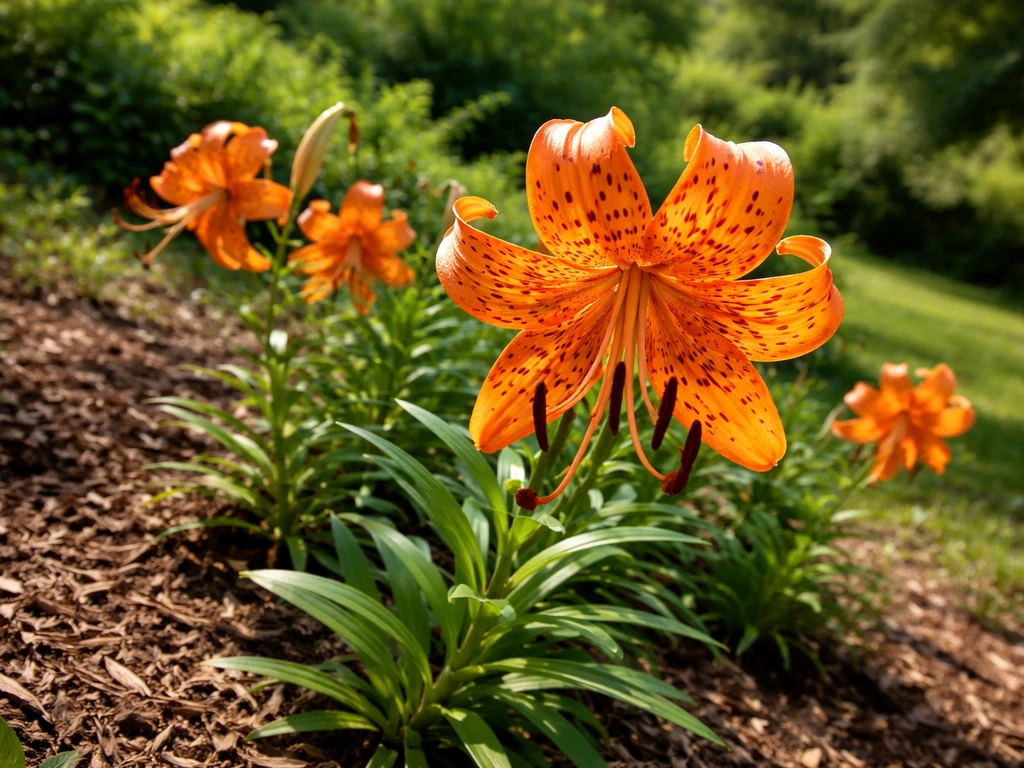
Tiger lilies grow natively across temperate East Asia, specifically China, Japan, Korea, and the Russian Far East. In home gardens across North America and Europe, the plant you almost certainly have (or want) is Lilium lancifolium, sometimes still listed under the older synonym Lilium tigrinum. It produces those instantly recognizable reflexed orange petals with bold black spots, and if you look closely at the upper stem, you'll find small dark purple-black bulbils tucked into the leaf axils. Those aerial bulblets are one of the easiest ways to confirm you've got a true tiger lily rather than a look-alike. This matters because naming in garden centers can be loose, and some plants sold as 'tiger lily' are actually daylilies or other orange bloomers that have very different growing requirements.
Once you're confident you have Lilium lancifolium, the good news is it's one of the tougher lilies around. It tolerates a range of conditions that would stress more finicky varieties, but there's still a clear difference between 'surviving' and 'thriving.' The rest of this guide is about getting it to thrive.
Do tiger lilies grow wild: natural range and habitat
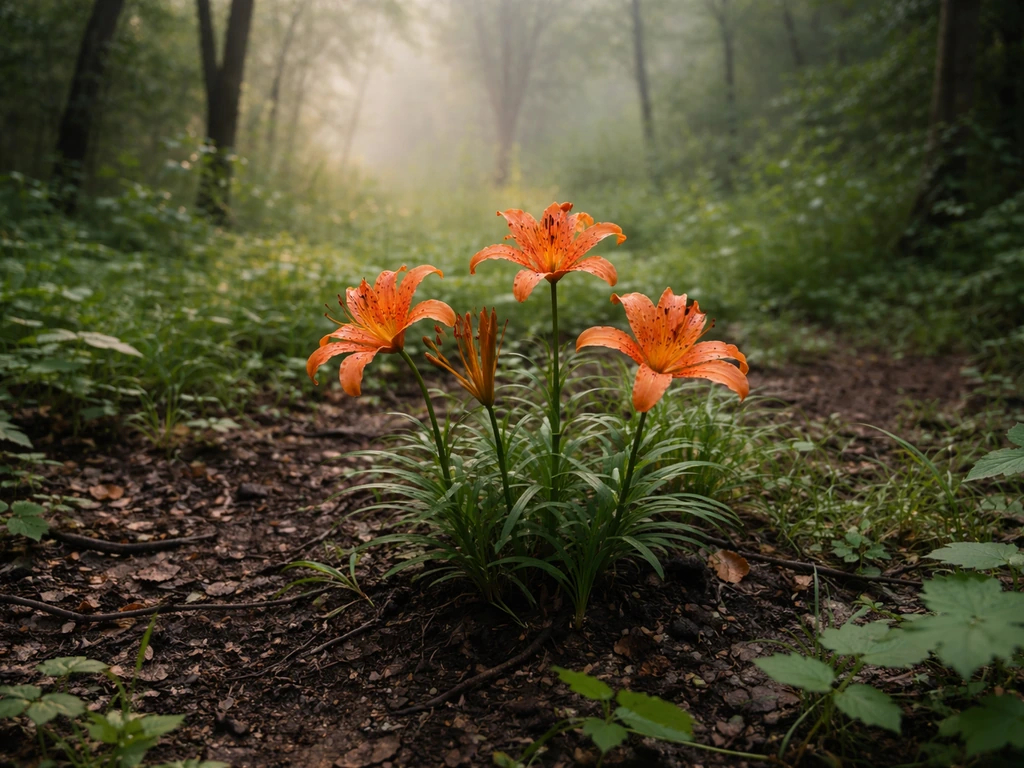
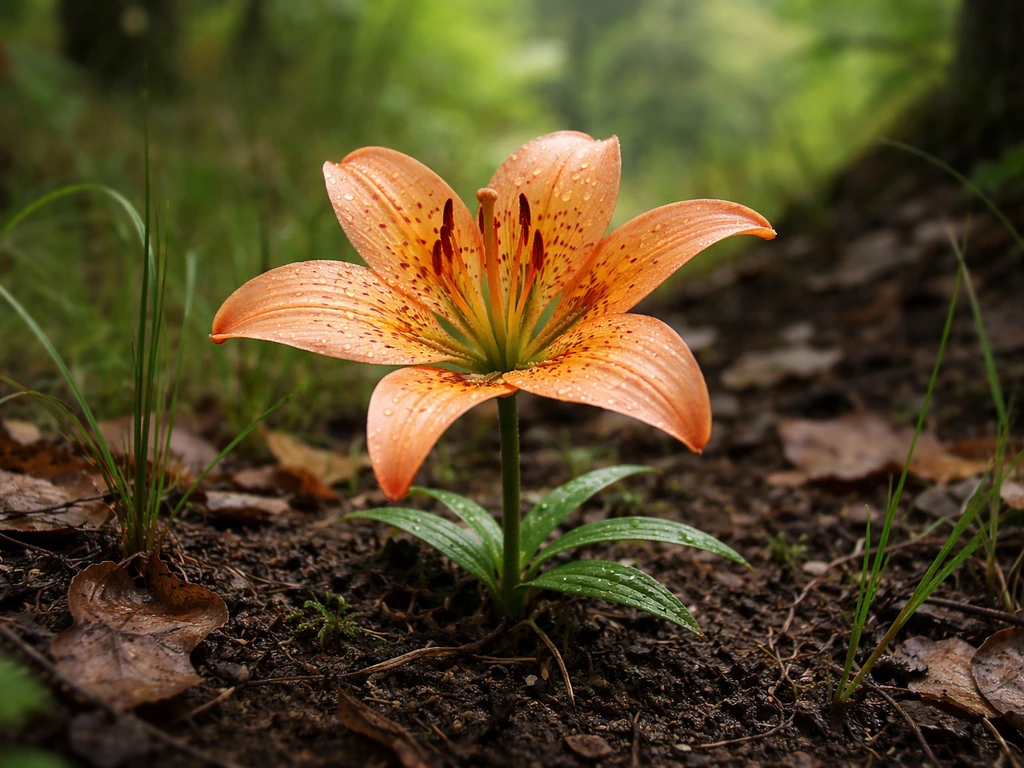
In their native range across East Asia, tiger lilies grow in open humid forests, scrubland, and moist meadows at elevations roughly between 300 and 2,200 meters. Lilium lancifolium is described in Royal Horticultural Society Lily Reports as growing in open humid forests, scrub, and moist meadows in its native area blank" rel="noopener noreferrer">open humid forests, scrubland, and moist meadows. That's a wide altitudinal band, which partly explains why they're so adaptable. The habitat is consistently bright and open (no dense canopy shade), and moisture is reliable but not waterlogged. Think of a hillside meadow that gets good rain but drains freely, and you have the template.
Outside their native East Asian range, tiger lilies have naturalized across parts of eastern North America as garden escapes. If you've spotted orange-spotted lilies growing along roadsides or in old fields in the eastern US, there's a reasonable chance you're looking at escaped Lilium lancifolium. This naturalized spread is worth understanding because it tells you something real: the plant is genuinely tough and can persist in disturbed, semi-wild spots. It's not a delicate greenhouse subject. Wild lilies in general tend to cluster in open, well-drained sites with good light, and tiger lilies follow exactly that pattern.
Where tiger lilies grow best: sun, moisture, and drainage
Full sun is the ideal, meaning at least six hours of direct sunlight per day. Tiger lilies can tolerate partial shade, and I've seen them bloom in shadier spots, but you'll get fewer flowers, weaker stems, and more flopping without adequate light. If you're choosing between two spots in your yard, always go with the sunnier one.
Drainage is non-negotiable. Soggy soil is the fastest way to lose a tiger lily bulb. In their native habitat, even the moist meadow sites have good drainage, and that's exactly what you need to recreate. Standing water around the bulb triggers Pythium root rot and similar fungal problems, which show up first as yellowing foliage and stunted growth before the bulb finally collapses. If your soil is heavy clay, amend it before planting or build a raised bed.
Soil pH should sit in the slightly acidic to neutral range, around 6.0 to 6.5. Most average garden soils land close to this without amendment, but if you're on strongly alkaline or very acidic ground, a quick soil test before planting saves a lot of frustration. Moisture needs are moderate: consistent watering during active growth, but you can back off significantly once the foliage dies back in fall. Unlike some other ornamental lilies that need occasional summer water even at rest, tiger lilies tolerate dry dormancy well.
One placement note that often gets overlooked: tiger lilies are highly prone to lily mosaic virus, and aphids spread it easily from plant to plant. Keep tiger lilies physically separated from other lily varieties in your garden. This isn't just a nice-to-have, it's the kind of thing that can wipe out an entire lily bed in a season if you ignore it. White lilies, Asiatic hybrids, and other lily types you might be growing nearby are all at risk.
How to grow tiger lilies: soil prep, planting depth, spacing
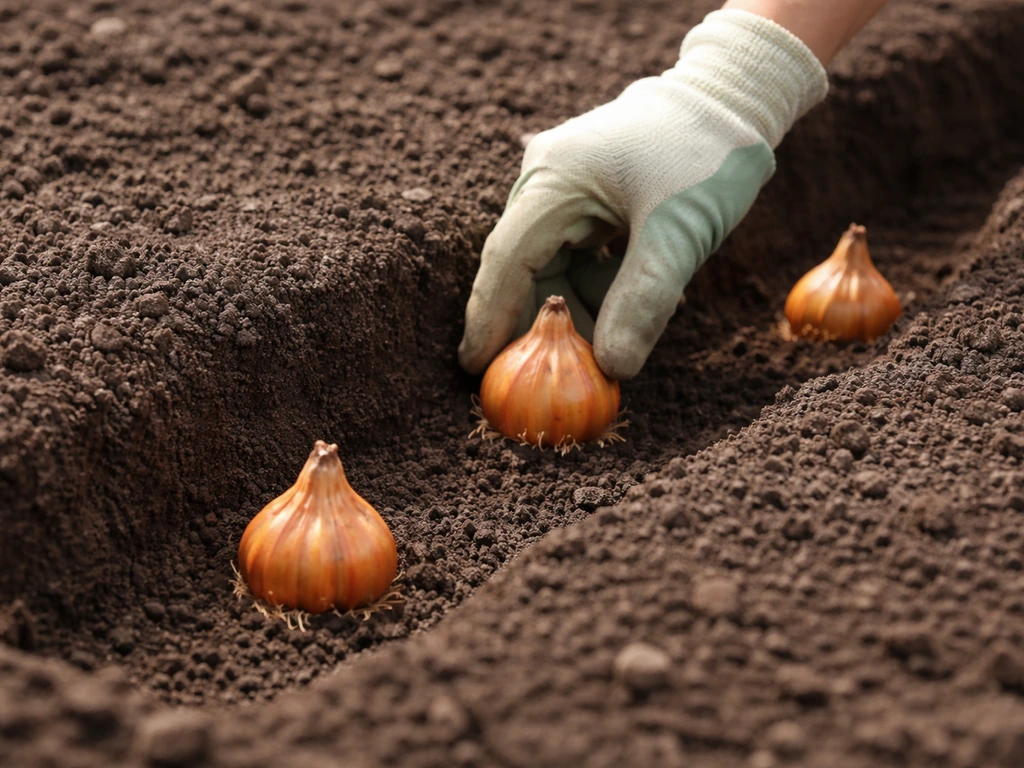
Start with soil prep before you put a single bulb in the ground. Loosen the bed to at least 12 inches deep and work in compost if your soil is compacted or nutrient-poor. If drainage is a concern, raising the bed by even four to six inches makes a noticeable difference. For clay-heavy sites, mixing in coarse grit or perlite helps water move through instead of pooling.
Planting depth for tiger lily bulbs is generally 4 to 6 inches, which fits the practical rule of planting lily bulbs at a depth equal to about three times their diameter. Smaller bulbs go shallower; larger bulbs go deeper within that range. Space bulbs 4 to 6 inches apart for a tighter, more naturalistic cluster, or push to 12 inches if you want each plant to have more room to develop over multiple seasons. For fall-planted bulbs, finish with several inches of straw or pine needle mulch to protect them from freeze-thaw cycles through winter.
If you're starting from those aerial bulbils rather than buying bulbs, the process is similar but the bulbils are tiny. Collect them when they're firm and dark, plant them about an inch deep in a prepared bed or a pot, and expect them to spend their first year developing a small bulb rather than blooming. Patience pays off here.
How tiger lilies grow over the season: sprouting to blooms
Tiger lilies are true bulb plants with a clear seasonal rhythm. Once temperatures warm in spring, shoots emerge from the ground and grow quickly into tall, arching stems that can reach 3 to 4 feet by midsummer. The narrow, lance-shaped leaves are arranged alternately along the stem, and as flowering approaches, you'll see the distinctive bulbils forming in the upper leaf axils. Blooms typically open in mid to late summer, with each stem carrying several flowers that open in succession over a few weeks.
After flowering, leave the foliage in place. The plant needs those leaves to continue photosynthesizing and building energy back into the bulb for next year. Cutting the foliage down too early is a common mistake that leads to progressively weaker blooming over time. Once the leaves yellow and die back on their own, usually in fall, you can remove them. At that point, watering can stop entirely, and the bulb rests until spring. This dry dormancy period is natural and important, not a sign that something's wrong.
Over several years, tiger lily clumps multiply and can become crowded. Lifting and dividing every three to four years keeps them vigorous and blooming well. It's also a good time to check bulbs for rot or damage before replanting at the correct depth. Fire lilies follow a similar seasonal cycle with a dry dormancy, so if you're growing both, the timing of your care calendar will overlap neatly.
Indoor vs outdoor and container growing guidance
Tiger lilies are outdoor plants at heart. They're hardy across a wide range of USDA zones (roughly 3 through 9), and they genuinely prefer being in the ground where they can go fully dormant in winter and come back strong in spring. If you have outdoor space and reasonable soil, that's always the first choice.
That said, containers work well as a temporary or space-constrained solution, especially on patios or balconies. The critical requirements for container success are a deep pot (at least 12 inches deep to accommodate the bulb and its root system), a drainage hole at the bottom, and a free-draining potting mix. Water thoroughly each time until water flows out the drainage hole, then let the top inch or two of mix dry before watering again. Fertilize lightly through the growing season. Container tiger lilies still need full sun, so position them where they'll get those six-plus hours of direct light. Unlike growing them in the ground, you'll need to bring the containers somewhere frost-free or insulated over winter, or lift the bulbs and store them dry until spring.
Keeping tiger lilies indoors long-term is not practical. They need the light levels, temperature fluctuations, and dormancy cycle that indoor environments can't provide. A sunny windowsill simply doesn't deliver enough light for a plant built for open meadows. If you're interested in true indoor lily growing, rose lilies can be managed in pots more gracefully, but even they prefer outdoor conditions during the growing season. For tiger lilies specifically, think of containers as outdoor pots that happen to be movable, not as houseplants.
One more thing worth noting: if you're drawn to bold, flame-colored lilies and are exploring which species suits your space, it helps to know how related plants differ in their habitat requirements. The flame lily is a completely different plant, a tropical climber with very different needs compared to the cold-hardy bulb of Lilium lancifolium.
Quick checklist: choosing the right spot in your yard and next steps
Before you plant, run through these conditions to make sure your chosen spot will actually work. Tiger lilies are forgiving, but they do have non-negotiables.
- At least 6 hours of direct sun per day: check your spot at midsummer when shade patterns are most pronounced, not in early spring when trees are still bare.
- Well-draining soil: pour a bucket of water on the spot and watch. If it pools for more than 30 minutes, drainage needs improvement before planting.
- Soil pH between 6.0 and 6.5: a basic soil test kit from any garden center will confirm this in minutes.
- Away from other lily varieties: plan at least 3 to 4 feet of separation to reduce mosaic virus spread via aphids.
- Space for height: tiger lily stems reach 3 to 4 feet, so avoid planting where they'll be shaded out by taller plants or structures to the south.
- Mulch ready: if planting in fall, have straw or pine needles on hand to mulch after planting.
- Planting depth confirmed: measure your bulbs and plan to plant at 3 times their diameter, typically landing in the 4 to 6 inch range.
- USDA zone check: tiger lilies are reliably hardy in zones 3 through 9; if you're at the cold or warm extremes, container growing with winter storage is a smart backup plan.
Your next step is straightforward: pick your sunniest, best-draining spot, amend the soil if needed, and get bulbs in the ground at the right depth. Tiger lilies don't demand much once they're established, but getting those first three things right, light, drainage, and depth, is the difference between a plant that struggles and one that comes back bigger and more floriferous every year. If you want to keep exploring how different lily species adapt to different natural habitats before you decide what to grow, it's worth reading up on where wild lilies grow more broadly, since the site-selection logic applies across the family.