
Yes, lilies and irises can absolutely grow together in the same bed, and they actually make a pretty natural pairing. If you are wondering can you grow lotus flowers, the key is to give them true pond-like conditions and lots of sun, which is different from lily-iris beds lilies and irises. Both want full sun, both prefer well-drained soil, and their bloom times can complement each other beautifully.
Can Lilies and Irises Grow Together? Planting Guide

Marcus Hendricks
29 May 2026
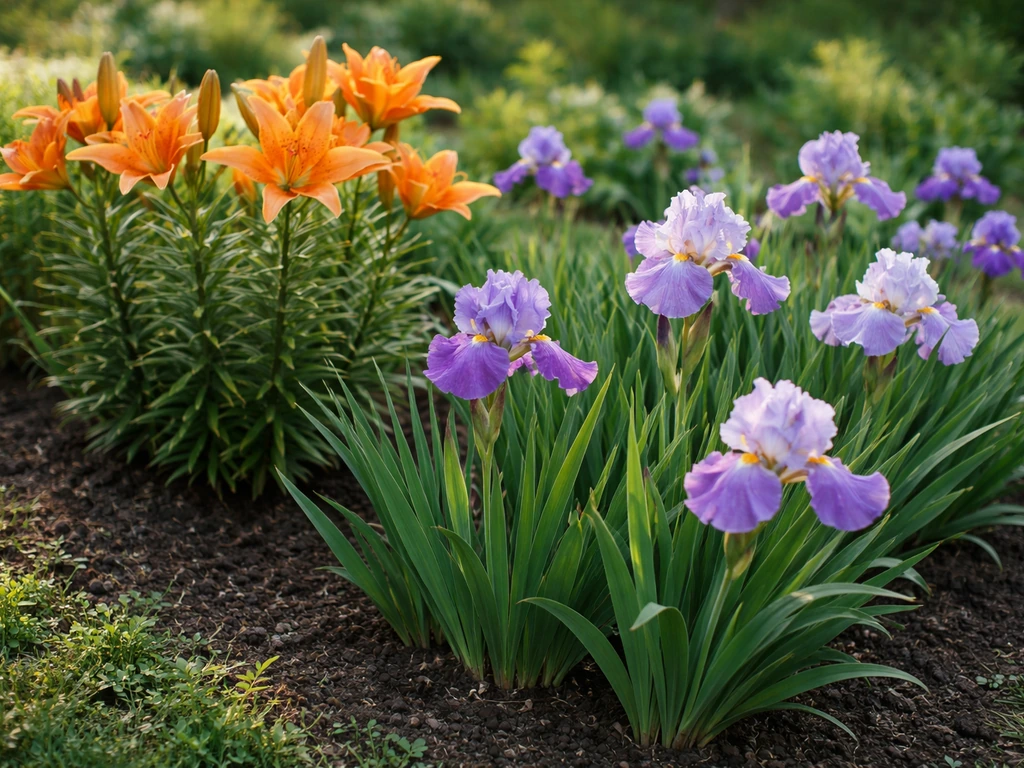
The catch is that 'lilies' and 'irises' each cover a wide range of plants with slightly different needs, and the details matter. Lotus plants typically require a pond or very wet, muddy conditions, so they are not usually described as growing on dry land. Get the drainage and spacing right and you'll have a bed that rewards you for years. Get them wrong and you'll be pulling out rotting rhizomes or wondering why nothing bloomed.
What 'growing together' actually means here
When people ask if lilies and irises can grow together, they usually mean one of two things: can you plant them in the same bed, or can they share the exact same root zone? The honest answer is that sharing a general bed works great, but giving each plant its own defined space within that bed is smarter than just intermingling them randomly. Irises (especially bearded irises) grow from rhizomes that sit at or just below the soil surface.
Asiatic and Oriental lilies grow from bulbs planted 6 to 8 inches deep. Because their root systems operate at different depths, they're not really competing head-to-head underground. What you're really managing is sun, drainage, and spacing so neither plant crowds or outcompetes the other over time.
The most common lily types you'll find in home gardens alongside irises are Asiatic lilies and Oriental lilies. Both are true bulb lilies. Daylilies (technically not true lilies) are also frequently mixed with irises and are very forgiving companions. The iris side of things most commonly means bearded irises, Siberian irises, or Japanese irises. Each combo has slightly different considerations, and I'll point those out as we go.
Light needs: matching your bed placement
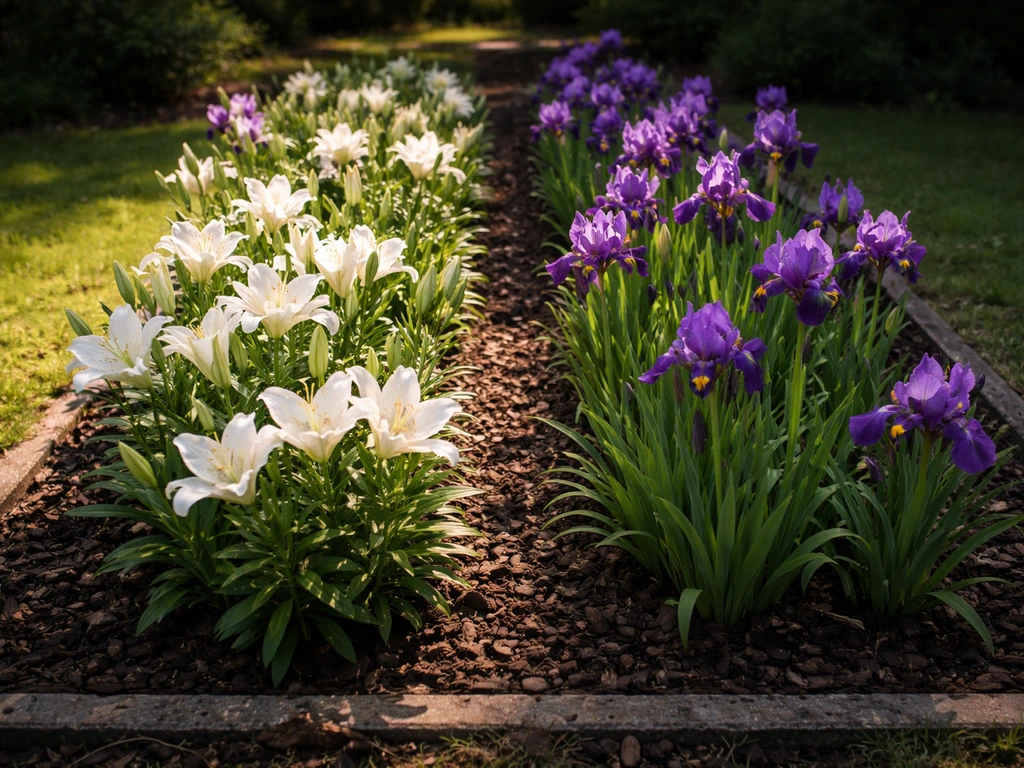
This is actually where lilies and irises agree most. Asiatic and Oriental lilies want at least 6 hours of direct sun daily, and so do most irises. Bearded irises need 6 to 8 hours of full sun for good blooming, and varieties like Japanese and Louisiana iris similarly want full sun. That makes bed placement straightforward: pick a spot that gets unobstructed sun for the better part of the day and both plants will be happy.
Siberian irises are the most flexible on this front. They'll tolerate light shade and still bloom reasonably well, which makes them the best iris choice if your bed has a slightly shaded corner or if you're in a hot climate where afternoon shade is actually helpful. Bearded irises are less forgiving of shade. I've seen bearded iris beds slowly stop blooming over 4 to 5 years as a nearby tree filled in, and the fix every time is moving them back into full sun.
One practical note: if you're in a climate with very hot summers (think USDA zones 8 and above), a spot with morning sun and light afternoon shade can prevent lily and iris flowers from burning out too fast. Everywhere else, just maximize sun.
Soil, drainage, and pH: making one bed work for both
This is where most people run into problems, and it's worth spending a few minutes getting right before you ever put a bulb or rhizome in the ground. Both lilies and irises absolutely require well-drained soil. Do lotus flowers grow in swamps? Like many aquatic plants, they need consistently wet, muddy conditions.
That contrast helps explain why a lotus plant cannot grow in the desert, since it depends on consistently wet conditions. Lotus and water lilies can be grown together too, but you need to give each one enough space and use the right water depth for their varieties can water lily and lotus grow together.
Many aquatic plants that thrive near water still prefer not to sit in stagnant mud, which is why drainage matters so much for lilies and irises do lotus flowers grow in mud. Irises, especially bearded irises, will rot if water sits around their rhizomes. Lilies will develop bulb rot in soggy conditions too. If your native soil is heavy clay that holds water, you need to amend it or build a raised bed before planting either.
Loosen the soil to about 12 inches deep and work in compost or coarse sand if drainage is an issue. Raised beds are genuinely worth the effort here. A 6-inch raised bed in clay soil can be the difference between thriving plants and a rot disaster.
On pH, the two plants are reasonably compatible. Bearded irises do best in a moderately acid to slightly alkaline soil, roughly pH 6.0 to 7.5. Asiatic and Oriental lilies prefer a slightly acidic to neutral range, typically around 6.0 to 6.5. Siberian irises want mildly acidic soil around pH 6.0 to 7.0. The sweet spot for a mixed bed is pH 6.0 to 7.0, which satisfies all of these plants comfortably. If you're planting bearded irises specifically, some references note they appreciate a slightly more alkaline environment and may benefit from a light lime application, but don't over-correct if your soil is already in the 6.5 to 7.0 range.
| Plant | Ideal pH | Drainage Needs | Soil Notes |
|---|---|---|---|
| Bearded Iris | 6.0–7.5 | Excellent, surface drainage critical | Rhizomes must not be buried deep or sit in wet soil |
| Siberian Iris | 6.0–7.0 | Good, tolerates slightly more moisture | More forgiving than bearded; still dislikes waterlogged soil |
| Asiatic Lily | 6.0–6.5 | Excellent, bulbs rot in wet conditions | Loose, loamy, amended soil preferred |
| Oriental Lily | 5.5–6.5 | Excellent | Slightly more acidic preference than Asiatics |
| Daylily | 6.0–6.5 | Good, fairly adaptable | Most forgiving of the group; tolerates clay better than others |
Watering: getting the moisture balance right
Watering is where mixed beds can go sideways if you're not thoughtful. The biggest mistake is treating the whole bed with the same irrigation schedule without considering what each plant actually needs at different points in the season.
Bearded irises are drought-tolerant once established and actively dislike sitting in wet soil, especially in summer when their rhizomes are semi-dormant. During that dormant period, excess water is one of the top causes of bacterial soft rot. Asiatic and Oriental lilies, on the other hand, need consistent moisture while they're actively growing and blooming, but also resent waterlogged conditions around their bulbs.
The practical middle ground: water deeply but infrequently. Let the top inch or two of soil dry out between waterings during the growing season. Drip irrigation or soaker hoses work much better here than overhead sprinklers, both because they deliver water at the root zone and because wet foliage encourages gray mold (Botrytis), which thrives in humid, poorly ventilated conditions and can affect both plants. After irises finish blooming and head into their summer rest, ease off watering in their section of the bed. If your lilies are still actively growing nearby and need water, that's fine, just make sure the bed drains well enough that the iris rhizomes aren't sitting in moisture.
- Water deeply once or twice a week during active growth, adjusting for rainfall
- Avoid overhead watering whenever possible to reduce disease pressure
- Back off watering in the iris section after blooming when rhizomes go semi-dormant
- Never let water pool around rhizomes or bulbs, even briefly
- Mulch lightly (1 to 2 inches max) to retain moisture for lilies, but keep mulch away from iris rhizome crowns
Planting timing, depth, and method
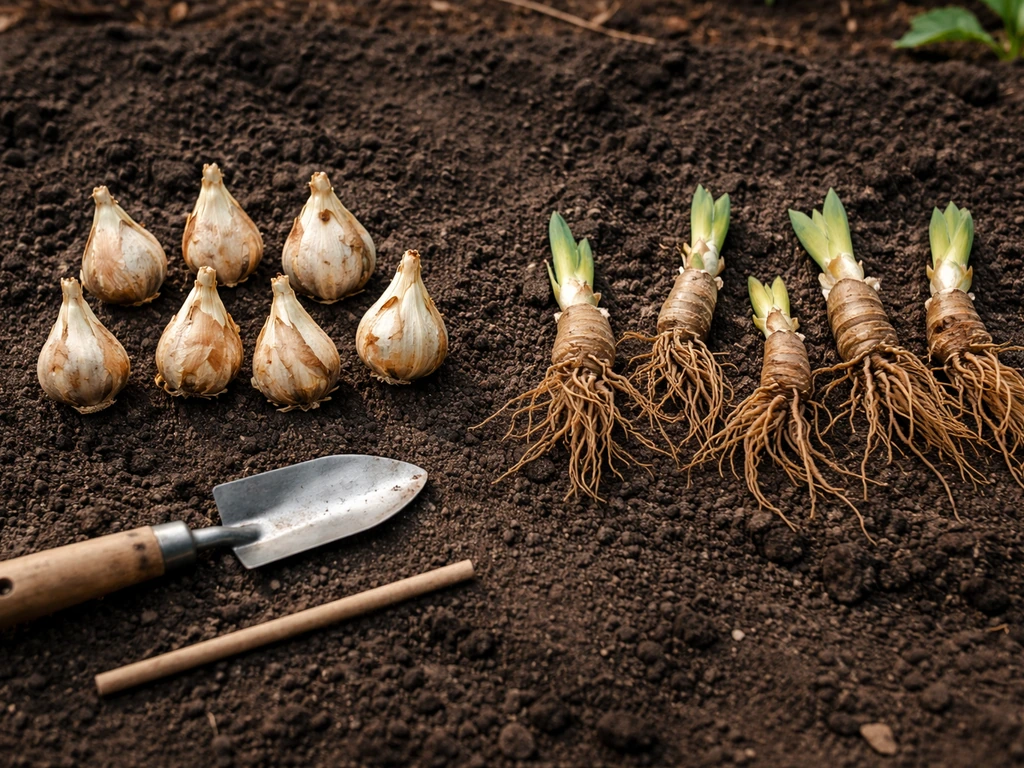
Irises and lilies have completely different planting structures, which is actually part of why they work well together. Getting the planting right for each is critical, and treating one like the other is a common beginner mistake.
Irises: planting rhizomes the right way
Bearded and most other garden irises grow from rhizomes, not bulbs. The number-one mistake with bearded irises is burying the rhizome too deep. The top of the rhizome should be at or just barely below the soil surface, with the roots spread downward. In hot climates, you can leave the top of the rhizome fully exposed to the sun, which actually helps prevent rot.
Planting them deep like a bulb is a guaranteed way to get poor blooms or rot. Space rhizomes 12 to 24 inches apart for normal growth. If you want faster fill in a new bed, you can set three rhizomes 8 to 10 inches apart in a cluster. The best time to plant or divide and replant bearded irises is after they bloom, typically in late July or August, so the divisions can establish roots before the ground freezes.
Lilies: planting bulbs the right way
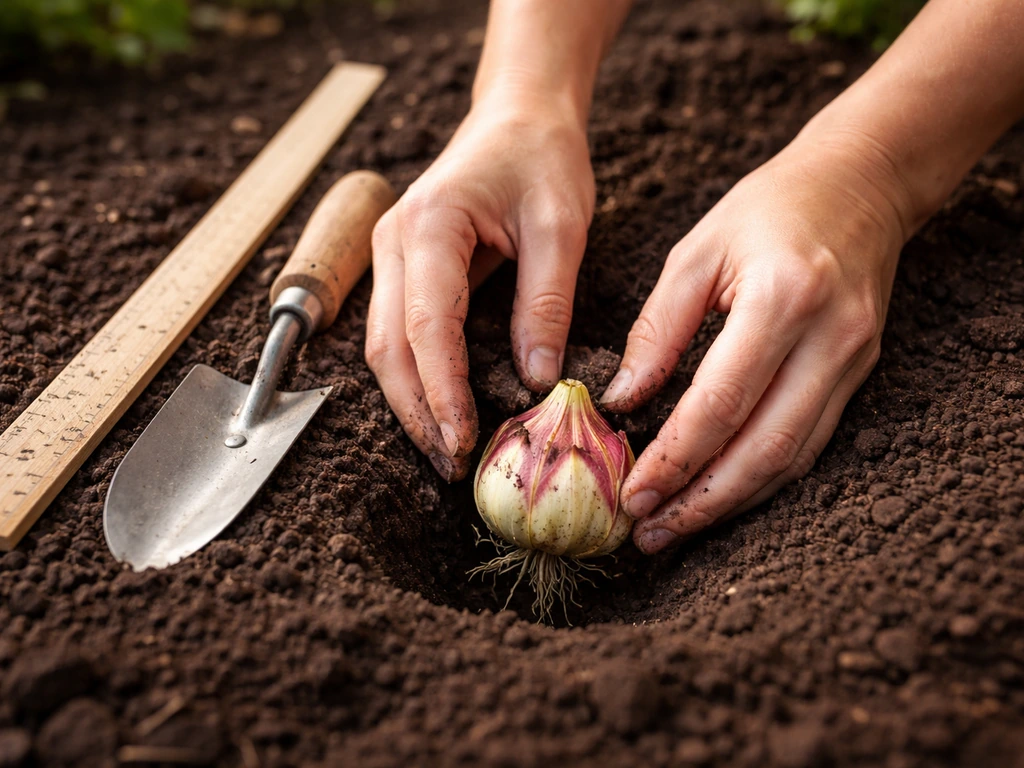
True lily bulbs (Asiatic, Oriental) get planted much deeper, typically 6 to 8 inches deep measured from the base of the bulb. A useful rule of thumb is to plant at a depth 2 to 3 times the height of the bulb. Space them 8 to 12 inches apart. Because they're planted significantly deeper than iris rhizomes, they don't directly compete for the same soil layer. Plant lily bulbs in fall for spring and summer blooms. If you're interplanting with established irises, place the lily bulbs in the gaps between iris clumps, making sure you're not displacing rhizomes as you dig.
| Plant | Structure | Planting Depth | Spacing | Best Planting Time |
|---|---|---|---|---|
| Bearded Iris | Rhizome | At surface (top exposed) | 12–24 inches | Late summer (July–August) |
| Siberian Iris | Rhizome | 1–2 inches deep | 18–24 inches | Spring or late summer |
| Asiatic Lily | Bulb | 6–8 inches | 8–12 inches | Fall |
| Oriental Lily | Bulb | 6–8 inches | 8–12 inches | Fall |
| Daylily | Tuberous roots | Crown just below surface | 18–24 inches | Spring or fall |
Layout strategies to prevent overcrowding
The biggest long-term threat in a mixed lily-iris bed is overcrowding. Bearded irises are especially prone to this. Within 3 to 4 years, a clump of bearded iris can become so dense that flowering drops off significantly and the plants start crowding out neighbors. Plan your layout with this in mind from day one.
The approach that works best is to define clear zones rather than randomly scattering plants. Plant iris clumps in defined groups with open space around them, and tuck lily bulbs in the gaps between clumps or along the front and back edges. This makes it much easier to dig and divide the irises every 3 to 4 years without disturbing your lily bulbs. Mark where your lily bulbs are planted (a small stake or marker works) so you don't accidentally slice through them when dividing irises.
If you're adding daylilies to the mix, give them even more room. Daylilies spread vigorously and can outcompete both irises and lilies if they're not divided regularly. Keep daylily clumps at least 18 to 24 inches from your iris rhizomes.
- Plan defined zones for irises and fill gaps with lily bulbs rather than randomly interplanting
- Mark lily bulb locations at planting so you can avoid them when dividing irises
- Divide bearded iris clumps every 3 to 4 years to maintain bloom quality and prevent overcrowding
- Allow at least 18 to 24 inches between iris clumps and any daylily plants
- Keep taller Oriental lilies toward the back of the bed so they don't shade irises
Troubleshooting: yellowing, poor blooms, and rot
When something goes wrong in a mixed bed, the cause is almost always one of a handful of things. Here's how to diagnose and fix the most common problems.
Irises not blooming
The top three causes are too much shade, rhizomes planted too deeply, or overcrowding. If nearby plants, shrubs, or trees have grown up and reduced sun in that bed, irises will stop blooming before almost any other symptom appears. Move them to a sunnier spot. If rhizomes have been buried over time by soil or mulch shifting, carefully remove excess soil and mulch so the tops of the rhizomes are visible again. If the clump is old and dense with many small fans producing no blooms, it's time to dig, divide, and replant with fresh outer divisions.
Lilies not blooming or producing weak stems
Poor lily blooms usually come down to insufficient sun, bulbs planted too shallow, or bulbs that have been in the ground so long they've gotten crowded and small. If your lilies are in partial shade, that's the first thing to fix. If they were planted too shallow (less than 4 to 5 inches), they may not have the energy reserves to bloom consistently. Dig and replant at the correct depth in fall.
Yellowing leaves
Yellowing in irises can mean several things. If leaves are yellowing from the tips down slowly, that can indicate crown rot. If you see leaves dying back and the base of the fan looks water-soaked or discolored, check the rhizome. A healthy rhizome is firm. A rotting rhizome from bacterial soft rot will feel soft or mushy when pressed and may smell unpleasant. There's no saving a badly rotted rhizome. Cut away and destroy infected tissue, and replant healthy sections in a better-drained location. Yellow foliage on lilies after blooming is normal and expected as the plant goes dormant. Yellow foliage before or during bloom is a red flag for overwatering, poor drainage, or a bulb that's rotting.
Gray mold and rot on flowers or stems
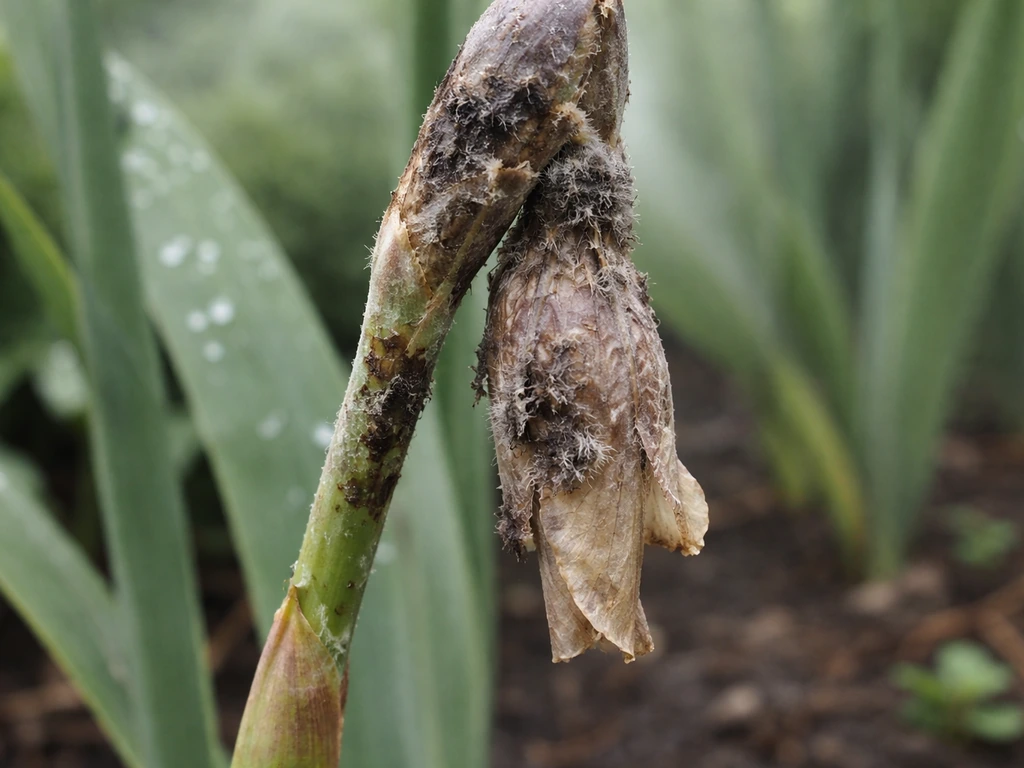
If you're seeing dark, blighted patches on flowers, buds, or stems, that's likely gray mold caused by Botrytis cinerea. It thrives in wet, humid, poorly ventilated conditions. The fix is improving airflow (thin crowded plantings, remove dead foliage promptly), switching to drip irrigation to keep foliage dry, and removing and disposing of affected plant material. Don't compost it. Botrytis can also cause rhizome rot in cool, wet conditions, showing up as few leaves emerging in spring. Again, improving drainage and airflow is the long-term solution.
The bottom line with troubleshooting is that most problems in a mixed lily-iris bed trace back to three things: not enough sun, too much moisture around the roots, or plants getting crowded over time. Fix those three conditions and most of the other issues resolve themselves.
FAQ
Can lilies and irises be planted in the same container or raised planter?
Yes, but it is harder to get right. Use a wide container with drainage holes and a potting mix that drains quickly (blend in coarse sand or perlite). Keep iris rhizomes near the surface and do not crowd them against lily bulbs, and expect more frequent watering in summer because containers dry out faster.
How do I place lilies vs bearded irises if the bed is small?
Use a clear layout where you keep iris clumps grouped and leave pockets for lily bulbs. The safest approach is to plant irises in defined clusters with open space around them, then tuck lily bulbs into the gaps rather than mixing them tightly in one pile.
Should I mulch a mixed lily and iris bed, and how thick?
You can mulch, but keep it from burying iris rhizomes. Use a thin layer (about 1 to 2 inches), keep mulch pulled back from the top of the rhizomes, and avoid fresh thick mulch right after planting because it can encourage rot if the area stays damp.
What watering schedule should I use in a mixed bed during spring vs summer dormancy?
During active growth and bloom, water deeply, then wait until the top inch or two of soil dries. After irises finish blooming, reduce watering in their section sooner than you would for lilies. The key is to prevent prolonged wetness around iris rhizomes while still supporting lily growth.
Are overhead sprinklers okay for lilies and irises together?
They often cause problems because wet foliage increases gray mold risk, and splashing can keep the root area too wet. If you must use a sprinkler, water early in the day, avoid soaking foliage, and ensure strong airflow. Drip or soaker hoses are the safer choice.
Can I grow bearded irises and lilies together if my soil is heavy clay?
Yes, but plan for drainage improvements before planting. Amend the soil with coarse sand or compost, consider a raised bed (a 6-inch lift can be meaningful), and avoid planting in low spots where water collects. If the area stays wet after rain, it is better to raise the planting than to rely on minor amendments.
How soon can I expect blooms after planting a mixed bed?
It varies by type and age of planting material. Iris rhizomes often bloom the first season if they are established and planted correctly, but very small divisions may take longer. Lily bulbs may also take a season to settle, especially if replanted after moving from another location.
What is the best spacing strategy if I want the bed to fill in but not overcrowd?
Start with generous spacing for irises (commonly 12 to 24 inches for rhizomes), then use lily bulbs in the gaps. Plan to divide bearded irises every 3 to 4 years to maintain flowering. If you overcrowd from day one, you may trade early fullness for reduced blooms within a few seasons.
Can I plant lilies into an established iris bed without disturbing the rhizomes?
Yes. Plant lily bulbs in the existing gaps between iris clumps and avoid digging directly through rhizomes. Mark where irises are to prevent accidental damage, and recheck bulb depth so the bulbs are planted about 6 to 8 inches deep from the base.
Why might my irises stop blooming even when the bed gets sun?
Common hidden causes are rhizomes getting buried by soil or shifting mulch and overcrowding inside older clumps. Check that the top of the rhizomes is at or just below the surface, then if flowering has dropped for a couple years, divide and replant healthy outer pieces.
What should I do if a lily or iris rots after a wet spell?
Improve drainage first, then remove the affected plant material. For rotted iris rhizomes, cut away and discard infected tissue, and replant only healthy sections in better-drained ground. For lily bulb rot, remove the bulb, discard it, and replant at the correct depth once the soil dries and conditions are improved.
Next Articles
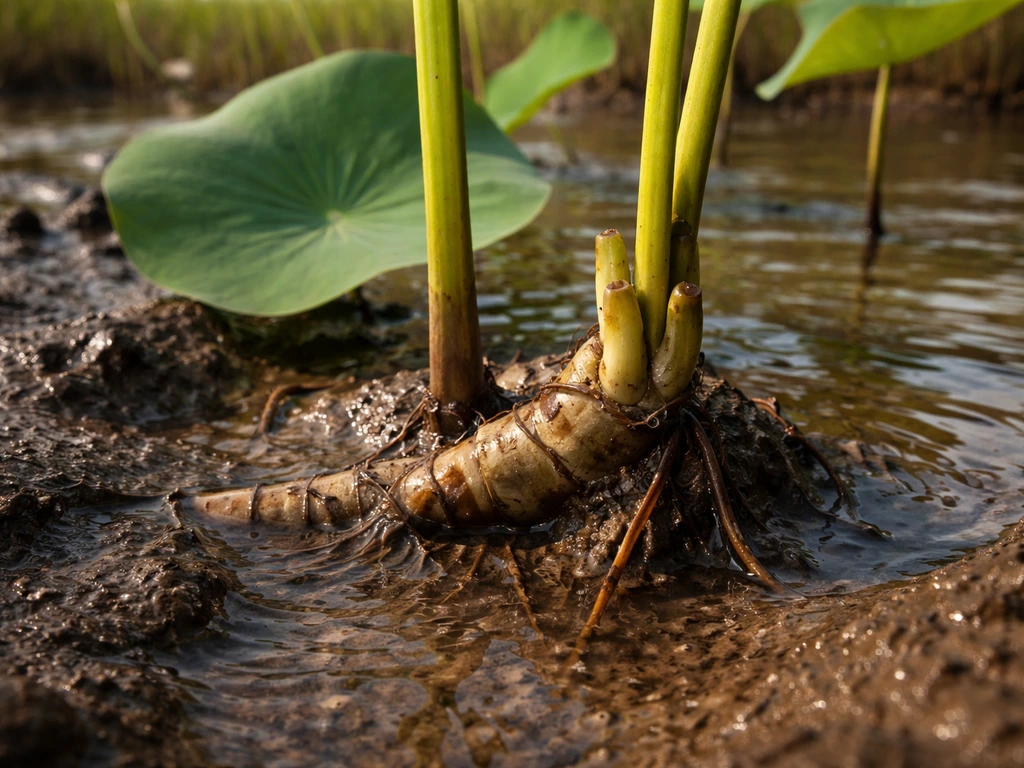
A Lotus Plant Cannot Grow in the Desert Why
Lotus needs warm, wet, muddy pond conditions and stable water depth; desert heat and dryness block roots and growth.
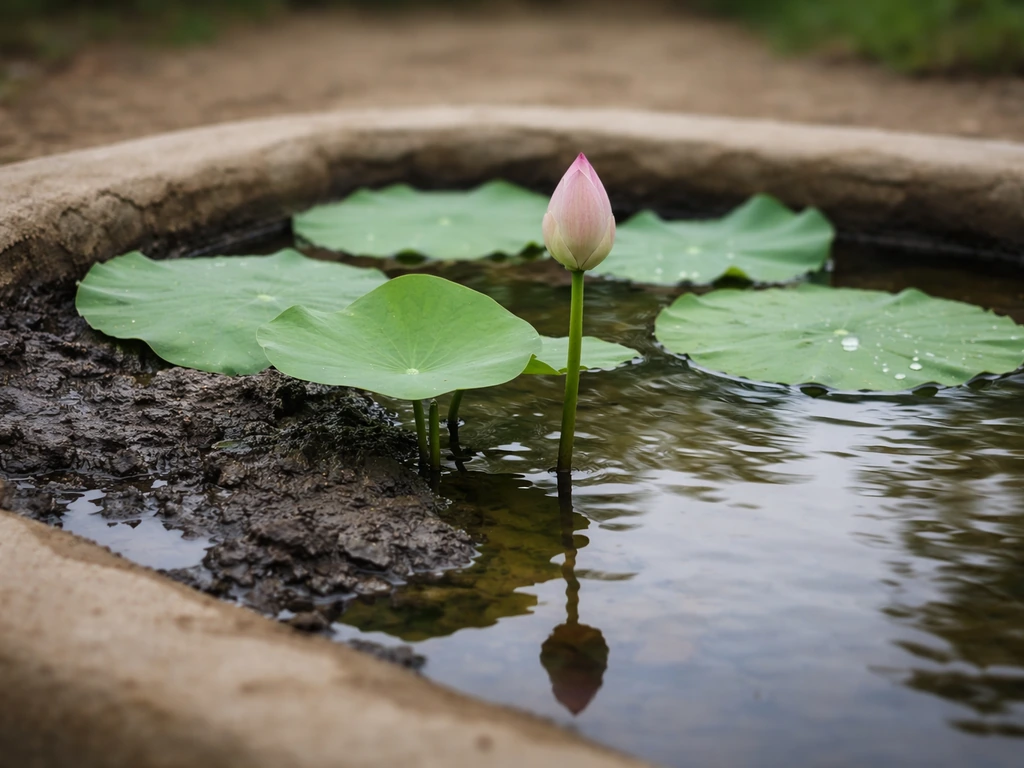
Does Lotus Grow on Land? How to Grow Lotus in Mud or Containers
Can lotus grow on land? Get step-by-step container or mud-bed setup, water levels, care, and indoor options.

Can Water Lily and Lotus Grow Together? How to Plant Both
Yes, water lilies and lotus can grow together with proper light, depth, spacing, and separate pots to prevent crowding.