
Yes, water lilies and lotus can grow together in the same pond or water garden, but only if you manage their space, depth, and vigor carefully. Put them in the same container without a plan and one will almost certainly crowd the other out, usually the water lily winning by blanketing the surface before the lotus can establish. Give each its own container, match the cultivar size to your pond, and keep up with pruning, and you can absolutely have both flowering together beautifully. If you are wondering can lilies and irises grow together, the same idea applies: matching plant needs and preventing one species from taking over matters most both flowering together.
Can Water Lily and Lotus Grow Together? How to Plant Both
Marcus Hendricks
30 Apr 2026
The quick compatibility verdict: when they work together and when they don't
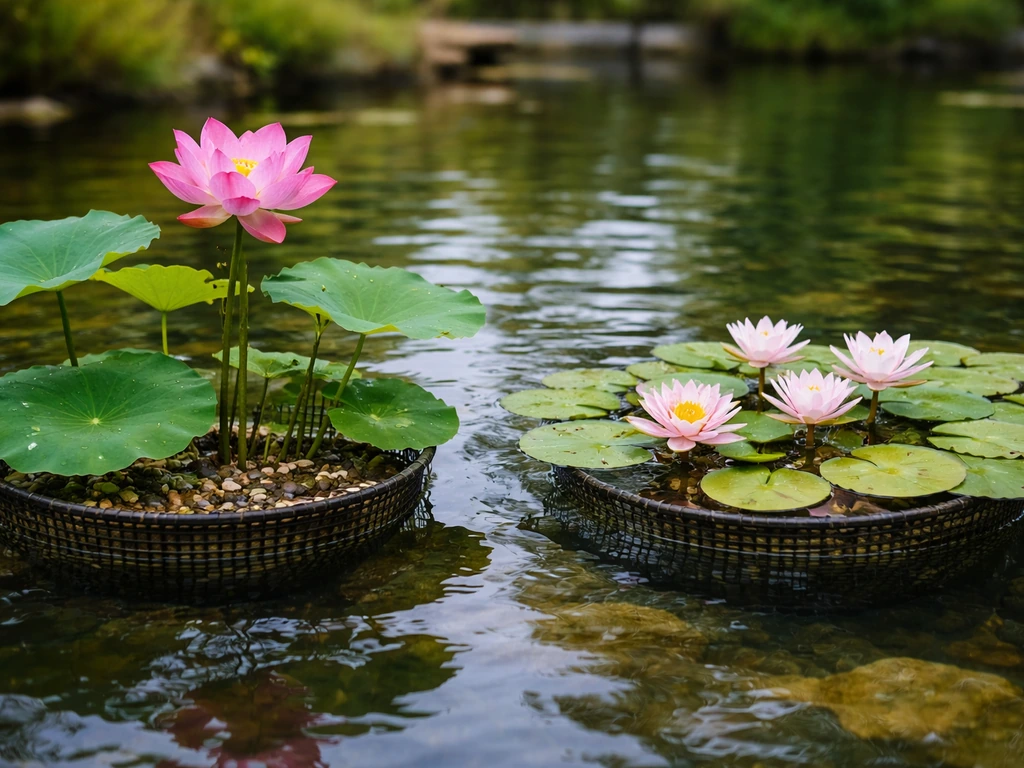
The honest answer is that lotus and water lilies are compatible in the same pond, but they are not good roommates in the same pot or basket. Both are aquatic plants that thrive in still or slow-moving water with full sun, which is exactly why they seem like natural companions. The problem is that water lilies (Nymphaea) are vigorous spreaders, and the RHS explicitly warns that you need to choose a cultivar that matches your pond size, precisely because a too-vigorous lily will dominate everything else. There are real failure stories out there, including home gardeners who planted both together and watched the water lily cover the entire surface within a season, leaving the lotus starved of light.
So here is the verdict in plain terms: co-planting works in ponds that are at least 6 to 8 feet across, where each plant gets its own separate container, and where you commit to seasonal maintenance. It does not work reliably in small tubs or barrels where space is tight, in ponds with only one shallow zone, or if you plan to just plant and walk away. If your pond is small, pick one or the other. If you are wondering whether do lotus flowers grow in swamps, it is useful to compare it with the small-pond guidance above, because lotus can like wet, muddy conditions but still needs the right depth and spacing to avoid failure.
Light and water conditions both plants need
This is actually where lotus and water lilies get along well, because their environmental preferences overlap a lot. Water lilies do best with 6 to 8 hours of direct sun per day. Lotus prefer a minimum of 5 to 6 hours of full sun. So a pond that gets strong morning through midday sun satisfies both. If your water garden is shaded for more than half the day, neither plant will perform well, and you will get almost no flowers from either.
Water temperature is where things get a bit more specific. Water lilies need a water temperature of at least 21°C (70°F) during the growing season to thrive, dropping to around 10°C (50°F) in winter dormancy. Lotus germinates and starts growing actively once temperatures exceed 13°C (55°F), and it also appreciates warm summer water. In practice, if your outdoor pond is warm enough for lotus to bloom, it is almost certainly warm enough for water lilies too. The challenge comes in autumn and winter, which I will cover in the seasonal section below.
Water quality matters for both. Both prefer relatively still, nutrient-rich water, which is why they do so well in ponds with a little organic muck at the bottom. That said, lotus typically grows well in muddy or nutrient-rich sediments, which is why it is often planted in muck at the bottom of ponds do lotus flowers grow in mud. Avoid strong fountain spray or waterfall turbulence directed at either plant. Moving water chills the root zone and interferes with flowering, especially for lotus.
Getting the depth and containers right
This is the most practically important section if you want both plants to succeed, because lotus and water lilies have different depth requirements and getting this wrong is the most common cause of failure.
Water lily depth and basket setup
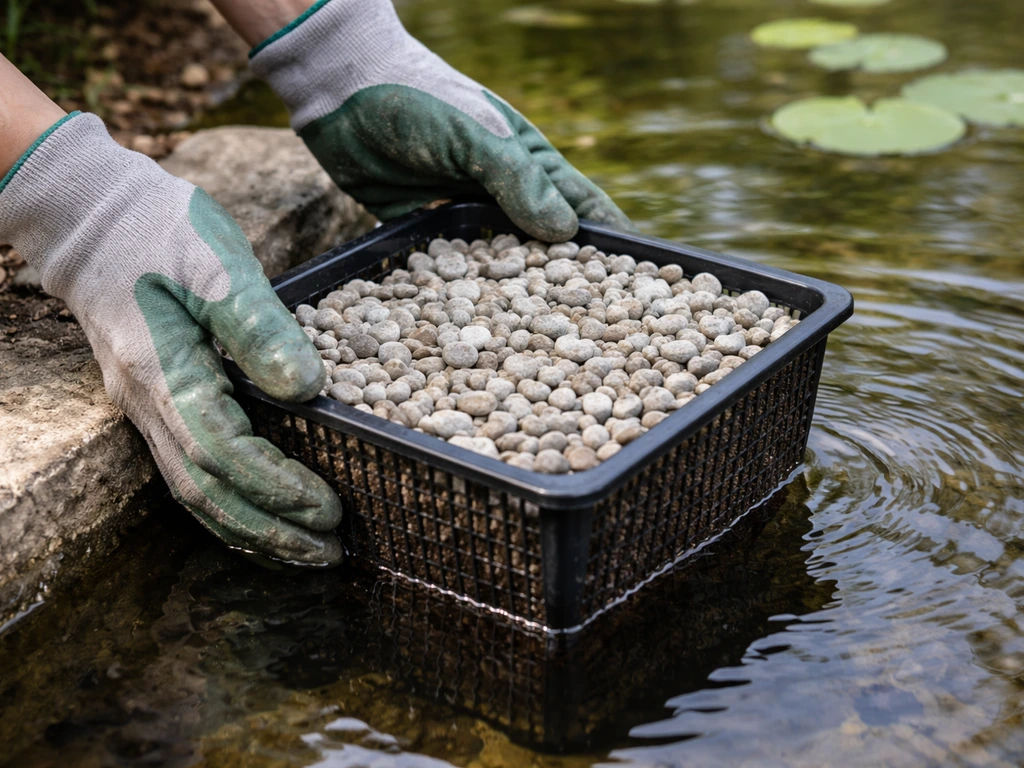
Plant your water lily into an aquatic basket filled with heavy loam or aquatic compost, cover the soil surface with washed gravel to lock in nutrients, and lower the basket so the crown sits under 15 to 25 cm (6 to 10 inches) of water initially. As the plant establishes over the first few weeks, gradually lower the basket to its final depth. For most hardy cultivars this ends up being 50 to 70 cm (20 to 28 inches) below the surface. Small or miniature cultivars can sit shallower, around 15 to 20 cm. A critical warning: do not bury the crown too deep too soon. Covering the crown too deeply before the plant has established can kill it outright.
Lotus depth and container setup
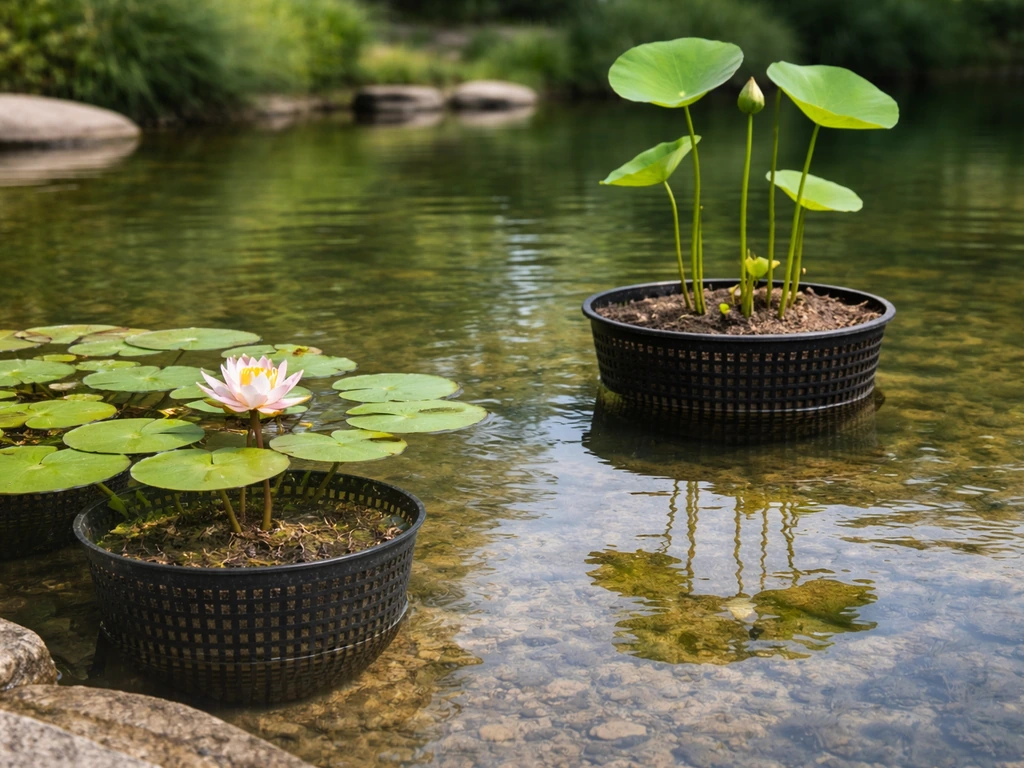
Lotus needs a wider, shallower container than most people expect. If you’re wondering can you grow lotus flowers, the answer is yes, as long as you give the plant a wide, low container and enough sunlight. A wide, low pot works far better than a deep narrow one. [Fill the container only one-quarter to one-half of its depth with soil before planting](https://hort.
ifas. ufl. edu/database/documents/pdf/shrubfactsheets/nelnuca. pdf), which gives the rhizome room to spread horizontally.
Plant the rootstock horizontally just below the soil surface in spring, barely submerged until new growth appears. The minimum safe water depth above the container is 30 cm (about 12 inches), and a practical rule of thumb is to allow about twice the depth of the tuber itself. Start lotus in just 6 inches of water until it is established, then gradually increase.
If your pond is too deep for lotus, do not give up. Place a brick or concrete block under the lotus container to raise it to the right depth zone. This is a genuinely useful trick that lets you keep both plants in the same pond even when the pond was not originally designed for lotus.
| Feature | Water Lily (Nymphaea) | Lotus (Nelumbo) |
|---|---|---|
| Container type | Deep aquatic basket | Wide, shallow pot |
| Starting water depth | 15–25 cm (6–10 in) over crown | ~15 cm (6 in) until established |
| Final water depth | 50–70 cm (20–28 in) | 30 cm (12 in) minimum |
| Soil fill level | Fill container fully | Fill 1/4 to 1/2 depth only |
| Rootstock placement | Crown just above soil surface | Horizontal, just below soil surface |
| Sun requirement | 6–8 hours direct sun | 5–6 hours direct sun |
Spacing, placement, and stopping one from taking over
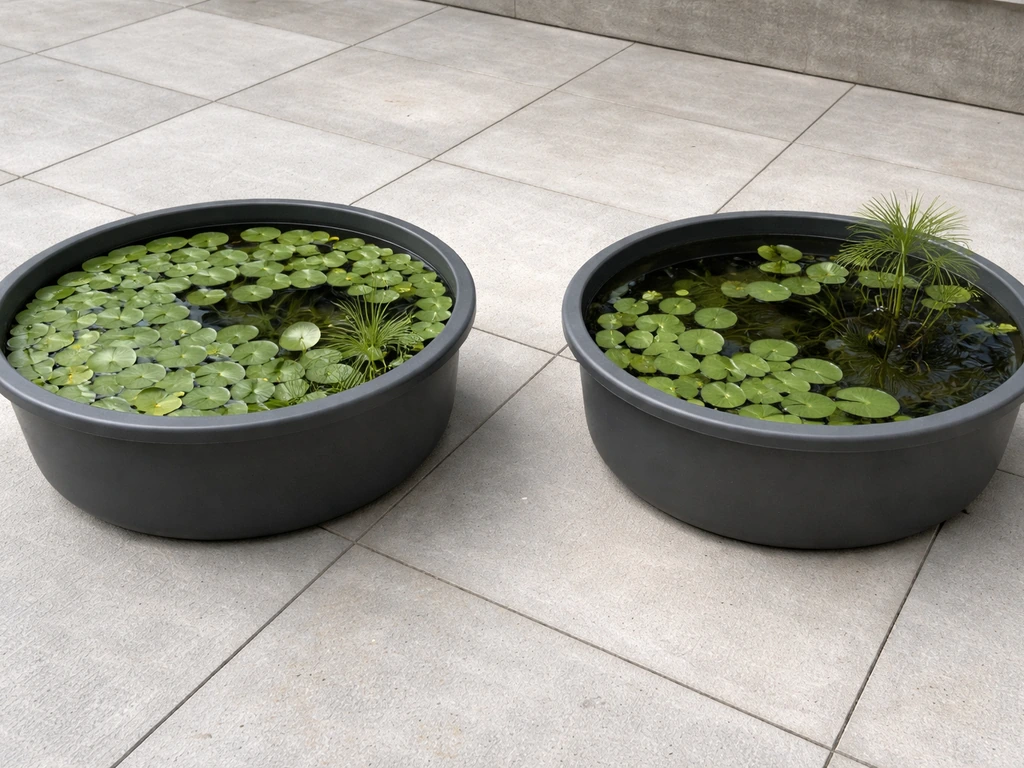
Growth competition is the biggest real-world challenge when co-planting these two, and it comes down to two things: surface shading and root competition. Water lilies spread their pads outward across the surface and can block sunlight from lotus leaves and buds emerging below. Lotus, once established, sends up tall aerial leaves that can tower above everything and shade out nearby water lily pads. They are both, in other words, capable of being the bully.
The fix is separation and cultivar matching. Keep each plant in its own container (never the same pot) and position them on opposite sides or ends of the pond rather than side by side. Give each plant a zone of surface space that is roughly 1 to 1.5 meters across as a minimum. For the water lily, choose a cultivar labeled for your pond size specifically. A small or miniature water lily in a large pond is much easier to manage alongside lotus than a vigorous large cultivar that wants to cover 4 to 6 square feet of surface on its own.
Pruning is your primary management tool. Remove yellowing or dead water lily pads regularly so they do not pile up and block light. Trim back any lotus leaves that are leaning out over the water lily zone. If either plant is visibly crowding the other, dividing the rhizomes in early spring before the growing season kicks off is the most effective reset. Texas A&M AgriLife Extension frames active population control as essential when either plant starts becoming a nuisance in a pond setting, and that is exactly the right mindset here: stay proactive, not reactive.
Feeding, water quality, and keeping things balanced after planting
Both plants are hungry feeders during the growing season, and fertilizing correctly prevents them from competing so hard that one fails. Fertilize each plant separately through its own container rather than adding fertilizer to the pond water, which just feeds algae.
For lotus, UF/IFAS recommends incorporating fertilizer at a rate of about one-quarter cup of 10-10-10 per gallon of soil in the container before planting, mixed in well. Once the plant is actively growing, continue feeding through the season with aquatic fertilizer tabs pushed into the soil near the rhizome.
For water lilies, a practical approach is using slow-release fertilizer tablets placed near the rhizome inside the basket, typically 3 to 5 tablets per plant depending on its size, repeated every 3 to 4 weeks through the growing season. Push the tablets deep into the soil so nutrients do not leach directly into the pond water.
On water quality: both plants prefer slightly murky, nutrient-rich water over crystal-clear filtered water. Avoid heavy use of algaecides or pond treatments while the plants are establishing, as these can stress rhizomes. If you have a pond filter running, make sure the return flow is not creating turbulence directly around the lotus or water lily containers. Still or gently moving water around the containers is what both plants want.
- Feed each plant through its own container, never by broadcasting fertilizer into the open water
- Use aquatic-specific slow-release fertilizer tablets pushed into the basket or pot soil
- Remove dead or decaying leaves promptly to prevent nutrient spikes that fuel algae
- Check containers every 2 to 3 years and divide rhizomes if the plant is outgrowing its pot
- Avoid strong fountain turbulence directed at either plant's root zone
Climate, seasons, and what to do when it gets cold
If you garden in a warm climate (roughly USDA zones 9 to 11), both lotus and water lilies can stay in the pond year-round with minimal intervention. The plants slow down in winter but do not require removal. This is the easiest scenario for co-planting, and it is why water gardens in Florida, Texas, and California can sustain both together without much seasonal drama.
In colder climates (zones 5 to 8), both plants need winter protection, but they need it handled differently, which is actually one of the more overlooked challenges of co-planting. Hardy water lily cultivars can overwinter in the pond if the rootstock stays below the ice line, which is why lowering the basket to the deeper part of the pond in autumn is standard practice. If your pond is shallow and likely to freeze solid, move the basket to a frost-free garage in a bucket of water.
Lotus is less tolerant of hard freezes. The RHS recommendation is clear: in cold areas, reduce the water level gradually in autumn, remove the container, and overwinter the lotus in frost-free conditions with the rhizomes kept just moist (not wet, not bone dry). This means that in a cold-climate pond, you will be pulling the lotus out every autumn and storing it separately, then returning it to the pond in spring once water temperatures climb back above 13°C (55°F). It is extra work, but it is manageable, and it also gives you the chance to divide and repot the lotus each spring, which keeps it from getting overly vigorous and outcompeting your water lily.
For anyone curious about growing lotus in containers indoors or exploring whether lotus can thrive outside of traditional pond setups, the same basic depth and soil rules apply. Lotus also generally needs to be grown in water rather than directly planted on dry land does lotus grow on land.
That is also the key question behind why a lotus plant cannot grow in the desert, since it depends on warm, consistently wet conditions to germinate and bloom why lotus cannot grow in the desert. Lotus is strictly an outdoor warm-season plant in most climates, while tropical water lily varieties (unlike hardy ones) also need to come indoors over winter in cold zones.
If you are mixing a tropical water lily with lotus in the same pond, make sure you have a plan to bring both indoors before the first frost.
Your practical next steps for planting both today
- Measure your pond: if it is smaller than roughly 6 feet across, choose one plant only. If it is larger, proceed with both in separate containers.
- Choose a compact or miniature water lily cultivar if your pond is medium-sized, and a dwarf or bowl lotus variety if space is limited. Matching vigor to pond size is the single most important decision you will make.
- Set up separate containers: a wide, shallow pot for the lotus (filled one-quarter to one-half with soil) and a deeper aquatic basket for the water lily.
- Plant lotus horizontally just below the soil surface in spring, starting it in 6 inches of water. Plant the water lily with the crown under 15 to 25 cm of water, then gradually lower it to its final depth over a few weeks.
- Position containers on opposite sides of the pond, not adjacent to each other, to minimize surface shading competition.
- If the pond is too deep for the lotus, raise its container on a brick or block to hit the right depth zone.
- Fertilize each plant separately through its own container at the start of the growing season and continue with slow-release tabs through summer.
- Prune dead leaves from both plants regularly throughout the season and divide rhizomes every 2 to 3 years in spring to keep growth in check.
- In cold climates, pull the lotus container out in autumn and store it frost-free and just moist; lower the water lily basket to the deepest part of the pond or move it indoors.
FAQ
Can water lily and lotus grow together in a single pond without separate containers if I prune often?
It will still be unreliable. Even with frequent pruning, their root systems occupy different zones and they can still steal nutrients, which leads to weak flowering. Separate containers are the simplest control, because it prevents invisible root competition even when leaves look balanced.
What is the minimum pond size to have both plants produce flowers most years?
If you want a realistic chance at both flowering, plan for at least about 6 to 8 feet across, because you need room for surface coverage control. In smaller ponds, either the lily will shade the lotus buds, or you will end up pruning so aggressively that lotus flowering is reduced.
Should I start the water lily and lotus at the same time?
Often better results come from staggering by a few weeks. Plant the water lily first so it establishes depth and root growth, then add the lotus once temperatures are reliably warm. This reduces the chance that lotus goes into a slow, light-stressed phase while the lily is still rapidly expanding.
How do I position them so they do not shade each other?
Do not place them side by side. Put them on opposite ends (or opposite sides) and give each plant a dedicated surface footprint, roughly 1 to 1.5 meters across. Also watch the direction of the sun, since morning sun can help both while harsh afternoon shade or glare can worsen uneven growth.
What if my pond is too deep for lotus even with a raised block?
If raising the container still leaves the lotus rhizome in consistently too much depth, use a shallower growing setup for the lotus. A raised platform approach works only if you can reliably keep the water depth above the container at least around 30 cm (about 12 inches) and manage seasonal water level changes.
My lotus is growing leaves but not flowering. What should I check first?
The top causes are insufficient sun and incorrect water depth during active growth. Verify you are getting at least 5 to 6 hours of full sun, and confirm the lotus container is not sitting too deep after you adjust for seasonal water levels. Nutrient timing matters too, make sure you fertilize through the growing season rather than only at planting.
Will fertilizing both plants make algae worse?
It can, if nutrients reach open pond water. Keep fertilization inside each container (tabs pushed into the soil or tablets in the basket), and avoid broadcasting fertilizer into the pond. If algae surges after feeding, pause and reduce feeding frequency until plant growth stabilizes.
Do water lily and lotus both need the same fertilizer type and schedule?
No. Water lilies typically do well with slow-release tablets placed near the rhizome inside the basket, while lotus benefits from a pre-plant soil mix and then supplemental feeding once actively growing. Treat them separately because their uptake is not the same and mixing strategies often leads to uneven vigor.
How often should I divide them to prevent one from taking over?
In co-planting situations, plan on dividing in early spring as soon as you see sustained crowding or surface dominance. For many gardens, this ends up being every few years, but if one plant consistently overwhelms the other despite pruning, divide sooner rather than waiting for a full season of damage.
What should I do if the pond freezes and the lotus cannot survive?
In cold climates, expect to remove and store the lotus rhizomes in frost-free conditions, keeping them just moist during overwinter storage. Water lilies may survive if the rootstock stays below the ice line, so you will likely be protecting each plant differently instead of using one single winter plan for both.
Is it safe to run a fountain or waterfall with both plants in the pond?
Avoid directing strong spray or turbulence right at the containers. Both prefer still or gently moving water, and strong movement can chill the root zone and reduce flowering. A trick is to position returns and spillways so water circulation stays away from the lotus and lily baskets.
Next Articles
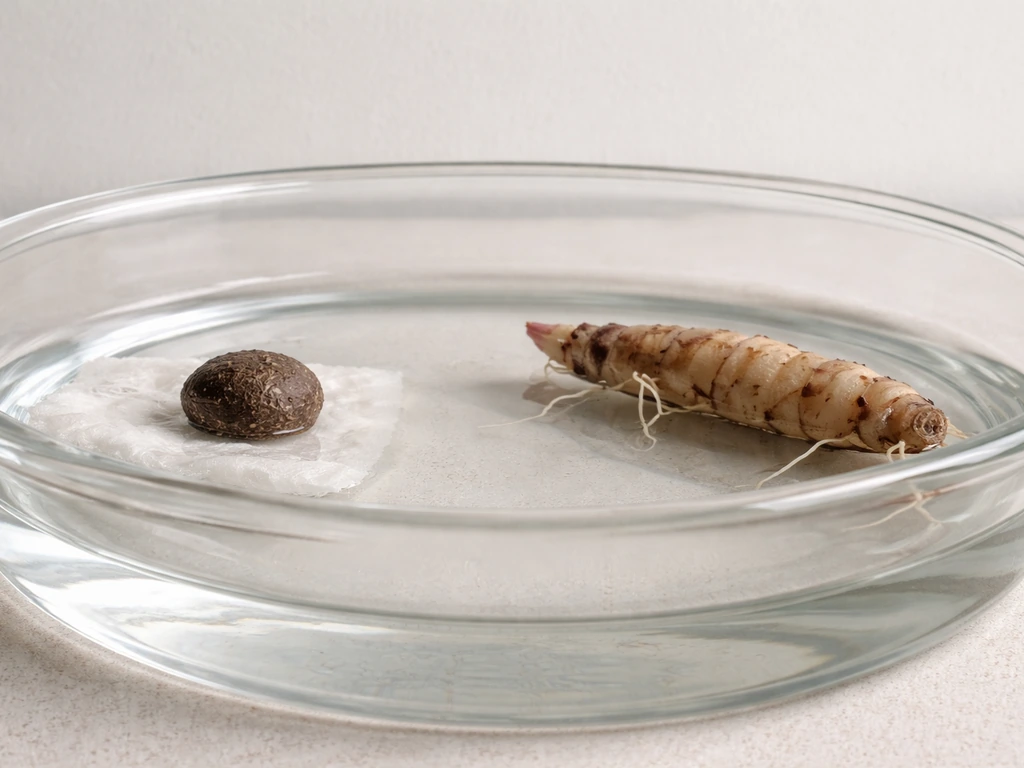
Can You Grow Lotus Flowers From a Bloom or Seeds?
Learn if lotus can be grown from a bloom or seeds, plus step-by-step setup for sprouting, water depth, light, and troubl
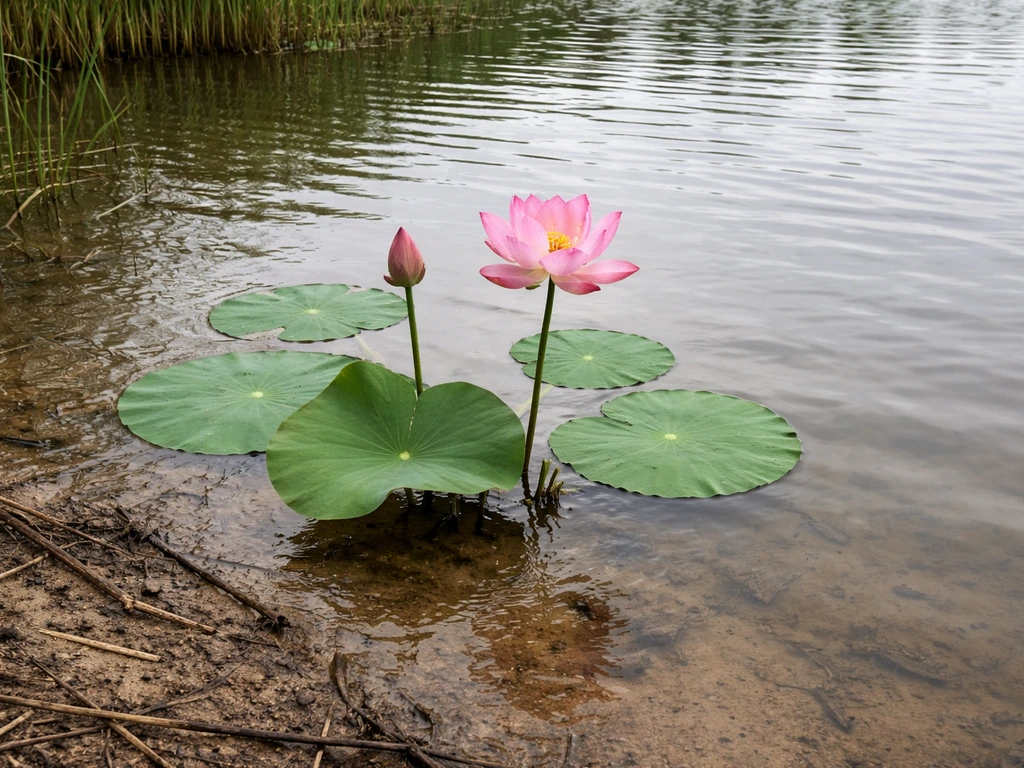
Do Lotus Flowers Grow in Swamps? Swamp Planting Guide
Learn if lotus grows in swamps, how to plant for depth, sun, warm temps, and fix rot, weak blooms, and cold.
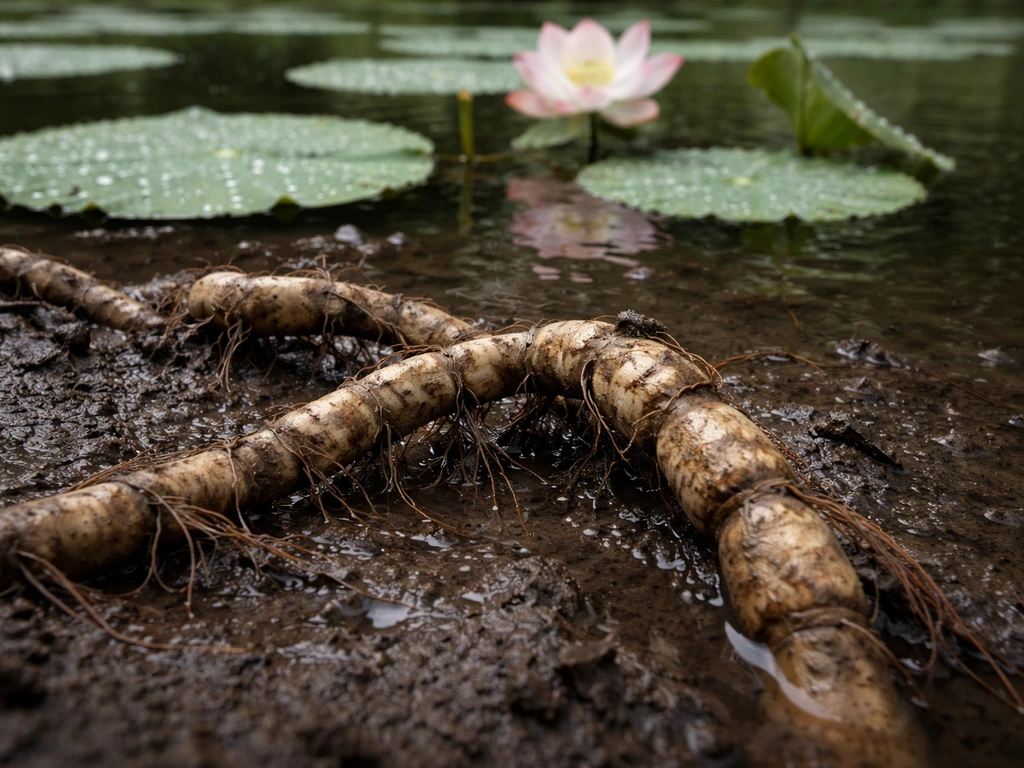
Do Lotus Flowers Grow in Mud? How to Grow Them
Yes, lotus grows in muddy sediment: learn why, how to plant rhizomes, depth, substrate, and fix common problems.