
A lotus plant cannot grow in the desert because it is a fully aquatic plant that needs its roots submerged in mud under at least 30 cm (12 inches) of standing water, warm temperatures above 25°C for several months, and stable moisture that never dries out. Desert conditions hit every single one of those requirements in the wrong direction at once: no persistent surface water, extremely low humidity, bone-dry soil, and wild temperature swings that stress the plant even when daytime heat seems "warm enough." Without a man-made pond, tub, or container water garden, a lotus simply cannot establish, grow, or survive in an arid environment.
A Lotus Plant Cannot Grow in the Desert Why
Marcus Hendricks
20 May 2026
What 'lotus can't grow in the desert' really means
The phrase isn't just a poetic observation. It's a precise biological statement. Lotus (Nelumbo nucifera) belongs to the family Nelumbonaceae, which makes it closer to water lilies than to the terrestrial lilies most gardeners are familiar with. Unlike a daylily or an asiatic lily that grows in garden soil, lotus roots through a creeping rhizome buried in submerged sediment at the bottom of a pond, lake, or wetland. The leaves and flowers push up above the water surface on tall stalks, sometimes reaching six feet high, but everything below is underwater. If there's no water body, there's no lotus. That's the core of it.
The "desert" in the question represents the complete opposite of what lotus needs: absent or seasonal rainfall, no standing freshwater, low humidity, rapidly draining sandy or rocky soil, and intense solar radiation combined with heat spikes and cold nights. Every one of those factors is a dealbreaker on its own. Together, they make lotus survival essentially impossible without serious intervention.
Lotus water needs: pond, mud, and keeping the depth stable
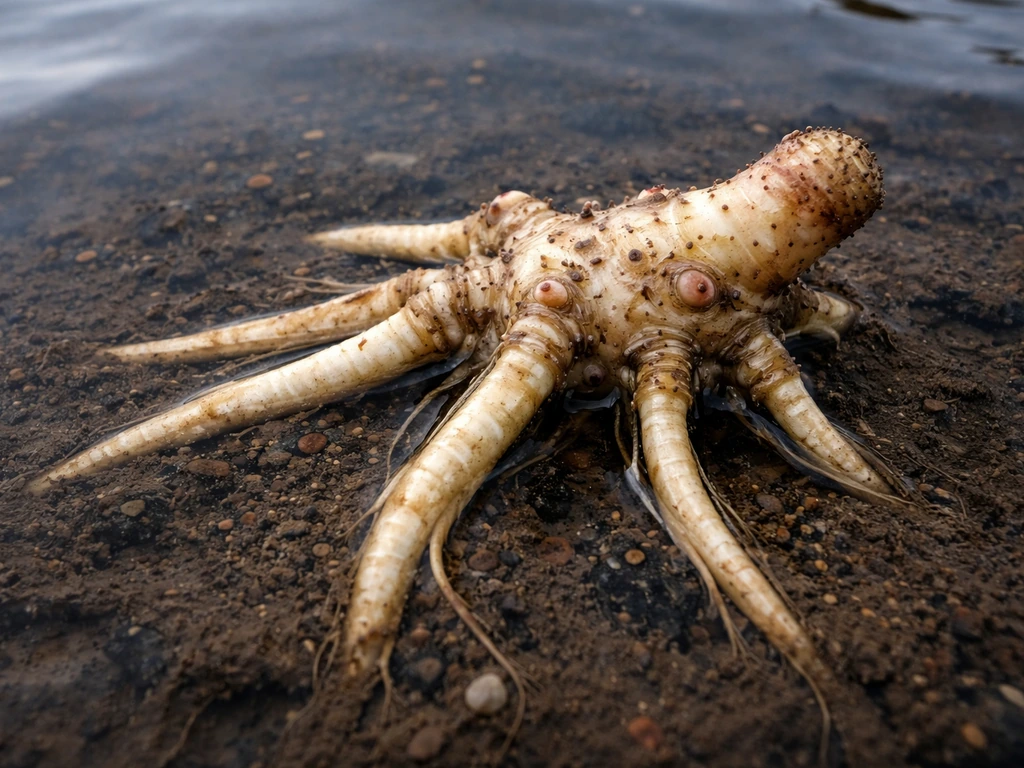
Lotus needs to grow in calm, shallow freshwater with its rhizome buried in mucky, organically rich substrate at the bottom. Documented natural habitat puts the water depth at roughly 0.3 to 1.0 meters (about 1 to 3 feet). In cultivation, the minimum water depth above the crown should not drop below 30 cm (12 inches), and as the plant establishes you work your way up to a typical range of 45 to 60 cm for larger varieties. Dwarf cultivars can manage with as little as 15 to 30 cm over the soil, but still, that is standing water, not moist soil.
In a desert, maintaining that depth is the first practical problem you hit. Evaporation in an arid climate is relentless. A shallow water tub or small pond that might stay topped up with natural rainfall in a humid climate will lose water fast in a dry, hot, windy environment. You'd be fighting evaporation every single day. More critically, if the water level drops below the rhizome even briefly during the growing season, the plant is exposed to dry air, the substrate dries out, and growth stalls or the rhizome dies. This is why desert gardeners who have tried lotus without a managed top-up system almost always lose the plant before it blooms.
The substrate matters just as much as the water depth. Lotus needs submerged mucky loam or soft silt, ideally 8 to 12 inches deep. The rhizome creeps through that anaerobic (low-oxygen) sediment and relies on a specialized internal gas-canal system (called aerenchyma) to move oxygen from the leaves and stems down to the buried roots. That system works when the rhizome is buried in saturated mud with connected water above it. Pack the same rhizome into dry, gritty desert sand and the oxygen supply chain breaks, the rhizome suffocates, and you get nothing.
Temperature and humidity: why heat alone isn't enough
Lotus does need warmth. It requires summer temperatures above 25°C (77°F) and really wants at least 24°C (75°F) sustained for a minimum of three months to complete its growth cycle, flower, and store energy in the rhizome for the following season. On paper, a desert in summer looks like it should work: plenty of heat, strong sun. But there's a catch that trips up a lot of first-time growers.
Desert heat and lotus heat are not the same thing. Lotus evolved in warm, humid wetlands where water moderates temperature extremes. The water body itself acts as a heat buffer, keeping the rhizome zone stable. In a desert, daytime air temperatures can push well above 40°C while nighttime temperatures swing dramatically cool. Those swings stress the plant. Lotus flowers actually have a remarkable internal thermoregulation ability, blank" rel="noopener noreferrer">keeping the receptacle between about 30°C and 36°C even as ambient temperature varies from roughly 8°C to 45°C. That's useful in swampy environments, but it doesn't help a rhizome sitting in a thin tub of water that scalds during the day and chills at night. Yes, lotus flowers are associated with wet habitats, and they can grow in swampy environments where their roots stay submerged in saturated mud.
Low humidity amplifies the problem. High vapor-pressure deficits (the "drying power" of the air) push lotus leaves to transpire faster. Research shows lotus stomata don't slam shut the way some drought-adapted plants do, even at vapor-pressure deficits up to 3.4 kPa. That's actually a desert liability, not an asset. In humid conditions that openness is fine because water supply from the roots is reliable. In dry air with a limited water reservoir, that high transpiration rate draws down your container water even faster, and the leaves can still desiccate if the root zone can't keep up with demand.
Sunlight versus heat stress: what intense desert sun actually does
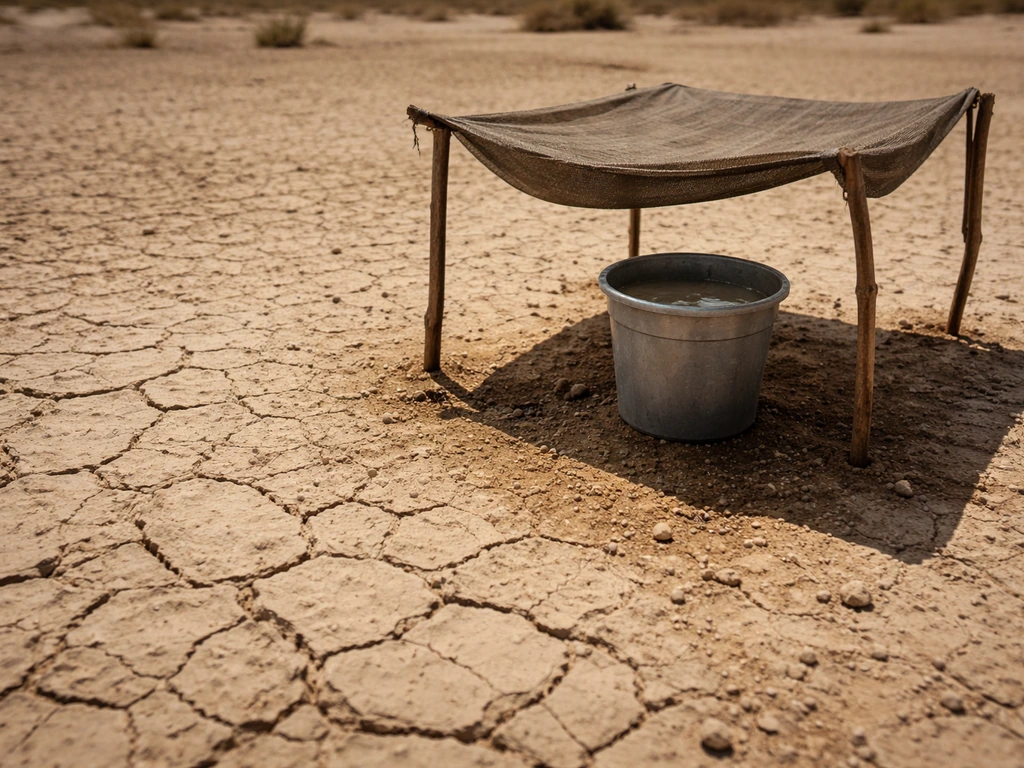
Lotus wants full sun, and plenty of it. Under normal pond conditions, full sun drives photosynthesis, warm water temperatures, and flowering. But there's a difference between the full sun of a pond in a humid subtropical climate and the punishing radiation of a desert at elevation or at low latitude.
In a desert, intense solar radiation combined with low humidity and dry air hits lotus leaves from above while the roots below are struggling with heat in a small, shallow water container. The water in a small tub or container pond can overheat rapidly in direct desert sun, which stresses the rhizome and encourages the growth of harmful algae or bacteria that further deteriorate the substrate. In a natural shallow pond the water volume is large enough that it resists rapid heating. In a 50-liter container in Phoenix in July, that buffer disappears. You'd likely need to shade the water container itself while still keeping the leaves in full sun, which is a difficult balance to strike.
The leaf canopy can handle significant heat and light when the plant is healthy and the water supply is robust. The weak link is always the roots and the water body, not the leaves.
Soil, substrate, and oxygen: how the rhizome survives (or doesn't)
This is the piece most gardeners overlook when they first think about growing lotus somewhere unusual. Lotus rhizomes grow through anaerobic sediment, meaning the substrate around them contains very little oxygen. Oxford Academic (Plant Physiology) reports that lotus problems in low-oxygen environments can be solved when buried roots or rhizomes receive an abundant oxygen supply abundant supply of oxygen. The plant compensates with a sophisticated internal gas canal system: oxygen moves from the aerial leaves and stems through connected tissue spaces (aerenchyma) down to the buried rhizome. This works beautifully in a wetland because there is continuous connected water and tissue carrying oxygen down. But this system only functions when the rhizome is buried in saturated substrate with at least some water above it maintaining that hydraulic connection.
Desert soil is the worst possible medium for a lotus rhizome. Sandy or gravelly desert soils drain instantly, contain almost no organic matter, and don't hold the anaerobic saturated conditions the rhizome needs. Even if you watered heavily every day, water drains through too fast to maintain the submerged, waterlogged layer. The rhizome dries, the gas canal system loses its connection, the roots suffocate, and the plant dies. You cannot fix this with any amount of watering into open ground. You need a sealed container or pond with an actual layer of standing water above a proper substrate.
The ideal substrate for lotus is a heavy, organically rich loam or soft silt clay, about 8 to 12 inches deep, at the bottom of the water container. Garden soil mixed with a little clay or a purpose-made aquatic planting mix works well. You are recreating the floor of a muddy pond, not planting into a garden bed.
Can you actually grow lotus in a dry climate? Realistic setups
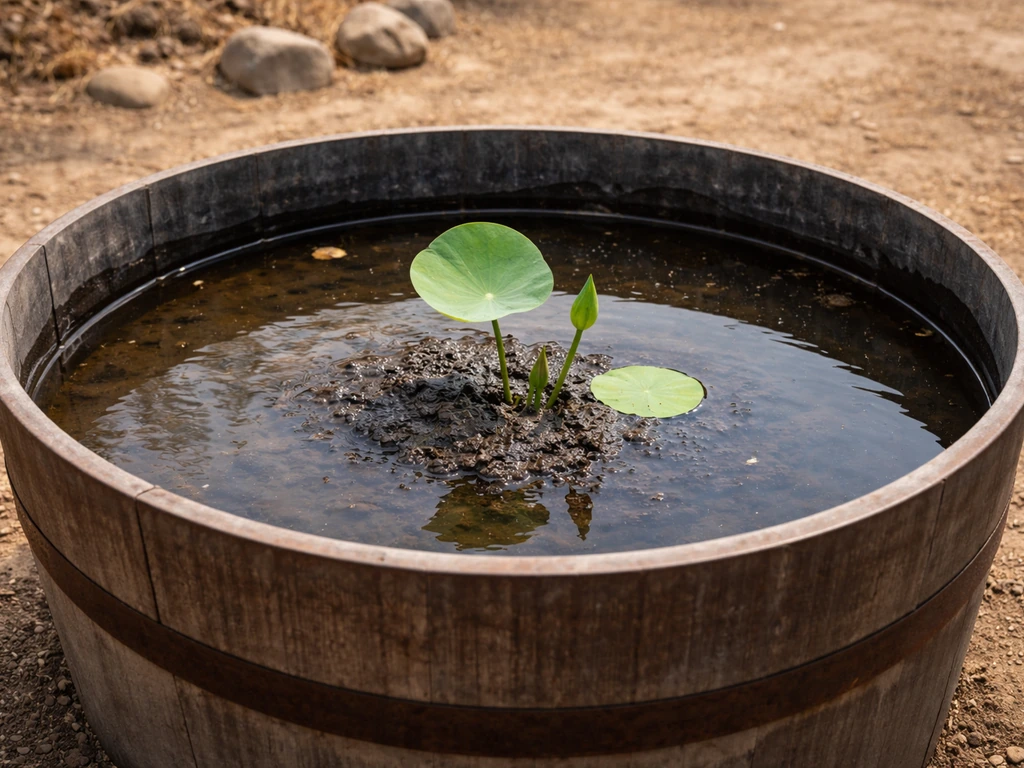
Yes, it's possible, but you need to be honest with yourself about the effort involved. Growing lotus in an arid region is not a set-it-and-forget-it project. Can you grow lotus flowers in a dry climate? You can, but you must build and maintain a miniature aquatic setup that keeps the rhizome in standing, oxygenated water. It requires building and maintaining a miniature aquatic system, not just planting into the ground. Here's what a realistic working setup looks like:
- Use a large, dark-colored container: a half-barrel water garden, a 100+ liter stock tank, or a purpose-built preformed pond. The larger the water volume, the more stable the temperature and water level.
- Fill the bottom 8 to 12 inches with heavy aquatic soil or a mix of garden loam and clay. Do not use regular potting mix (it floats and fouls the water) and do not use pure sand or gravel.
- Plant the lotus rhizome horizontally just under the soil surface, with the growing tip (the curved end) pointing slightly upward.
- Fill with water to 5 to 10 cm above the soil surface initially. As aerial leaves establish, gradually raise the water level to the variety's recommended depth (15 to 30 cm for dwarf, 30 to 60 cm for larger varieties).
- Place the container in full sun but consider shading the sides and lower portion of the container to prevent water from overheating above 35°C in summer. You want warm water, not boiling water.
- Top up the water level daily or use a float valve to compensate for evaporation. In a dry desert climate this is non-negotiable.
- In cooler desert winters, move the container to a frost-free location or insulate it heavily. The rhizome tolerates below-freezing temperatures only if it stays submerged and insulated by water and soil. Exposed to dry air, it dies.
Filtration is optional for a large container but helpful if you are in a very hot climate where algae can take over a small, warm water body quickly. A small submersible pump with a basic biological filter helps keep the water clear and oxygenated, which also benefits the rhizome's gas exchange system.
Indoors, lotus is much harder. It needs full sun (meaning a south-facing window is rarely enough) and the kind of high humidity that a desert home interior simply doesn't provide. A greenhouse or a covered courtyard with a managed water feature gives you far better odds than an indoor attempt.
How lotus compares to other aquatic and lily-type plants for dry climates
| Plant | Water Needs | Desert Ground-Planting Possible? | Container Pond Viable? | Difficulty in Arid Climates |
|---|---|---|---|---|
| Lotus (Nelumbo nucifera) | Submerged roots, 30–60 cm standing water | No | Yes, with daily top-up | High |
| Water lily (Nymphaea spp.) | Submerged roots, similar pond depth | No | Yes, slightly easier than lotus | High |
| Peace lily (Spathiphyllum) | Moist soil, no standing water | No (indoor only) | Not applicable | Moderate indoors |
| Calla lily (Zantedeschia) | Consistently moist soil | Possible with drip irrigation | Not needed | Moderate |
| Daylily (Hemerocallis) | Moderate water, tolerates dry spells | Yes | Not needed | Low to moderate |
If you are a desert gardener drawn to the look of lotus but not ready to manage a container pond, daylilies and calla lilies give you lush foliage and dramatic flowers with far less infrastructure. Daylilies and calla lilies can be easier companions with irises or other marginal wetland plants, but they still need the right moisture and water conditions to thrive together. If the aquatic, floating-leaf aesthetic is what you want, water lilies follow nearly the same setup logic as lotus, and some cultivars are slightly more forgiving of container conditions. Water lilies follow nearly the same setup logic as lotus, and in many cases you can combine can water lily and lotus grow together in the same container pond if you match the water depth and substrate.
Next steps: choose the right plant or build a real aquatic setup
If you've read this far and you still want to grow lotus in a dry climate, I respect that. Here's how to decide what to do next.
- Check your summer temperatures first. You need at least three months of sustained temperatures above 24 to 25°C (75 to 77°F). Most hot desert regions have this in summer, so you're likely fine on the heat side.
- Assess your water access. Do you have a reliable water source you can use to top up a container pond every one to two days in summer? If the answer is no or uncertain, lotus will fail from dehydration before anything else goes wrong.
- Choose a dwarf or medium cultivar for container growing. They need 15 to 45 cm of water depth and fit into manageable stock tanks or half-barrels. Large varieties in a 45 to 60 cm pond are harder to manage in a small space.
- Prepare a proper substrate. Heavy loam or aquatic planting soil, 8 to 12 inches deep at the container bottom. This is not optional.
- Plan for winter. If your desert location has freezing nights, the container must be moved, insulated, or kept topped up with enough water to protect the rhizome.
- If the container setup sounds like too much work, grow daylilies or calla lilies in your garden beds and save the aquatic system for later when you have more time and space.
- If you want to explore the full range of lotus habitat questions, topics like whether lotus grows in mud, whether it grows in swamps, and whether lotus and water lilies can share the same container are all worth reading through as you plan your setup.
The bottom line is this: the desert doesn't beat lotus through heat alone. It beats lotus by removing every condition the plant's biology depends on at the same time. Build a sealed, properly filled container pond, commit to topping it up, give it full sun with some side shading in peak summer, and you can absolutely grow lotus in a dry climate. Skip any one of those steps and you'll be pulling out a dead rhizome before the season is over.
FAQ
If I soak desert soil every day, can a lotus grow in the ground anyway?
No. Even daily soaking usually cannot keep a constant saturated, mud-like layer over the rhizome zone long enough. Desert soils drain and oxygen levels shift, breaking the submerged mud conditions lotus depends on. Ground watering may wet the surface briefly, but it does not recreate the stable, anaerobic sediment layer at the rhizome depth.
What size container pond is “large enough” to avoid overheating and evaporation?
There is no single magic number, but the main rule is water volume. Very small tubs heat up and cool down quickly, and they evaporate faster than you can reliably top up. Use the largest footprint and water volume you can manage, then shade the water surface in peak sun while still giving the leaves strong light.
How often do I need to top up the water in a desert setup?
It depends on heat, wind, and humidity, but assume you may need frequent checks, sometimes daily during peak summer. The critical trigger is not the calendar date, it is whether the water level stays at or above the minimum depth over the crown. Dropping even briefly during the growing season can stall growth or kill the rhizome.
Can I use normal potting soil or garden loam in the container?
You can use loam or clay-rich material only if it behaves like pond sediment when submerged. Pure potting mix with lots of peat or fast-draining components may float, break apart, or create oxygenated pockets. The goal is a heavy, organically rich, mucky substrate that stays saturated underwater at least 8 to 12 inches deep.
Why does my lotus sprout but then stop growing in a hot dry climate?
Common causes are water level dropping below the rhizome zone, water overheating in direct sun, or the substrate drying out at the bottom edge of the tub. Also check for algae and bacterial films, which can worsen substrate conditions in small, warm containers.
Do I need a filter or pump in a desert container pond?
Not always, but it helps in hot climates because it slows algae buildup and can improve water oxygenation and clarity. If you skip filtration, plan on more frequent cleaning and water management, especially in direct sun where small bodies of water become biologically unstable quickly.
Is indoor lotus possible in a desert home?
Usually no, not as a simple indoor plant. Lotus needs full sun for healthy growth and a consistently humid root environment that an interior home often cannot provide. A greenhouse or a covered outdoor courtyard with a managed water feature gives far better results than a south-facing window.
What water depth should I start with, and can I reduce it later?
Start with at least the minimum depth above the crown, then adjust upward as the plant establishes. Many growers aim for around 30 cm (12 inches) minimum above the crown, with higher typical ranges for larger varieties. Do not “experiment” by reducing depth mid-season, because the rhizome zone is the first thing to lose stability.
Can I grow lotus in a desert by planting it in a raised bed and using a drip system?
Drip irrigation does not replicate lotus requirements because the rhizome must be in standing water-saturated sediment. A raised bed may keep the surface damp, but it will not maintain submerged, connected hydraulic conditions at rhizome depth. You would need a sealed container or pond-like setup instead.
If desert winters are cold, what happens to lotus rhizomes?
Lotus growth depends on sustained warmth, and cold periods can delay dormancy or damage rhizomes if water temperatures drop too low. In cold-desert regions, you may need to protect the system, keep the plant in appropriate seasonal conditions, or bring the setup under shelter to prevent freezing and rapid temperature swings.
What alternatives give a similar look without the same “always submerged” requirement?
If you want the pond-and-leaf aesthetic with less infrastructure, daylilies, calla lilies, and many marginal wetland plants are easier because they tolerate more variable moisture than fully submerged rhizomes. For the closest aquatic look, water lilies often work with similar container-pond logic, sometimes with slightly more forgiving container behavior.
Next Articles
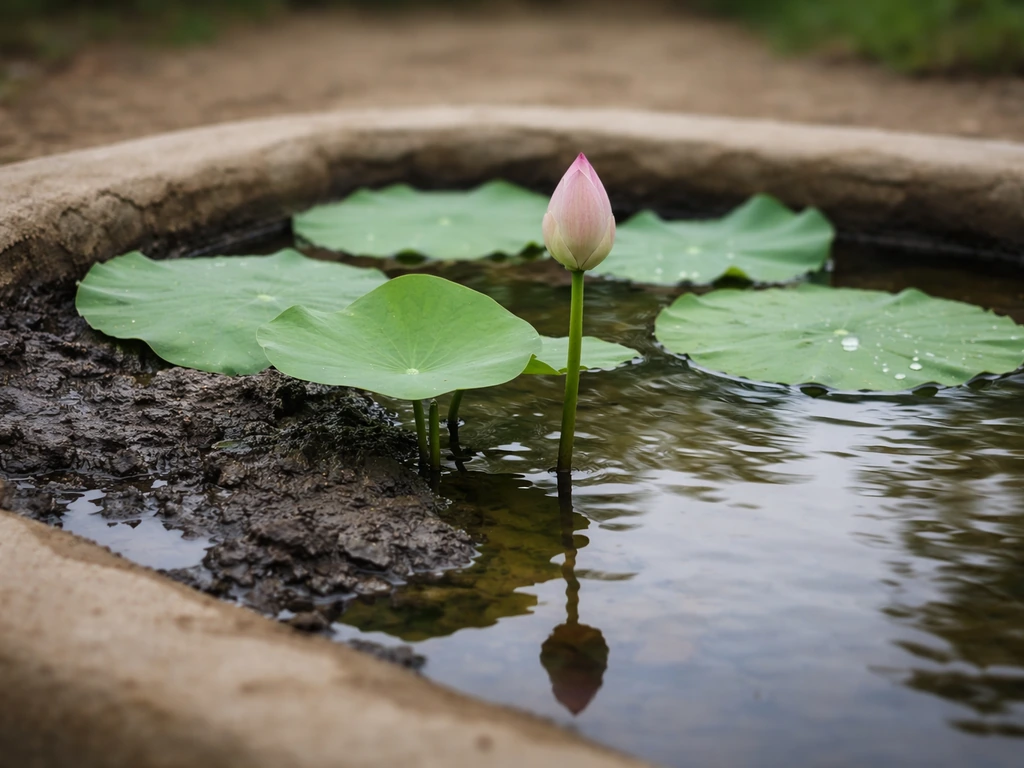
Does Lotus Grow on Land? How to Grow Lotus in Mud or Containers
Can lotus grow on land? Get step-by-step container or mud-bed setup, water levels, care, and indoor options.
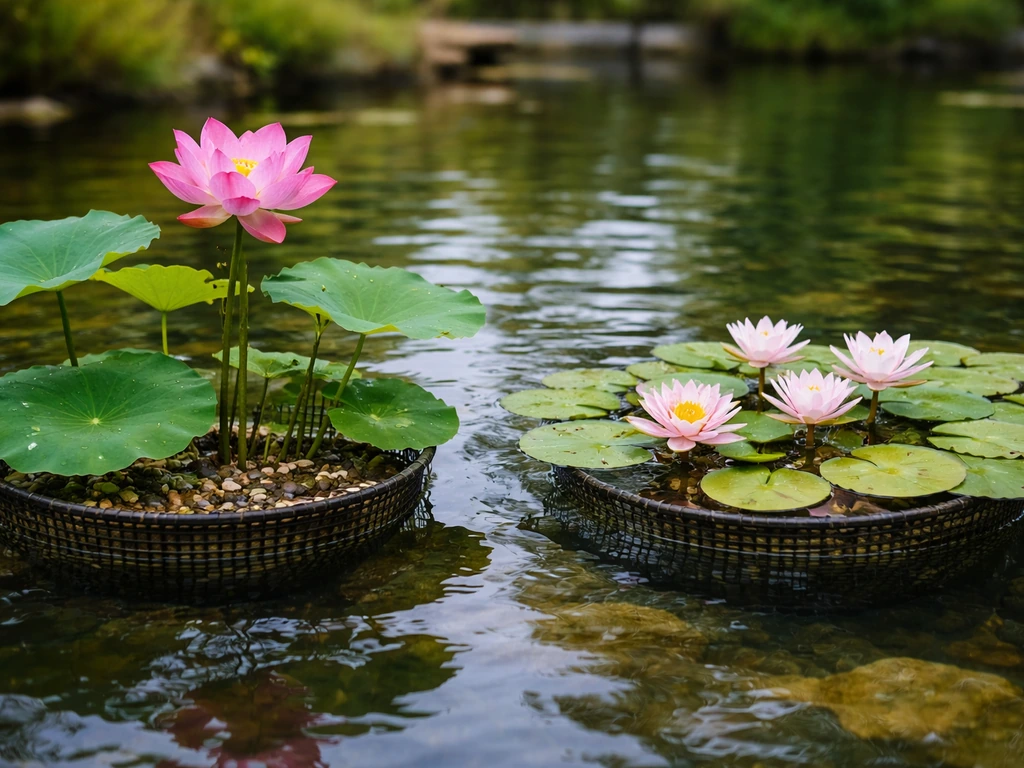
Can Water Lily and Lotus Grow Together? How to Plant Both
Yes, water lilies and lotus can grow together with proper light, depth, spacing, and separate pots to prevent crowding.
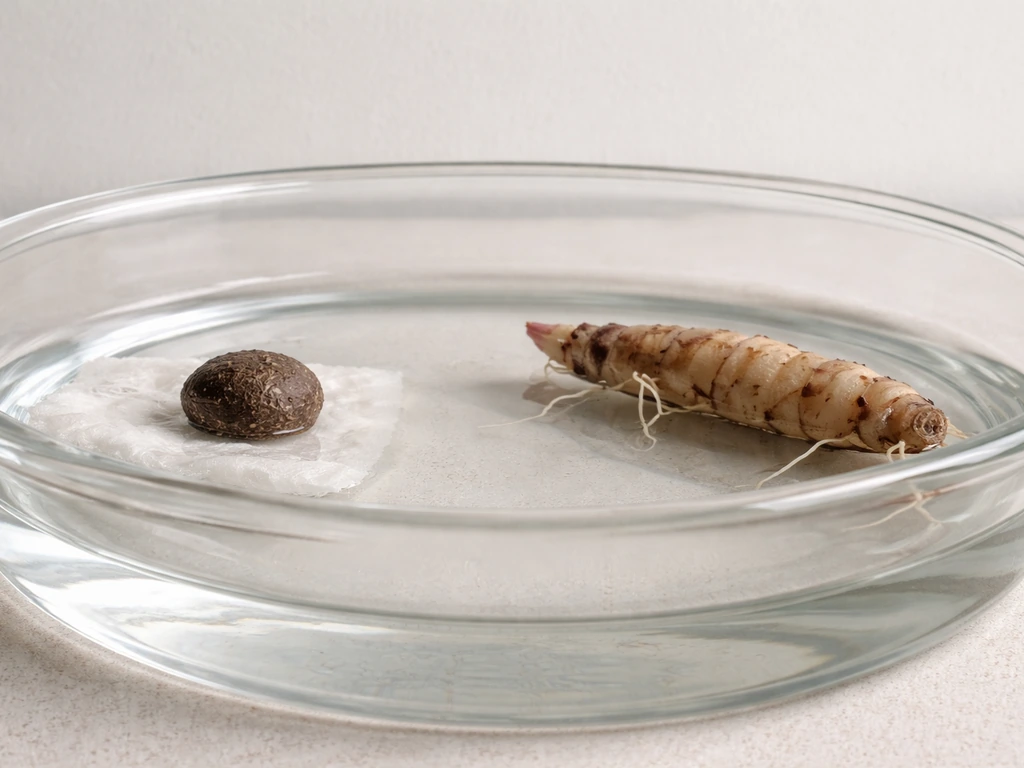
Can You Grow Lotus Flowers From a Bloom or Seeds?
Learn if lotus can be grown from a bloom or seeds, plus step-by-step setup for sprouting, water depth, light, and troubl