
Lotus does not grow on dry land. It needs to be rooted in mud or wet substrate with standing water above the roots. Yes, but only if the water stays standing over the roots and the plants are rooted in mud or wet substrate. But here is the part most gardeners miss: lotus does not need a full pond. You can grow it in a container, a half-barrel, or a shallow shoreline bed as long as the roots stay wet, the crown sits above the waterline, and the water is warm enough to fuel growth. That setup counts as "near-land" culture, and it works very well once you get the mud depth and water level right.
Does Lotus Grow on Land? How to Grow Lotus in Mud or Containers
Marcus Hendricks
11 May 2026
What people mean by "grows on land" (and where the confusion comes from)
When someone asks if lotus grows on land, they usually mean one of two things: can it survive without a pond, or can it grow in a regular garden bed like a perennial? When someone asks if lotus grows on land, they usually mean one of two things: can it survive without a pond, or can it grow in a regular garden bed like a perennial do lotus flowers grow in mud. The answer to the first question is yes with the right setup. The answer to the second is no, not really.
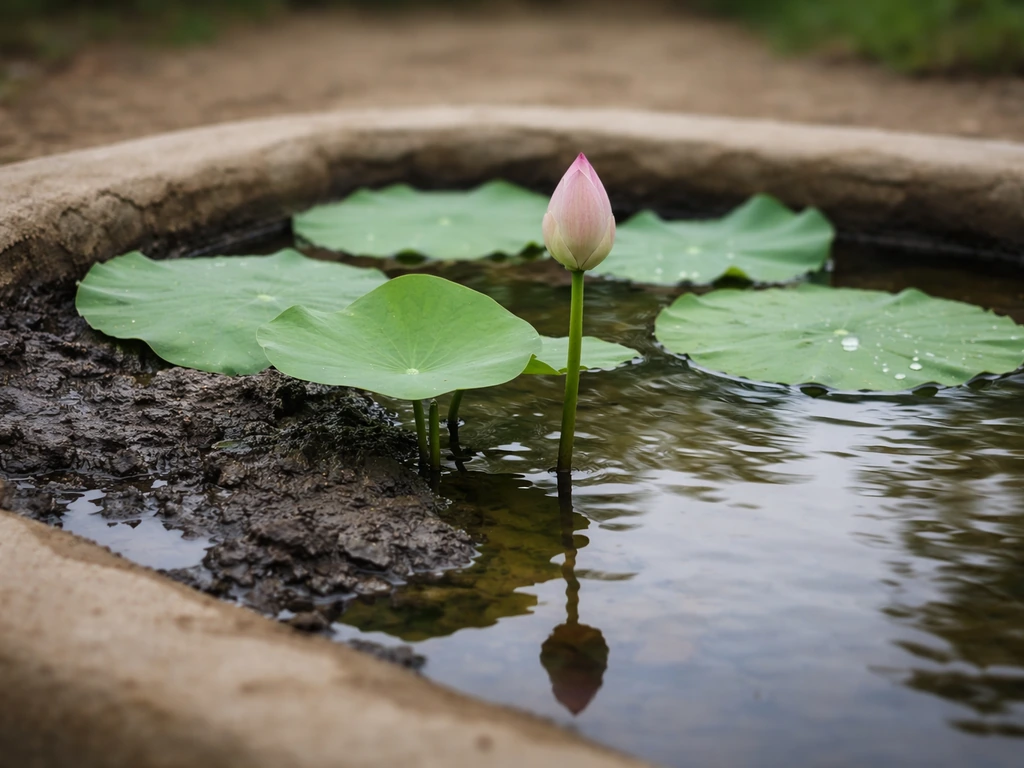
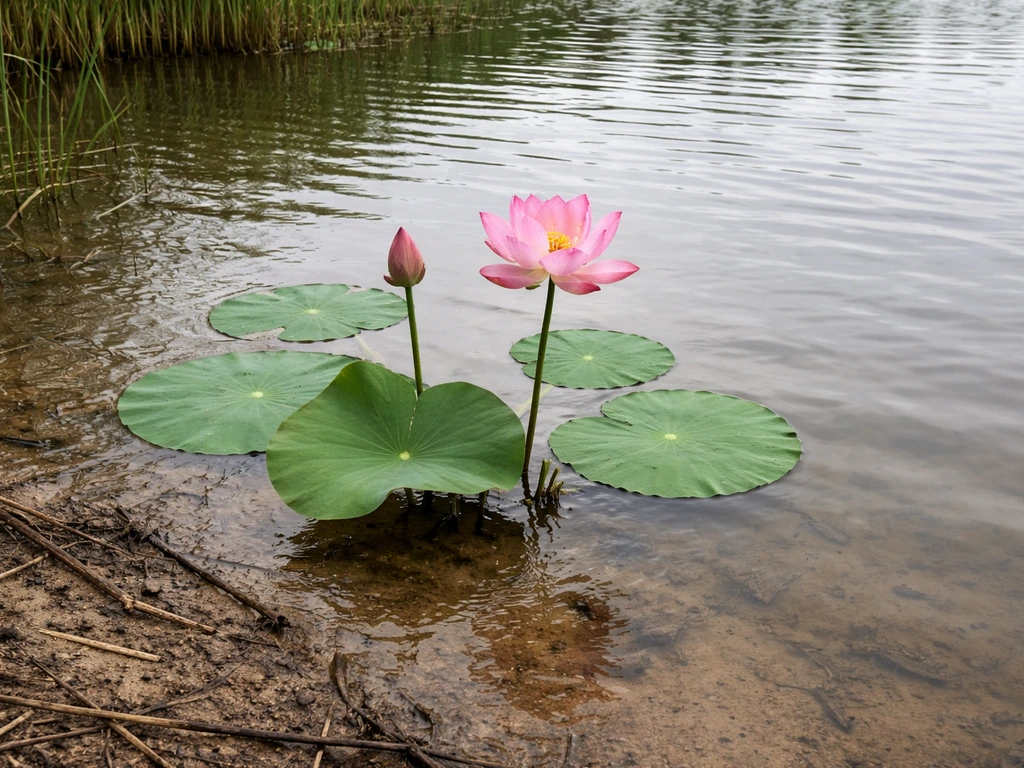
Nelumbo nucifera is classified as an obligate aquatic by the USGS, meaning it needs an aquatic environment to complete its life cycle. It is also described as an emergent aquatic, which is the key detail here. "Emergent" means the roots and rhizomes are submerged in mud or mucky substrate while the stems, leaves, and flowers grow above the water surface. The leaves can either float flat on the water or rise on stalks up to six feet in the air on rigid petioles. The flowers are held even higher, sometimes on peduncles reaching six feet above the water, opening in the morning and closing at night.
So the plant is not floating freely like duckweed, and it is not rooted in garden soil like a daylily. It sits somewhere in between: horizontal rhizomes buried in submerged mud, with everything above the waterline being aerial. That emergent behavior is exactly what makes container culture on a patio or at a pond's edge possible. The roots never leave the water. Only the plant's face does.
The best near-land setup: containers, mud depth, and water management
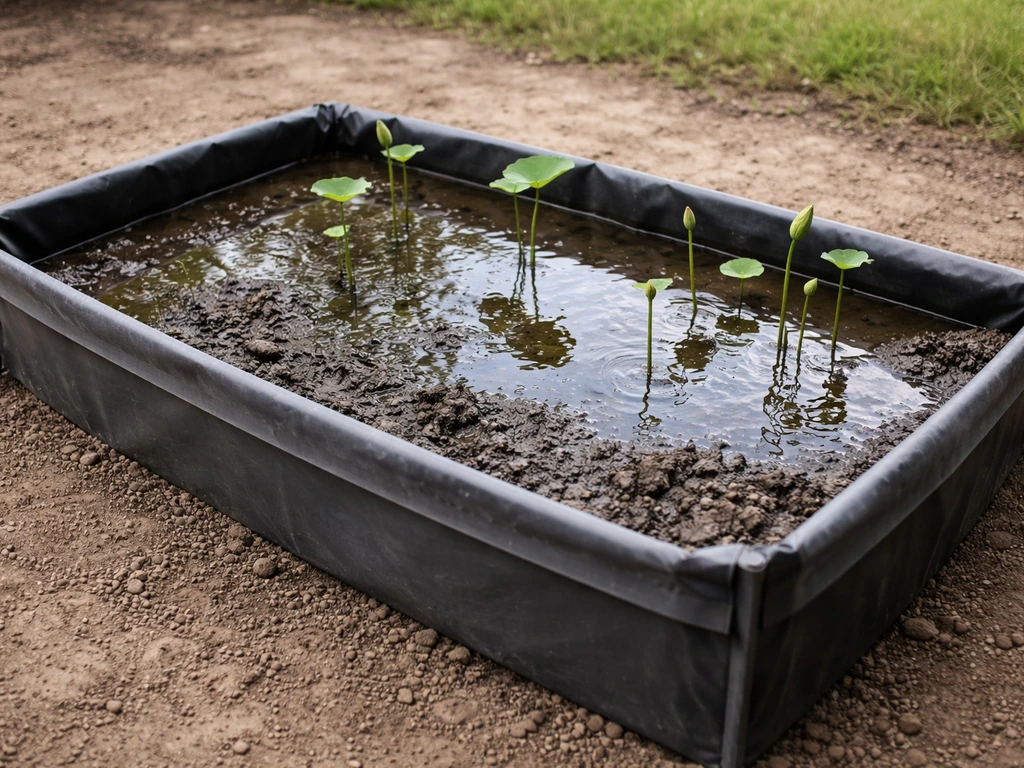
Container culture is actually the recommended approach for home gardeners, not just a workaround. UF/IFAS explicitly suggests growing lotus in containers in the water garden because this plant is aggressive and will spread and escape if left uncontrolled in a natural pond or open shoreline bed. A container keeps the rhizomes in check and lets you manage water depth and feeding much more precisely.
Choosing and setting up your container
Use a wide, shallow container without drainage holes. Lotus rhizomes spread horizontally, so width matters more than depth. A large plastic tub, half-barrel lined with a pond liner, or a purpose-made aquatic planter all work. Aim for a container at least 18 to 24 inches across for a standard variety, or larger if you are growing a full-sized cultivar. Dwarf varieties can manage in a pot as small as 12 inches wide.
Fill the container with a dense, heavy growing medium (more on the exact mix below), then place the whole container in a sunny spot and fill it with water to the correct depth. Fine Gardening also recommends using a sealed, waterproof container and adding regular garden loam in the bottom as the growing medium layer, with about 4, 5 inches being sufficient for that container setup Fill the container with a dense, heavy growing medium. If you are using a decorative patio setup rather than a pond, you can sit the container inside a larger tub of water to maintain the water level around it, or simply keep the container filled directly.
Mud depth and water level
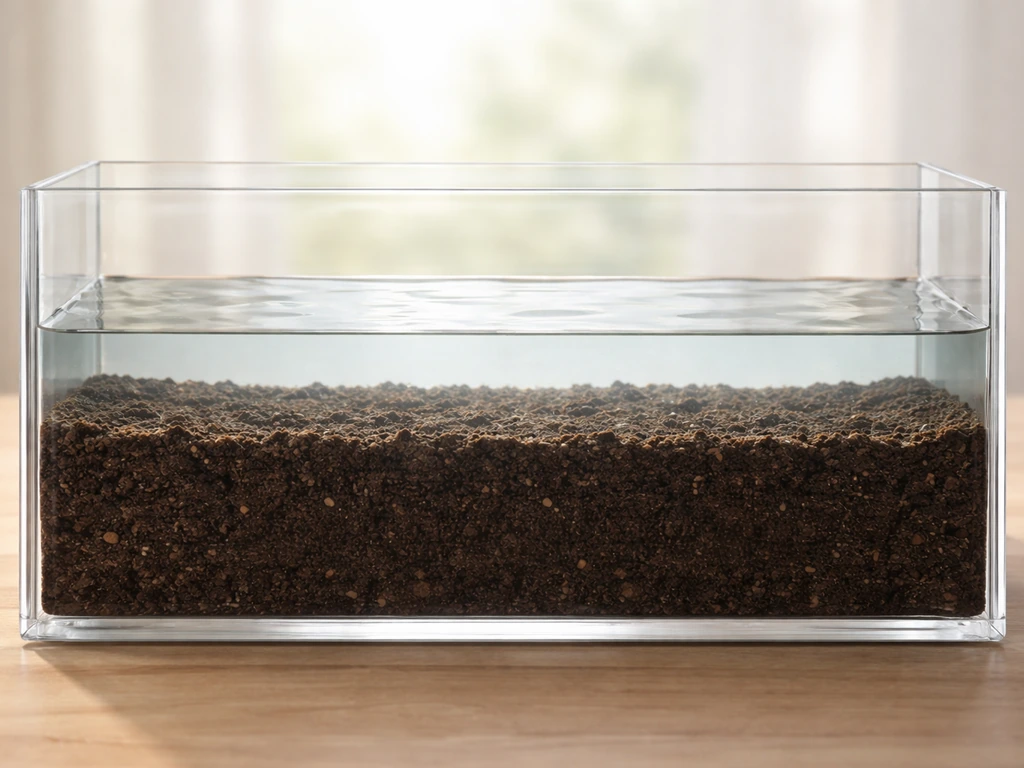
For the soil layer itself, aim for about 6 to 8 inches of growing medium in the bottom of your container. The water above the soil is what you need to manage carefully. For newly planted tubers or germinating seeds, keep the water level shallow at first, just a few inches above the soil surface. Shallow water heats up faster, and warm water is critical for early root establishment and flowering. The USFWS notes that shallow water conditions can actually promote better growth and flowering in lotus because the water column warms more quickly in sunlight.
Once the plant is established and sending up leaves, you can gradually raise the water level to 6 to 12 inches above the soil, and larger taxa can be moved to placements where water depth reaches 2 to 3 feet. For a near-land patio or container setup, staying in the 6 to 12 inch range over the soil is perfectly fine for most home garden cultivars.
Drainage strategy for near-land beds
If you are trying a shoreline bed rather than a freestanding container, the goal is to create a permanently saturated zone with no drainage. You can do this by lining a shallow depression in the ground with pond liner, filling it with heavy clay-rich soil or aquatic mix, and managing the water level manually or by connecting it to a pond or water feature with a slow fill. The key is that the roots must never dry out. Even brief drying of the substrate during the growing season can kill the rhizomes.
Light, temperature, and daylength
Lotus is not a plant that tolerates shade. Full sun is the baseline, meaning at least six hours of direct sunlight per day, and more is better. UF/IFAS is explicit about this, and you will get far more flowers with eight or more hours of sun. Some sources list it as tolerating part sun, but in practice, shaded lotus produces mostly foliage and rarely blooms well. If your container spot gets shaded by a fence or tree in the afternoon, consider moving it or rethinking the location before you invest in tubers.
Temperature is just as critical. Lotus germinates at temperatures above 13 degrees Celsius (55 degrees Fahrenheit), but active growth and flowering really kick in once air and water temperatures are consistently warm. For outdoor container setups, do not plant until your water temperature is staying reliably above 60 to 65 degrees Fahrenheit. In most of the US, that means late spring, roughly May to June depending on your zone.
For winter hardiness, Nelumbo nucifera is rated for USDA zones 5 through 10 by UF/IFAS, and the Missouri Botanical Garden extends that to zone 4, provided the roots do not freeze solid. The key is that the rhizomes must stay below the ice line in winter. In cold climates, move containers to a frost-free garage or basement, or sink them deep enough in the pond that the water does not freeze all the way to the roots. In zones 8 through 10, you can often leave containers outdoors year-round.
Water and soil: getting the chemistry right
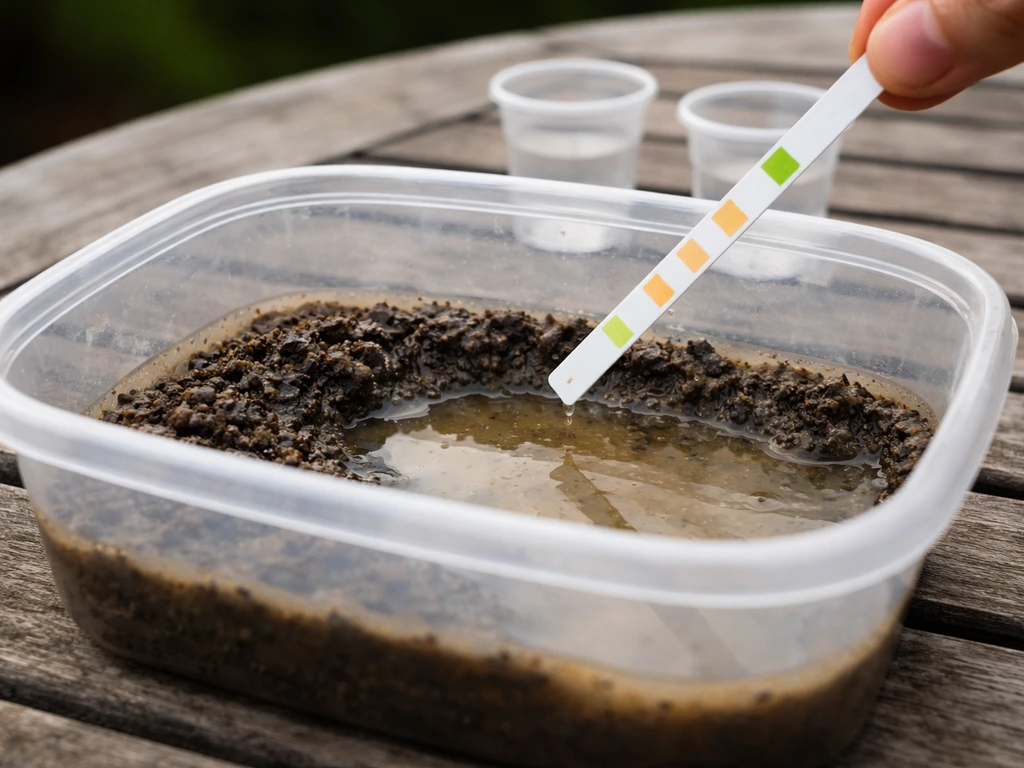
Lotus prefers organically rich, heavy substrate, essentially the kind of mucky, fertile loam you would find at the bottom of a natural pond. A mix of heavy clay garden soil and well-aged compost works well for containers. Avoid standard potting mix, which is too light and floaty, and avoid pure sand, which holds no nutrients. The USGS confirms lotus does best in rich, fertile soils, sometimes described as muck, similar to the substrate you would find in a productive shallow wetland.
For pH, aim for slightly acidic to neutral conditions. The USGS reports lotus tolerates pH around 5.7 to 6.8, and a practical growing range of about 5.5 to 7.0 is widely cited. If your tap water is very alkaline, letting it sit for 24 hours before adding it to the container can help, and occasional pH checks are worth doing if your plant seems to stall.
The water itself does not need to be oxygenated the way a fish pond does. Lotus tolerates still, calm water and actually prefers it. Running water or strong currents can damage the emergent stems and interfere with rooting. Keep the water topped off but calm.
Planting step by step: seed vs tuber
Starting from tubers (the easier route)
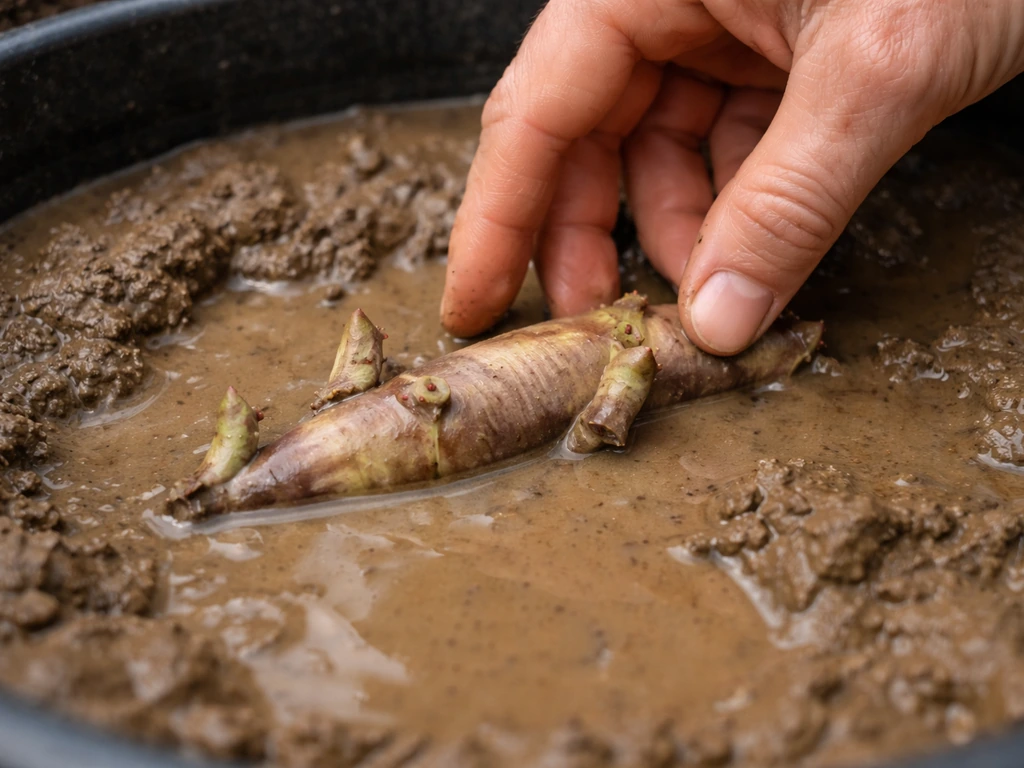
- Fill your container with 6 to 8 inches of heavy, clay-rich soil or aquatic planting mix. Do not add drainage material at the bottom.
- Lay the tuber (which looks like a small banana or curved sausage) horizontally near the soil surface. The growing tip should point slightly upward and toward the center of the container. Do not bury the tip.
- Cover the tuber body lightly with soil, leaving the growing tip just at or barely below the surface.
- Add water slowly and gently until you have 2 to 4 inches of water above the soil surface. Keep this shallow until the first leaves appear.
- Place the container in full sun. Warm water will accelerate rooting significantly.
- Once leaves are rising on stalks above the water, gradually raise the water level to 6 to 12 inches above the soil.
- Once the plant fills the container (usually every 1 to 2 seasons), divide the rhizomes in early spring before new growth starts.
Starting from seed (slower but satisfying)
Lotus seeds have an extremely hard coat that prevents water absorption, so scarification is essential. You can nick or file the seed coat carefully, or soak seeds in diluted sulfuric acid for about 3 hours followed by thorough rinsing, which is a method used in research settings.
For home gardeners, the simpler approach is to use sandpaper or a nail file to scratch through the dark outer coat until you see a lighter layer underneath, then soak the seeds in warm water kept between 18 and 22 degrees Celsius (64 to 72 Fahrenheit). Change the water daily. A small sprout may emerge around day 10, with germination possible within a few days and up to about 28 days.
Once seedlings have a couple of small floating leaves, transplant them carefully into your container setup.
Fertilizing and ongoing maintenance
When preparing your container soil, you can incorporate a balanced fertilizer at roughly one quarter cup of 10-10-10 per gallon of soil to give the plant a nutritional foundation. During the growing season, use aquatic fertilizer tablets pushed into the soil near the rhizomes, not loose granules that dissolve into the water. Fertilizer tablets are designed for exactly this kind of submerged soil application and will not cloud or pollute the water the way broadcast fertilizers do.
Watch for algae in warm weather, especially in shallow containers sitting in full sun. Algae will not kill the lotus, but heavy algae can compete for nutrients and make the setup look messy. You can reduce algae by adding a few small snails or doing occasional water changes. Avoid fish in small containers, as they can disturb the sediment and damage the rhizomes.
On the pest side, rhizome blackening disease caused by nematodes (specifically Hirschmanniella diversa) is a documented problem in lotus. If your tubers develop dark, mushy patches and growth stalls, suspect nematode damage or root rot from poor substrate conditions. Starting with clean tubers from reputable suppliers and using fresh substrate each time you repot is the best prevention.
Is lotus right for your region, and what to grow instead if not
Lotus is surprisingly cold-tolerant for an aquatic plant, surviving to zone 4 if the roots are protected from freezing. But it is not a plant for truly cold climates unless you can bring containers indoors for winter storage, and it is definitely not a plant for arid or desert environments. If you are in a dry climate without the ability to maintain standing water in a container, lotus simply will not work. That is why a lotus plant cannot grow in the desert: it needs standing water so its roots stay submerged a lotus plant cannot grow in the desert why. It is not just about watering frequency: the roots need to stay submerged continuously.
| Plant | Water Needs | Hardiness Zone | Best for Near-Land Container? | Key Difference from Lotus |
|---|---|---|---|---|
| Lotus (Nelumbo nucifera) | Submerged roots, standing water always required | Zone 4–10 (roots protected) | Yes, ideal in a sealed container | Needs continuous standing water above roots |
| Water Lily (Nymphaea) | Fully aquatic, floating leaves | Varies by species (Zone 3–11) | Yes, in a deeper container (12–18 in water) | Leaves float; needs more water depth than lotus |
| Canna (aquatic varieties) | Moist to boggy soil, tolerates standing water | Zone 7–10 (or lifted) | Yes, in wet or boggy bed | Can tolerate more drainage variation than lotus |
| Pickerelweed (Pontederia) | Emergent marginal, shallow water | Zone 3–10 | Yes, in shallow container | More cold-hardy, smaller scale than lotus |
| Peace Lily (Spathiphyllum) | Moist potting soil, no standing water | Tropical, indoor only in most zones | No aquatic setup needed | Terrestrial, not aquatic; no standing water |
If your climate supports lotus but you cannot maintain a pond or large container, water lilies are the closest alternative with a similar emergent aesthetic, though they need more water depth and their leaves stay flat rather than rising above the surface. If you are in a zone colder than zone 4 or a region where outdoor water containers freeze solid every winter, you are probably better served by a bog garden plant like pickerelweed or an aquatic canna that can be lifted and stored more easily.
It is also worth knowing that lotus and water lilies can be grown together in the same pond or large container, though lotus will eventually dominate if not contained. If you also want to mix other pond plants, you can lilies and irises grow together by choosing compatible water depths and keeping them spaced to avoid crowding. Water lilies can also be paired in the same container or pond, as long as both plants have enough light and you manage water depth so neither one gets stressed. And while the question of whether lotus grows in mud or swamps is closely related to this one, the practical takeaway is the same regardless of setting: what lotus needs is saturated substrate and standing shallow water, whether that is in a natural swamp, a pond, or a tub on your patio.
If you are in zones 5 through 9 with at least six hours of sun and the willingness to keep a container filled with water through the growing season, lotus is absolutely within reach without a pond. Reddit mini-pond gardeners share practical tips like slowly filling containers with water and using containers or bowls for balcony setups, while also avoiding fish in such small containers to protect the rhizomes avoid fish in small containers/bowls.
Get a wide, heavy container, fill it with rich clay-based soil, lay in a tuber, add a few inches of water, and put it in the sunniest spot you have. If you follow these near-land container steps, you can grow lotus flowers even without a full pond. You will be surprised how quickly this plant takes off once the water warms up.
FAQ
If I keep the pot mostly full but it sometimes dries out, will lotus still grow?
Not the typical way. Lotus can handle a patio container or a lined shoreline bed, but its rhizomes must stay submerged continuously during the growing season. If the container water drops low enough that the mud dries around the crown, the plant can stall or die even if it looks fine at first.
Can I leave the container water completely still all summer, or does it need any water changes?
It will be weakened. Lotus can tolerate still, calm water, but if you truly stagnate it for long periods, algae and nutrient imbalance rise and leaves can become ragged. Use calm water, keep the water level topped off, and do small water top-ups or partial changes to manage algae, especially in hot sun.
I have a regular planter with drainage. Can I grow lotus in it?
Those setups are risky because they drain. If you use a container with drainage holes, water will fall, the soil layer will dry, and the rhizomes can die. If you only have a pot, use it as an inner pot sitting inside a larger watertight tub, and keep the rhizome zone submerged.
Can lotus work in a bog garden without any pond liner or active water source?
No, not as a standalone plan. Even with the right soil, lotus is an aquatic plant, it needs submerged roots and warm water to bloom. A bog garden can work only if you maintain a permanently saturated, no-drying zone and the roots never lose contact with wet substrate.
What water depth should I use right after planting, and does it stay the same?
Start with shallow water above the soil (a few inches) and raise the level gradually after leaves emerge. Jumping to deep water too early slows warming of the root zone and delays establishment, especially right after planting tubers.
My lotus has leaves but no flowers. How can I tell if it is light, temperature, or water-depth related?
A faster way to diagnose is to look at leaf development versus flower bud formation. Too little sun usually produces tall, greener foliage with few or no blooms. Cold water or late planting often causes slow growth, and you may see delayed leaf emergence before you see any budding.
Can I just add general pond fertilizer or liquid feed to the water to help my lotus bloom?
Avoid sprinkling fertilizer into the water. Lotus benefits from nutrients, but using loose granules can cloud the water and can fuel algae instead of feeding the rhizomes. Push aquatic fertilizer tablets into the soil near the rhizomes, and do it sparingly during active growth.
What is the best way to overwinter lotus containers if my area gets hard freezes?
Yes, and it is a common reason containers fail. If you do not protect against freezing, the rhizomes can freeze solid even when temperatures briefly dip. For winter storage, move containers indoors to a frost-free space, or keep them submerged deeply enough in a pond so the water does not freeze through to the root zone.
Does lotus act like a normal perennial once it is established?
They differ in what they can handle about substrate and water level. Lotus needs an emergent lifestyle, rhizomes buried in submerged mud and leaves rising above the water, so it is not the same as truly floating plants. If the plant is in a system where the roots are not submerged in muck, lotus will not behave like a perennial garden plant.
Can I grow lotus with other pond plants in the same container without it taking over?
Sometimes, but be cautious. Lotus will eventually dominate most shared containers or beds because it spreads via rhizomes. If you mix it with lilies or other pond plants, keep spacing and plan to re-pot or contain lotus when you see roots expanding beyond the intended area.
Next Articles
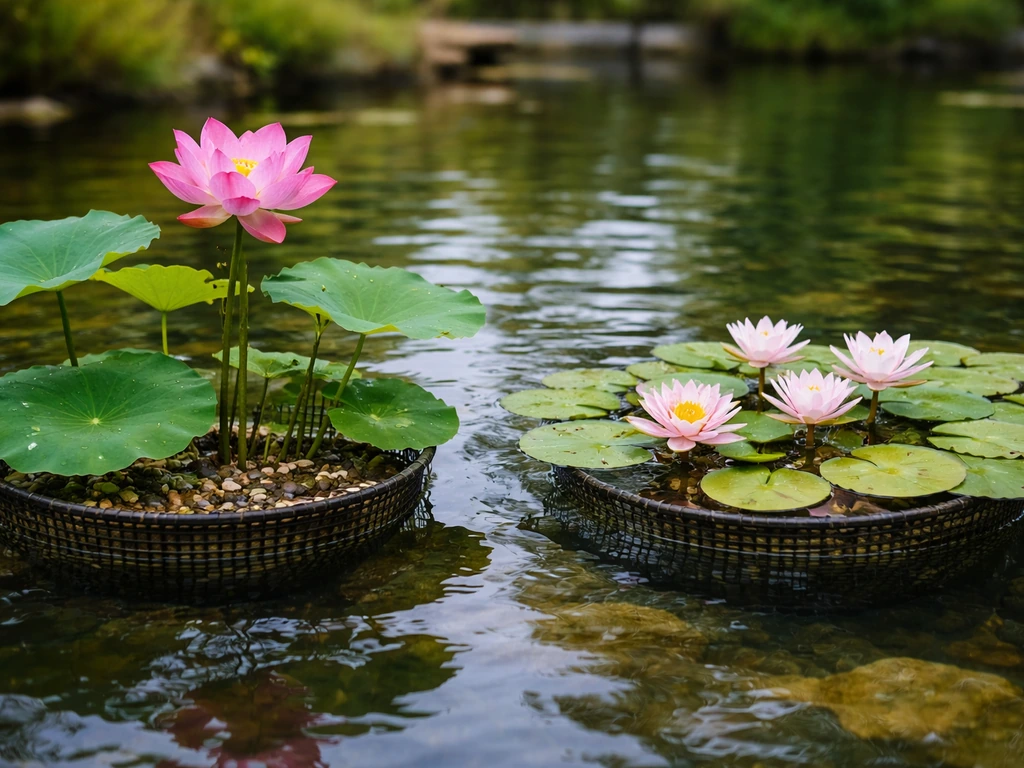
Can Water Lily and Lotus Grow Together? How to Plant Both
Yes, water lilies and lotus can grow together with proper light, depth, spacing, and separate pots to prevent crowding.
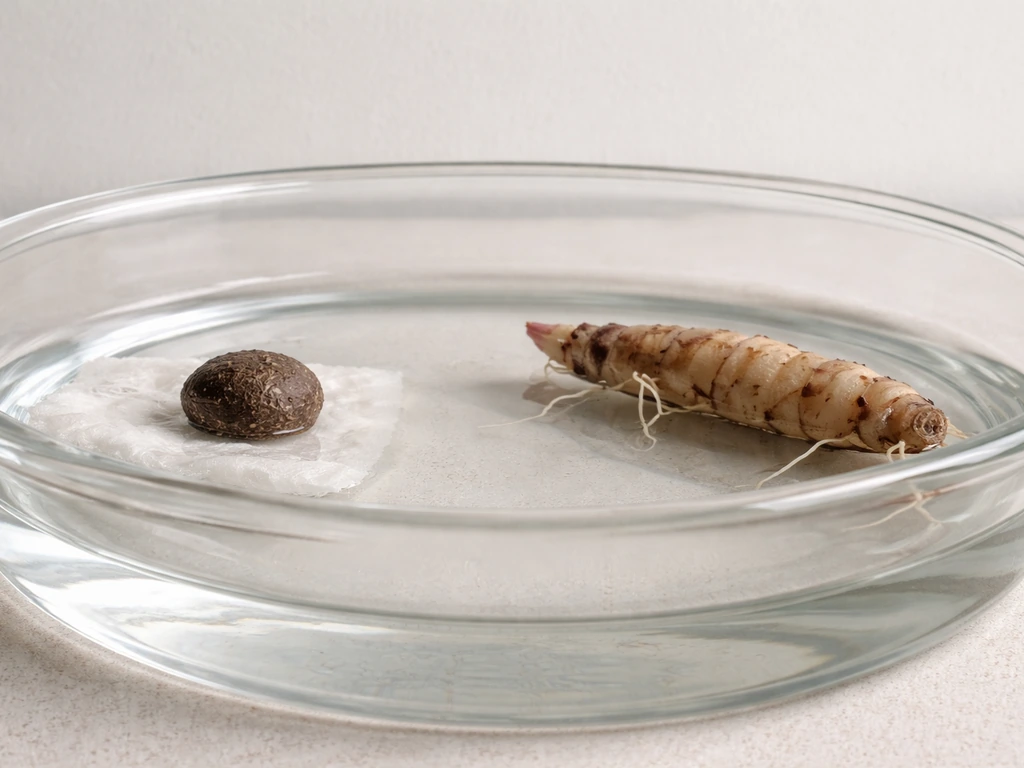
Can You Grow Lotus Flowers From a Bloom or Seeds?
Learn if lotus can be grown from a bloom or seeds, plus step-by-step setup for sprouting, water depth, light, and troubl
Do Lotus Flowers Grow in Swamps? Swamp Planting Guide
Learn if lotus grows in swamps, how to plant for depth, sun, warm temps, and fix rot, weak blooms, and cold.