
Yes, water lilies can survive and even grow for a short time without soil, but they won't thrive long-term without some kind of anchoring medium. The short answer is that water lilies are aquatic plants, not truly hydroponic ones. Their roots need something to grip and stay submerged. Without any medium at all, the rhizome floats, the roots have nothing to anchor into, and the plant slowly declines. That said, "soil" doesn't have to mean backyard dirt. You have real options, and some work better than traditional soil in certain setups.
Can Water Lily Grow Without Soil? Bowl Step-By-Step Guide
Marcus Hendricks
17 Apr 2026
What water lilies actually need from the ground
Water lilies need three things from whatever medium they're planted in: physical anchorage so the plant doesn't float, nutrient access so the rhizome can feed and spread, and enough density to stay put underwater. This is why a lot of growers ask whether water lilies grow in mud as an alternative to potting soil. The answer is yes, and mud actually works well because it's heavy and nutrient-rich. But if you're growing in a bowl or container indoors, mud isn't exactly practical. That's where soil-free setups start to make sense.
The reason soil is traditionally recommended comes down to weight and nutrients, not some unique biological requirement that only garden soil can meet. North Carolina Extension specifically links container success to preventing floating, recommending heavier clay soil for that reason alone. Moore Water Gardens makes the same point: lighter materials tend to float, and once your planting medium floats, the plant loses its anchor entirely. So if you go soil-free, you need to solve both the weight problem and the nutrient problem another way.
When soil helps and when you can skip it
Soil is most helpful when you're planting in an outdoor pond or large container where you want a self-sustaining setup with fewer inputs. A rich, clay-based topsoil (mixed with river sand if needed) gives the rhizome everything it needs for months with minimal intervention. It also acts as a slow-release nutrient bank, which matters when you're growing in a pond ecosystem rather than a managed container.
Soil becomes unnecessary, or at least optional, when you're working with a small indoor container, a decorative bowl setup, or any situation where you plan to fertilize consistently with aquatic tablets and you're prioritizing cleanliness over a set-it-and-forget-it approach. SKH's planting guide explicitly lists soilless potting media like Profile (a calcined clay product) as a usable growing medium alongside traditional aquatic potting mix. So going soil-free is a legitimate method, not a workaround.
If you're curious how this compares to other lily types and whether water lilies grow on land at all, the short version is: they don't. Unlike terrestrial lilies, water lilies are fully aquatic and always need to be submerged or at least have their root zone underwater, whether in soil or not.
How to grow water lilies without soil: materials and basic setup
For a soil-free container setup, you'll replace soil with a combination of a heavy inert anchoring medium and regular aquatic fertilizer tablets. For a soil-free container setup, use heavy, kiln-fired clay-based media, because aquatic soil is typically made from kiln-fired clay particles. Here's what you need:
- A container without drainage holes (a solid-sided pot, planting basket, or decorative bowl all work)
- Pea gravel or coarse river sand as your anchoring medium (or a soilless aquatic media like Profile/calcined clay)
- Aquatic fertilizer tablets (pond tabs or similar slow-release tablet formulas)
- A healthy water lily rhizome with visible growth tips
- Dechlorinated or aged tap water
The container size matters more than people expect. A container that's too small won't give the rhizome room to spread, and the plant will stall. Aim for at least a 10- to 14-inch diameter container for a dwarf or tropical variety. Larger hardy varieties need more room. One question that comes up a lot is whether water lilies can grow in gravel as a standalone medium. Gravel alone works as an anchor, but it holds zero nutrients, so your fertilizer schedule becomes non-negotiable. After the rhizome is planted, covering the soil with blank" rel="noopener noreferrer">pea gravel (or a few large rocks) helps keep the soil in the pot and around the lily.
It's also worth noting upfront what doesn't work: loose, light potting mixes, perlite, and anything that floats. I've watched beginners dump standard houseplant potting mix into a container and then wonder why the whole thing bubbles to the surface the moment they add water. Use only heavy, inert materials if you're going soil-free.
Growing water lilies in a bowl without soil: step by step
- Choose a solid, deep bowl or container with no drainage holes. A minimum depth of 8 to 10 inches gives you enough water column for the rhizome and early leaf growth. Wider is better than deeper for most compact varieties.
- Add 3 to 4 inches of pea gravel, coarse river sand, or a soilless aquatic medium to the bottom of the bowl. This is your anchoring layer. Pack it gently so it's dense enough to hold the rhizome in place.
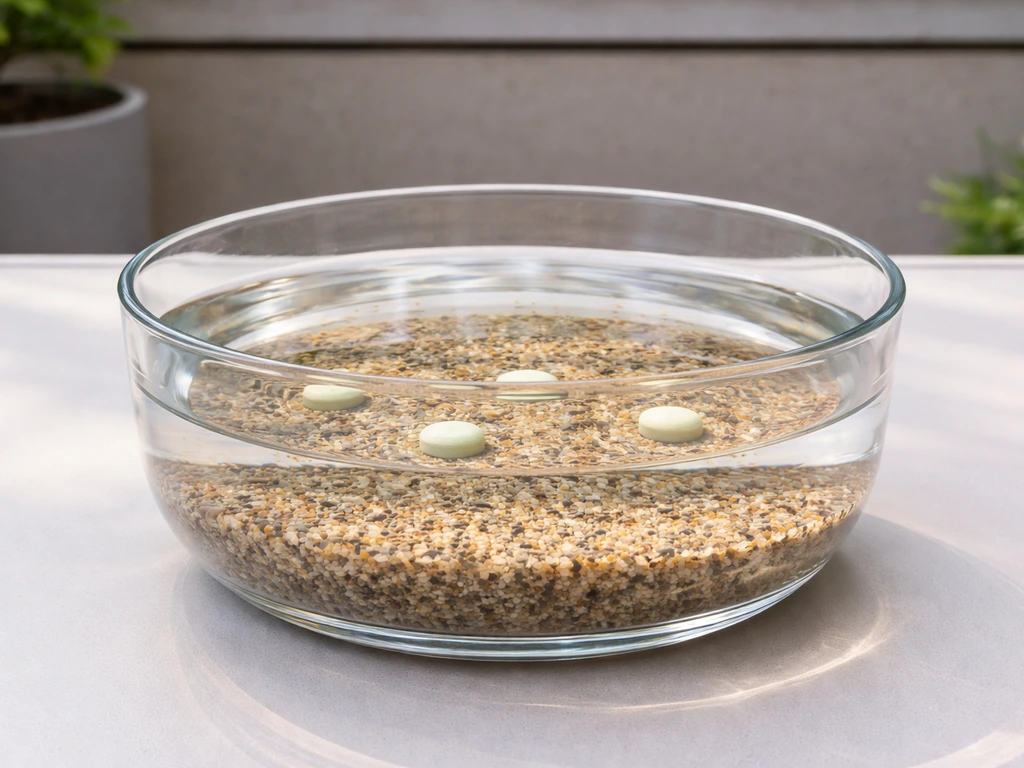
- Push one or two aquatic fertilizer tablets into the gravel layer, about 3 inches from where the crown of the rhizome will sit. Chalily and similar tablet fertilizers are designed for exactly this use: pressed directly into the root zone, not dissolved in open water.
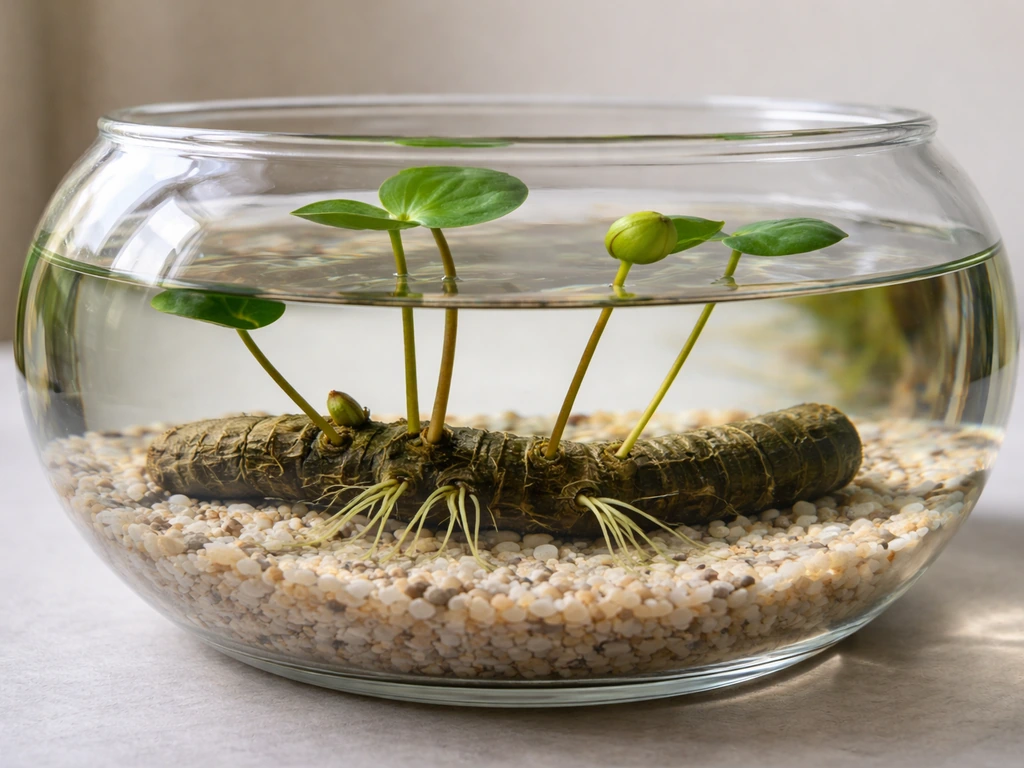
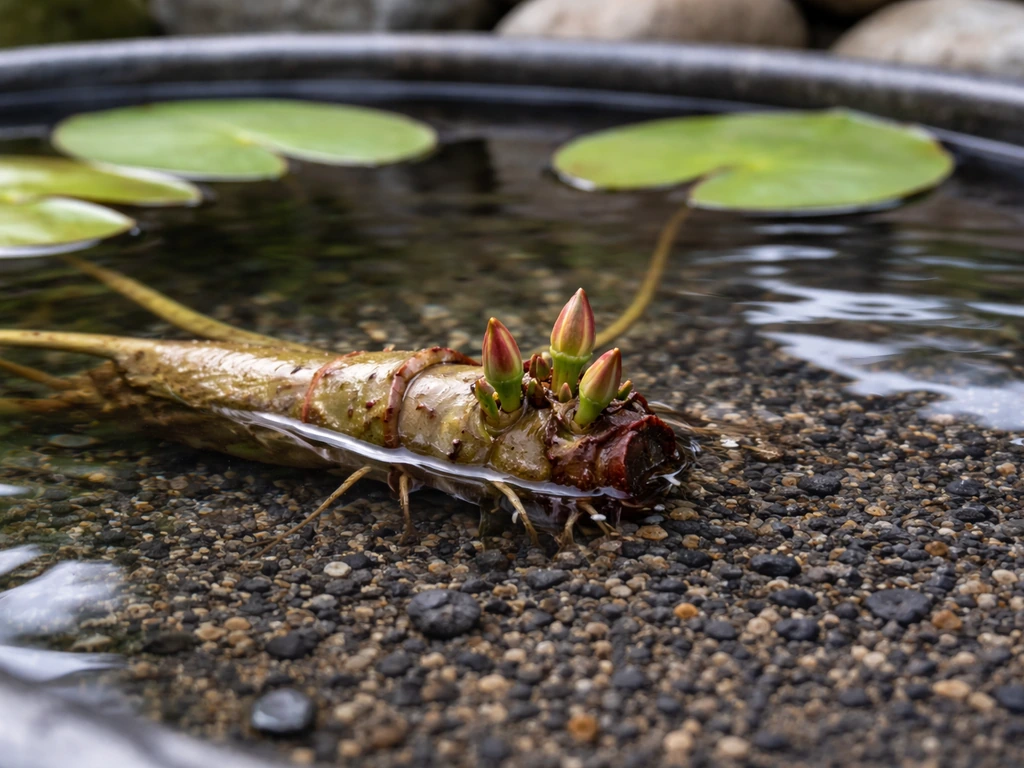
- Position the rhizome horizontally on top of the gravel layer with the growing tips pointing upward and outward toward the edge of the bowl. Don't bury the crown, just the roots.
- Add another 1 to 2 inches of pea gravel or sand on top to hold the rhizome in place. UF/IFAS extension guidance specifically recommends this top layer of sand or gravel to keep the planted medium from shifting.
- Slowly fill the bowl with dechlorinated water until the top of the gravel is covered by at least 2 to 4 inches. For newly planted rhizomes, start shallower (2 inches over the crown) and raise the water level as the plant grows and pads reach the surface.
- Place the bowl in a spot with at least 6 hours of direct sunlight per day. Move it outdoors in warm weather or use a grow light for indoor setups (more on this below).
- Feed monthly during the growing season by pushing a fresh tablet into the gravel near the root zone, replacing the one from the previous month.
That's the core setup. Once pads start reaching the surface and you see new growth, you can gradually raise the water level. Florida Aquatic Nurseries recommends a final depth of around 12 inches for established plants in containers, measured from the water surface to the top of the pot or planting medium. You don't need to hit that depth right away with a new plant, but keep it in mind as a goal once the lily is established.
Water conditions that do the work soil normally would
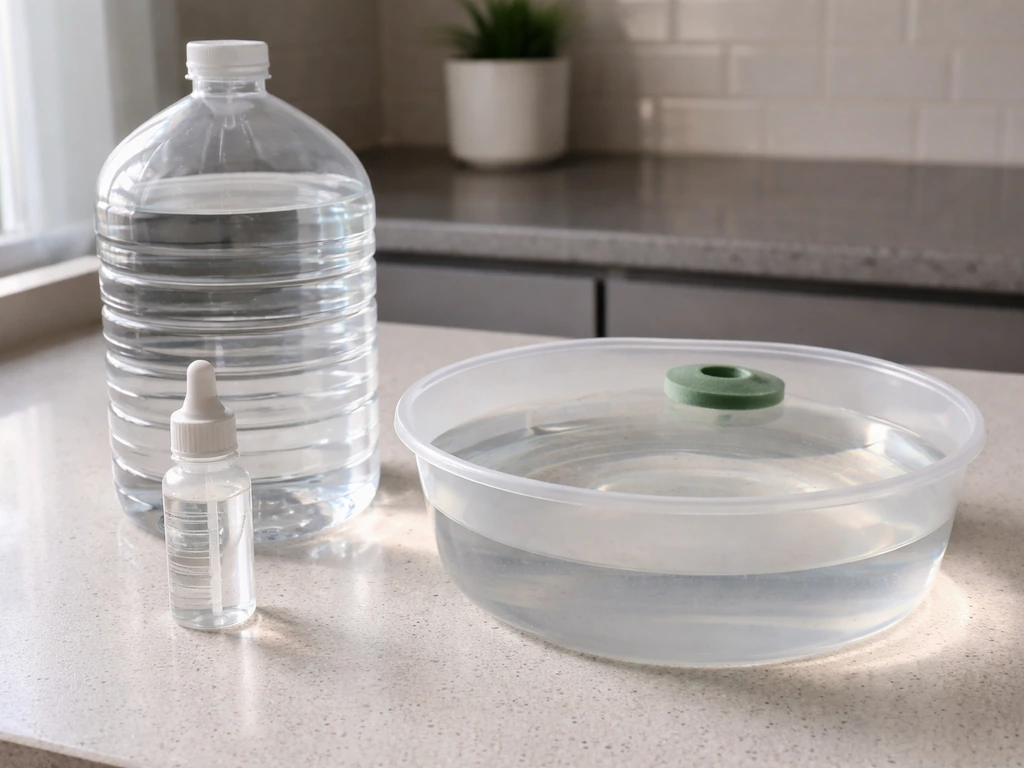
In a soil-free setup, the water itself plus your fertilizer becomes the main nutrient delivery system. That means water quality matters more than it does in a traditional soil-planted pond. Here's what to manage:
Use dechlorinated water. Tap water is fine once it's sat out for 24 hours or been treated with a dechlorinator. Chlorine and chloramine don't just affect fish, they stress aquatic plant roots too. Rainwater is ideal if you can collect it.
On nutrients: aquatic fertilizer tablets are the standard approach for soil-free container water lilies. Push them 3 inches from the crown into the gravel, not into open water. Dissolving fertilizer into the water column doesn't feed the plant efficiently and can cause algae problems. Most growers follow a monthly schedule: one tablet per gallon of medium in the container during the growing season, with the frequency increasing as summer warms up. One common schedule runs one tablet in April, one in May, two in June and July, then backs off in late summer. Adjust based on how vigorously your plant is growing.
On water depth: too shallow and the plant overheats and dries out. Too deep and a young plant can't push pads to the surface fast enough. Start at 2 to 4 inches of water over the crown, then increase to 6 to 12 inches once the plant is established and actively growing. The 12-inch mark is a good final target for most compact and dwarf varieties grown in containers.
One thing many people overlook is that water lilies don't grow in desert sand not just because of soil type, but because of water availability and extreme temperature swings. Even in a container, replicating stable, warm, still-water conditions is what makes the difference. Change the water partially every few weeks if you notice it going murky or green from algae, especially in a small indoor bowl.
Light, temperature, and placement for indoor vs outdoor growing
Water lilies are sun-hungry plants. The standard recommendation is 6 hours of direct sunlight at minimum, and most varieties perform better with 8 hours. Outdoors, this is straightforward: find a spot that gets unobstructed sun from mid-morning through the afternoon and you're in good shape. Indoors, it's trickier.
A south-facing window in a well-lit room might give you 4 to 5 hours of direct light in spring and summer, but it's rarely enough on its own. A supplemental grow light running 12 to 14 hours per day can fill the gap. If you want to understand this tradeoff in more detail, the full breakdown of whether water lilies can grow without sunlight covers what happens to growth and flowering when light is too low.
Temperature is equally important. Tropical water lily varieties want water temperatures above 70°F (ideally 75 to 85°F) to actively grow. Hardy varieties can handle cooler water, down to around 60°F, but they grow slowly below that. If you're keeping a bowl indoors, room temperature water is usually fine in spring and summer. Avoid placing the container near air conditioning vents or cold windows in early spring, as cold water temperatures will stall growth even if the light is good.
| Setting | Light Needs | Water Temp Target | Notes |
|---|---|---|---|
| Outdoor pond/container | 6–8+ hours direct sun | 60–85°F depending on variety | Easiest setup; natural light and temperature swings manageable |
| Indoor sunny window | 4–5 hours direct sun | 70–80°F room temp | Supplement with grow light; watch for algae in warm indoors |
| Indoor under grow light | 12–14 hours grow light | 70–80°F room temp | Use full-spectrum light; dwarf/tropical varieties work best |
| Shaded outdoor spot | Fewer than 5 hours | Varies | Not recommended; expect poor flowering and slow growth |
Soil vs. no soil: which method is right for your setup
Both methods work, but they suit different situations. Here's the honest comparison:
| Factor | Soil-Based Method | Soil-Free (Gravel/Sand) Method |
|---|---|---|
| Anchoring | Excellent; heavy clay locks the rhizome in place | Good if gravel is packed well; lighter than clay |
| Nutrients | Built-in from soil; still needs tablet fertilizing | Entirely dependent on fertilizer tablets; no buffer |
| Mess | Messier when repotting or handling | Cleaner; gravel is easy to rinse and reuse |
| Algae risk | Lower in outdoor ponds; soil can cloud water indoors | Higher if water quality isn't managed carefully |
| Best for | Outdoor ponds, large containers, low-maintenance setups | Indoor bowls, decorative containers, beginners wanting control |
| Cost | Low; clay topsoil is cheap | Slightly higher if using specialty aquatic media |
My recommendation: if you're growing in a backyard pond or a large outdoor container and want a low-maintenance setup, go with a heavy clay-based soil mixed with river sand. It's cheaper, more forgiving, and the plant will establish faster. If you're setting up a decorative indoor bowl or you want cleaner water for a display piece, the gravel/sand soil-free method is the better choice, as long as you commit to a monthly fertilizer tablet schedule. The question of whether you need soil to grow water lilies really comes down to your setup and how hands-on you want to be.
One common comparison worth addressing: sandy soil. It's tempting to use because it's heavy and cheap. But pure sand has almost no nutrient value. If you've wondered whether lilies can grow in sandy soil, the answer is that it works as an anchor but needs heavy fertilizer support, similar to the soil-free gravel method. A mix of river sand plus clay is what most aquatic planting guides actually recommend when soil is used in containers.
If your lily pads won't root or the plant just isn't growing
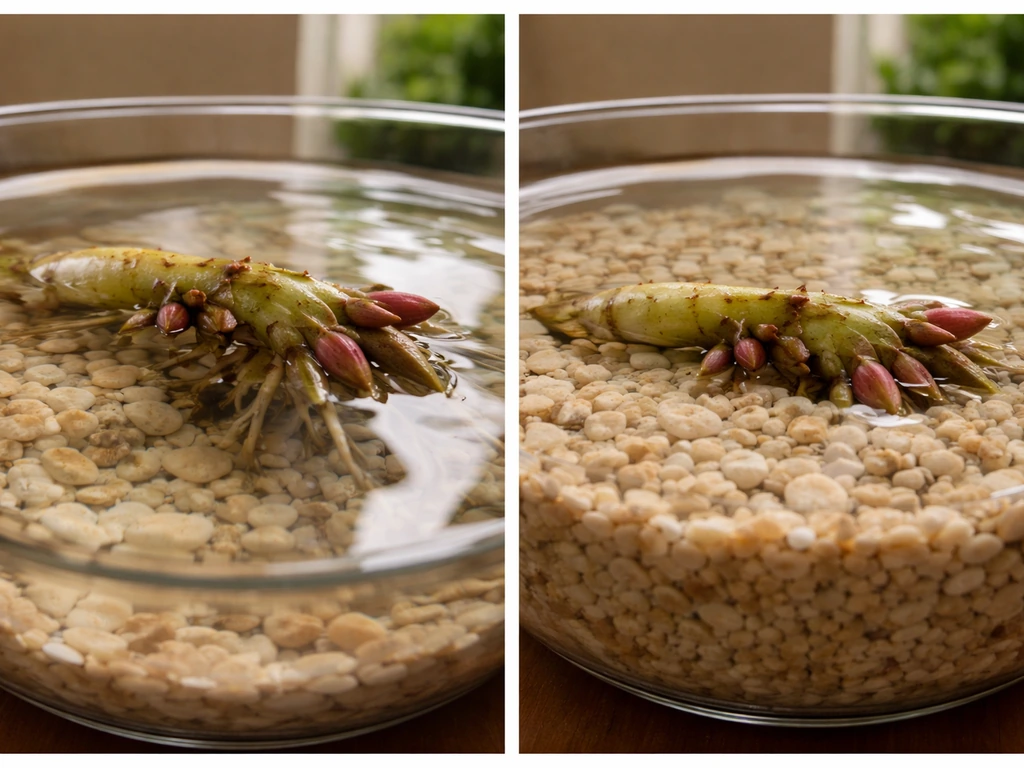
Troubleshooting a soil-free water lily comes down to ruling out a short list of common issues. Here are the most likely culprits and what to do about each:
- Rhizome is floating: The gravel layer isn't packed tightly enough, or there isn't enough weight on top. Add more gravel over the rhizome and gently press it down. The growing tip should be just above the gravel surface, not buried and not floating free.
- No new growth after 2 to 3 weeks: Check water temperature first. If it's below 65°F, the plant is likely dormant or stalled. Move it to a warmer spot. Also check light: fewer than 5 to 6 hours of direct sun is a growth-stopper.
- Leaves are yellow or pale: This almost always means nutrients are depleted. Push a fresh fertilizer tablet into the gravel near the root zone. Don't wait for the monthly schedule if the plant is clearly hungry.
- Algae taking over the bowl: A small indoor bowl with no water movement and direct sun will turn green fast. Do a partial water change (replace about 30% of the water) and consider adding a small aquatic snail or two if the bowl is large enough to handle it naturally.
- Leaves stay small and never reach the surface: Water is too deep for a newly planted rhizome. Lower the water level to just 2 to 3 inches over the crown until new pads are actively growing and reaching the surface, then slowly raise it.
- Roots look rotted or mushy: This usually means the rhizome was damaged before planting or the growing tip was buried. Trim any rotted sections back to clean tissue with a clean blade, dust with powdered sulfur or activated charcoal if available, and replant with the crown exposed.
One mistake I've seen repeatedly: growers switch too quickly between methods when things aren't working, instead of fixing the one thing that's actually wrong. If your setup is basically correct but the plant is slow, give it time and a fertilizer tablet before you tear everything apart and start over. Water lilies take a few weeks to establish in any new container, with or without soil.
Finally, be realistic about what a bowl setup can achieve long-term. A small decorative bowl without soil will grow beautiful floating pads and you may even get flowers from a dwarf tropical variety, but it requires more attention than a pond setup does. You're trading maintenance ease for aesthetics and convenience, and that's a perfectly reasonable trade if you go in with clear expectations.
FAQ
How long can a water lily stay alive with no soil or other medium at all?
If the rhizome is still submerged, it may survive for a short period, but without any anchoring material it typically weakens quickly (often within weeks). A practical fix is to move it into a weighted inert medium or an aquatic potting mix as soon as you notice drifting roots, pale new growth, or stalled pad production.
Can I use pea gravel or aquarium gravel as the anchoring medium?
Yes, but prioritize weight and stability. Coarser or lighter decorative stones can shift and expose the crown, which interrupts feeding. If you use gravel, pack it firmly enough that the crown sits securely, then follow a strict fertilizer tablet routine because the stones provide no nutrients.
Do fertilizer tablets still work if there is no soil, and how exactly should I place them?
Yes, fertilizer tablets are especially important in soil-free setups because the medium cannot hold nutrients. Push each tablet into the planting zone about 3 inches from the crown and keep it out of open water, then avoid dissolving tablets into the tank or bowl since that can feed algae more than the plant.
Why does my bowl water turn cloudy or green when I switch to soil-free planting?
Soil-free systems often trigger algae when nutrient release happens in the water column or when light and warmth are high. Use dechlorinated water, place tablets in the medium (not floating), and reduce feeding frequency if algae surges even though the lily looks small.
What’s the best way to handle water changes in a small indoor bowl?
Do partial changes rather than dumping and refilling. Replace only a portion every few weeks (more often if the water goes murky), and keep temperature close to what the lily has been growing in to avoid slowing growth from sudden cooling.
My lily pads are getting to the surface slowly. Is it always a water depth problem?
Water depth matters, but so do light and crown stability. If the crown is slightly exposed, the plant may spend energy recovering instead of pushing pads. Check that the crown is covered by a few inches initially, keep direct sun consistent, and ensure the anchoring medium does not float or loosen.
Can I grow a water lily in a soil-free setup using only sand?
Pure sand can anchor the rhizome, but it provides almost no nutrients and very little buffering against feeding mistakes. If you use sand-only, you must rely on a fertilizer schedule similar to gravel-only, and you may need more frequent adjustments than with heavy clay-based mixes.
Do I need to pull the plant out and replant if roots start to drift?
Usually no, unless the crown is uncovered or the rhizome has separated from the anchoring zone. Gently press or re-pack the gravel around the rhizome so the crown stays fixed underwater, then monitor for new shoots over the next couple of weeks before changing the whole setup.
Is soil-free growth better for indoor bowls than pond planting?
Soil-free can produce a cleaner, more controlled display, but it is typically higher maintenance because nutrients and water quality must be managed more actively. If you want a low-intervention system, an outdoor pond or large container with a clay-based medium is usually more forgiving.
What’s a common mistake that causes failure in soil-free water lily containers?
Using light potting mixes, perlite, or anything that floats. Even small amounts of lightweight media can rise when wetted, shifting the crown and cutting anchorage. Stick to heavy, inert materials and confirm the medium stays in place once the water is added.
Next Articles
Can Calla Lilies Grow in Ponds? How to Set Up Successfully
Yes, with the right setup: water depth, substrate, anchoring, light, and overwinter care for pond or marginal calla lili
Are Calla Lilies Hard to Grow? Easy Guide for Success
Get a clear answer on are calla lilies hard to grow, plus exact light, temperature, watering, planting, and fixes.
Can Calla Lily Grow Outside? Outdoor Care by Climate
Yes, calla lilies can grow outside. Learn climate, light, soil drainage, planting timing, and fixes for no growth.