
Water lilies cannot grow in desert sand because sand drains too fast to stay wet, offers no nutrients, and provides zero root anchorage for a plant that needs its rhizome buried in permanently saturated, nutrient-rich mud with standing water above it at all times. Take away any one of those three things and the plant desiccates, starves, or simply floats away. But here's the encouraging part: if you recreate those exact conditions in a container or backyard pond, you can grow beautiful water lilies even in a hot, dry climate. You can also use gravel carefully, but it must be paired with the right root-zone mud and persistent wet conditions water lilies even in a hot, dry climate.
Water Lilies Do Not Grow in Desert Sand Because What’s Missing
Marcus Hendricks
29 May 2026
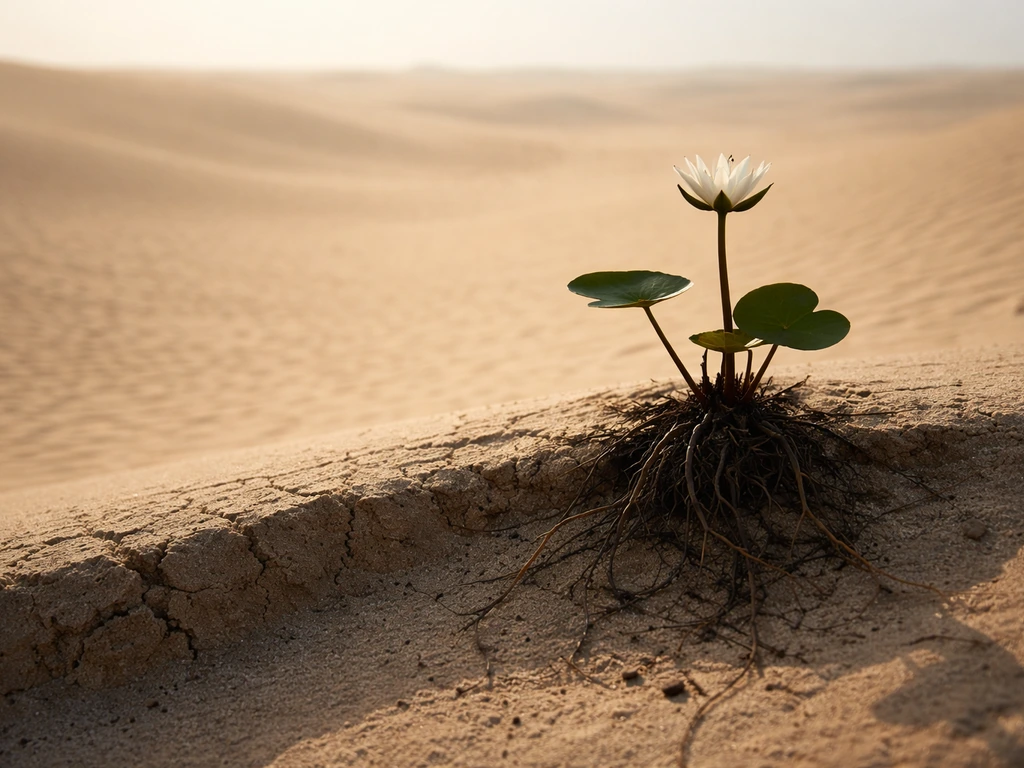
Why desert sand is the worst possible home for a water lily
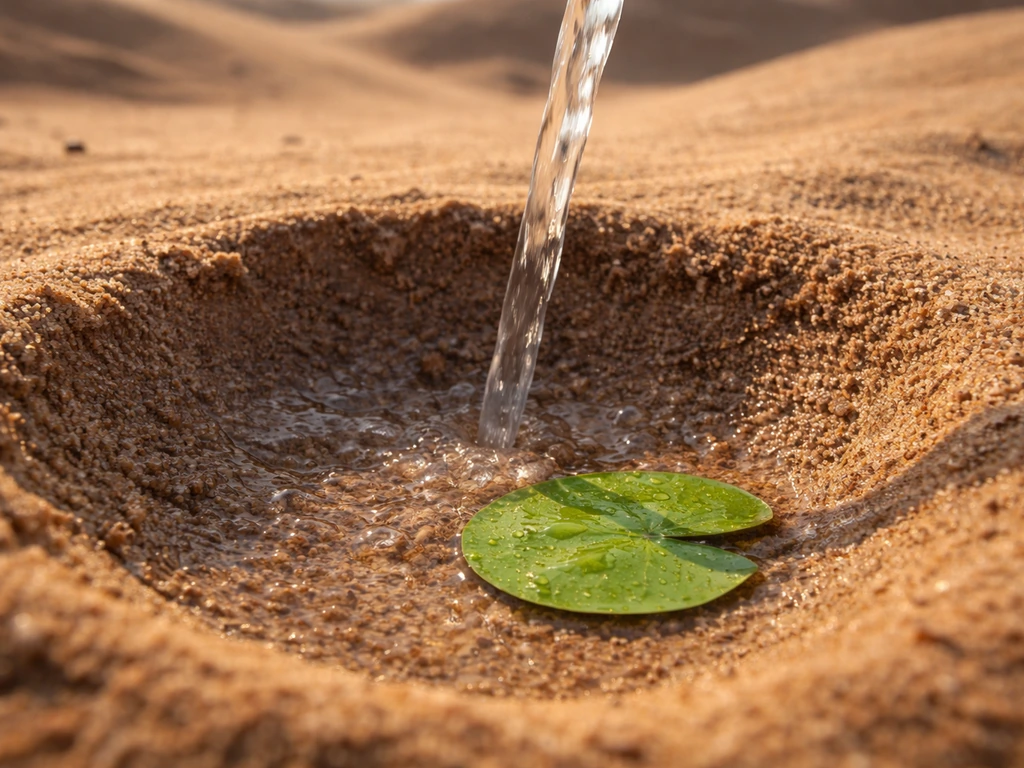
Desert sand has two properties that are completely opposite to what a water lily needs. First, it drains almost instantly. Pour water on sand and it's gone in seconds. A water lily rhizome sitting in that environment dries out and desiccates before it can even attempt to push out new roots. Second, sand is essentially nutritionally inert. It holds no organic matter, no clay particles to bind fertilizer, and no cation exchange capacity to store the minerals a growing plant needs. Even if you kept watering desert sand constantly, you'd be washing nutrients straight through rather than holding them at the root zone.
The water lily's anatomy makes these problems worse. The plant grows from a buried rhizome that sends long petioles up toward the surface and pushes roots downward into substrate. Those roots are not built for dry conditions at all. They're designed to anchor into waterlogged, oxygen-balanced sediment. In loose, fast-draining sand, there's nothing to grip. The rhizome shifts, the crown gets exposed to air, and rot or desiccation follows quickly. I've seen people try to keep water lilies alive by watering a sandy container daily, and it never works. The plant isn't just thirsty; it fundamentally requires a different kind of growing environment.
What water conditions water lilies actually need
Water lilies need calm, still, standing water. If you’re wondering about light, water lilies still need sunlight to power growth, even when their water conditions are perfect calm, still, standing water. That's not negotiable. The RHS is pretty clear on this: keep them away from fountains, pumps, and cascades. Turbulent water stresses the leaves and disrupts the root zone. Think of a natural pond on a still summer day, not a babbling brook.
Depth matters a lot and it varies by cultivar. Miniature varieties can manage in as little as 10 cm (4 inches) of water above the crown. Mid-size varieties do well with the crown sitting under 15 to 25 cm (6 to 10 inches) of water. Large cultivars may need up to 1.2 meters (4 feet). When you're setting up a container or pond in a hot climate, matching water depth to the plant label is one of the most practical things you can do. Too shallow and the roots dry out in heat; too deep and the young leaves can't reach light.
Temperature is the other big water variable. Hardy water lilies tolerate a wide range and go dormant in cold winters, surviving as long as the rhizome doesn't freeze solid. Tropical varieties need water that stays at least 70°F (21°C) and can handle temperatures up to about 95°F (35°C). In a hot desert climate, tropical water lilies actually have an advantage in summer, but you'll want to watch water temperature closely in a container, because shallow water in full sun can exceed safe limits during a heat wave.
Muddy silt versus gritty sand: the root zone comparison
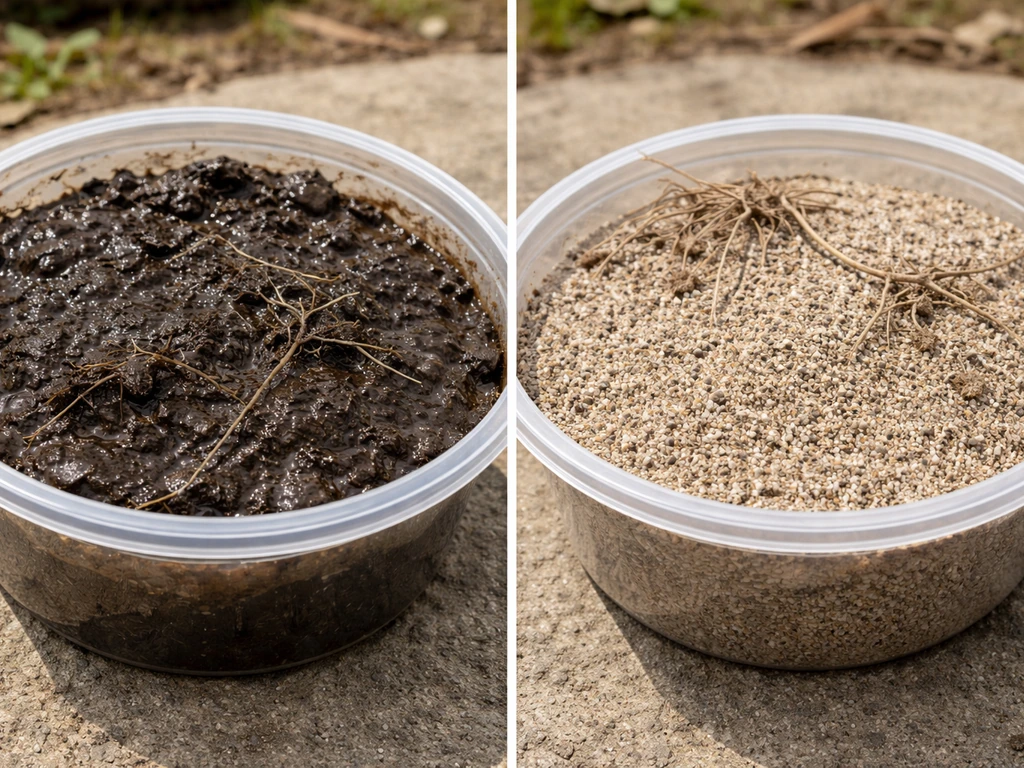
Wetland mud, the stuff water lilies evolved to grow in, stays permanently saturated. It's dense, fine-grained, and packed with organic matter. Roots can push through it without the whole structure collapsing, and the rhizome stays locked in place. Desert sand does none of that. The grain size is too large, the particles don't compact, and the moment you add water the whole thing becomes a slurry that a rhizome can't anchor into.
For container or pond planting, the best substitute for natural wetland mud is heavy clay-based garden loam. Not potting mix, not compost, and definitely not pure sand. Pond Megastore and other specialist growers all point to the same thing: you want a heavy loam that binds to fertilizer tablets and holds moisture at the root zone. Clay particles carry a negative charge that holds onto positively charged nutrient ions, which is exactly why fertilizer tabs designed for water lilies are formulated to work with clay rather than sandy media. In sand, those nutrients just wash away.
| Property | Wetland Mud / Heavy Loam | Desert Sand |
|---|---|---|
| Water retention | High, stays saturated | Near zero, drains instantly |
| Nutrient holding capacity | High (clay particles bind nutrients) | Very low |
| Root anchorage | Firm, rhizome stays locked | Poor, rhizome shifts freely |
| Organic matter | Rich | Essentially absent |
| Particle size | Fine (clay and silt) | Coarse and gritty |
| Suitability for water lilies | Ideal | Unsuitable |
Nutrients and water chemistry in desert environments
Desert water sources often have elevated dissolved minerals. Well water in arid regions can carry high concentrations of calcium, magnesium sulfate, calcium chloride, and magnesium chloride. This pushes up total hardness and total alkalinity, both of which affect how easily plants can take up nutrients. The Missouri Botanical Garden's guidance notes that if the water's pH or chemistry is off, water lilies simply can't absorb what they need even if nutrients are present. Unsuitable alkalinity or acidity blocks nutrient uptake at the root level.
Salinity is the other concern. Research on Nymphaea roots shows that elevated salt levels directly disrupt root system function and growth. In practical terms, if you're filling a container with well water or tap water in a high-mineral desert area, it's worth picking up a basic water test kit. You're looking for electrical conductivity below about 1.5 mS/cm and a pH in the 6.5 to 7.5 range. If your tap water is significantly harder than that, using filtered or collected rainwater for top-offs goes a long way.
Growing water lilies in a hot, dry climate: yes, it's doable
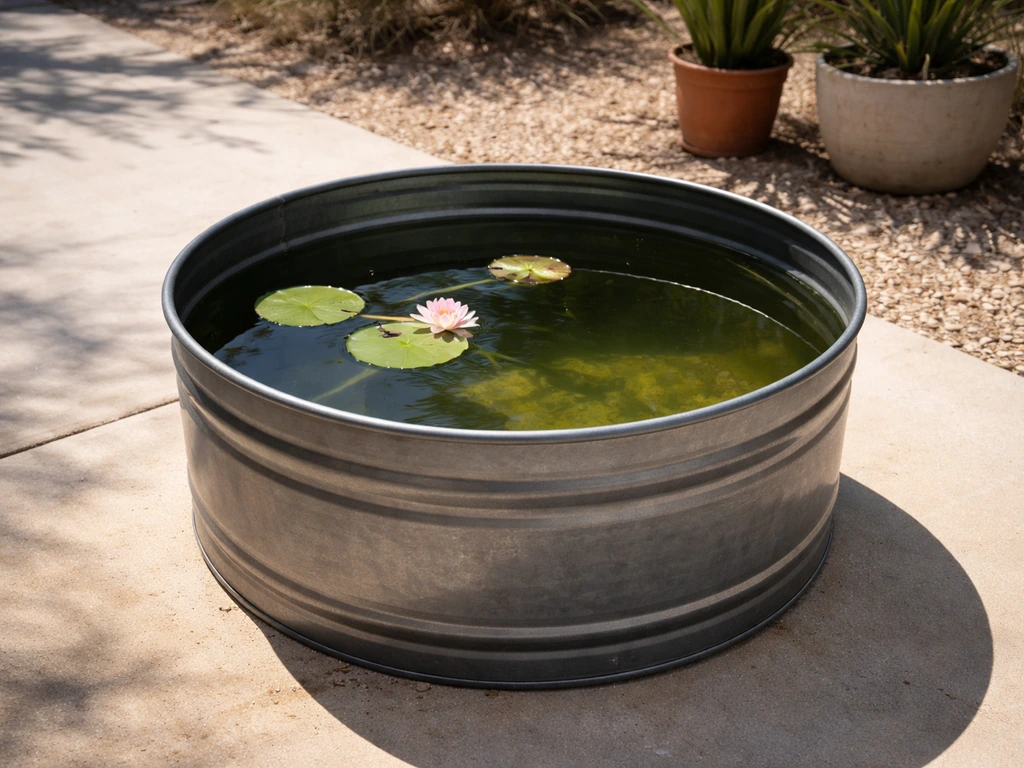
I've talked to gardeners in Arizona and Southern California who grow gorgeous water lilies in half-barrel ponds and stock-tank setups on their patios. The key is controlling the four variables that desert environments naturally get wrong: water retention, substrate quality, water temperature, and evaporation.
- Use a lined container or preformed pond basin. A large half-barrel lined with a rubber pond liner, or a stock tank, holds water reliably and doesn't let it drain away.
- Position it where it gets 6 or more hours of sun but has some afternoon shade in extreme heat. Water lilies need sun for blooming, but a container sitting in full desert sun all day can overheat the water.
- Top off water lost to evaporation regularly. In hot, dry climates you can lose several inches a week, which drops the water level below what the crown needs.
- Avoid running any kind of pump, fountain, or waterfall feature in the same container. Water lilies want still water.
- Choose a tropical variety for a hot desert summer, but be ready to bring it indoors or treat it as an annual when temperatures drop in winter.
Step-by-step: substrate, planting, and depth
Here's the method I'd walk you through if you were sitting across from me. It works for containers or a small pond.
- Line your container if needed. Any vessel that isn't already waterproof needs a rubber pond liner fitted snugly inside. No holes, no drainage gaps.
- Fill a wide, shallow planting basket (not a standard flower pot) about two-thirds full with heavy clay-based garden loam or aquatic planting mix. Do not use regular potting compost or any mix with perlite or sand added.
- Place the rhizome at roughly a 45-degree angle, with the cut or older end toward the basket wall and the growing tip (crown) pointed toward the center and slightly upward. The crown must sit at or just barely above soil level. Never bury the crown.
- Push one or two slow-release aquatic fertilizer tablets into the soil near the roots but away from the crown before capping.
- Cover the soil surface with about half an inch of pea gravel or washed coarse sand. This cap keeps the fine loam from clouding the water and prevents fish (if any) from disturbing the soil, but it does not replace the loam underneath.
- Lower the planted basket into your container. For new plants just starting out, start at a shallower depth (around 8 to 12 inches of water above the crown) so leaves reach light easily. As the plant establishes, you can lower it to the cultivar's full recommended depth.
- Keep the water still and maintain the water level consistently. In a hot climate, check every few days and top off with low-mineral water as needed.
One thing that trips up a lot of beginners: the crown positioning. Plant the crown too deep and you risk rot from oxygen deprivation. Plant it too shallow and it's exposed to air. It should be at soil level or just peeking above it, with water covering it from above. That's the sweet spot.
Picking the right variety and fixing common failures
Hardy vs. tropical: which one should you choose?
If you're in a mild desert climate with warm winters (think low-elevation Arizona or Southern California), tropical water lilies are a strong choice. They thrive in warm water, often bloom more prolifically than hardy types, and some even bloom at night. In higher-elevation or colder desert climates where winter nights drop hard, hardy water lilies make more sense. They go dormant in winter and come back as long as the rhizome doesn't freeze through. Chicago Botanic Garden notes that hardy water lilies survive the winter depending on whether their rhizomes freeze solid, so protection from temperature extremes relative to the cultivar's hardiness is crucial. If your container is shallow enough to freeze solid, you'll need to bring hardy rhizomes indoors for winter storage.
Troubleshooting common problems
- Yellowing leaves: Usually crown planted too deep, water level too shallow causing roots to dry, or water that's too cold for a tropical variety. Check depth first.
- Leaves but no flowers: Almost always a light problem. Water lilies need at least 6 hours of direct sun to bloom reliably. If the container is too shaded, move it.
- Cloudy water and floating soil: The gravel cap wasn't applied or was too thin. Lift the basket, check the cap, and add more pea gravel over the loam surface.
- Rhizome rotting: Crown was buried too deep, or the water has poor oxygen levels. Reposition with the crown exposed at soil level and ensure water isn't stagnant and oxygen-depleted.
- Plant not anchoring or drifting: Basket is too small, soil is too sandy, or gravel cap is missing. Repot into a wider, heavier loam-filled basket.
- Stunted growth in desert water: High mineral content or elevated EC in your water supply. Switch to rainwater or filtered water for top-offs and test your water chemistry.
A quick note on what's actually a water lily
True water lilies (Nymphaea species) are fully aquatic plants. They are not the same as calla lilies, daylilies, or peace lilies, all of which grow in regular soil. If someone tells you water lilies can grow in sandy soil, they're almost certainly talking about a different plant. The soil requirements for sandy versus aquatic substrates come up a lot when comparing lily types, and it's worth being clear: Nymphaea needs standing water. If you're wondering can lilies grow in sandy soil, the short answer is that true water lilies need standing water and an aquatic substrate, not dry sand. No exceptions.
Also worth knowing: if you're in Minnesota or certain other states, some non-native Nymphaea species are regulated as invasive. Always check local rules before buying and introducing a variety to an outdoor water feature that could connect to natural waterways.
The bottom line is that water lilies can't grow in desert sand because everything about sand is wrong for them: it won't hold water, won't anchor roots, and won't hold nutrients. But recreate a pond in a barrel with the right loam substrate and still water, and you're giving the plant exactly what it evolved to need. I've watched people set this up in a weekend and have blooms within the same season. Get the substrate, depth, and water chemistry right, and the plant does the rest.
FAQ
Can I make water lilies work in desert sand by watering more often?
Not if you mean true water lilies (Nymphaea). Even if you top up constantly, sand will still drain and nutrients will leach past the rhizome zone. The fix is to use a dense, water-retentive root media (heavy clay-based loam) under a layer that stays saturated, and keep standing, calm water over the crown.
Is there any situation where sand is acceptable for water lily planting?
Use sand only as a surface cover or drainage layer after the rhizome is secured in the correct wet root zone (heavy loam or pond-safe clay sediment). If the rhizome itself sits in pure sand, it will desiccate or shift, and you will likely see crown exposure, rot, or stalled growth.
My water lily is struggling, how can I tell if it is sand drainage versus planting depth or rot?
Yes, several lily symptoms can look similar but have different causes. If leaves wilt or crown looks dry, it is usually root-zone desiccation from insufficient standing water or too shallow placement. If you see mushy bases, it is often crown too deep or oxygen-starved mud. Check crown height first, then confirm the substrate is staying saturated, not just wet on the surface.
Will a filter or small pump ruin water lilies in a desert setup?
Pumps and fountains can work only if the water remains mostly calm around the plant and the root zone is not constantly disturbed. If your setup creates strong circulation, algae often increases and leaves get stress damage. For easiest success, avoid direct jets hitting leaves, and use gentle filtration positioned away from the lily spot.
What happens if my water level drops a lot between top-ups?
If the container evaporates faster than you can top up, the crown can be intermittently exposed to air and the root zone can swing between wet and dry. In hot climates, automate top-offs, shade the container rim, and keep a water level you can measure daily, especially during heat waves.
How do I choose the right water depth if my water lily label is vague?
Tall water does not automatically guarantee success. Too deep can prevent young leaves from reaching light, while too shallow can overheat and dry the rhizome zone. Follow the cultivar’s water depth guidance and adjust seasonally, since summer evaporation and growth rate change how much depth you actually have.
Can hot desert sun overheat the water even if the lilies are in the right substrate?
Yes. Water lilies can tolerate warmth, but container water heats and cools faster than ponds. Shallow containers in direct sun can exceed safe root-zone temperatures during heat spikes. Practical steps are using a larger volume container (more thermal mass), partial shading, and keeping the water deep enough to buffer temperature.
If I add fertilizer tabs to my container, why might the lily still not absorb nutrients?
A pH or hardness mismatch can slow growth even when nutrients are present. Since you cannot fix chemistry by adding more fertilizer tablets, test your source water and then decide whether to switch to collected rainwater for top-ups, dilute with softer water, or choose a fertilizer strategy compatible with higher alkalinity.
How do I know if salt in my well water is the problem?
If your tap or well water has high salts, you may see reduced root vigor and poor leaf growth even with correct media. A water test kit (electrical conductivity and pH) is the quickest decision aid, and if values are high, use filtered or rainwater for top-offs and consider occasional partial water changes to reduce salt buildup.
What is the quickest way to avoid buying the wrong plant for “desert lily” gardening?
True water lilies (Nymphaea) should be treated as fully aquatic. Calla, peace lily, and daylily relatives may be sold with similar names, but they are not designed for submerged root zones in water. Before buying, confirm it is labeled as Nymphaea or “aquatic lily, pond plant,” and check care instructions that specify standing water.
How should I overwinter water lilies in a desert climate with occasional freezing?
For hardy lilies, winter storage depends on whether the container can freeze solid. If the pot freezes through, move the rhizomes indoors to keep them from going through thaw-freeze cycles. If it only cools but does not fully freeze, the colony may overwinter in place. For tropical types, keep water from dropping below their minimum temperature and protect them from winter cold snaps.
I live in a state with invasive-plant rules, how can I stay compliant when growing water lilies outdoors?
Any outdoor planting that connects to natural waterways can create invasive risks for some non-native Nymphaea. The safest move is to confirm local regulations before introducing varieties, and prevent escape by keeping lilies contained in a pond feature that cannot drain into streams.
Next Articles
Can Lilies Grow in Sandy Soil? How to Succeed
Learn if lilies thrive in sandy soil and how to amend, plant, water, and troubleshoot for reliable blooms.
Can Water Lily Grow Without Sunlight? Indoor and Outdoor Guide
Yes, but water lilies need low-light limits, proper water temp and depth, and often grow lights to bloom indoors or in s
Do You Need Soil to Grow Water Lilies? What Works
Do water lilies need soil or just bare roots? Learn best substrate for ponds, containers, and how to plant correctly.