
Yes, you can grow canna lilies indoors, but let's be honest about what you're signing up for. Indoors, cannas will almost certainly give you lush, dramatic foliage. Getting them to actually bloom is harder and depends almost entirely on how much light you can provide. If you have a very bright south-facing window or a decent grow light setup, flowering is genuinely possible. If you're working with a dim apartment, plan on enjoying the leaves and moving your plant outside when the weather cooperates. Either way, cannas are surprisingly satisfying as indoor container plants once you understand what they need.
Can You Grow Canna Lily Indoors? How to Succeed
Marcus Hendricks
11 Apr 2026
Your indoor setup: light, temperature, and humidity
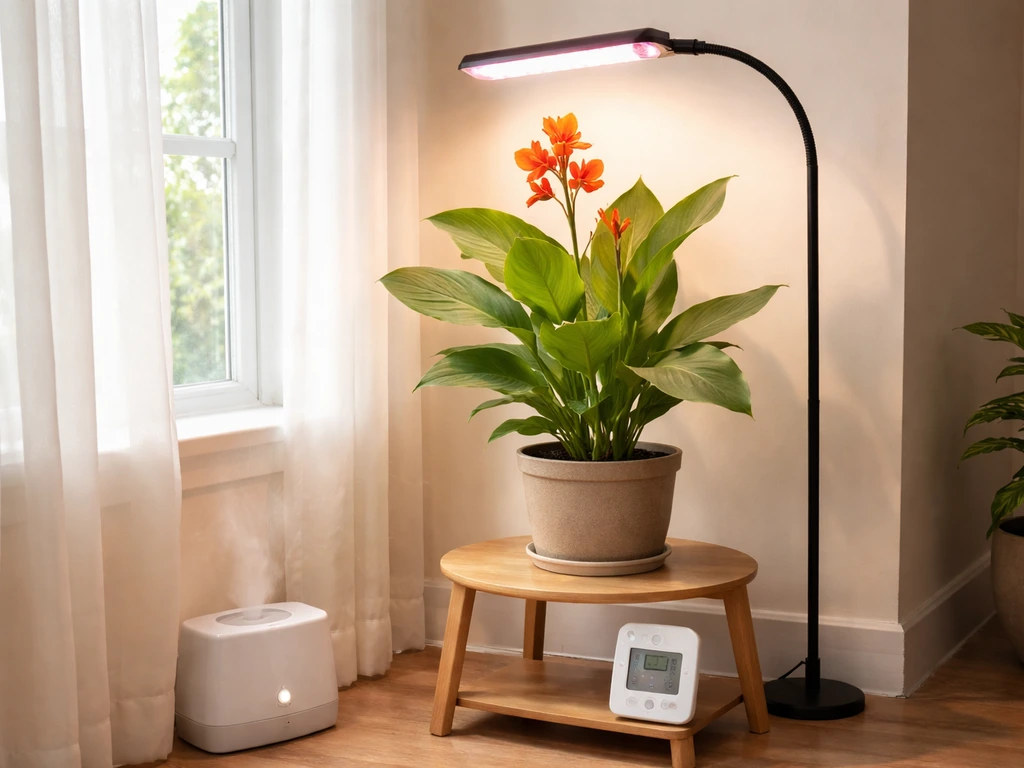
These three factors determine whether your canna thrives or just survives. Get them right and everything else becomes much easier.
Light
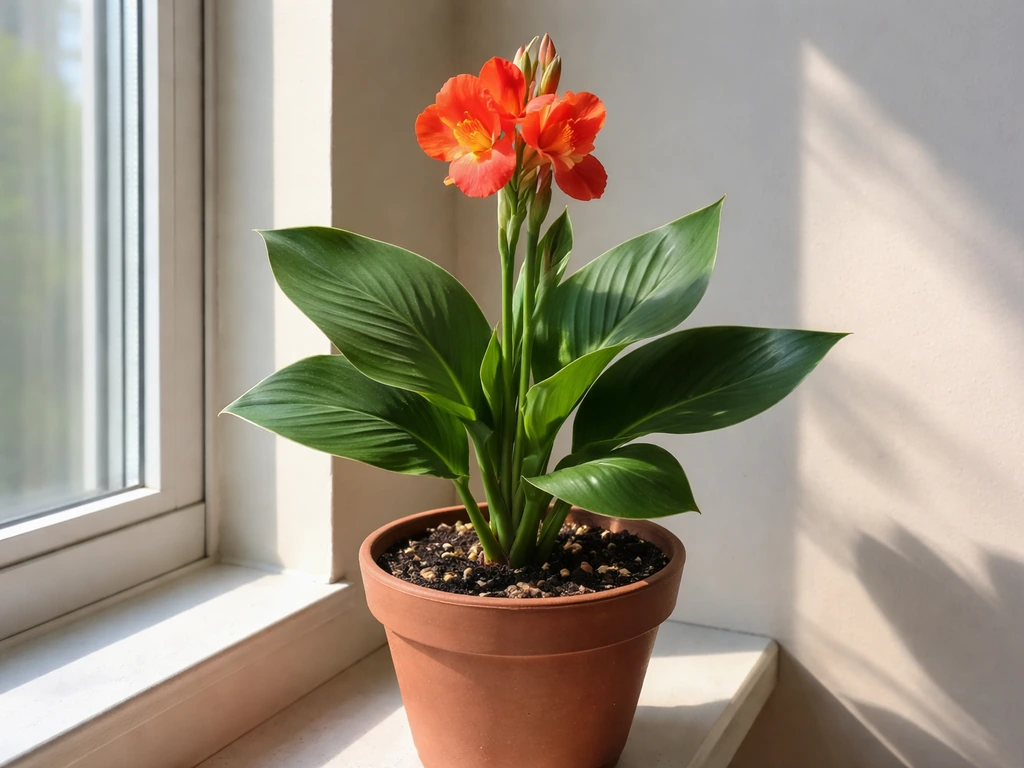
Cannas are sun-hungry plants. Outdoors, they want 6 to 8 hours of direct sunlight for best growth and blooming. Indoors, you need to match that intensity as closely as possible. A south-facing window with no obstructions is your best bet.
If you're using a grow light, aim for at least 5,000 lux at the canopy, and ideally push into the higher ranges during the active growing phase. In PPFD terms (the measurement serious growers use for light intensity), something in the 200 to 400 µmol/m²/s range during vegetative growth is a reasonable target. Run your grow light for 12 to 14 hours a day to simulate a long summer day.
Leggy, stretched stems with pale leaves are the classic sign of insufficient light indoors, and no amount of fertilizer will fix that problem.
Temperature
Cannas love warmth. During active growth, blank" rel="noopener noreferrer">keep your indoor temperature between 65 and 80°F (18 to 27°C). They'll tolerate a little cooler at night, but once temperatures dip below 60°F, growth slows noticeably. Below 50°F, the plant reads that as a signal to go dormant, which is not what you want mid-season. Most homes sit comfortably in the right range, but avoid placing your pot near drafty windows, air conditioning vents, or exterior doors in winter.
Humidity
Cannas aren't fussy about humidity the way some tropical plants are, but they do prefer moderate levels. Average household humidity of 40 to 60% works fine. If your home is very dry in winter (common with forced-air heating), a small humidifier nearby or a pebble tray with water under the pot can help prevent leaf tip browning. Good air circulation also matters for keeping fungal issues at bay.
Choosing the right pot, soil, and drainage
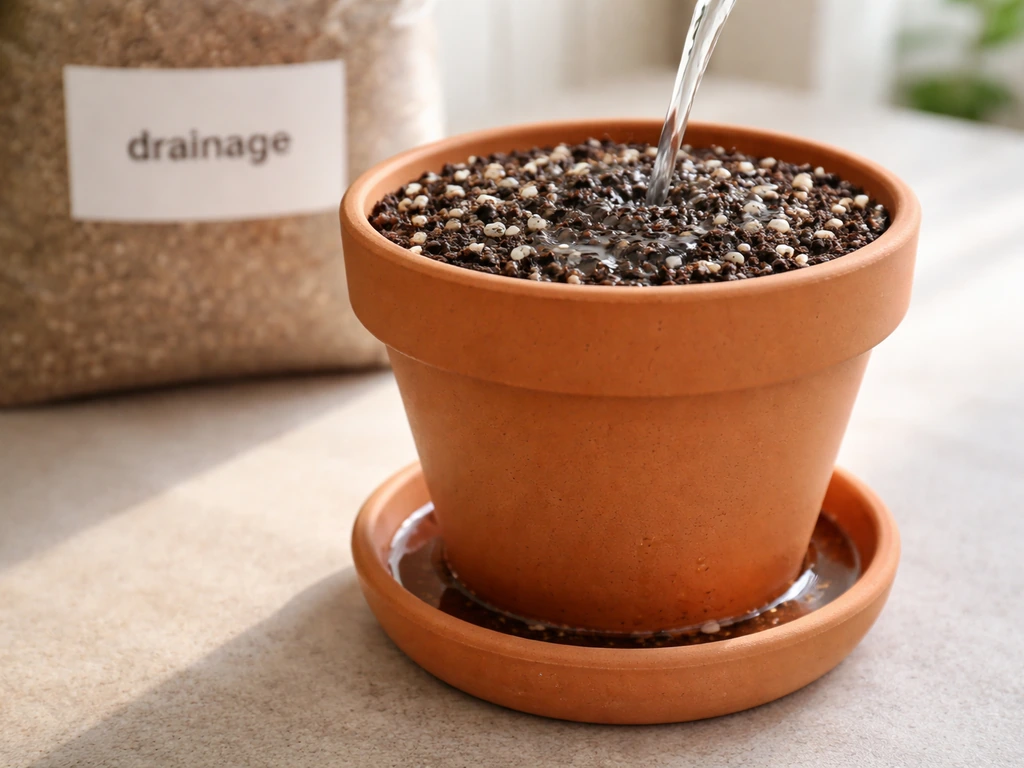
Container choice makes or breaks canna growing indoors. The standard recommendation is one rhizome per 10 to 12-inch container. Go smaller and the plant will feel cramped and stressed; go much larger and you risk the soil staying wet too long between waterings, which is a fast track to root rot. Make sure your pot has drainage holes. This is non-negotiable. Cannas sitting in waterlogged soil are immediately at risk from fungi like Sclerotium rolfsii and Fusarium, which cause rhizome rot. A decorative cachepot without drainage is fine, but always lift the inner pot out to check that water isn't pooling at the bottom.
For potting mix, cannas need something that holds moisture without becoming compacted and soggy. A good indoor canna mix starts with a peat moss base (or coconut coir as a more sustainable alternative), with perlite mixed in for aeration and drainage. The classic modified Cornell mix ratio of 2 parts peat to 1 part perlite works very well here.
For potting mix, the University of Georgia container gardening guidance says a mix ratio of two parts soil, two parts peatmoss, and one part perlite should be satisfactory classic modified Cornell mix ratio of 2 parts peat to 1 part perlite.
You can also add a small amount of composted bark to improve pore space. Avoid dense, heavy garden soil in containers because it compacts around roots, blocks oxygen, and dramatically increases rot risk. Pre-bagged quality potting mixes are a reliable starting point as long as you add extra perlite to ensure the mix stays loose and airy.
Watering and feeding schedule
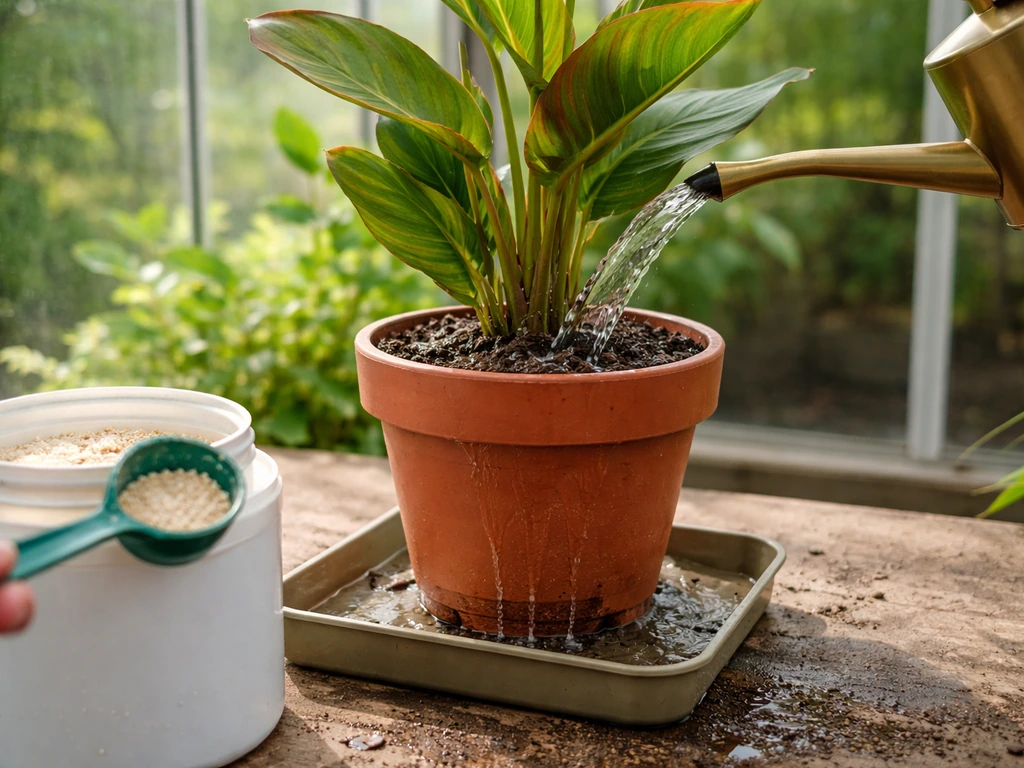
Water thoroughly after planting, letting water drain freely from the bottom of the pot to settle the soil around the rhizome. After that first watering, hold off until the top inch or two of soil is dry before watering again. During active growth in warm conditions, that might mean watering every 3 to 5 days, but always let the soil guide you rather than a strict calendar. In cooler conditions or lower light, the soil dries much more slowly, and overwatering becomes the biggest risk most indoor growers face.
For feeding, cannas are moderate to heavy feeders once they're actively growing. Start fertilizing about 4 weeks after planting when you see shoots emerging. A balanced slow-release granular fertilizer worked into the top of the soil works well for steady nutrition. Supplement with a liquid balanced fertilizer every 2 to 3 weeks during the growing season. Once you see flower buds forming, switch to a bloom-focused formula with higher phosphorus to support flowering. Cut back fertilizing completely when the plant starts to wind down in fall.
How to grow canna lilies indoors: step by step
- Start with a healthy rhizome (or potted start from a nursery). Check that it feels firm with no soft or mushy spots. Each piece should have at least one visible "eye" or growing tip.
- Fill your 10 to 12-inch pot about halfway with your peat-perlite potting mix. Make sure it has drainage holes.
- Place the rhizome eye-side up on top of the mix. Cover it with 3 to 4 inches of potting mix (about 7.6 to 10 cm deep). You can go slightly deeper, up to 5 to 6 inches, if your pot is tall enough, which helps anchor the eventual large stems.
- Water thoroughly until water drains from the bottom. Set the pot in your brightest window or under a grow light.
- Keep the temperature consistently above 60°F. Don't water again until the top inch of soil is dry.
- Expect shoots to appear within 2 to 4 weeks if temperatures are warm. If you're giving your canna strong light and warmth, container-grown plants can start flowering roughly 6 to 8 weeks after planting.
- Once actively growing, begin a regular fertilizing schedule and keep up with watering as described above.
- Rotate the pot every week or two so all sides get equal light exposure, preventing the plant from leaning toward the light source.
If you're starting from seed rather than rhizomes, transplant seedlings to a 4 to 6-inch starter pot first to establish a root system before moving up to your final container. Rhizomes are almost always the faster and more reliable route indoors. For planting divisions in controlled environments, Oklahoma State University extension notes that Canna indica has “three to five eyes per rhizome.”.
One thing worth knowing before you get started: canna lilies are generally considered easy to grow once their basic needs are met, which makes them a reasonable choice even for beginners tackling container gardening indoors.
Indoors vs. outdoors: what changes and what doesn't
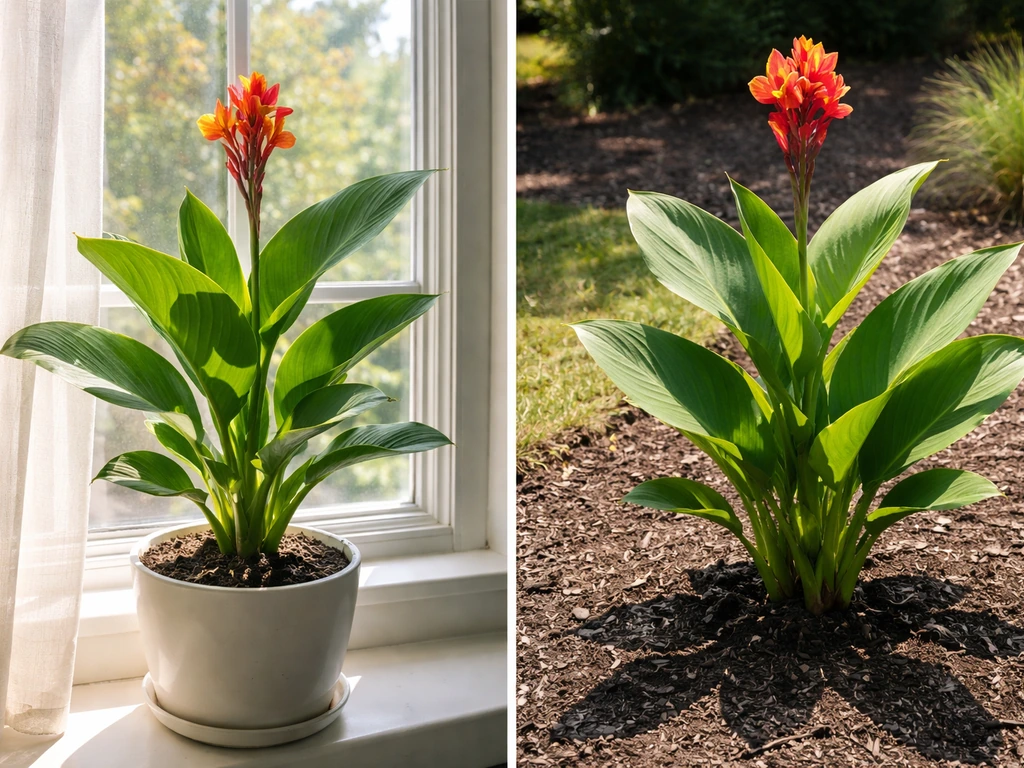
If you searched for how to grow canna lilies outdoors and landed here, this section is for you. The fundamentals are the same: cannas want warmth, sun, good drainage, and regular feeding whether they're in a border or a living room. The key differences are scale and light availability.
| Factor | Indoors | Outdoors |
|---|---|---|
| Light | South window or grow light; 12–14 hrs simulated | 6–8 hours direct sun; natural |
| Pot/Spacing | 10–12" container, 1 rhizome | Garden rows 1.5–2 ft apart; 5–6" planting depth |
| Watering | Check soil; every 3–5 days in active growth | More frequent in heat; rain supplements |
| Fertilizing | Liquid feed every 2–3 weeks | Slow-release granular every 4–6 weeks |
| Bloom potential | Possible with strong light; less reliable | High, especially in full sun |
| Winter care | Manage dormancy in-pot or lift rhizome | Lift and store or leave in mild climates |
| Pest pressure | Spider mites common; less wind exposure | Broader pest range; more air circulation |
Outdoors, cannas are much easier to push into flowering simply because natural sunlight is far more intense than almost any indoor setup. If you want to understand the conditions where cannas truly thrive, it helps to know where canna lilies grow best in terms of climate and exposure, which also informs how closely you need to replicate those conditions inside.
Troubleshooting common indoor problems
No growth or very slow to sprout
The most common cause is cold temperatures. If your room is below 65°F, rhizomes can sit dormant for weeks before doing anything. Move the pot somewhere warmer, ideally 70°F or above, and be patient. Also check that your rhizome has a visible eye (growing tip) and that it's positioned eye-up. A rhizome planted upside down can still sprout, but it takes much longer.
Tall, floppy stems and pale leaves (etiolation)
This is a light problem, almost without exception. The plant is stretching toward whatever light it can find. Move it to a brighter spot or add a supplemental grow light. There's no fixing leggy growth on existing stems, but once you correct the light situation, new growth will be compact and healthy.
Yellow leaves
Yellow leaves have a few possible causes indoors. Overwatering is the most frequent culprit: the soil stays too wet, roots can't breathe, and leaves yellow and drop. Let the soil dry out more between waterings and check that drainage holes aren't blocked. Nutrient deficiency (especially nitrogen) causes older leaves to yellow first; if watering seems fine, start a regular fertilizing schedule. Spider mites are another cause worth checking: look closely at leaf undersides for fine webbing and tiny moving dots. Mite feeding causes yellow stippling that spreads across the leaf surface and can eventually cause widespread leaf damage. If you spot them, isolate the plant immediately and treat with insecticidal soap or neem oil.
Soft, mushy rhizome (rot)
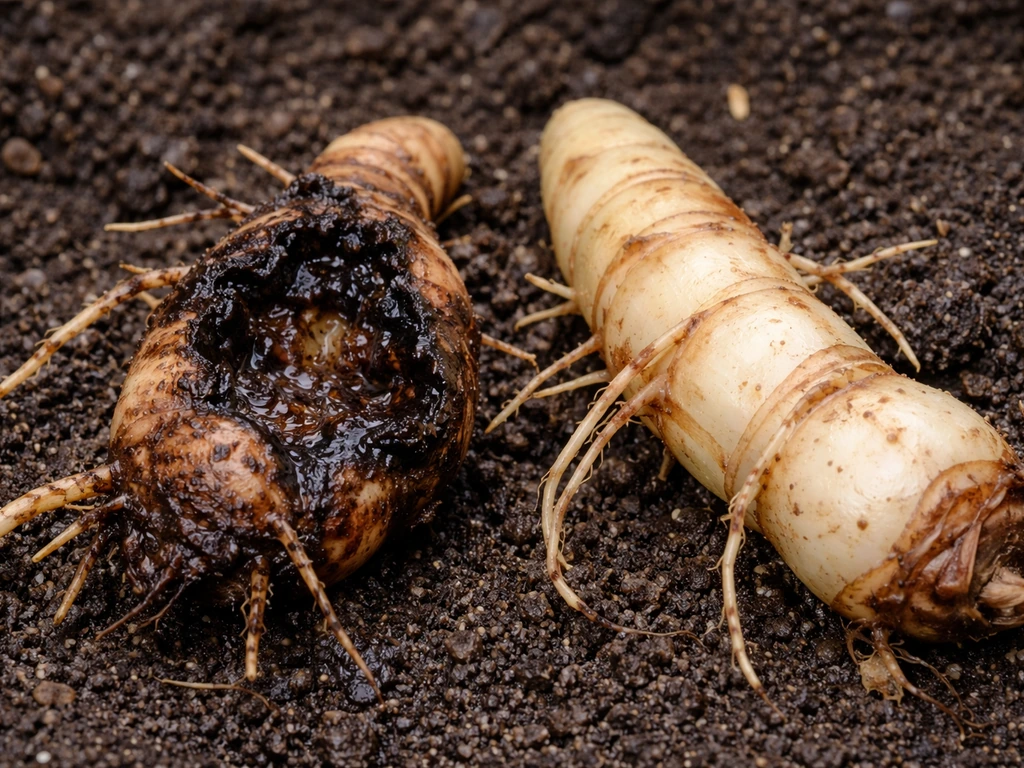
If you dig up your rhizome and find it's soft or smells bad, fungal rot has taken hold. This is caused by consistently waterlogged soil creating the perfect environment for fungal pathogens. Remove any affected portions with a clean blade, let the healthy sections dry and callous for a day, dust with sulfur powder if you have it, and replant in fresh, well-draining mix. Going forward, improve drainage by adding more perlite to your mix and watering less frequently.
Long-term care: dormancy, overwintering, and getting blooms next year
Cannas grown indoors year-round in consistently warm conditions may not go fully dormant on their own, which is actually fine. You can simply reduce watering in late fall and early winter, ease off fertilizing, and let the plant rest with minimal attention for 8 to 12 weeks before ramping back up in late winter. This rest period, even if informal, helps the plant reset and supports better blooming in the next growth cycle.
If you're in a colder climate and move cannas outdoors in summer, you'll need to bring them in before the first frost. Once cold temperatures blacken the foliage, cut stems back to a few inches above the rhizome level. You then have two options: store the rhizomes bare, or keep them in the pot. For bare storage, lift the rhizomes, shake off soil, and let them dry for a few days.
Store them in a cool, dark location that stays between 45 and 60°F, with around 50% humidity and some air circulation. Packing them loosely in peat moss or vermiculite helps maintain the right moisture level without letting them dry out completely or stay too damp. Come spring, you can pot them back up 4 to 6 weeks before your last frost date to get a head start on the season.
If pot storage is easier, just move the whole container to a cool basement or garage that stays above freezing. Water very sparingly (once a month or so) just to keep the rhizome from completely desiccating. When you're ready to restart growth, move the pot back into warmth and light, resume normal watering, and expect new shoots within a few weeks. Understanding when canna lilies start to grow after their dormant period helps you time this restart correctly.
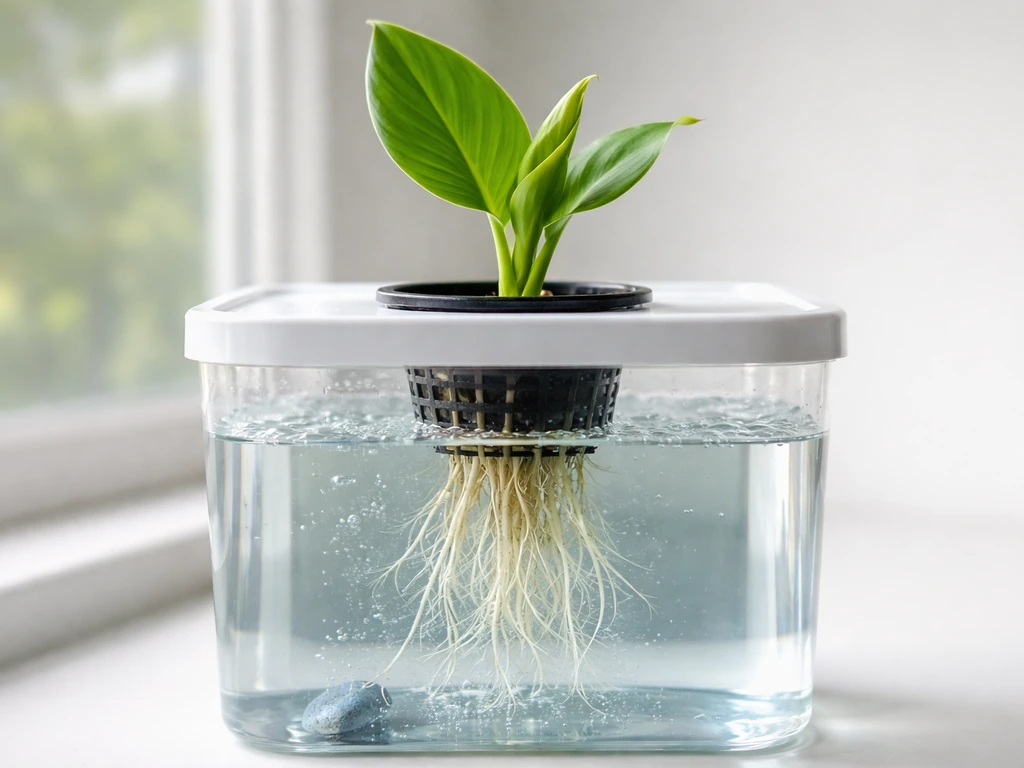
One question that comes up often is whether cannas can actually grow in standing water rather than soil. It's worth knowing that canna lilies can grow in water under certain conditions, which makes them unusually versatile compared to most flowering plants. This isn't the typical indoor setup, but it's a legitimate option if you're interested in a water garden approach.
For anyone wondering how quickly to expect progress after planting, growth rate is a reasonable concern. How fast canna lilies grow depends heavily on temperature and light, but under good indoor conditions you should see shoots within a few weeks and steady leaf development from there.
Finally, if you're comparing plant options for indoor growing and cannas feel like a lot to manage, it's worth knowing that other plants in this family have different requirements. For example, rain lilies can also be grown indoors, and they tend to be more compact and lower-maintenance than cannas, which might suit a smaller space better.
The bottom line is that indoor cannas are absolutely doable, and the process is straightforward once you stop treating them like a typical houseplant and start treating them like the sun-loving, warm-climate plants they really are. Nail the light, keep them warm, don't overwater, and you'll have a plant that makes every visitor ask what that incredible tropical thing in the corner actually is.
FAQ
Can you grow canna lilies indoors year-round without making them go dormant?
Yes, you can keep them growing year-round if your indoor temperatures stay consistently warm and you provide steady light. If blooms are the goal, many growers still schedule a short rest period by reducing light and water for 8 to 12 weeks in late fall, then resuming once new growth starts to avoid weak, stretched regrowth.
What size pot do I need if I only have a small window or limited floor space?
For one rhizome, aim for a container about 10 to 12 inches across or larger, as very small pots can stress the rhizome and dry out too fast. If space is limited, use the biggest pot you can manage with guaranteed drainage, then reduce feeding slightly in low light instead of forcing growth with heavy fertilizer.
Will canna lilies grow from rhizomes if I buy them and my home is cool?
They will usually wait for warmth. If your room is under about 65°F, growth can stall for weeks, even with good watering, so prioritize warmth first. Ensure the rhizome has a visible growing tip (eye) and plant it eye-up, then be patient until temperatures rise.
How do I tell if my canna is stretching because of light versus because it is overfed?
Light shortage shows up as tall, thin stems and pale, weaker foliage, and the plant keeps leaning toward the brightest spot. Overfeeding can cause darker, lush growth, but it does not typically correct leggy spacing. If stems are lengthening rapidly and leaves look washed out, adjust light upward before changing fertilizer.
Is it better to start canna lilies indoors in water or in soil?
Soil is the safer indoor default because it naturally supports oxygen around the rhizome. Growing in water can work as a specialized water-garden approach, but it requires careful monitoring of water quality, oxygenation, and rot risk. If you are new, start in a well-draining mix and only switch approaches if you can manage the water conditions.
How often should I water indoors if I have good drainage?
Do not water on a fixed schedule. Instead, water thoroughly, then wait until the top inch or two is dry. In brighter, warmer conditions you may end up watering more often, while in dimmer rooms the soil stays wet longer, making overwatering and rhizome rot the main failure mode.
What are the most common signs my rhizome is rotting before it fully collapses?
Early warning signs include a sour or bad odor, soft or mushy sections near the rhizome, persistent yellowing plus soil that never really dries, and a foul smell after you remove the plant from the pot. If you catch it, cut away affected parts with a clean blade, let healthy tissue callous, then replant in fresh, airy mix.
Should I mist canna lily leaves to fix dry indoor air?
Misting is usually not the best solution for cannas. If humidity is very low, a nearby humidifier or a pebble tray can help, but also focus on avoiding wet leaves at night and keeping gentle airflow for fungus prevention.
Can I use a decorative pot without drainage?
You can use it as a cover pot, but the inner nursery pot must have drainage holes, and you must empty any collected water from the outer cachepot. If the inner pot sits in water for long periods, you recreate the rot conditions cannas hate.
Do cannas need to be fertilized immediately after potting?
Usually no. A common mistake is feeding too early, before the rhizome is actively producing shoots. Waiting about four weeks after planting, or until you see new growth, helps prevent fertilizer waste and reduces stress in less-established root systems.
When my canna forms buds indoors, why might it drop them?
The most common causes are inconsistent light and temperature swings, plus uneven watering. Bud drop can also happen if you are still running a high-nitrogen feeding plan after buds appear. Increase bloom-oriented nutrition when buds form and keep conditions stable.
Why are my lower leaves yellow but the soil seems only slightly wet?
Check for blocked drainage first, then look at your fertilizing routine. Nutrient imbalance, especially nitrogen deficiency, often starts yellowing on older leaves. If roots are stressed due to waterlogging it can also look similar, so confirm by checking whether the soil dries at the expected pace.
How can I prevent spider mites from becoming established indoors?
Start with early inspection of leaf undersides, and isolate the plant immediately if you see stippling or webbing. Regular wiping or spraying with insecticidal soap can work best as prevention or early control, and avoiding prolonged dryness helps reduce the stress that mites exploit.
Next Articles
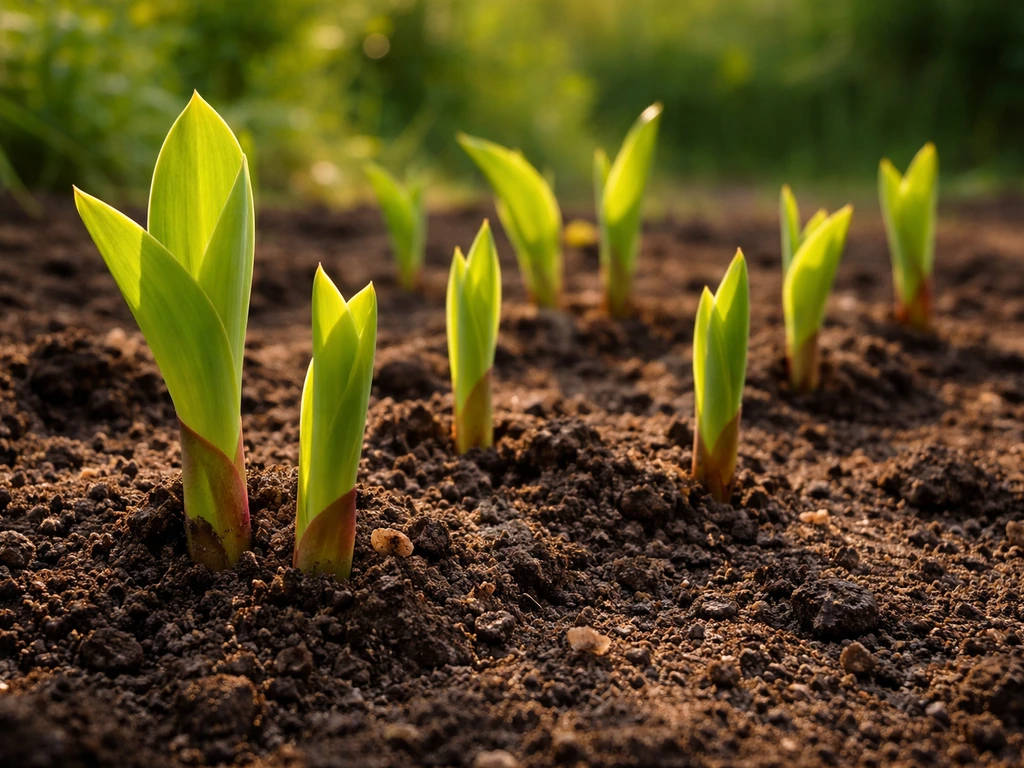
How Fast Do Canna Lilies Grow Learn Timing for Bulbs
Know when canna lily bulbs and plants sprout, how temperature affects growth, and tips to speed flowering.
Can Canna Lilies Grow in Water? Yes How to Do It
Yes, canna lilies can grow in water. Learn water-culture setup, light, temperature, oxygenation, and fixes for rot and a
Can Calla Lilies Grow in Ponds? How to Set Up Successfully
Yes, with the right setup: water depth, substrate, anchoring, light, and overwinter care for pond or marginal calla lili