
The short answer: lotus flowers do not grow on lily pads. What you're almost certainly looking at when you see floating leaves with blooms resting near or just above the water surface is a water lily (genus Nymphaea), not a lotus. These two plants get mixed up constantly, and it's an easy mistake to make. But once you understand the difference, you'll know exactly what you have in your pond, what flowers to expect, and what it takes to actually get those blooms to appear.
What Flowers Grow on Lily Pads? Lotus vs Water Lilies
Marcus Hendricks
7 Apr 2026
Lily pads vs. true aquatic plants (what's actually floating out there)
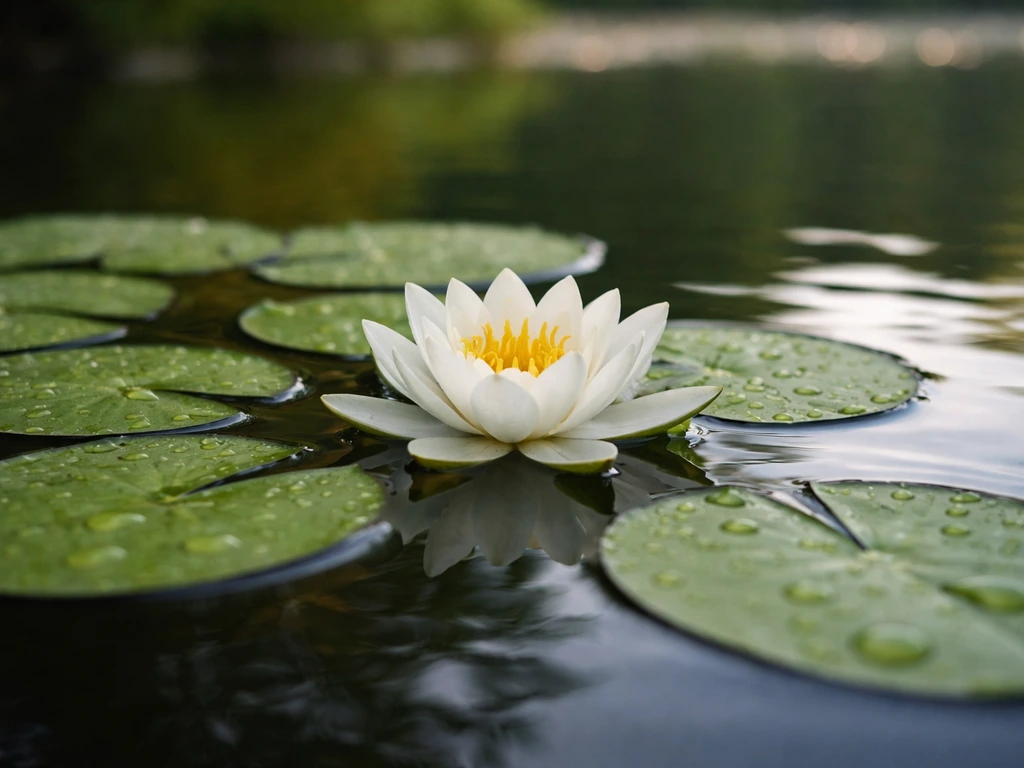
"Lily pad" is a casual term, not a botanical one. In everyday gardening conversation, it refers to the large, round, flat leaves that float directly on the surface of a pond or container water garden. Those leaves almost always belong to a water lily in the genus Nymphaea. The leaf structure is specifically adapted to float: the stem runs from the root system anchored in soil or a pot at the bottom of the pond, up through the water column, and connects to the leaf at the surface.
Water lilies are the dominant pond plant most people picture when they say "lily pads." They're the ones with waxy, round or slightly notched leaves that lie flat on the water and flowers that sit right at or just above the surface. Understanding how lily pads grow makes this clearer: the leaf stalks are flexible and elongate as water depth increases, always keeping the pad floating at the surface no matter how the water level shifts. That's a water lily characteristic, not a lotus one.
There are other aquatic plants that produce floating leaves too, including native species like spatterdock (Nuphar) and some tropical plants, but when someone asks about the classic lily pad image, they're almost always describing Nymphaea. Lotus plants (genus Nelumbo) are closely related and share the same wet habitat, but they behave quite differently above the water line, which I'll get into next.
Do lotus flowers grow on lily pads? (and why it's almost always a no)
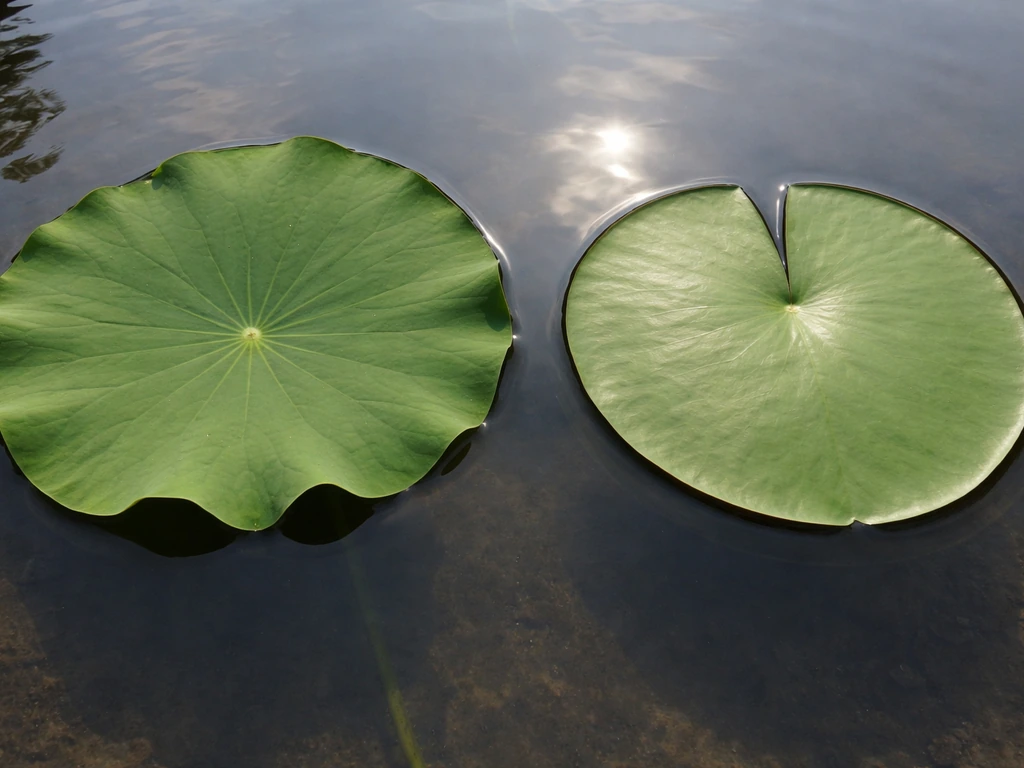
Lotus flowers do not grow on lily pads. They grow on lotus plants, which produce their own leaves that look completely different from water lily pads. This is the most common point of confusion I run into, especially with beginner pond gardeners who see a stunning flower in a pond photo and assume every large aquatic bloom must be coming from the floating pads beneath it.
Here's the key distinction: lotus (Nelumbo) leaves are typically held up out of the water on stiff, tall stems, sometimes rising 2 to 4 feet above the surface. They're round with the stem connecting at the center of the leaf (called peltate), and water beads up and rolls off them in an almost magical way. Lotus flowers are also elevated well above the water on their own tall stems and are much larger and more cupped than water lily flowers. Mississippi State University Extension Service describes American lotus (Nelumbo lutea) as having large round leaves with central stem insertion, large yellow single flowers, and an unmistakable seed pod Lotus flowers are also elevated well above the water. They do not rest on or near the water surface.
So if you're seeing flat, floating pads and blooms sitting at or just above the water line, you're looking at a water lily, not a lotus. If you see tall, umbrella-shaped leaves standing upright above the pond and large flowers held even higher in the air, that's a lotus. The "lily pad" beneath a bloom belongs to the water lily, not the lotus. These are two separate plants that can actually live side by side in the same pond, which adds to the confusion.
Water lilies on lily pads: what blooms you can actually expect
When the growing conditions are right, water lilies produce flowers that emerge directly from the same root system as their floating pads. The flowers appear on short, stiff stems that rise just enough to clear the water surface, and they typically open during the day (for most hardy varieties) or in the evening (for many tropical varieties). Flower size varies a lot by species and cultivar, ranging from small blooms about 2 inches across on miniature varieties to flowers that can reach 10 to 12 inches on large tropical types.
Hardy water lilies (Nymphaea varieties suited to colder climates, Zones 3 to 11 depending on cultivar) generally flower in shades of white, pink, red, yellow, and peach. Tropical water lilies expand that palette to include vivid purples and blues, which hardy types don't produce at all. Both types produce flowers from the same root clump that sends up the floating pads, so the pad and the bloom are always from the same plant. blank" rel="noopener noreferrer">Fragrant water lily (Nymphaea odorata) is described as a floating aquatic, and its long flowering stalks develop directly from the rootstock, bearing a single floating flower at the apex. As Britannica describes it, the "floating water lily pads (Nymphaea species)" and the flowers are part of the same organism.
If you have lily pads and zero flowers, the most common reasons are insufficient sunlight, water that's too deep for the variety you're growing, or a root system that's been in the same container too long and needs dividing. I'll cover those specifics in the growing conditions section below.
How to identify what you're actually looking at
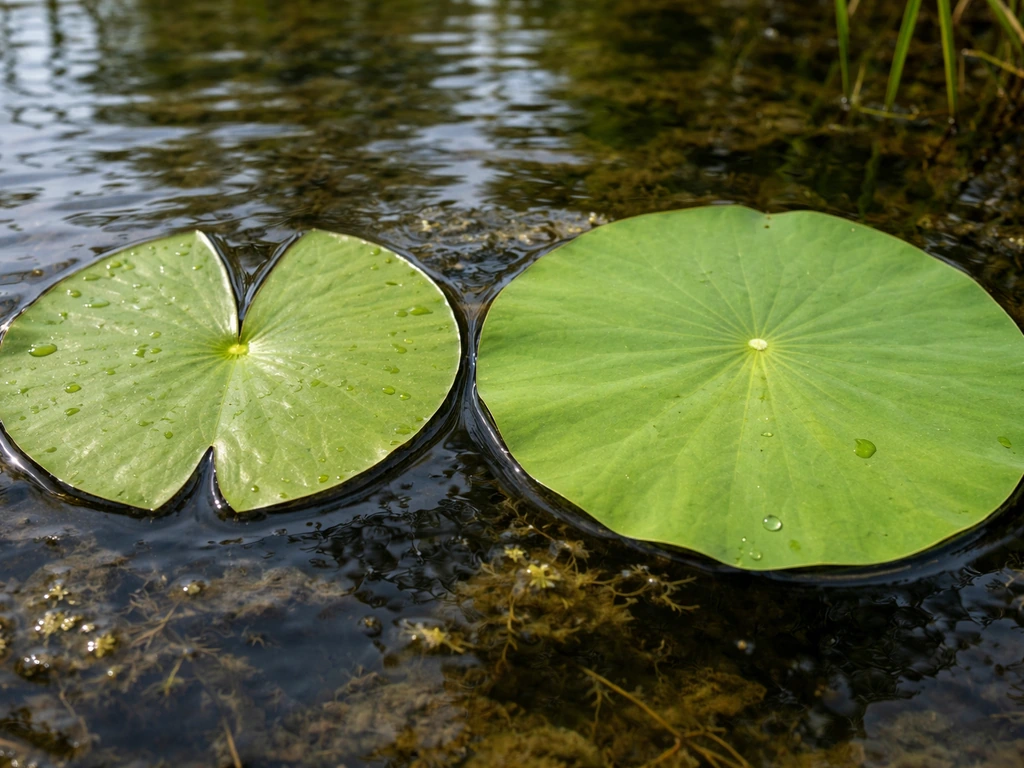
If you're standing at the edge of a pond trying to figure out whether you have water lilies, lotus, or something else entirely, here's a practical identification checklist:
- Floating flat leaves with a notch or slit cut toward the center: almost certainly a water lily (Nymphaea)
- Round leaves held upright on tall stiff stems, water beads off them instantly: lotus (Nelumbo)
- Flowers resting on or just above the water surface: water lily
- Flowers elevated 1 to 3 feet above the water on their own stems: lotus
- Seed pods that look like a showerhead after flowering: lotus (these are very distinctive)
- Heart-shaped floating leaves with a smooth or slightly wavy edge and no tall stems: possibly spatterdock (Nuphar) or another native Nymphaeales relative
Knowing where lily pads grow naturally also helps you narrow things down. Nymphaea species are native across North America, Europe, Asia, and Africa, and they show up in slow-moving rivers, ponds, lakes, and backyard water features worldwide. Lotus plants are also widespread but tend to prefer shallower, murkier water with more sediment. If you're in a natural wetland setting, the habitat itself can offer clues.
| Feature | Water Lily (Nymphaea) | Lotus (Nelumbo) |
|---|---|---|
| Leaf position | Floating flat on the water surface | Held upright above water on stiff stems |
| Leaf shape | Round with a notch/slit | Round, stem attaches at center (peltate) |
| Water repellency | Moderate | Extreme (lotus effect) |
| Flower position | At or just above water surface | Elevated 1 to 4 feet above water |
| Flower colors | White, pink, red, yellow, purple, blue | White, pink, yellow |
| Seed pod | Submerges after flowering | Distinctive showerhead-shaped pod |
| Preferred water depth | 6 to 24 inches depending on variety | 6 to 18 inches, often shallower |
Growing conditions that determine whether flowers actually appear
A pond full of lush pads with no flowers is one of the most frustrating things in water gardening. The good news is that the fix is almost always environmental rather than a plant problem. Water lilies and lotus plants both need specific conditions to bloom, and if even one factor is off, you'll get plenty of leaves and nothing else.
Sunlight is non-negotiable
Water lilies need a minimum of 6 hours of direct sunlight per day to bloom, and honestly 8 hours is better. They will grow pads in shadier conditions, but flowers require full sun. If your pond is partly shaded by trees, a pergola, or a building, that's likely the reason you're seeing leaves but no blooms. Unlike some plants where partial shade just reduces output slightly, water lilies in shade often stop flowering completely.
Water depth matters more than most people think
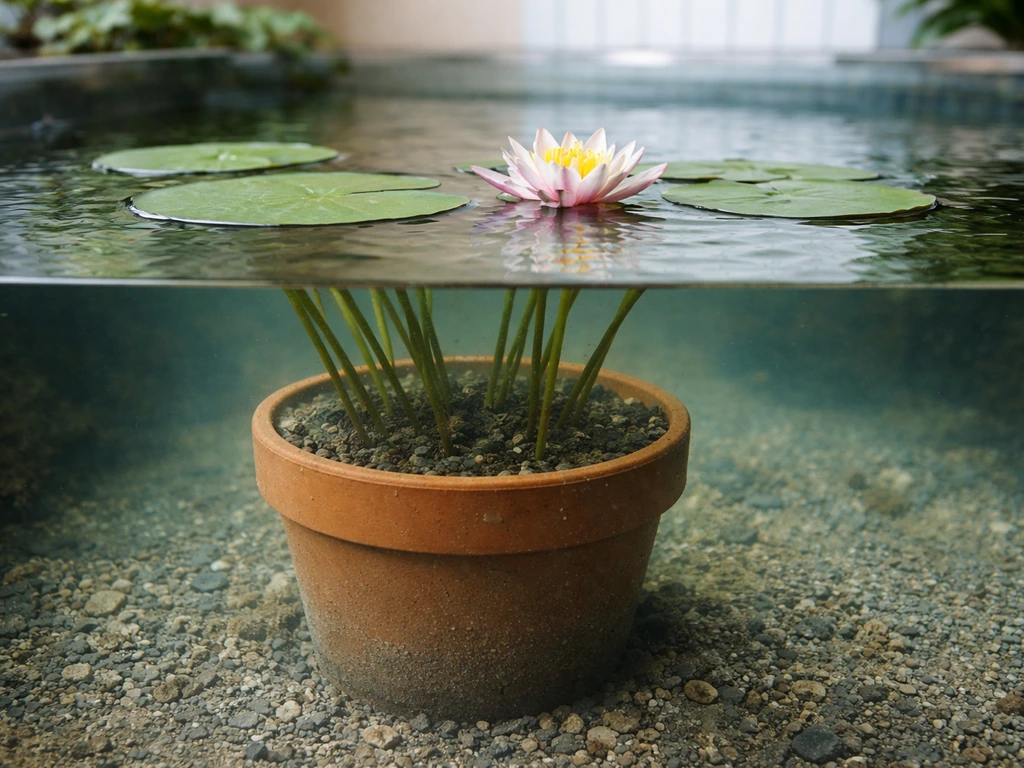
Water depth is the second most common reason for no flowers. Hardy water lily varieties generally do best with the top of their pot or root zone sitting about 6 to 18 inches below the water surface. Miniature or small varieties prefer the shallower end (6 to 12 inches), while larger varieties can handle up to 24 inches. Tropical varieties are usually similar in depth preference. If you've placed a pot too deep, the plant can still send up pads but struggles to produce flowers. How deep lily pads can grow has more detail on this, but as a rule of thumb: start shallow and adjust upward only if the plant is clearly thriving.
Temperature and season
Hardy water lilies bloom from late spring through early fall in most climates, peaking in midsummer when water temperatures are warmest. Tropical water lilies need consistently warm water (above 70°F) to bloom and are typically grown as annuals in Zones below 9 or 10 unless you overwinter them indoors. If you're in early spring and the water is still cold, patience is the answer. Water lilies are sensitive to water temperature, and blooming won't start until conditions warm up.
Container size and soil
If you're growing water lilies in a container water garden rather than an in-ground pond, pot size has a direct impact on flowering. A water lily cramped into a small pot will push out pads but rarely blooms well. Hardy varieties do best in wide, shallow containers, at least 12 to 18 inches across and 8 to 10 inches deep, filled with a heavy clay loam or aquatic planting mix (not regular potting soil, which floats). Lotus in containers need similar sizing but actually perform well in slightly smaller pots than their size suggests, because mild root restriction can actually encourage flowering.
How fast things move, and setting realistic expectations
If you've just planted, give it time. How fast lily pads grow depends on water temperature and sunlight, but you can generally expect a new water lily plant to spend its first season establishing roots and pads, with heavier flowering in the second year. I've made the mistake of thinking a plant was a dud in year one only to have it take over the pond in year two.
A few things worth knowing before you plant
Water lilies are vigorous growers in the right conditions. In a natural pond setting, they can spread significantly, which is a good thing if you want coverage but something to plan for. They're not a plant that stays neatly in a corner on its own. If you're working with a small container or a lined garden pond, keeping the roots in a pot gives you much better control over spread. It's also worth knowing whether your water source affects plant health. Whether lily pads can grow in saltwater is a real consideration if you're near coastal areas, and the short version is that true water lilies are freshwater plants and won't tolerate saline conditions.
One more thing people don't think about until it's a problem: whether lily pads can grow on land. They can't, at least not in any meaningful way. Nymphaea is an obligate aquatic plant and needs to be rooted in soil beneath water. If your container water feature dries out partially or completely, the plants will decline quickly.
What to plant or do next for surface blooms
If your goal is floating blooms at the water surface, plant a water lily (Nymphaea), not a lotus. Lotus gives you stunning tall flowers, but they won't be surface-level blooms on floating pads. For a classic pond-surface flower display, choose a hardy water lily variety matched to your climate zone, give it a spot that gets at least 6 to 8 hours of direct sun, place the pot at the right depth for the variety, and use a good heavy aquatic soil. If you already have pads and no flowers, check sunlight first, then depth, then pot size. In most cases, one of those three is the culprit.
The distinction between water lilies and lotus is one of those things that seems confusing until you see both plants side by side, and then it's immediately obvious. The lotus stands tall and dramatic above the water. The water lily keeps everything low and close to the surface, pads and blooms together, which is exactly what most people picture when they imagine a perfect pond in bloom.
FAQ
If I see floating leaves with a bloom on a pond surface, is it always water lily, not lotus?
Usually, yes, if the pads are truly round and flat on the water surface and the blooms sit at or just above that surface. In that case it is almost always a water lily (Nymphaea), even if the flower color or shape looks unusual. Look for whether the leaf is floating and whether any leaves are standing up on tall stalks (that would suggest lotus).
Can a water lily have lily pads but the flowers come from a different plant?
No. When water lilies flower, the bloom and the floating pad come from the same root clump, so you should see a strong link between the plant that has pads and the plant that produces flowers. If you have pads but no blooms, it is typically light, water depth, or a cramped pot, not a “different plant” hiding underneath.
Why do the floating lily pads look different from what I see in photos online, could it still be water lily?
Sometimes, but not because the plant is changing species. Water lily “pads” can look different as leaves mature, and some cultivars have slight notches or different shapes. A better tell is the overall growth habit: water lily leaves stay at the surface while lotus leaves rise on stiff stems.
My pads appeared, but flowers took a while after I transplanted, is that normal?
If you recently moved the plant or changed the water level, expect a delay. Water lilies often pause flowering while leaf stalks and root placement re-adjust, and blooms may not appear until the following season or after a few warm weeks. If pads look healthy, give it time before changing soil or fertilizer aggressively.
How can I tell lotus upright leaves from water lily leaves that seem to stand up?
Tall “umbrellas” above the water usually indicate lotus, but there is a common mix-up when large water lily leaves with long stalks make it look like a standing plant. Confirm by checking the leaf base, lotus leaves attach at the center and rise on stiff stems, while water lily stalks flex so the pad stays floating.
If I have both lotus and water lilies, how do I know which flowers I’m seeing?
Both water lilies and lotuses can grow in the same pond, and the blooms will be at different heights. Lotus flowers are elevated well above the surface on long stems, while water lily flowers sit at or just above the water line from short stiff stems. If you only see surface blooms, that points to water lily.
What should I do if my water lilies have leaves and still no flowers, should I fertilize?
If the plant is getting at least 6 hours of direct sun (8 is better) and the water is at the correct depth for that cultivar, fertilization can help. In containers, many growers use an aquatic root tab or slow-release aquatic fertilizer placed in the pot, not broadcast into the pond, to avoid algae blooms. Overfertilizing can cause more leaves and fewer flowers.
Will water lilies keep blooming if my container water level drops or the pond partially dries?
Yes, but only if the container actually stays wet enough for long enough. Water lilies are obligate aquatic plants, if the roots dry out (for example during a drain-down), the plant can decline quickly and flowering may stall for months. For winter storage, keep the plant submerged or follow a local overwinter plan for your cultivar.
Can lotus flowers ever appear resting on floating lily pads?
Generally, no. If you are seeing blooms right at the surface, those are typical of water lilies. Lotus blooms may be dramatic, but they sit higher on tall stems, and lotus pads do not function like classic floating lily pads. So “flowers on lily pads” as most people mean it points to water lilies.
My pond is near the coast, can water lily blooms still happen if there’s some salinity?
If your water source is brackish or salty, most true water lilies will struggle or fail to bloom because they are freshwater plants. In coastal areas, check salinity and avoid direct exposure to saltwater unless you are specifically growing a tolerant plant. Algae and weak growth often look like “no flowers” before plants decline.
Next Articles
How Do Lily Pads Grow: Timing, Conditions, and Steps
Learn how lily pads grow, from timing and sunlight needs to planting, water depth, and troubleshooting no-pads issues.
Can Calla Lilies Grow in Ponds? How to Set Up Successfully
Yes, with the right setup: water depth, substrate, anchoring, light, and overwinter care for pond or marginal calla lili
Are Calla Lilies Hard to Grow? Easy Guide for Success
Get a clear answer on are calla lilies hard to grow, plus exact light, temperature, watering, planting, and fixes.