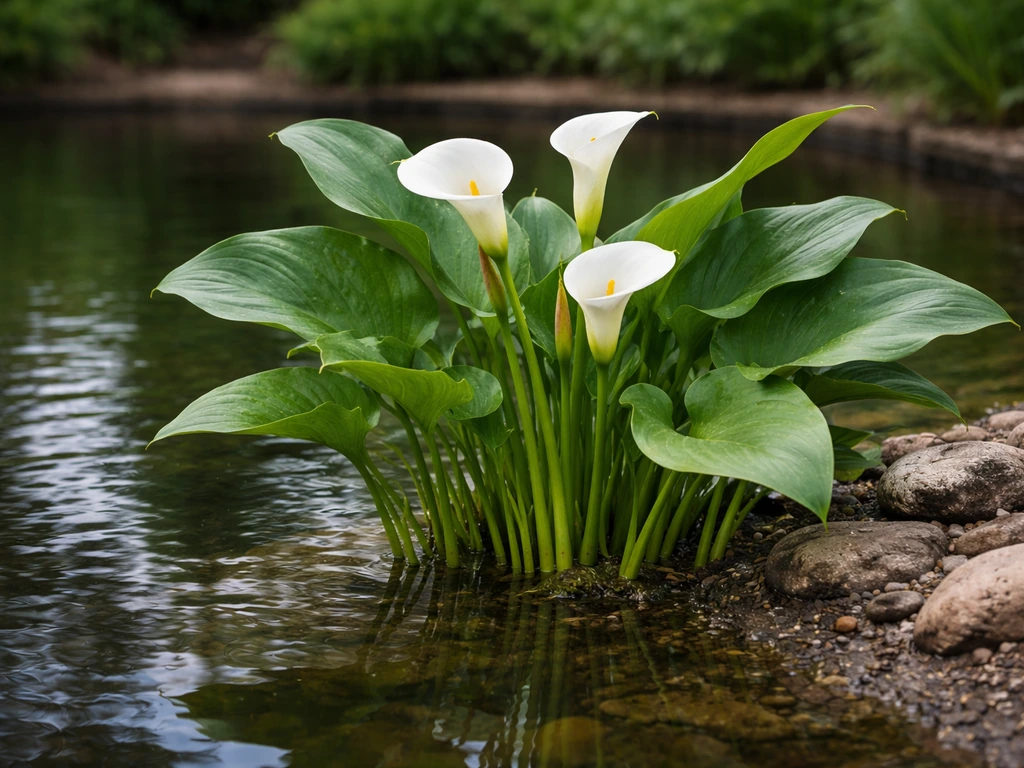
If you found spider lilies growing near disturbed soil, a decomposing log, or an old burial site, the answer is still the same: they are growing there because the soil conditions, light levels, and moisture suit them, not because decay is feeding them. Understanding that distinction matters a lot if you are trying to grow them yourself, relocate them, or just figure out whether the clump in your yard is actually a spider lily at all.
What spider lilies are and how they actually grow
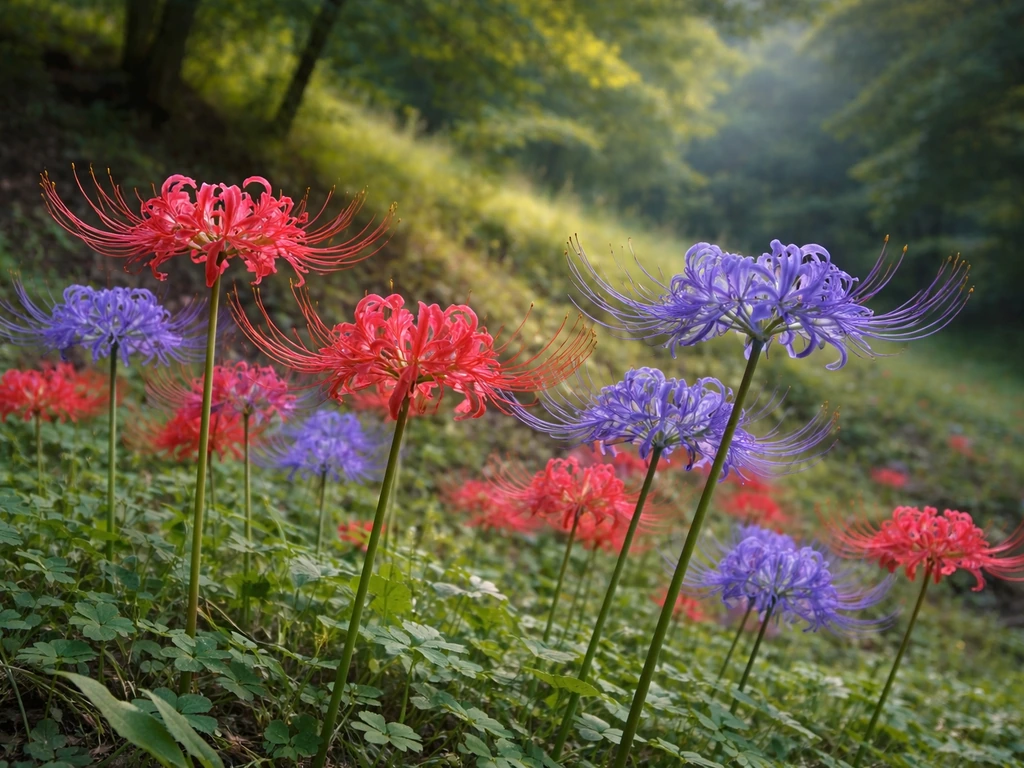
Spider lilies in this context almost always means Lycoris radiata, the red spider lily, though the Lycoris genus includes about 20 species with colors ranging from white to yellow to pink. They are bulb-forming plants in the Amaryllis family, originally from China, Japan, Korea, and Nepal. They have been so widely cultivated for centuries that they now grow naturally in parts of the United States, particularly in the Southeast.
The thing that makes Lycoris genuinely unusual is its reversed phenology. Most plants follow a predictable cycle: leaves come up, flowers appear, seeds form, plant dies back. Lycoris does it backwards and in stages. The strap-like leaves emerge in autumn, grow through winter and into spring, then die back completely by early summer. You then get about 100 days of summer dormancy with no sign of the plant above ground at all. Then, right around late summer to early fall, bare flower stalks shoot up seemingly overnight, produce the dramatic, spidery blooms, and the whole leaf cycle starts again. The Pacific Bulb Society PDF describes that Lycoris (spider lilies) produces bare flower stalks in late summer to early fall and blooms in August to October, with the leaf cycle starting again around flowering blank" rel="noopener noreferrer">bare flower stalks shoot up seemingly overnight. There are no leaves and flowers at the same time. Ever. That 'appearing from nowhere' quality is entirely normal biology, not anything to do with what is buried underneath.
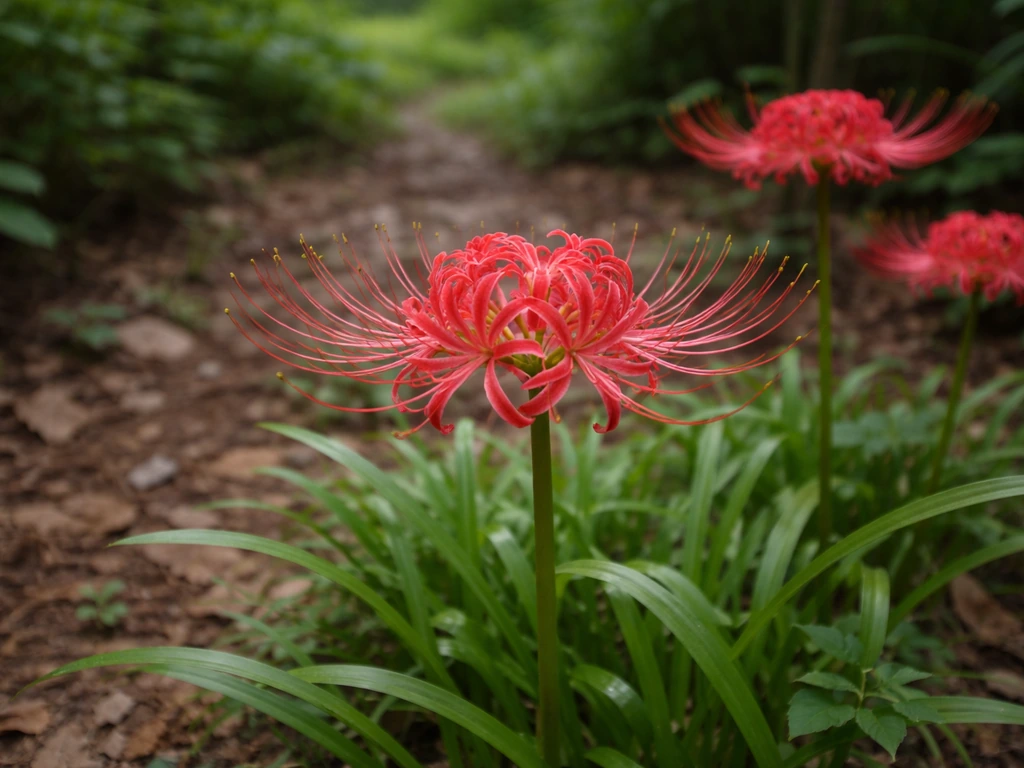
The flower structure is worth knowing for identification: each stalk (technically a scape) grows 30 to 70 cm tall and tops out with an umbel of 4 to 8 flowers. Each flower has 6 tepals that curve back dramatically, and the long stamens extend far beyond the petals, which is exactly where the 'spider legs' look comes from. One important note: most Lycoris radiata in Japan are triploid and essentially sterile, so the plant cannot spread by seed in those populations. It only spreads via bulb offsets, which is a slow process, and it helps explain why established clumps in old cemeteries stay put rather than aggressively colonizing fresh ground nearby.
Where spider lilies naturally grow (and why cemeteries are on that list)
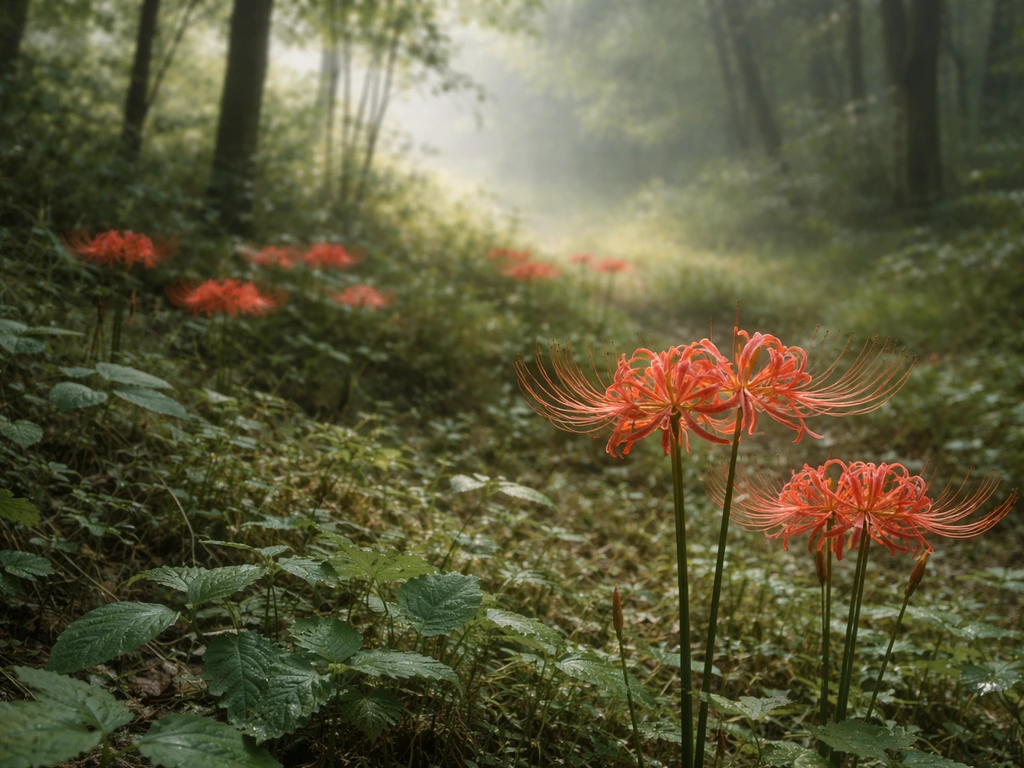
In their native range, spider lilies grow along roadsides, rice paddy borders, woodland edges, and in partial shade under trees. They thrive where soils are reasonably well-drained, summers are warm enough to trigger proper dormancy, and autumns bring the cooler temperatures that cue flowering. In Japan specifically, the connection to cemeteries is cultural and deliberate: people have been planting them in graveyards and along sacred paths for centuries because the autumn bloom coincides beautifully with Higan, the Buddhist period of grave visits tied to the equinoxes. The flowers were not growing there because of what was buried. They were planted there, stayed there (because they resent transplanting and bulbs persist for decades once established), and the seasonal timing created the association over generations.
The name higanbana in Japanese literally refers to the Higan period, not to anything morbid about the soil. Similarly, the 'ominous flower' label in Chinese and Japanese cultural texts is a folklore designation, tied to Buddhist concepts of guiding souls in the afterlife, not a botanical description of the plant's growing habits. The association became self-reinforcing: the flowers appear during grave-visiting season, so they were planted in graveyards, which made them appear more often during grave-visiting season, and so on for hundreds of years.
Why they might appear near human remains or disturbed sites
This is the part of the question worth taking seriously from a practical standpoint. If someone genuinely finds spider lilies near a disturbed site or decomposing organic matter, there are a few real horticultural explanations worth walking through.
- Soil disturbance improves drainage and loosens compacted ground, which spider lily bulbs actually prefer. They do not want heavy, waterlogged clay. A freshly turned or disturbed patch of earth can accidentally create better-draining conditions that benefit existing bulbs nearby.
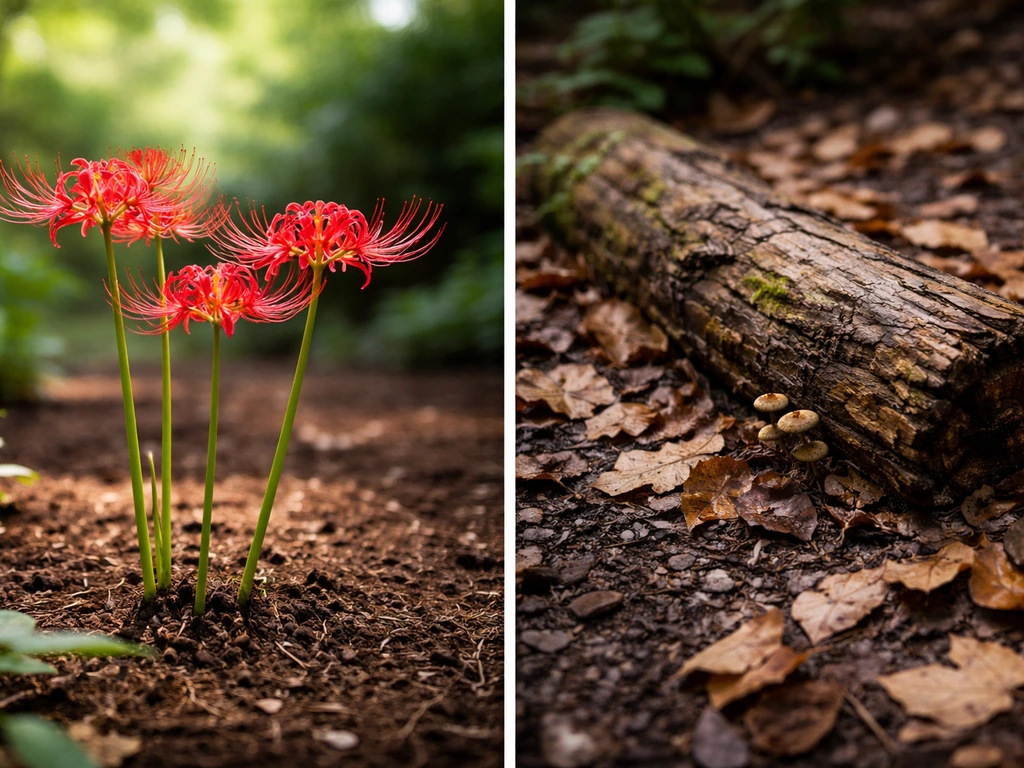
- Organic matter decomposing on the soil surface (think rotting logs, leaf piles, or garden compost) gradually improves soil structure and nutrient availability. Spider lilies, like most bulbs, benefit from organically rich soil. They are reacting to the conditions the decomposition created, not the decomposition itself.
- Cemeteries and burial sites are often undisturbed for long periods and tend to have mature trees, low foot traffic, and soil that has not been turned or chemically treated frequently. That is genuinely good spider lily habitat: partial shade, stable soil, consistent moisture patterns.
- Because Lycoris bulbs persist and slowly offset for decades, a plant introduced to a site 50 or 100 years ago will still be there, slowly expanding. Old burial grounds are exactly the kind of long-undisturbed site where a clump planted generations ago survives intact.
The plant is not drawing nutrients from corpses or decomposing remains in any meaningful horticultural sense. It is a bulbous plant that stores its own energy, uses photosynthesis during the leaf stage, and goes dormant in summer. It does not have specialized roots for extracting nutrients from animal remains, unlike actual parasitic or carnivorous plants. The proximity to death-related sites is explained entirely by cultural planting history and shared habitat preferences.
Plant identification and lookalikes (how to be sure you have the right plant)
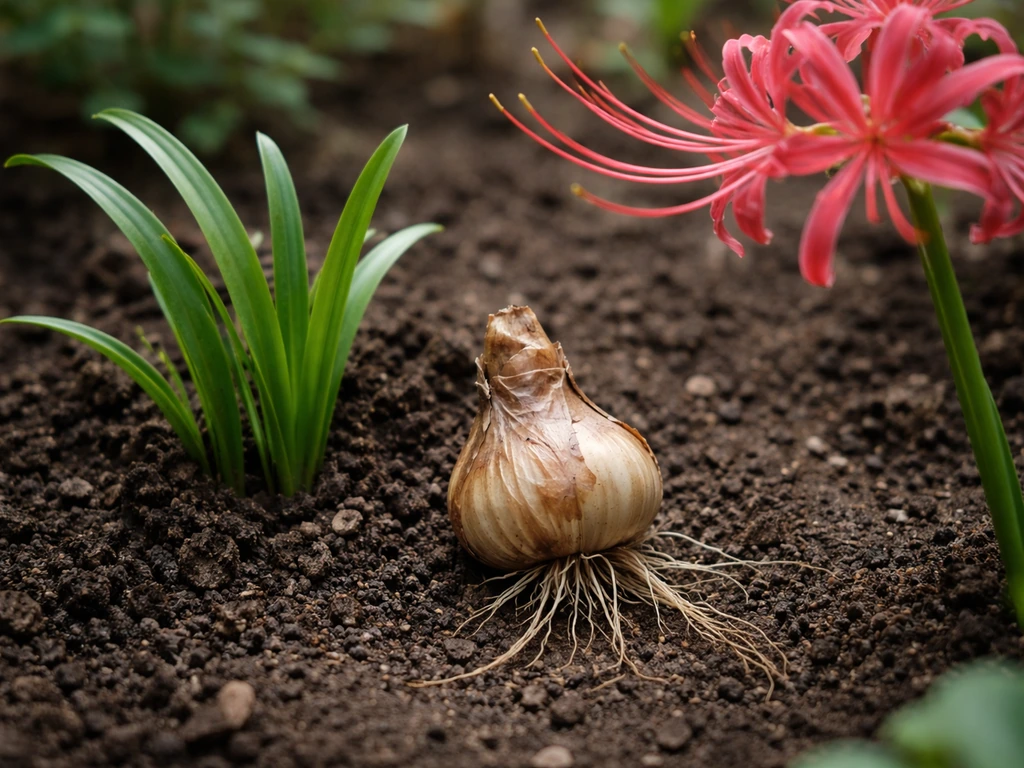
Before you do anything with a plant you found in the garden or in the wild, make sure it is actually Lycoris. There are a few common lookalikes that are worth distinguishing.
| Plant | Bloom color | Bloom time | Leaves present at bloom? | Key difference |
|---|
| Lycoris radiata (red spider lily) | Bright red | Late summer to early fall | No | Extremely long stamens; leafless scape; bulb offsets slowly |
| Lycoris squamigera (surprise lily) | Pink/lavender | Mid-summer | No | Shorter stamens; flower cluster more like an amaryllis |
| Nerine (Guernsey lily) | Pink to red | Fall | No | Narrower petals; smaller bulb; from South Africa |
| Hemerocallis (daylily) | Orange, yellow, red | Summer | Yes | Grassy leaves present with flowers; entirely different growth habit |
| Amaryllis belladonna (naked lady) | Pink | Late summer | No | Larger, more trumpet-shaped flowers; coarser stems |
If you see leafless red stems rising from bare ground in early fall, topped with clusters of dramatically reflexed petals and extremely long, arching stamens that look like spider legs, you almost certainly have Lycoris radiata. If the plant has leaves alongside the flowers, or the flowers are shaped more like a funnel or trumpet than a backward-swept star, it is probably something else. Worth knowing too: all Lycoris contain the alkaloid lycorine, which is toxic if ingested. That is actually one of the reasons people historically planted them around rice paddies and graves, to deter rodents from digging up bulbs.
Growing spider lilies successfully
Once you know you are dealing with Lycoris, the growing guidance is fairly specific and worth getting right. I have seen people fail with these plants repeatedly because they treat them like daylilies or tulips, and they are neither.
Light
Partial shade is the sweet spot for L. radiata, specifically dappled light or a spot that gets morning sun and afternoon shade. Full blazing sun all day will stress the plant and reduce flowering. This lines up perfectly with why they do well under mature trees or along shaded walls, which are, incidentally, common features of old cemeteries and churchyards.
Soil and drainage
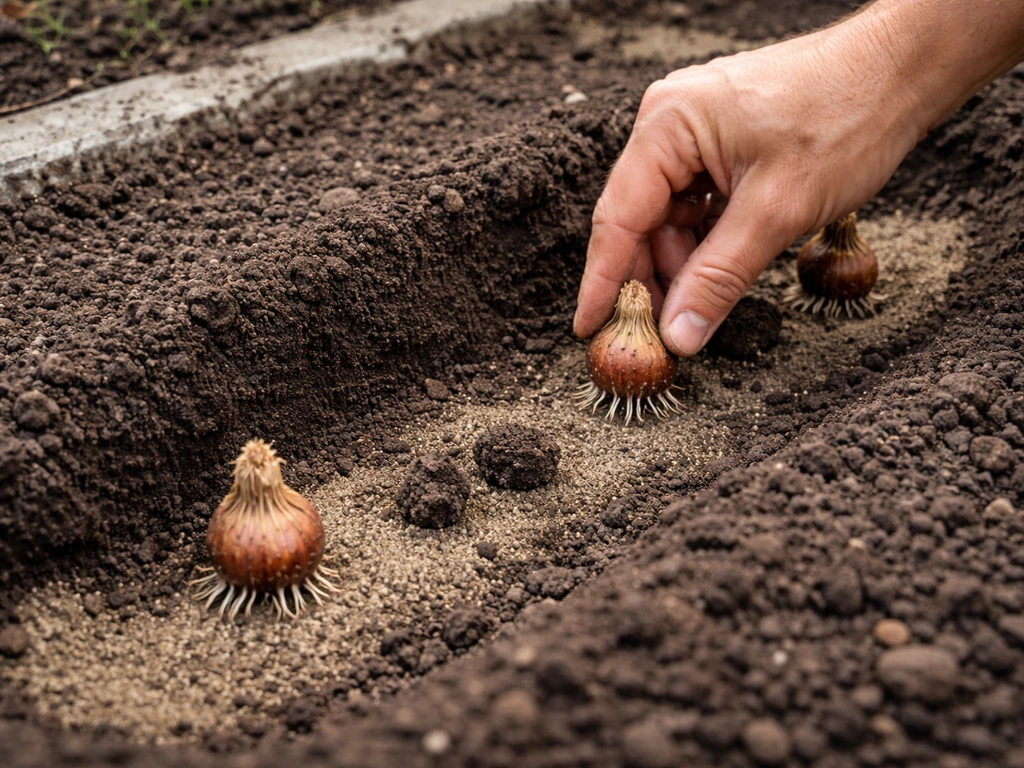
Rich, well-drained soil is non-negotiable. Bulb rot is the most common killer, and it happens when bulbs sit in wet soil during their summer dormancy period. If your soil is heavy clay, amend it with compost and coarse grit before planting, or raise the bed. During active growth (autumn through spring), the plants appreciate consistent moisture. During summer dormancy, they want to stay relatively dry. Site selection matters more than watering habits here: if you put them somewhere that naturally dries out in summer and stays moist in winter, you are already most of the way there.
Planting depth and spacing
Plant bulbs 4 to 6 inches deep and space them roughly 6 inches apart. Planting time is late summer to early fall, timed to match the plant's natural cycle. Do not plant them in spring when garden center impulse buys tend to happen, as that is their growing season and you will likely set them back. Also, and this is important: plant them somewhere permanent. Lycoris bulbs resent being moved. A transplanted bulb will often sulk for a full season before blooming again, and repeated moves can prevent flowering indefinitely.
Climate and hardiness
Lycoris radiata is reliably hardy in USDA zones 6 through 10, with some reports of zone 5 success with mulching. The Southeast United States is actually ideal territory for them, which is why naturalized populations are common there. If you are wondering about growing spider lilies in Texas, the answer is generally yes, especially in the eastern and central parts of the state where heat and humidity more closely match their native East Asian range. Hot summers help trigger the dormancy cycle properly, which is actually a prerequisite for good flowering.
Indoor growing
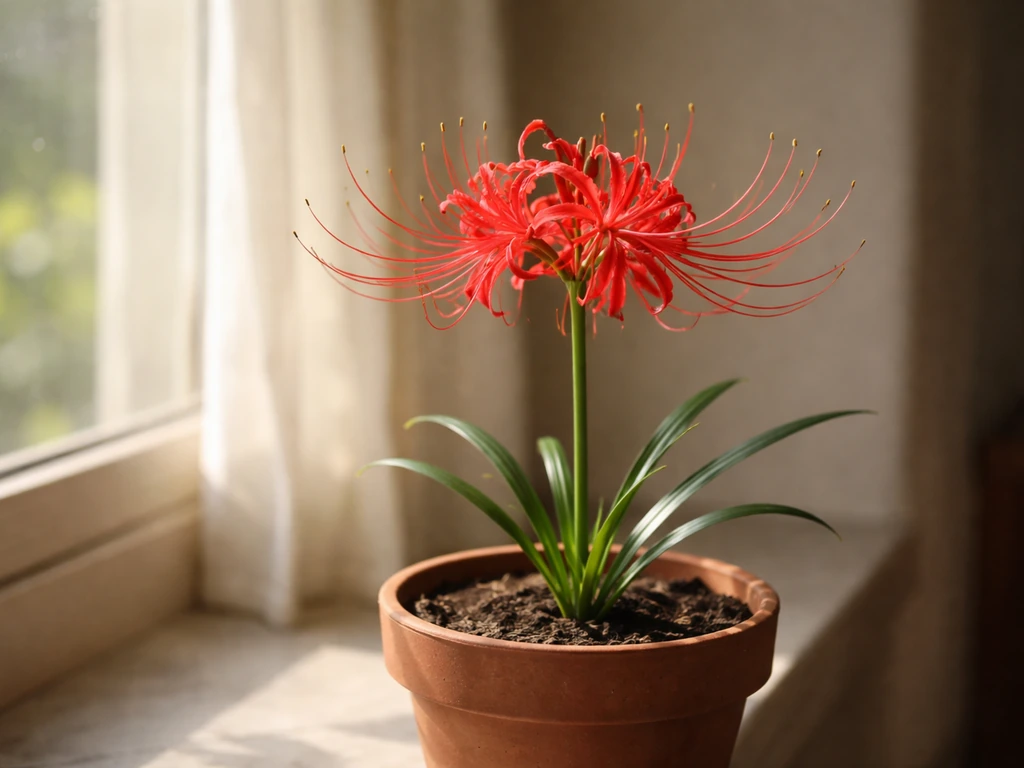
If you are thinking about growing spider lilies indoors, it is possible but tricky. The plant needs a genuine summer dormancy period with warm temperatures and reduced water, followed by cooler autumn cues to trigger flowering. A pot on a warm, bright patio that gets moved inside after first frost can work reasonably well. The challenge is replicating the dry dormancy phase without letting the bulb desiccate completely. Most people find them easier to manage outdoors in the ground, where natural seasonal shifts do the work for you.
Troubleshooting and next steps today
People often search this topic because they have spider lilies that are not performing the way they expected, or they found a mystery plant near disturbed ground and want to know what to do next. Here is the practical breakdown.
If your spider lilies are not blooming
This is the most common complaint and it almost always has one of a few causes. First, if you recently transplanted them, wait. Lycoris typically takes at least one full season to settle in after being moved, and sometimes two. Second, check your light levels. If they are getting full afternoon sun in a hot climate, or deep shade all day, neither is ideal. You want bright indirect light or morning sun. Third, think about your summer watering habits. If you have been irrigating through summer dormancy, the bulbs may be staying too wet, which disrupts the dormancy trigger and delays or prevents flowering. Fourth, planting depth matters: too shallow and the bulbs may not get the thermal cues they need; too deep and they struggle to push the scape up. Stick to 4 to 6 inches.
If you are new to these plants, it helps to understand upfront that spider lilies can be challenging to grow specifically because their needs are unusual compared to typical garden bulbs. Getting the dormancy cycle right is the key, and most failures trace back to watering at the wrong time of year.
If you want to relocate spider lilies from a disturbed or unwanted spot
Do it in summer, when the plant is fully dormant and there is no foliage to damage. Dig carefully to get the whole bulb and as many offsets as you can. Replant immediately at the correct depth in your chosen spot, water once to settle the soil, then leave them alone. Do not overwater during dormancy. Mark where you planted them so you do not accidentally disturb them before the flower scape appears in fall. Expect a skipped bloom season the first year after moving them.
If you want to understand the full timeline before committing
Knowing how long spider lilies take to grow and bloom from a newly planted bulb helps set realistic expectations. First-year bloomers are possible but not guaranteed, and understanding the multi-month dormancy cycle before that first fall bloom helps you stay patient rather than assuming something went wrong. The general rule is: plant in late summer, expect leaves in autumn, lose the leaves by late spring, see nothing through summer, and then hope for blooms the following fall. Some bulbs do it in the first year; others take two.
Final check: is it definitely a spider lily?
If you found a mystery plant near disturbed ground and are still not certain what you have, the best field test is simple: dig up a small bulb and look at it. Lycoris bulbs are white to pale tan, roughly the size of a golf ball to a tennis ball, and have a distinct neck at the top. If the plant had no leaves when it flowered, produced red star-shaped flowers with dramatically extended stamens on a bare stem in early fall, and you found it in a partially shaded spot with decent drainage, it is almost certainly Lycoris radiata. From there, treat it as a keeper, give it the right conditions, and it will reward you with reliable fall color for decades.