
In UK ponds, hardy water lilies typically start growing from late April through May, but the honest answer is that the calendar matters far less than your water temperature. Once the water hits around 16°C (about 60°F), you'll see the first new leaves pushing up from the rhizome. Before that point, no matter what the date says, your water lily is essentially still asleep.
When Do Water Lilies Start to Grow in the UK

Marcus Hendricks
7 May 2026
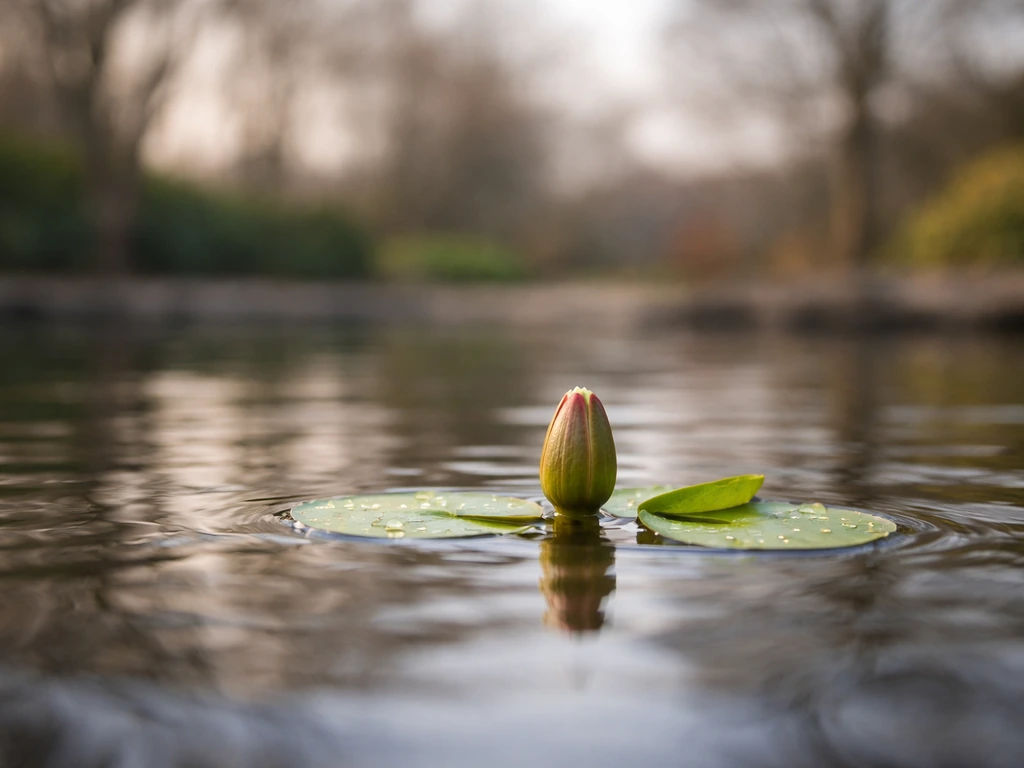
Spring vs summer: what actually kicks growth off
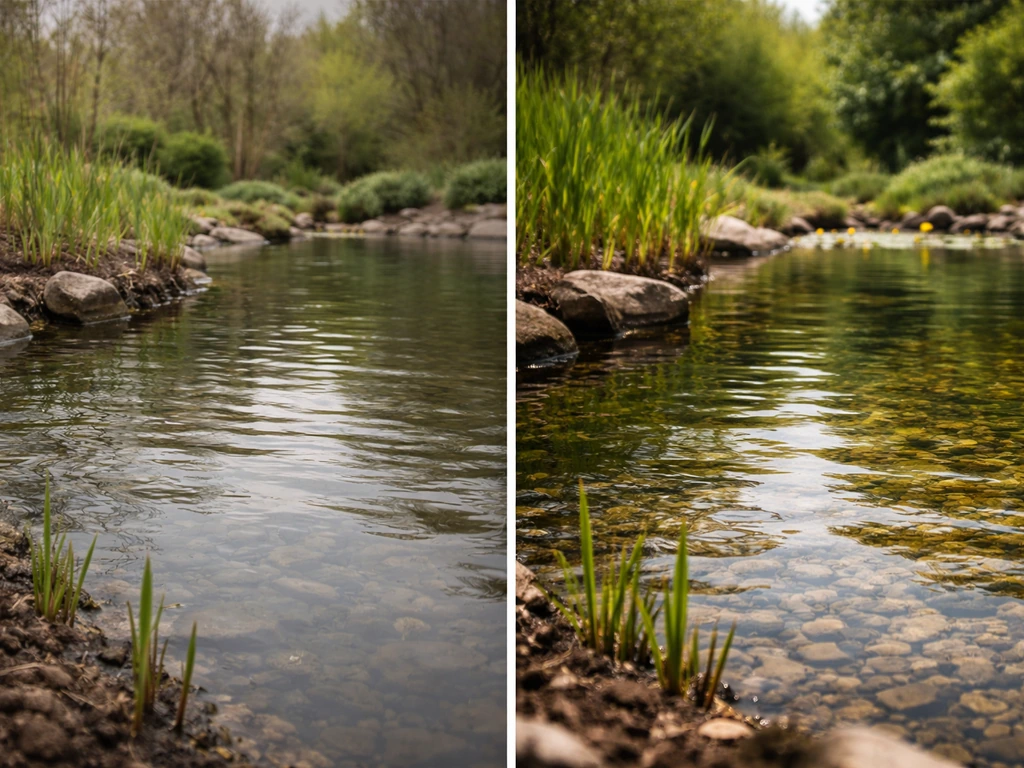
UK pond water warms up slowly and unevenly depending on your garden's exposure, pond depth, and whether you've had a cold, wet spring. In a typical UK year, shallow garden ponds start reaching the 16°C threshold somewhere between late April and late May. Deeper ponds, or those sitting in shade for part of the day, often lag two to four weeks behind. So if your neighbour's water lily is already leafing up and yours looks dead, depth and shade are usually the culprits, not the plant itself.
Daylight intensity plays a supporting role too. Water lilies need strong, direct sun to produce energy for that first burst of growth. The combination of warming water and lengthening days is what flips the switch. A plant sitting in dappled shade might wait until June even if the water temperature is technically warm enough, simply because it can't build enough energy to push new leaves.
Think of it like spring bulbs. The warming has to happen first. A freshly planted water lily rhizome will just sit there looking inert until conditions are right, and that's completely normal. Patience is genuinely the hardest part of keeping water lilies in the UK.
Hardy vs tropical: timing is very different
Most UK gardeners are growing hardy water lilies, varieties of Nymphaea that can survive British winters in the pond. These are the ones that go dormant over winter and wake up with spring warming. They're tough, forgiving, and well suited to our unpredictable climate. Tropical water lilies are a completely different story: they need water temperatures of around 21°C to 24°C (70°F to 75°F) before you'd even consider putting them outside, which in most of the UK means they're a summer-only plant, usually safe to introduce no earlier than June, and even then only in warmer parts of England.
| Type | Water temp to start growing | Typical UK start window | Winter survival |
|---|---|---|---|
| Hardy water lily (Nymphaea) | ~16°C (60°F) | Late April to late May | Yes, stays in pond |
| Tropical water lily | ~21–24°C (70–75°F) | June onwards (southern UK) | No, needs overwintering indoors |
For almost everyone reading this in the UK, the focus should be on hardy varieties. They're the practical choice, and they're what the rest of this guide is mostly about. If you're curious about how different types of water lily grow and develop over the season, that's worth digging into separately, because the growth habit of a hardy rhizome-based lily is quite different from a tropical one.
The conditions your water lily needs before it'll do anything
Water temperature
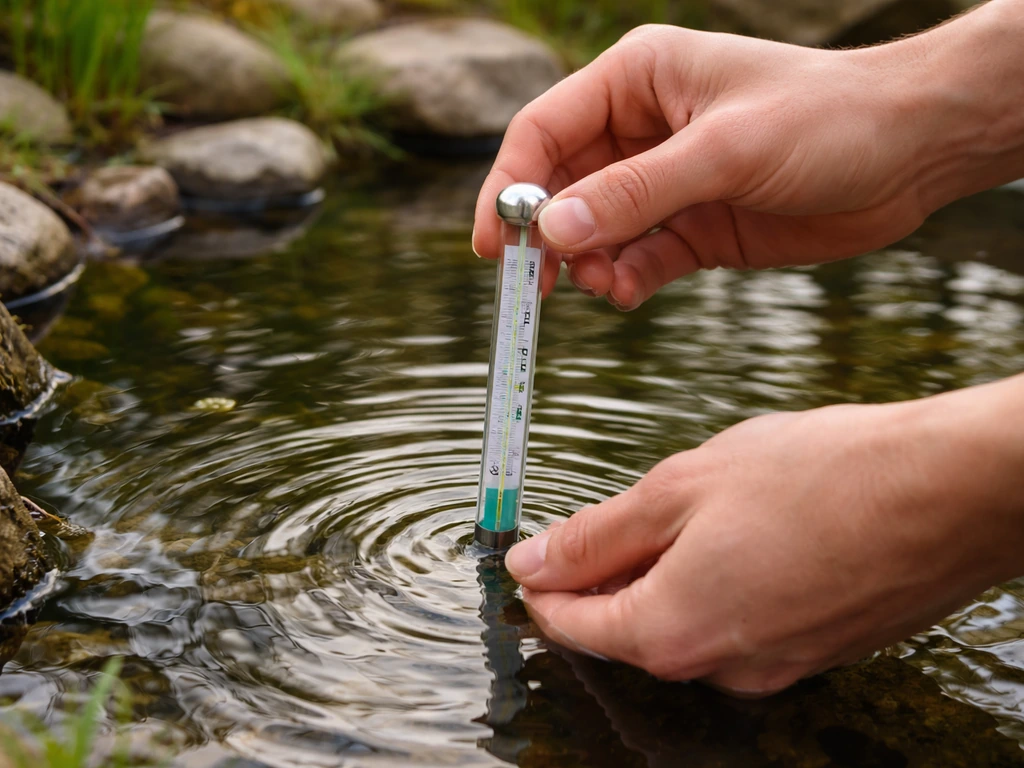
This is the big one. Active growth starts at around 16°C, and the plant is happiest and growing fastest somewhere between 25°C and 35°C. In the UK, most ponds only hit those higher temperatures for a few weeks in a warm summer, which is why growth can feel slow compared to what you see in warmer climates. Get a basic pond thermometer and start checking from April onwards. It removes all the guesswork.
Light
Water lilies want at least five to six hours of direct sun per day. This isn't negotiable. A pond in part shade will produce plants that grow slowly, flower poorly, and stay dormant longer into spring. If you're setting up a new pond or repositioning a plant, prioritise the sunniest spot available.
Water depth
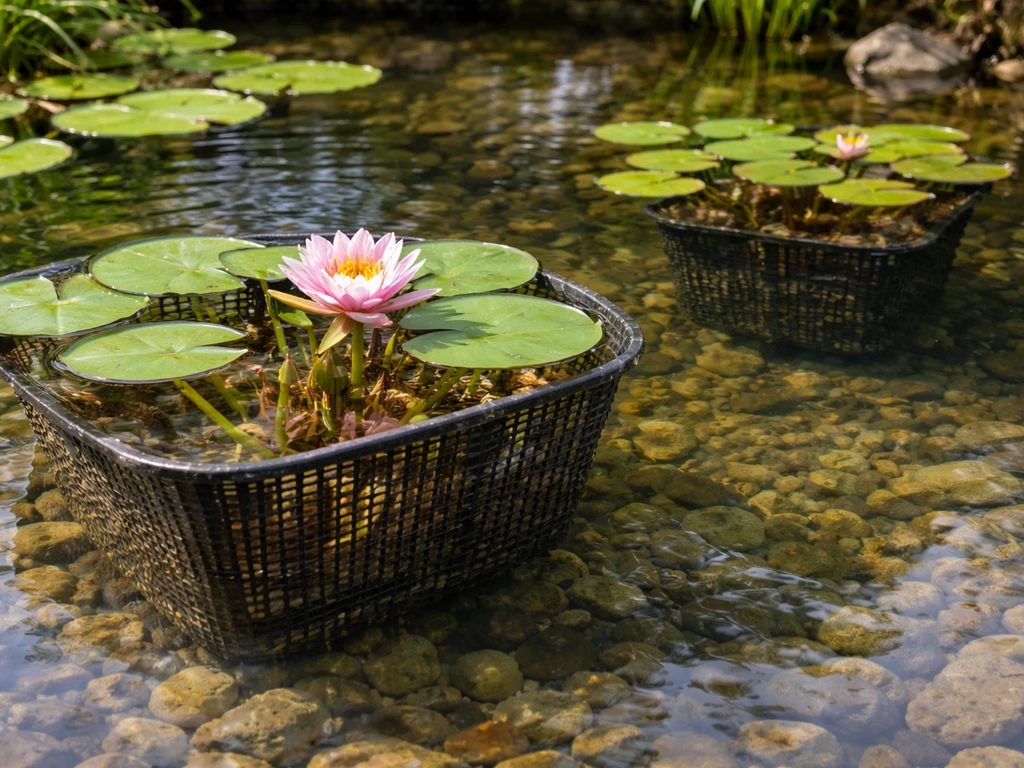
Depth matters more than most people realise, both for getting growth started and for long-term health. The key principle is: shallower water warms up faster, so starting new or young plants shallower helps trigger growth earlier. As a rule of thumb, many hardy water lilies end up roughly in the 30 cm to 90 cm range, depending on the variety and growing conditions shallow water warms up faster. For a newly planted hardy water lily, position the basket so there's only about 15–30cm (6–12 inches) of water over the soil surface. As the plant grows and produces more leaves, you gradually lower it to its final depth. For established plants, recommended depths vary by cultivar size: small varieties do well at 30–45cm, medium at 45–75cm, and large varieties at 75–120cm of water depth over the crown.
Planting too deep too soon is one of the most common reasons UK gardeners wonder why their water lily isn't growing. BBC Gardeners' World Magazine's water lily planting guidance also stresses correct depth and positioning, warning not to plant too deep straight away Planting too deep too soon is one of the most common reasons UK gardeners wonder why their water lily isn't growing.. If the plant is sitting at 90cm depth in May and the water is only just starting to warm, it's going to struggle. Bring it up to a shallower shelf (aim for a planting shelf around 20–25cm deep is a good starting position) and you'll often see it respond within a few weeks.
How to tell if your water lily has actually started growing
The first sign is usually a reddish or greenish shoot emerging from the growing tip of the rhizome, followed quickly by small, rolled-up leaves pushing up toward the surface. In a newly planted rhizome, you might see this within two to four weeks of planting if conditions are right, or it might take six to eight weeks in a cold spring. An established plant that overwintered in the pond will often show growth slightly earlier because its roots are already settled.
- New shoots visible at the growing tip of the rhizome (look through the basket if you can)
- Small, coin-shaped leaves unfurling at or near the water surface
- Leaf stems (petioles) extending upward through the water column
- Reddish tinting on new juvenile leaves (completely normal and not a sign of disease)
- Increased leaf production week on week once growth starts
If you're several weeks into the season and see none of these signs, check the rhizome. Lift the basket carefully and inspect the growing tip. A healthy rhizome should be firm and light-coloured at the cut end. If it's soft, mushy, or black, it has likely rotted, often from being planted in cold, stagnant conditions over winter or from damage during planting. A firm rhizome with no visible shoots is usually just waiting for warmer water.
Common UK problems that delay or stop growth
Cold water lingering too long
In the UK, a cold, wet spring can push the 16°C threshold into June in northern England, Scotland, or exposed gardens. There's no shortcut here, but you can help by making sure the pond is in full sun and not shaded by overhanging trees or fencing that blocks early-season light. Some gardeners cover small ponds with a clear fleece or polycarbonate sheet in early spring to help trap heat, which can bring the temperature up a few degrees faster.
Planting too deep
Already mentioned above, but it's worth repeating because it's so common. New plants placed straight into deep water in spring won't get enough light or warmth to start growing. Always start shallow and move deeper as the season progresses.
Wrong rhizome orientation
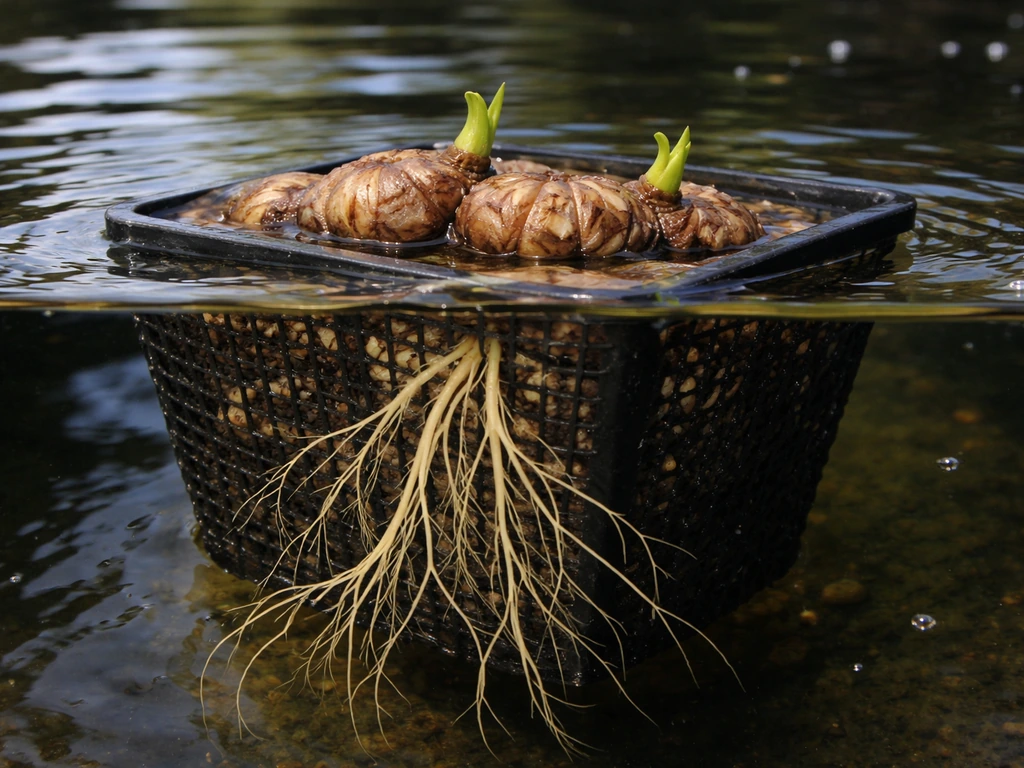
Hardy water lily rhizomes have a distinct growing tip or crown, which needs to be pointing upward or toward the centre of the basket rather than buried or facing down. If it's planted facing the wrong direction or buried too deeply under the planting media, growth can be seriously delayed or the new shoot may exhaust itself trying to find the right direction. Plant the rhizome horizontally near the edge of the basket, with the growing tip angled toward the middle and exposed just above the soil surface.
Insufficient light
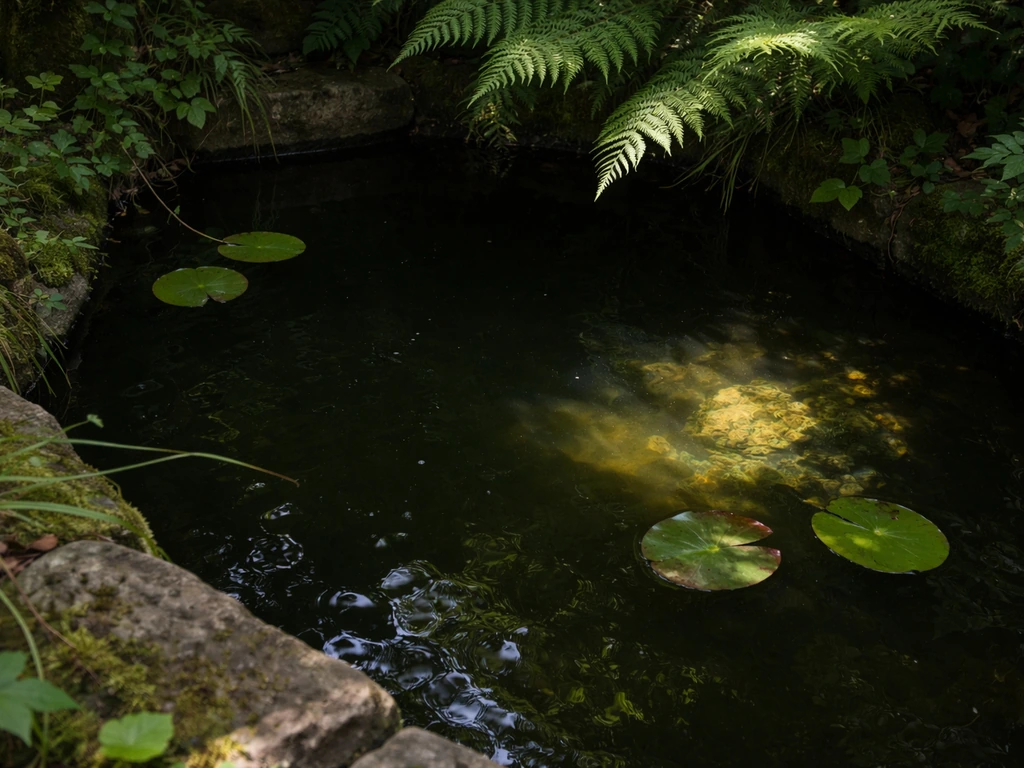
A shaded pond is probably the single biggest long-term barrier to healthy water lily growth in UK gardens. Even if the plant eventually produces some leaves, flowering will be poor and growth will be sparse. If you can't move the pond, consider whether overhanging branches can be pruned back to increase sun hours.
Pests and other issues
Water lily aphids (Rhopalosiphum nymphaeae) can attack new leaves in late spring and early summer, covering them with sticky colonies that distort growth. A strong jet of water from a hose will knock them into the pond where fish will deal with them. China mark moth larvae are another UK pest, cutting pieces from leaves to make protective cases. Again, fish help, and manual removal works for small infestations. Neither pest will prevent growth from starting, but they can slow it down noticeably once it has begun.
What to do right now: a step-by-step for May
If you're reading this in May, you're at a good moment to act. UK pond water is either just reaching or approaching the 16°C mark in most regions. If you enjoy songs and outdoor soundtracks, “Where the Water Lilies Grow” can also be a nice companion while you wait for that first burst of growth where the water lilies grow song. Here's what to do today.
- Check your water temperature with a pond thermometer. If it's below 16°C, hold off on planting new lilies but check existing ones for signs of life.
- Inspect established water lilies by looking for new shoots or leaves near the surface. If none are visible, gently lift the basket and check the rhizome is firm and healthy.
- For any new hardy water lily rhizomes you're planting now, pot them into an aquatic planting basket using heavy loam or specialist aquatic compost (not peat-based multipurpose). Orient the rhizome horizontally with the growing tip exposed and angled toward the centre.
- Position the basket on a pond shelf or prop it up so there's only 15–30cm of water over the soil. You'll lower it gradually over summer as the plant grows and leaves reach the surface comfortably.
- Add a slow-release aquatic fertiliser tablet into the soil near the roots at planting time, and repeat every spring for established plants. This promotes strong growth and better flowering. Don't use general garden fertilisers, which will cause algae problems.
- Make sure the pond is getting at least five to six hours of direct sun per day. If it isn't, consider whether any nearby shading can be reduced.
- Check again in two to three weeks for new leaf growth. In May conditions, a correctly planted hardy lily should start showing signs within that window.
- For tropical varieties, wait until water temperatures are reliably at 21°C or above before even thinking about putting them outside, which in most of the UK means June at the earliest.
Seasonal care as growth gets going
Once your water lily is actively growing, the key jobs are progressively lowering the basket to its final depth as stems elongate, removing any yellowing or dying leaves promptly (they decompose and affect water quality), and keeping on top of aphid checks through summer. By midsummer, a healthy plant should be producing new leaves regularly and, if conditions and variety allow, flowering between June and September.
Growth rate varies considerably by variety and conditions. Some compact cultivars fill their basket and start producing flowers within a single season; larger varieties may take two seasons to really establish and bloom. If you're wondering how fast water lilies grow or how big they're likely to get in your pond, those are worthwhile things to look into before you buy, because a large-growing variety in a small pond will overwhelm the space and suppress its own growth by overcrowding. If you want the full answer to how does water lily grow, it helps to understand how growth speed and size change with temperature, light, and variety how fast water lilies grow.
As autumn comes and water temperatures drop back below 16°C, growth will slow and eventually stop. Water lilies do not grow new leaves in winter because they become dormant when water temperatures drop back below about 16°C. Hardy varieties will die back naturally and go dormant again, which is completely normal. Don't panic if leaves yellow and sink from October onwards. That's the plant protecting itself, not dying. It'll be back next April or May, right on schedule.
Quick checklist: is your water lily ready to grow?
- Water temperature is at or above 16°C (use a thermometer, not a guess)
- Pond is in at least five to six hours of direct sun daily
- Rhizome is firm, healthy, and oriented with growing tip facing upward/inward
- Basket is positioned at 15–30cm water depth over the soil for new or young plants
- Aquatic fertiliser tablet added to the planting basket this spring
- No signs of rhizome rot (soft, black, or mushy tissue)
- New leaf growth checked for and week by week progress noted
- Aphids monitored once leaves appear and dealt with quickly if found
FAQ
How can I tell if my water lily is just late, or if something is wrong?
Look for a firm, pale growing tip on the rhizome. If the rhizome is firm but no shoots appear, it is usually waiting for warmer water and more sun. If it is soft, mushy, or black at the cut end, it has likely rotted and needs to be replanted. Also check that the growing tip is angled upward toward the basket center, not buried or pointing the wrong way.
Should I move my water lily to a shallower spot in spring if it has not started yet?
If it is planted too deep for where the pond is warming early in the season, lifting it to a planting shelf can help. For a newly planted hardy lily, a common starting position is around 15 to 30 cm of water over the soil surface, then increase depth gradually as stems elongate. Avoid replanting repeatedly, as disturbing the basket in cold conditions can delay recovery.
What water temperature should I measure, and where should the thermometer be placed?
Measure actual pond water near the lily’s root zone, not at the surface. A floating thermometer that records only surface warmth can be misleading in UK ponds where water warms unevenly. Take readings at similar times of day (for example, late morning) from April onward so you can spot when the lily should realistically be waking up around the 16°C threshold.
Why are my lily leaves coming up, but it never flowers until late (or not at all)?
Flowering often needs more than “growth.” If the pond gets fewer than about five to six hours of direct sun, the plant may leaf out but flower poorly. Also check depth and variety size, crowded baskets can suppress flowering, and excessive nitrogen-rich feeding (if you fertilize) can lead to leaves but not blooms.
Do tropical water lilies follow the same timing in the UK?
No. Tropical types need much warmer water, roughly in the 21°C to 24°C range, so in the UK they are usually only safe outdoors from around June in warmer areas. If you put a tropical lily outside too early, it may sit dormant or suffer stress even if temperatures are “mild” in your garden.
If my hardy water lily starts growing in June, is that a lost year?
Not necessarily. A late start from a cold, shaded, or deep pond often still allows leaves to establish and may produce some blooms depending on the variety and how quickly summer warms. Growth is most efficient when water reaches the mid to high 20s Celsius, so late starts can shift flowering later into summer or reduce it for larger varieties that take two seasons to establish.
Can I speed up when water lilies start by adding heat to the pond?
Small ponds can benefit from trapping solar heat early in spring, for example with a clear cover that lets light in. The goal is to raise the water temperature a few degrees faster, which can help the lily reach the 16°C wake-up point sooner. Ensure the cover still allows adequate light and ventilation, and remove it once temperatures become consistently mild.
My rhizome is firm but showing no shoots, how long should I wait before replanting or replacing it?
In a mild UK spring, you might expect first shoots within about two to four weeks after planting, but in a colder spring it can take six to eight weeks. If you are beyond that window and water temperature and sun exposure are adequate, re-check basket depth, rhizome orientation, and whether the growing tip was buried under too much media. Replacing is usually a last step after confirming those factors.
How deep should the water be once growth starts, and when should I lower the basket to the final depth?
Start the basket shallower so the roots get warmth and light, then progressively lower as stems elongate. Follow your cultivar’s recommended range for final depth (small, medium, and large types differ), and avoid dropping it to the final depth immediately, which can slow the initial growth stage.
Will fish in the pond affect when water lilies start growing?
Fish do not typically prevent the initial wake-up, but they can influence early growth by reducing aphids and by disturbing newly exposed leaves in some ponds. If you have a history of plant damage, consider adding a temporary leaf guard or monitoring closely after shoots appear. The main drivers for start time are water temperature, sun hours, and correct planting depth.
Next Articles

Where the Water Lilies Grow Song Lyrics and Where They Grow
Find the song lyrics to Where the Water Lilies Grow and learn exact water lily growing conditions for your pond or conta
How Fast Do Water Lilies Grow How Long to Expect Blooms
Get real timelines for water lily growth from rhizomes to blooms, plus tips to speed growth safely and fix slow growth.

How Does Water Lily Grow: Habitat, Leaf Pads, and Care
Learn how water lilies grow in ponds, why they float, when they leaf out, and how to set light, depth, and care.