
Asiatic lilies can tolerate a little shade, but they are fundamentally full-sun plants. For a typical growth rate and what to expect at different light levels, see how fast do lilies grow. If your spot gets fewer than 6 hours of direct sun daily, you are going to run into problems, and if it gets fewer than 4 hours, you will almost certainly get weak stems and very few flowers. The honest answer is: partial shade can work with careful management, but deep shade will not work at all, and you should not waste good bulbs trying.
Can Asiatic Lilies Grow in Shade? Sun Needs and Tips
Marcus Hendricks
18 Apr 2026
How much shade Asiatic lilies can actually handle
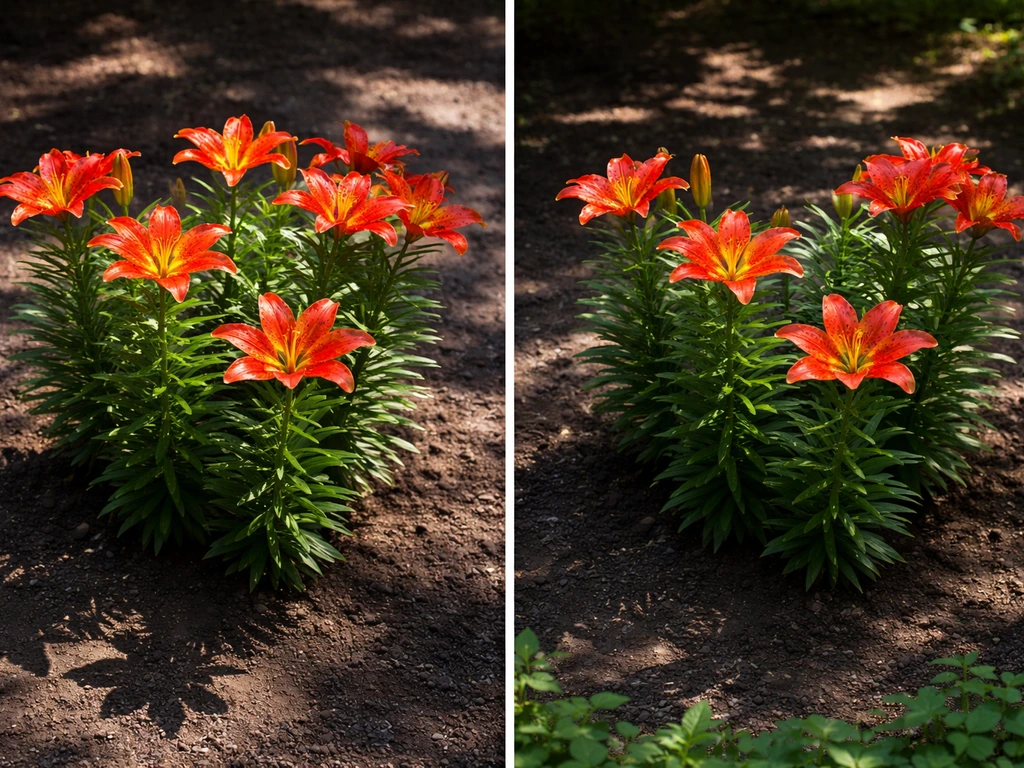
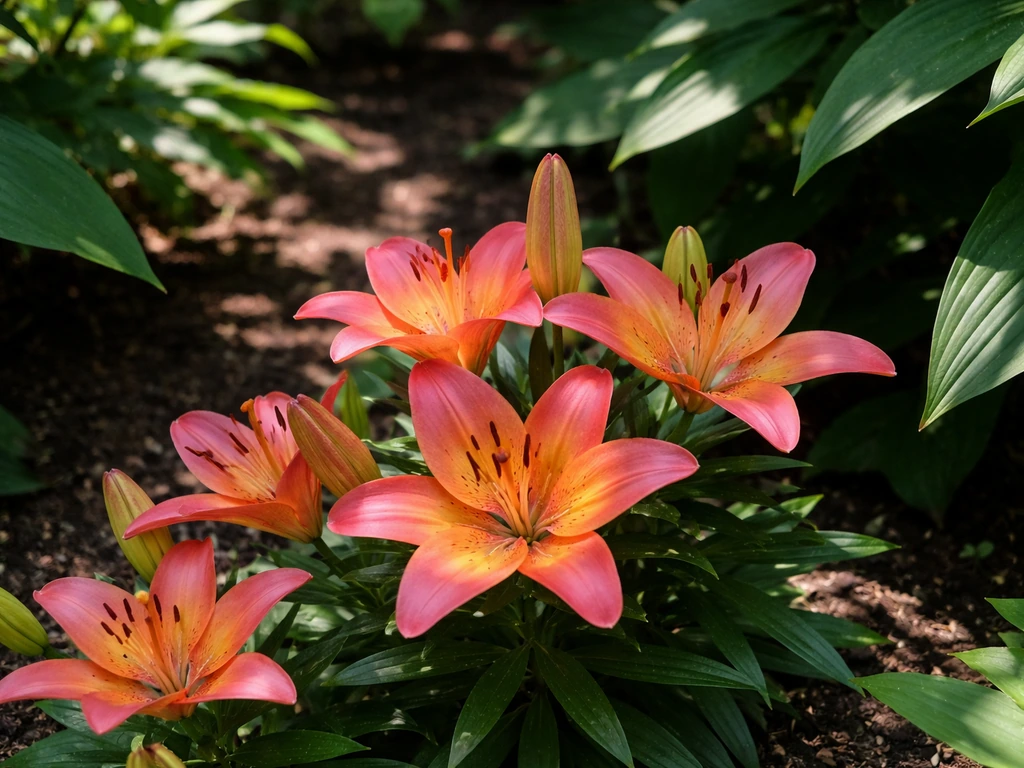
NC State University Extension and Iowa State University Extension both specify that Asiatic lilies need full sun, defined as at least 6 hours of direct sunlight per day. Brent and Becky's Bulbs tightens that range to 6 to 8 hours. What this means in practice: a spot that gets 5 hours of direct sun on a midsummer day is already pushing the lower limit. A spot that gets 3 to 4 hours is genuine partial shade, and while some sources list Asiatic hybrids as tolerating 'full sun to light shade,' that light-shade tolerance is a buffer, not a recommended condition.
Here is how the light tiers break down for these plants. Full sun (6 or more hours of direct sun) is where Asiatic lilies thrive and flower reliably. Light or partial shade (roughly 4 to 6 hours of direct sun, or dappled light through thin canopy) is where they can survive and sometimes bloom, but stem strength and flower count will drop. Anything below about 4 hours of consistent direct sun counts as moderate to full shade for practical lily-growing purposes, and that is where bud failure becomes the likely outcome, not the exception.
| Light Level | Direct Sun Hours | Expected Outcome for Asiatic Lilies |
|---|---|---|
| Full sun | 6–8 hours/day | Strong stems, full flowering, healthy foliage |
| Light/partial shade | 4–6 hours/day | Reduced flower count, slight stretching, manageable with care |
| Moderate shade | 2–4 hours/day | Leggy stems, poor flowering, high bud drop risk |
| Deep/full shade | Under 2 hours/day | Fails to flower, bulbs weaken and decline over seasons |
One thing that catches a lot of gardeners off guard: shade is not just about whether trees are overhead. A north-facing fence, a wall, or a tall neighboring structure can cut your effective sun hours significantly without a single leaf in sight. Before planting, track your spot through the day and count actual hours of direct sun hitting the ground. That one step will save you a lot of frustration.
Signs your spot is too shady for Asiatic lilies
Asiatic lilies in too little light do not fail quietly. The signs are pretty clear once you know what to look for, and they usually show up before flowering even becomes a question.
- Stems stretch and lean toward the nearest light source rather than growing straight up (etiolation). This is one of the earliest and most reliable indicators.
- Plants are noticeably taller and thinner than expected for the cultivar. If you know the variety typically reaches 24 to 36 inches and yours is hitting 48 inches with a spindly stem, low light is the likely culprit.
- Buds form but then drop off before opening, or they blast (dry up and die on the stem without opening). ISHS research specifically documents bud blasting and bud abscission as failure modes tied directly to insufficient light in Asiatic lilies.
- Flower count is lower than expected. Plants that should carry 4 to 6 flowers per stem might produce 1 or 2.
- Foliage is paler than usual, sometimes yellow-green instead of a deep healthy green.
- Overall plant vigor declines over multiple seasons as the bulb slowly exhausts its energy reserves trying to flower in inadequate light.
The bud-drop issue is worth understanding because it can feel like a disease or pest problem when it is actually a light problem. When Asiatic lilies do not receive enough light energy during bud development, the plant essentially aborts the buds rather than completing the flowering process. If you have ruled out pests, botrytis, and poor drainage and your buds are still dropping, revisit how many sun hours the site actually receives.
Making partial shade work: placement and layout
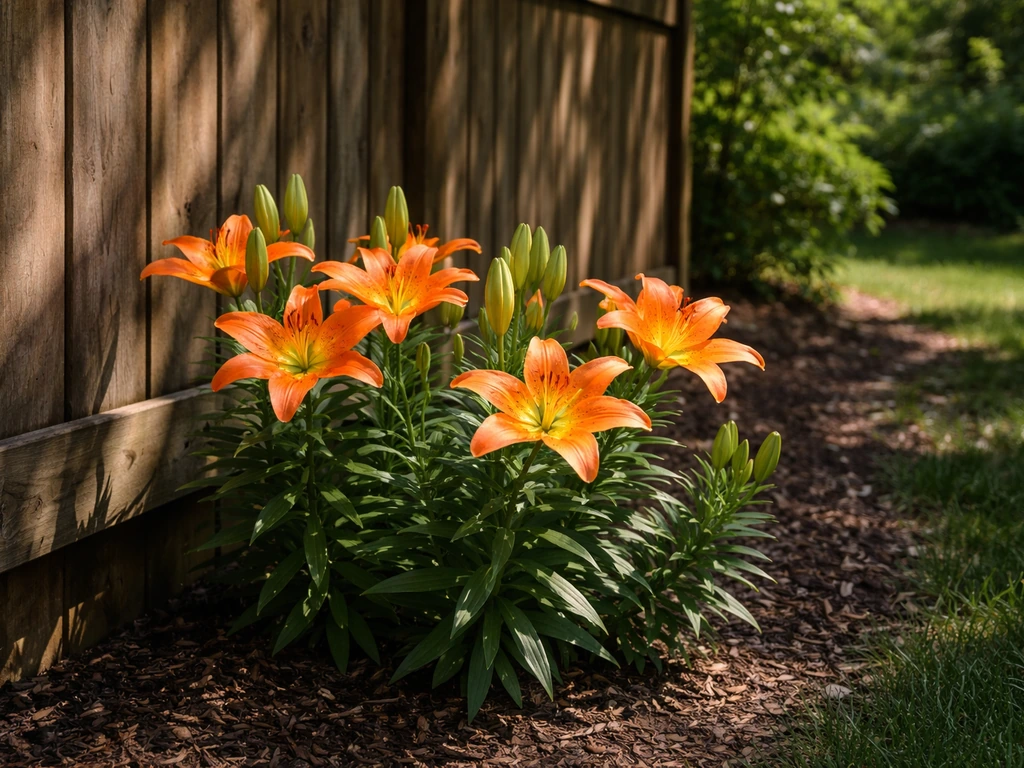
If your site falls in that 4 to 6 hour partial-shade zone, there are real strategies that can push your Asiatic lilies toward success. The key is maximizing the quality of the light they do receive and keeping the base of the plant as cool and stable as possible.
The most practical placement advice comes directly from the RHS and is echoed by NC State: put the base of the plant in shade but let the rest of the plant grow into full sun. In practice, this means planting Asiatic lilies at the edge of a shaded area, behind low groundcover, or alongside shorter plants that will eventually shade the soil around the bulbs. The roots stay cool and moist, but the stems and flowers grow up into better light. This is not a workaround, it is actually the recommended microclimate strategy even for optimal growing.
Morning sun is better than afternoon sun only if you are in a hot climate where afternoon sun is scorching. In most temperate zones, afternoon sun delivers more total light energy and is worth prioritizing for Asiatic lilies in marginal shade spots. East-facing beds that get morning sun but are shaded by afternoon are actually suboptimal compared to a west-facing spot with strong afternoon exposure. Keep that in mind when you are evaluating your options.
Spacing also matters in shaded beds. Tight planting creates its own micro-shade as plants compete for light and airflow. In a partially shaded spot, give each plant a little more room than the standard recommendation, at least 12 inches between bulbs, to reduce competition and help foliage dry out faster after rain or irrigation.
Reflected light is a real asset. Planting near a white or light-colored wall or fence can meaningfully boost the effective light level in a spot that would otherwise be borderline. If you have a choice between a shady bed near a dark fence and one near a light-colored wall, go with the wall.
Soil, watering, and fertilizing in a shaded bed
Growing Asiatic lilies in partial shade changes the care equation, mostly around moisture and disease risk. Shaded soil stays wet longer than a sunny bed, and Asiatic lilies are genuinely sensitive to waterlogged conditions. Root rots from Pythium and Rhizoctonia are common when bulbs sit in overly wet soil, and botrytis (a fungal disease that attacks foliage and buds) thrives in the cool, moist, low-airflow conditions that shade creates.
Start with the soil. NC State recommends well-drained loamy soil enriched with leaf mold or well-rotted organic matter. In a shaded bed, drainage becomes even more critical than usual. If your soil is heavy clay, amend generously with compost and coarse material, or consider raised beds that get the bulbs up and out of any standing moisture. Aim for a slightly acidic pH around 6.0 to 6.5 for best nutrient availability. When soil pH is off and light is already limited, you double the stress on the plant.
For watering, the Flamingo Holland Asiatic lily cultivation guide is direct about this: water thoroughly, then let the soil dry out slightly before watering again. In a shaded bed, 'slightly' really means it. You will water less frequently than you would in a sunny bed because the soil holds moisture longer. Avoid overhead irrigation if you can manage it, watering at the base instead. Wet foliage in a shaded, lower-airflow bed is an invitation for botrytis.
Fertilizing in partial shade should be restrained. A lower-light plant is growing more slowly and using fewer nutrients than a plant in full sun. Over-fertilizing, especially with nitrogen-heavy feeds, can push lush leafy growth at the expense of flowering and make the plant even more susceptible to disease. Use a balanced or slightly phosphorus-forward fertilizer at shoot emergence to support root development and bud set, then hold back once the plant is established. Mulching the base with wood chips or a low groundcover helps regulate soil temperature and moisture without smothering the bulb.
Picking the right variety or knowing when to switch lily types
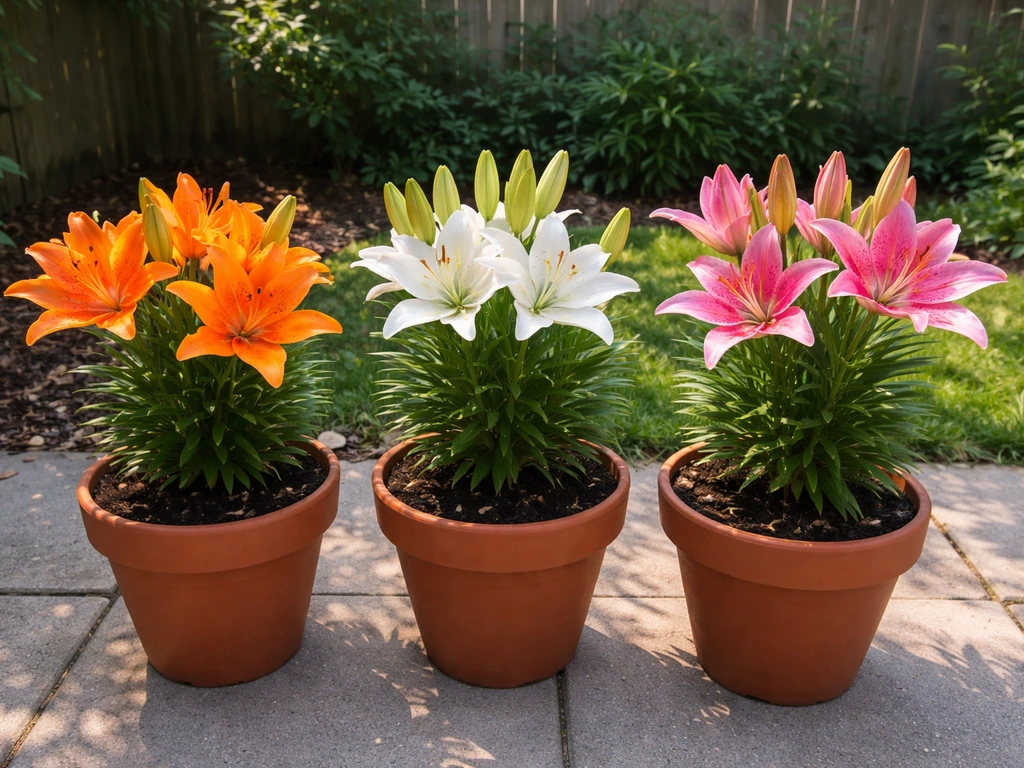
Within the Asiatic hybrid group, cultivar differences in light response do exist. ISHS research on forcing specifically documents that different Asiatic cultivars respond differently to low light, with some being more prone to bud blasting than others. Unfortunately, commercially available retail bulbs are rarely labeled with their light-tolerance specifics. The practical approach is to look for compact, shorter-growing Asiatic cultivars (generally 18 to 24 inches tall) rather than tall varieties, since compact plants need less energy to maintain their structure in lower light and are less likely to etiolate dramatically. If you are wondering how big lilies get, the next step is to look at the mature height and how it varies by variety and growing conditions how big lilies grow.
If your site consistently falls in the 4 to 5 hour sun range and you keep struggling with Asiatic lilies, the more honest move is to consider LA hybrid lilies instead. LA hybrids (crosses between Longiflorum and Asiatic species) have broader light tolerance than standard Asiatic hybrids. The Chicago Botanic Garden specifically lists some LA hybrid cultivars like 'Aladdin's Sun' as partial-shade plants. They tend to have stronger stems than Asiatic types in lower light and can handle a shadier microclimate with less performance loss. Mississippi State University Extension also notes that LA hybrids perform well in slightly acidic soil around pH 6.0, so the same soil prep applies.
If your spot gets fewer than 4 hours of direct sun, the honest recommendation is to skip Asiatic lilies entirely and look at true shade-tolerant plants. Surprise lilies have their own light and spacing needs, so use their growing guide to time planting and avoid bud issues how do surprise lilies grow. Martagon lilies, for instance, are specifically noted by Iowa State Extension as preferring partial shade, making them a far better fit for a genuinely shady garden bed. Knowing when to pivot is part of smart gardening, not a failure.
Growing Asiatic lilies indoors or in containers with limited light
Indoor Asiatic lily growing is a completely different light challenge from outdoor shade. Inside a home, even a sunny south-facing window rarely delivers the 6 to 8 hours of quality direct light that outdoor full sun provides. Light intensity drops off fast as you move away from windows, and glass filters out some of the light spectrum that drives flowering.
'Bright indirect light' for indoor plants often means something in the range of 1,000 to 2,000 lux at the plant surface. For Asiatic lilies to bud and flower successfully indoors, they need significantly more than that during bud development. ISHS research puts quantitative minimums on this: at light levels around 30 cal per square centimeter per day, bud blasting can be prevented, but preventing bud abscission (buds forming and then dropping off) required roughly twice that. These are greenhouse-experiment numbers, but they tell you the same story in practical terms: Asiatic lilies need a lot of light to complete their flowering cycle, and a typical indoor environment often does not provide it.
If you want to grow Asiatic lilies in containers indoors, place them directly in your sunniest south or west-facing window and supplement with a grow light positioned 6 to 12 inches above the foliage for at least 14 to 16 hours per day during the bud development stage. Full-spectrum LED grow lights are the practical choice here because they are energy-efficient and do not generate excessive heat near the foliage. Without supplemental light, you are almost certainly going to get the same bud-drop problem that shows up outdoors in deep shade.
Container-grown Asiatic lilies that started indoors can be moved outside once frost risk has passed. Transitioning them to an outdoor spot with good light (even partial shade) after the indoor forcing period is often the best of both worlds: you get to enjoy the early growth indoors, then let the plant finish and recover in stronger natural light. If you are tracking how tall your Asiatic lilies grow or comparing them to other lily types, container culture in lower light often produces noticeably shorter, denser plants than outdoor full-sun growing, which can actually be an advantage for indoor display. If you are also wondering how tall do asiatic lilies grow in your conditions, look at the mature height for the specific variety you choose.
Your practical plan based on what you have
Here is how to think about your situation right now. Count your actual sun hours at the planting site, not an estimate but a real count over a full day. If you are at 6 or more hours, plant Asiatic lilies without hesitation and use the cool-root microclimate strategy (groundcover or low plants shading the base). If you are at 4 to 6 hours, plant compact Asiatic cultivars or consider LA hybrids, amend for excellent drainage, water conservatively, and position plants where they get the best quality of their available light. If you are seeing extra-tall growth, the most common cause is too little direct sun during the growing and bud-development stages. If you are under 4 hours, save your money and choose a lily type that actually fits the space. A common question is how big do Asiatic lilies grow, since mature height depends on the variety and growing conditions. If you are also asking about rain lilies specifically, check their growth timeline by season and conditions so you can plan watering and spacing appropriately how long does it take for rain lilies to grow.
- Track sun hours at your exact planting spot over one full day before buying any bulbs.
- If you are at 4 to 6 hours, choose compact Asiatic cultivars or LA hybrids with documented partial-shade tolerance.
- Prepare well-draining soil enriched with compost, targeting pH 6.0 to 6.5.
- Plant with the bulb base shaded by groundcover or low plants, stems growing into the best available light.
- Space plants at least 12 inches apart in shaded beds to improve airflow and reduce disease risk.
- Water at the base, not overhead, and let soil dry slightly between waterings.
- Use a balanced fertilizer at shoot emergence; avoid heavy nitrogen feeds in low-light conditions.
- For indoor growing, supplement with full-spectrum grow lights during bud development to prevent bud drop.
- If your site is consistently under 4 hours of sun, pivot to martagon lilies or another shade-tolerant species rather than pushing Asiatic lilies into conditions they cannot handle.
FAQ
Can asiatic lilies grow in shade if they only get sun for part of the day?
Yes, but it only works if those hours are truly direct sun on the ground (not just bright light). If the area is shaded most of the day and only gets sun for a short window, expect bud blasting or delayed bloom even if the total “daylight” feels strong.
How can I tell early on that my asiatic lilies are getting too much shade to flower?
Look for plants that stay short and firm with leaves holding upright structure. Etiolation is a key clue, so if you see stretched stems before buds form, the light level is usually below what this lily group can reliably flower in.
Does watering schedule change when asiatic lilies are in partial shade?
In general, deeper shade means you should reduce watering frequency because the soil dries more slowly, and you must prioritize drainage over “more moisture but less water.” If you keep the soil consistently wet, root rots and botrytis risk rise quickly.
Is it better to mulch more heavily when asiatic lilies are in the shade?
Mulch helps regulate temperature, but thick, damp mulch can also hold moisture in a shaded bed longer. Keep mulch modest in depth and avoid piling it directly against the bulb or crown to reduce the chance of rot.
What should I check first if buds are dropping on my asiatic lilies in a shady spot?
If you are seeing bud drop, don’t immediately treat it as disease. First confirm sun hours at the site, then check airflow and avoid overhead watering, because bud abscission from insufficient light can look similar to pest damage.
Can I solve shade problems by choosing a different asiatic lily variety?
Switching cultivars can help, especially choosing compact types, but it is not a guarantee if you consistently get under about 4 hours of direct sun. Think of variety choice as a support option within the 4 to 6 hour range, not a fix for deep shade.
Do container-grown asiatic lilies handle shade better than in-ground plants?
Container planting changes things because you can move the pot to chase sun, but it also increases drying and temperature swings. For shade tolerance, containers are useful only if you can actually give consistent direct light during bud development, or reliably supplement with a grow light.
Can groundcover be used to shade the base of asiatic lilies if the rest of the plant still gets limited light?
Yes, but only if you can keep the base shaded without blocking the stem from reaching brighter light. If the entire plant is shaded, the microclimate trick stops working and stem strength and flower count usually drop.
Does spacing matter more for asiatic lilies in shade?
For partial shade beds, spacing slightly wider than standard is especially helpful for drying and airflow, which reduces botrytis pressure. If plants are too close, you get both light competition (more stretching) and slower foliage drying after irrigation or rain.
What is the most effective fix if I planted asiatic lilies in a spot that gets less sun than I expected?
If you already planted and the site is borderline, the fastest upgrade is improving light around the plant (thinning nearby plants, trimming low branches, or relocating bulbs if possible). Fertilizer rarely compensates for missing direct sun, and heavy feeding can worsen weak, disease-prone growth.
Next Articles
How Fast Do Lilies Grow A Timetable by Lily Type
Growth timelines for Asiatic, calla, peace, water lilies and daylilies, plus fixes for slow growth.
How Tall Do Asiatic Lilies Grow? Plus Oriental Heights
Asiatic vs oriental lilies heights, why they vary, and tips to get mature growth outdoors or in containers.
How Big Do Lilies Grow? Heights, Spread, and Varieties
Real lily height ranges plus spread tips, and why varieties, bulbs, light, soil, and climate change growth size.