
Yes, a peace lily (Spathiphyllum) can grow in low light, and still may be an option if you’re wondering will peace lilies grow in water. It is genuinely one of the most shade-tolerant houseplants you can own, and university extension research backs that up.
Can Peace Lily Grow in Low Light? Care Guide and Fixes
Marcus Hendricks
24 Mar 2026
Peace lily light needs explained in real home terms
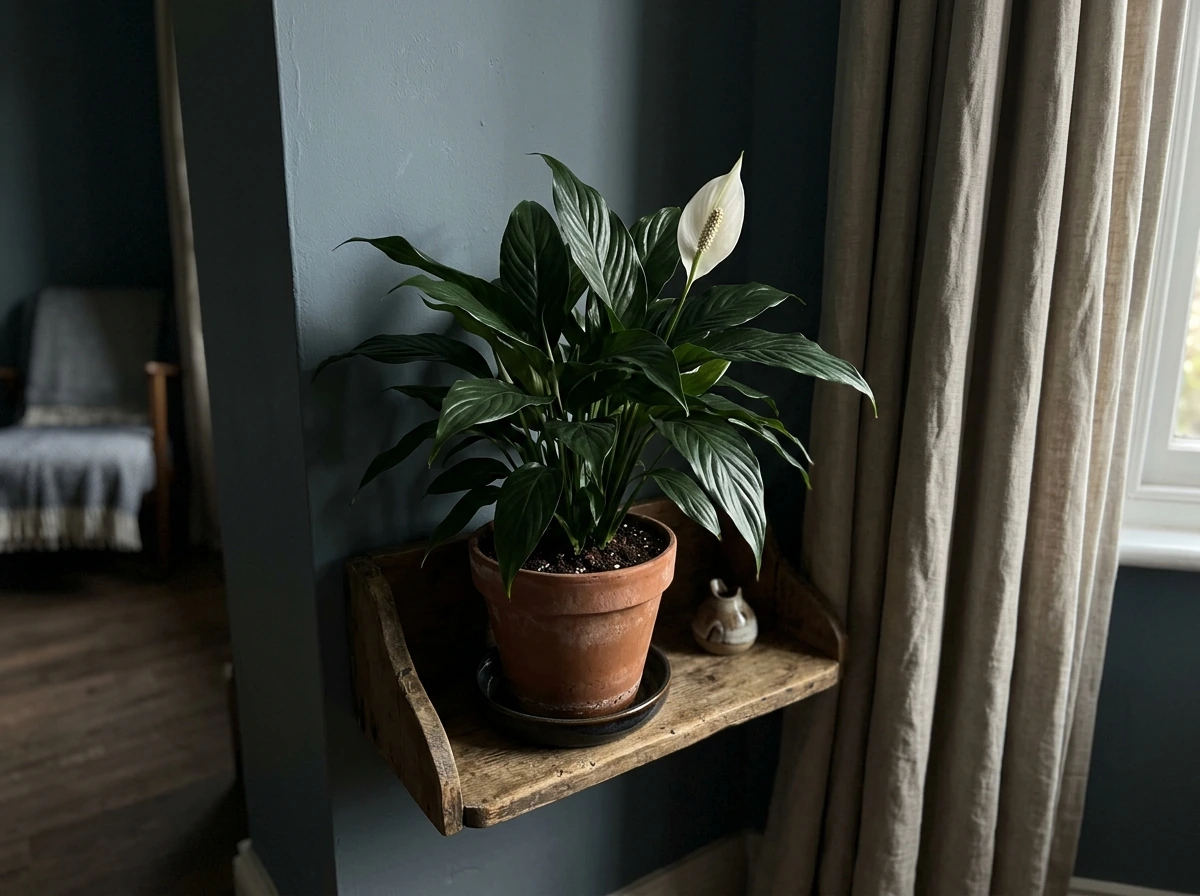
Peace lilies are tropical shade plants. In their natural habitat under a rainforest canopy, they rarely see direct sun at all. The University of Florida IFAS extension lists their light requirement plainly as 'no direct sun,' and they are specifically documented as tolerant of very low light levels. That is not marketing language. It is a measurable trait that makes them genuinely useful in darker corners of your home where most plants would give up.
The Missouri Extension defines 'low light intensity' for indoor houseplants as roughly 50 to 250 foot-candles. Illinois Extension puts peace lilies squarely in that low-light category. To make that concrete: a spot 8 to 10 feet from a window, or a room with one north-facing window and no direct sky view, is typically in the 50 to 200 foot-candle range. Illinois Extension also explains that light intensity is measured in foot-candles and gives an example “Low Light” value such as 75 foot-candles in its houseplant lighting guidance. That is enough for a peace lily to survive and even grow steadily, as long as it is not truly dark.
What peace lilies cannot handle is direct, harsh sun. UF/IFAS Gardening Solutions also advises keeping peace lilies in a well-lit area but out of direct sunlight. A south-facing windowsill in summer will scorch the leaves and stress the plant badly. If you have burned peace lily leaves, too much light is almost always the culprit. Unlike many of the true lilies (Lilium species) that need full sun to bloom outdoors, peace lilies actively prefer shade.
Low light vs 'dark': what happens to growth and blooms
This is where it gets important to be honest with yourself about your space. Low light and 'dark' are not the same thing, and the outcomes are very different.
In genuine low light (50 to 250 foot-candles, meaning a room with some ambient daylight even if no direct window exposure), a peace lily will grow. It will be slower than in bright indirect light, and it will flower less frequently or produce smaller blooms. Research published in Acta Horticulturae on Spathiphyllum flower initiation shows that light intensity directly affects how and when blooming is triggered. You will probably still get flowers once or twice a year in decent low light, especially in late winter through spring, but do not expect a constant show.
In near-dark conditions (think a hallway with no window, an interior bathroom with no natural light, or a room where you need a lamp on during the day), growth essentially stops. University of Arizona supplemental lighting research notes that for Spathiphyllum, growth rate can drop to near zero around very low daily light sums. The plant will not die immediately. It can linger for months looking okay-ish, but new leaves stop appearing, old leaves may yellow, and you will never see a bloom. If you are wondering can peace lily grow without sunlight, the answer is yes, as long as it still gets enough indirect light to avoid a slow decline. That is not thriving. That is slow decline.
| Light situation | Expected peace lily outcome |
|---|---|
| Bright indirect light (near a window, no direct sun) | Best growth, regular blooms, lush leaves |
| Low light (50–250 foot-candles, ambient daylight) | Steady growth, fewer or smaller blooms, healthy leaves |
| Very low light (dim room, far from any window) | Minimal growth, rare or no blooms, risk of yellowing |
| Near-dark (no natural light, interior room) | Growth stalls, no blooms, gradual decline without grow lights |
How to place and set up your peace lily for low light
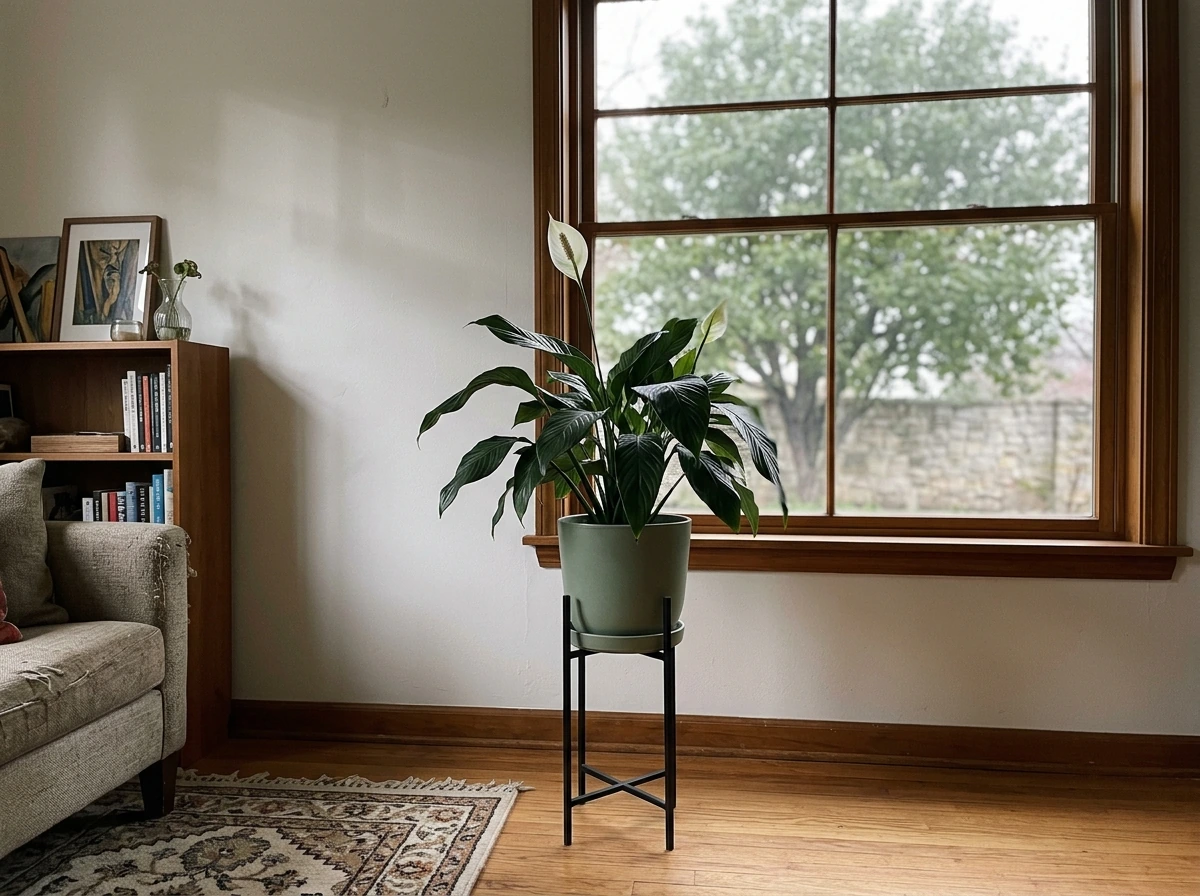
Getting placement right is the single biggest lever you have. Here is how I think about it practically.
Choosing the right spot
- Aim for a spot within 5 to 8 feet of a window, even a north-facing one. The closer to any natural light source, the better, as long as there is no direct sun hitting the leaves.
- East-facing windows are nearly ideal: gentle morning light, no harsh afternoon sun. A few feet back from an east window is a sweet spot for low-light peace lily placement.
- North-facing windows work well in most homes. Even 2 to 3 feet from a north window gives enough ambient daylight for steady (if slower) growth.
- Avoid placing the plant in rooms with no windows at all unless you plan to supplement with grow lights. The 'tolerates low light' claim has limits.
- Keep the plant away from heating vents, air conditioning units, and exterior doors. Temperature swings stress peace lilies more than low light does.
Pot and drainage setup
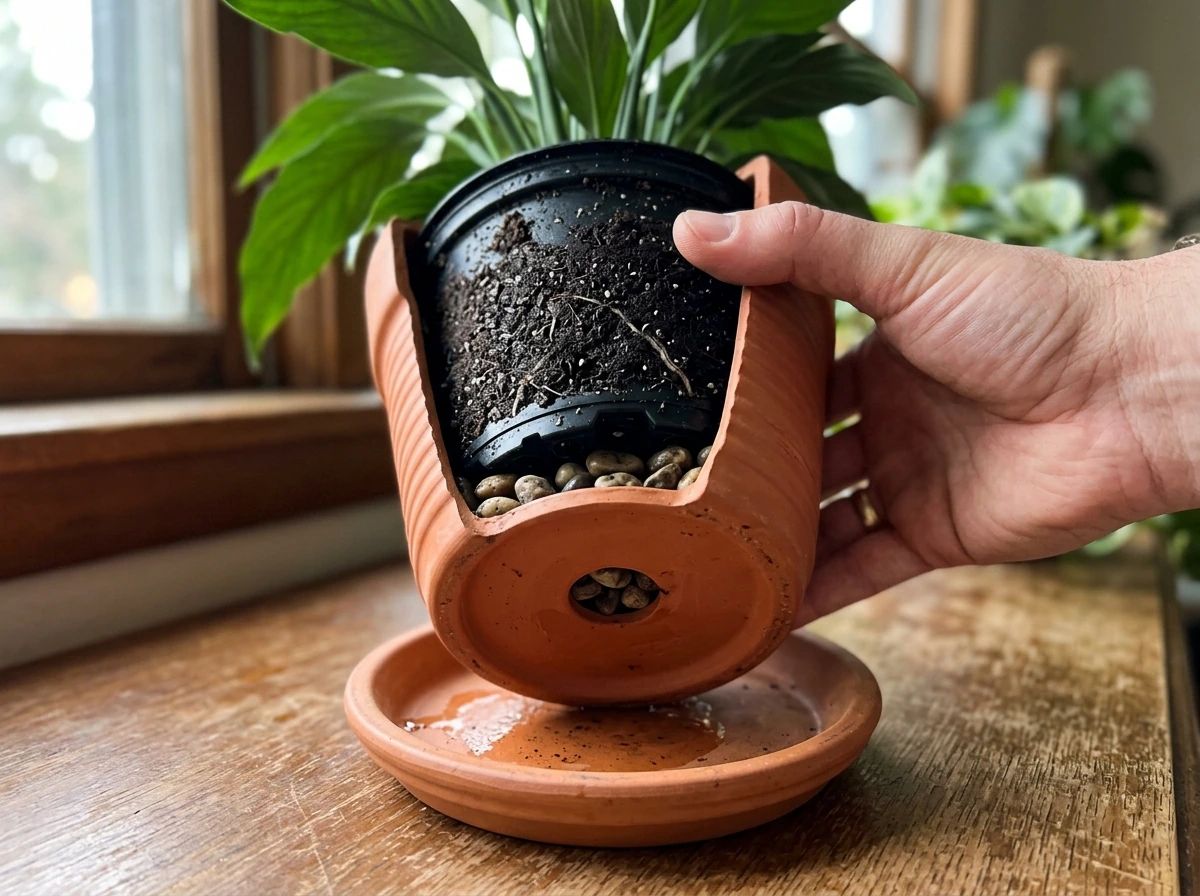
In low light, your peace lily's soil stays wet much longer than it would near a bright window. This means drainage matters even more than usual. Use a pot with at least one drainage hole. A terracotta pot will help wick excess moisture away from roots faster than plastic or glazed ceramic. Never let the pot sit in standing water in a saucer. Root rot is the most common way people lose peace lilies in low-light setups, and it almost always traces back to soggy soil combined with slow drying time.
Care adjustments in low light
Growing a peace lily in low light is not just about placement. You need to adjust a few care habits or you will create problems. I learned this the hard way after overwatering a peace lily in a dim corner and watching it slowly rot.
Watering
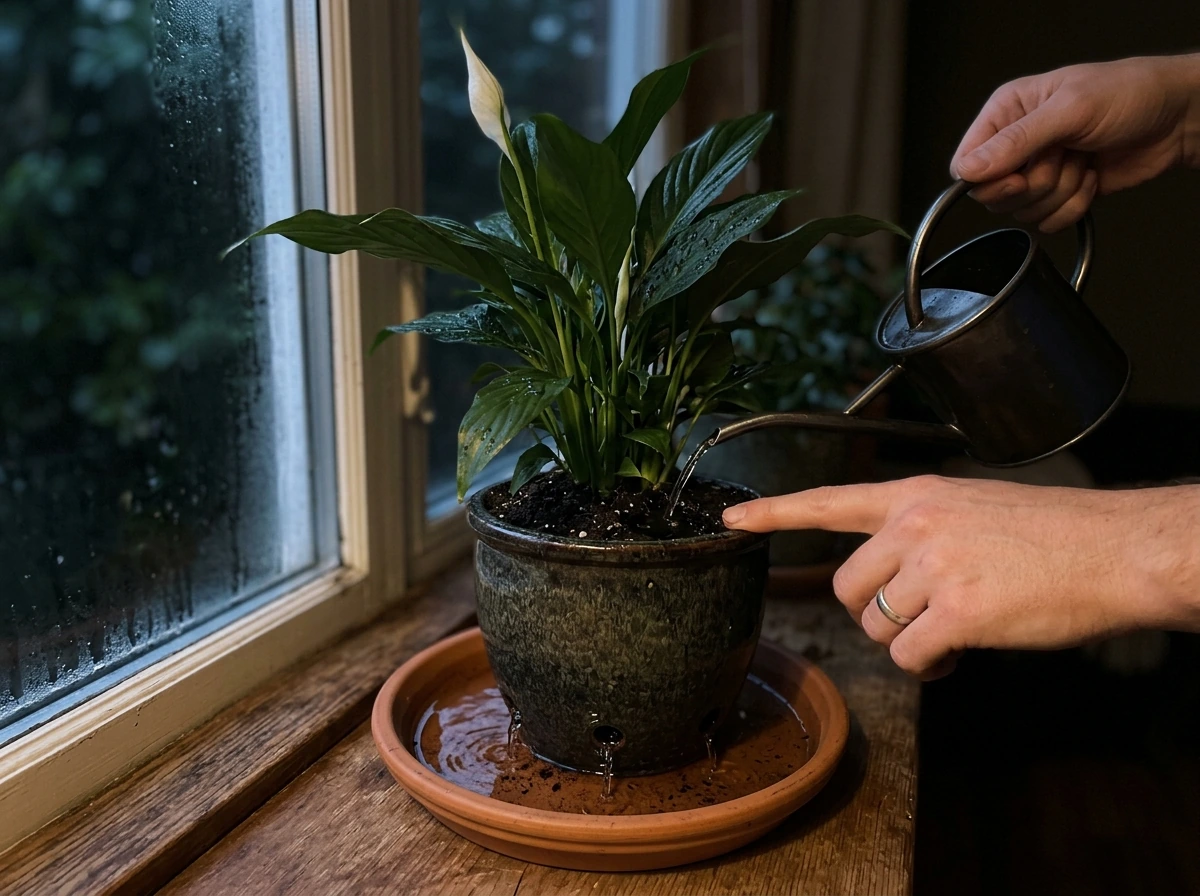
In low light, a peace lily uses water much more slowly because it is photosynthesizing less. Missouri Extension recommends a 'drench, then dry' approach for peace lilies. Water thoroughly until water drains from the bottom of the pot, then wait until the top inch of soil feels dry before watering again. Yes, peace lilies can sometimes be kept in water under the right setup, but the usual better method is still to follow the soil-care advice in this guide. In a bright-light spot that might be every 5 to 7 days. In a low-light spot, it might be 10 to 14 days or longer. Check the soil with your finger every time rather than following a fixed schedule.
Humidity
Peace lilies are tropical plants that prefer higher humidity. The UF IFAS documentation lists their preferred temperature range as 75°F to 85°F, which gives you a clue about their origin: warm and humid. In low-light interior spots like hallways or bathrooms with natural light, humidity is often naturally higher and that actually works in your favor. If your home is dry (under 40% relative humidity), consider a small pebble tray with water under the pot, or mist the leaves occasionally. If you are thinking about a bathroom placement, that article covers the specific considerations in more detail.
Temperature
Keep your peace lily above 60°F at all times. Temperatures below that slow growth even further and can cause leaf damage. The sweet spot is 65°F to 85°F. Cold drafts from windows in winter are a hidden stressor in low-light spots near exterior walls, so feel for any cool air before settling on a winter position.
Fertilizing in low light
Feed lightly and less often than you would in brighter conditions. In low light, the plant is growing slowly and does not need much fertilizer. Overfeeding in low light can increase soluble salts in the soil, which damages roots. A diluted balanced liquid fertilizer once every 6 to 8 weeks in spring and summer is plenty.
Troubleshooting: yellow leaves, drooping, and no blooms
Most peace lily problems in low-light setups come down to three complaints. Here is how to read the symptoms and what to do first.
Yellow leaves
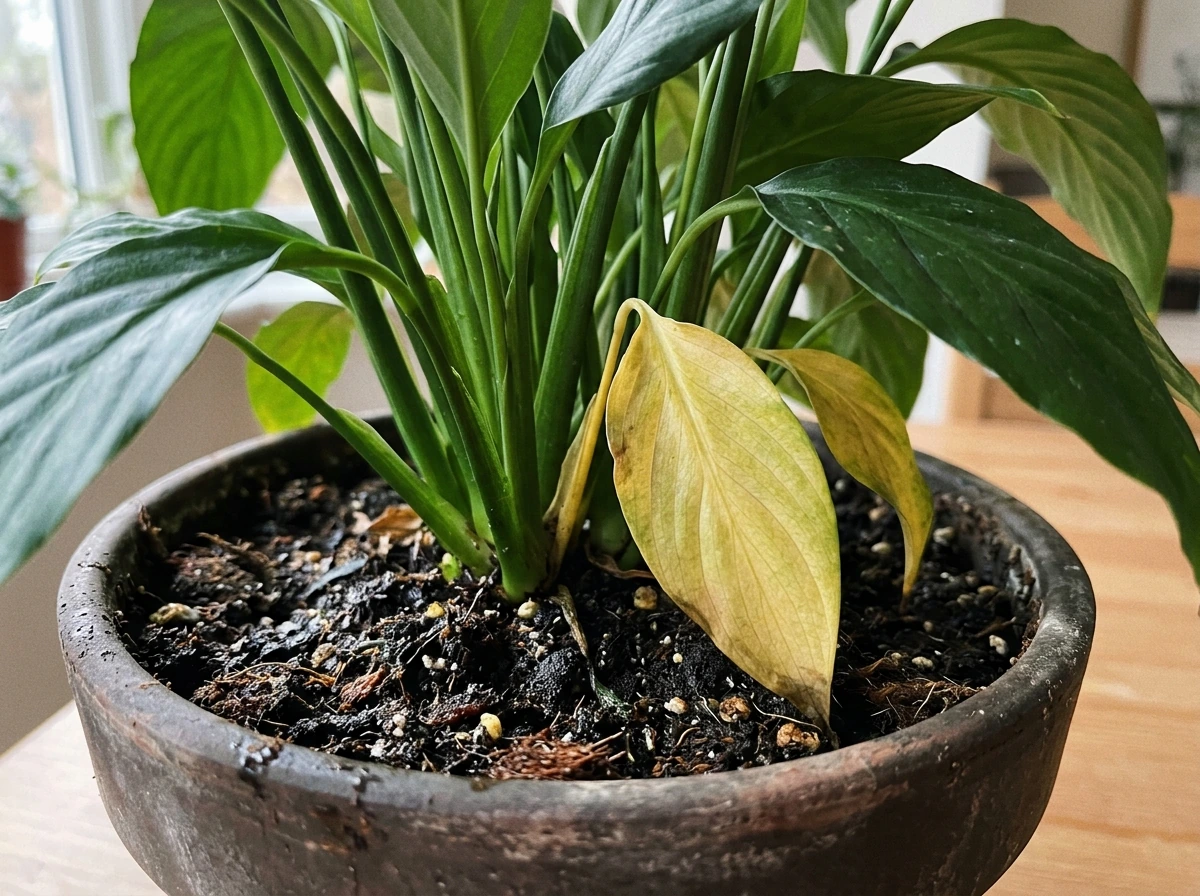
Yellow leaves are the most common complaint and unfortunately they can mean several different things. In a low-light setup, the most likely culprit is overwatering. When soil stays wet too long in dim conditions, roots suffocate and the plant cannot take up nutrients, which shows up as yellowing. Check the soil moisture first. If it is soggy or has been consistently wet, let it dry out completely before watering again and consider moving to a slightly brighter spot.
If the soil seems fine, consider whether the plant has been in the same pot for years with old, compacted soil. Salt buildup from fertilizer is another cause. And genuinely insufficient light over many months will cause older leaves to yellow and drop as the plant sheds what it cannot sustain. If you suspect light deficiency, move the plant closer to a window for two to three weeks and see if new growth looks healthier.
Drooping
A drooping peace lily is almost always thirsty. This is actually one of the plant's clearest signals. Check the soil: if the top inch or more is dry, water thoroughly. The leaves should perk up within a few hours. If the soil is wet and the plant is still drooping, that is a root rot warning. Unpot the plant, check for brown mushy roots, trim any damaged ones, let the roots air out slightly, and repot in fresh well-draining mix. Then move it to the best light you can provide while it recovers.
No blooms
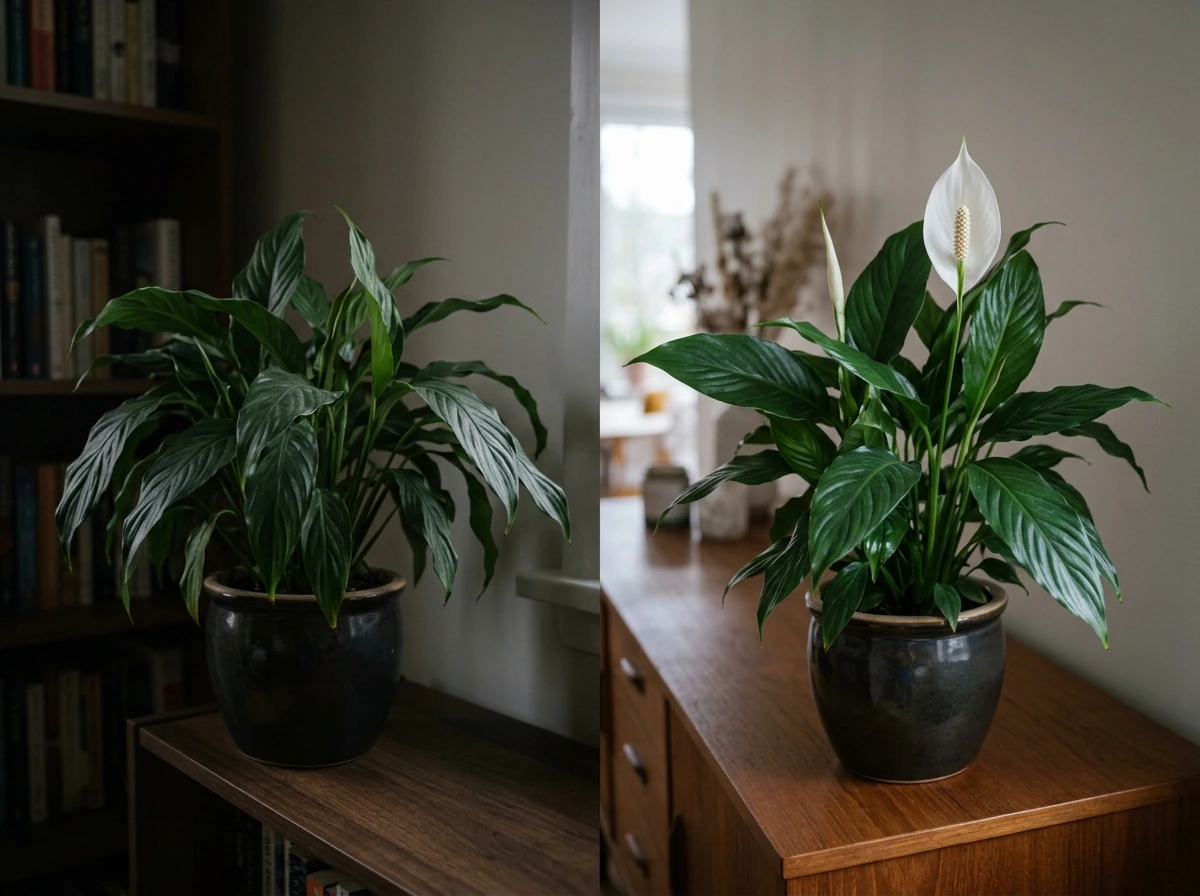
This is the most common frustration with peace lilies in low-light spots. The research is clear: light intensity directly affects flower initiation in Spathiphyllum. If your plant has not bloomed in over a year, insufficient light is the most likely cause. Peace lilies typically bloom between late winter and spring (often February through April) when light and temperature conditions trigger initiation. If they never get enough light to hit that trigger, blooms will not form.
The fix is either moving the plant to a brighter (still indirect) spot or adding a grow light. Give it 6 to 8 weeks in improved light conditions before expecting results. Also make sure the plant is not root-bound and has not been over-fertilized with nitrogen, both of which can suppress blooming.
When to add grow lights and how to choose a setup
If your peace lily is in a room without natural light, or if you want to push blooming in a genuinely low-light space, a grow light is the right move. The good news is that peace lilies have very modest light needs compared to most flowering houseplants, so you do not need an expensive or powerful setup.
Signs you need a grow light
- No new leaf growth for more than 2 to 3 months
- Plant has not bloomed in over 12 months and soil and watering are fine
- Leaves are pale green or yellowish but the plant is not overwatered
- The space has no windows or only receives light from a doorway
What to look for in a grow light for peace lilies
Because peace lilies need relatively low light, you do not need high-intensity grow lights. A full-spectrum LED grow light in the 10 to 20 watt range for a single plant is typically sufficient. Look for lights that cover both blue spectrum (for foliage growth) and red spectrum (for flowering). Clip-on or desk-style LED grow lights work well for single plants and are inexpensive.
Position the light 12 to 18 inches above the plant's canopy. Run it for 12 to 14 hours per day using a simple outlet timer so you do not have to think about it. The Acta Horticulturae research on Spathiphyllum flower initiation showed that short photoperiods (under 12 hours) can actually help trigger blooming, so you do not need to run lights all day. A consistent 12-hour light period mimics the natural conditions that encourage flower initiation, so yes, peace lilies can do well with grow lights when you keep the schedule like that. If you are wondering can peace lilies grow outside UK conditions, the key is whether they can be kept warm, humid, and protected from cold drafts and direct sun peace lilies can do well with grow lights. If you want to dig deeper into grow light setups specifically for peace lilies, that topic is covered in more detail in the grow lights guide on this site.
One last thing worth saying: a peace lily in low light with basic care adjustments will almost always outlast and outperform a peace lily in low light that is treated the same as one in a bright spot. Match your watering and feeding to the light level, keep the roots healthy, and this plant will reward you with glossy foliage and occasional blooms even in rooms other plants would refuse.
FAQ
Can a peace lily grow in water in low light, or will it rot?
Yes, but only if the water is supplemented with enough oxygen and you actively control nutrients. If you keep roots in water, the water must never be stagnant, use fresh water on a regular schedule, and consider switching to a hydroponic approach with diluted fertilizer. Otherwise, roots can suffocate and leaves will yellow, especially in low light where the plant grows slowly.
How do I tell if my peace lily needs more light versus just less water?
If the leaves are turning pale or thin, increase light in small steps. Move it closer to the window (still indirect), or start with a grow light, then reassess in 2 to 3 weeks. Sudden jumps to brighter conditions, even indirect, can cause leaf stress, so gradual change is safer than moving it from a dark corner to a sunny window.
Why isn’t my peace lily blooming in low light, even though the plant looks healthy?
A peace lily can survive in low light, but it usually will not flower reliably. If you do not see blooms after a full year in the same spot, treat that as a light issue first, then check for root crowding and excess nitrogen. In low light, blooms often require either a brighter indirect location or a grow light with a consistent schedule.
Could yellow leaves in low light be a pest problem instead of overwatering?
Yes. In low light, leaf yellowing is often caused by staying wet too long, but pests can also show up when conditions are stressful. Inspect the undersides of leaves and the crown for webbing, speckling, or scale. If pests are present, wipe leaves and use an appropriate insecticidal soap, but do not increase watering at the same time because that can worsen root problems.
Does low light placement matter if my home has drafts or a heater near the plant?
Aim for an airflow-friendly setup: keep the plant away from drafty windows that drop below about 60°F and also away from heat vents that dry it out. In low light, stagnant air plus wet soil is a bad combination for roots and can increase the risk of fungal issues.
Should I repot my peace lily in low light, and if so, when?
It’s usually better to wait until you see active growth before repotting, because low-light plants are slower to recover. If you must repot in low light, do it during the warmer months and keep the pot only one size up. Over-potting increases the amount of wet soil, which raises the chance of root rot.
What potting mix works best for a peace lily in low light?
For low light, keep the soil mix fast-draining and oxygenated. Use an indoor potting mix that includes airy components (for example, perlite or orchid bark) and always confirm there is a drainage hole. If the mix stays wet for many days, switch the mix, because you cannot “water less” your way out of a dense, poorly draining potting medium.
Should I fertilize a peace lily that is growing slowly in low light?
Most of the time, no. If it is truly near-dark with minimal daylight, fertilizer will not fix the underlying growth stall and can add salts that damage roots. If you want to feed, do it sparingly only during the brighter part of the year, and use a diluted dose, then stop if leaves yellow or the soil stays wet for too long.
Next Articles
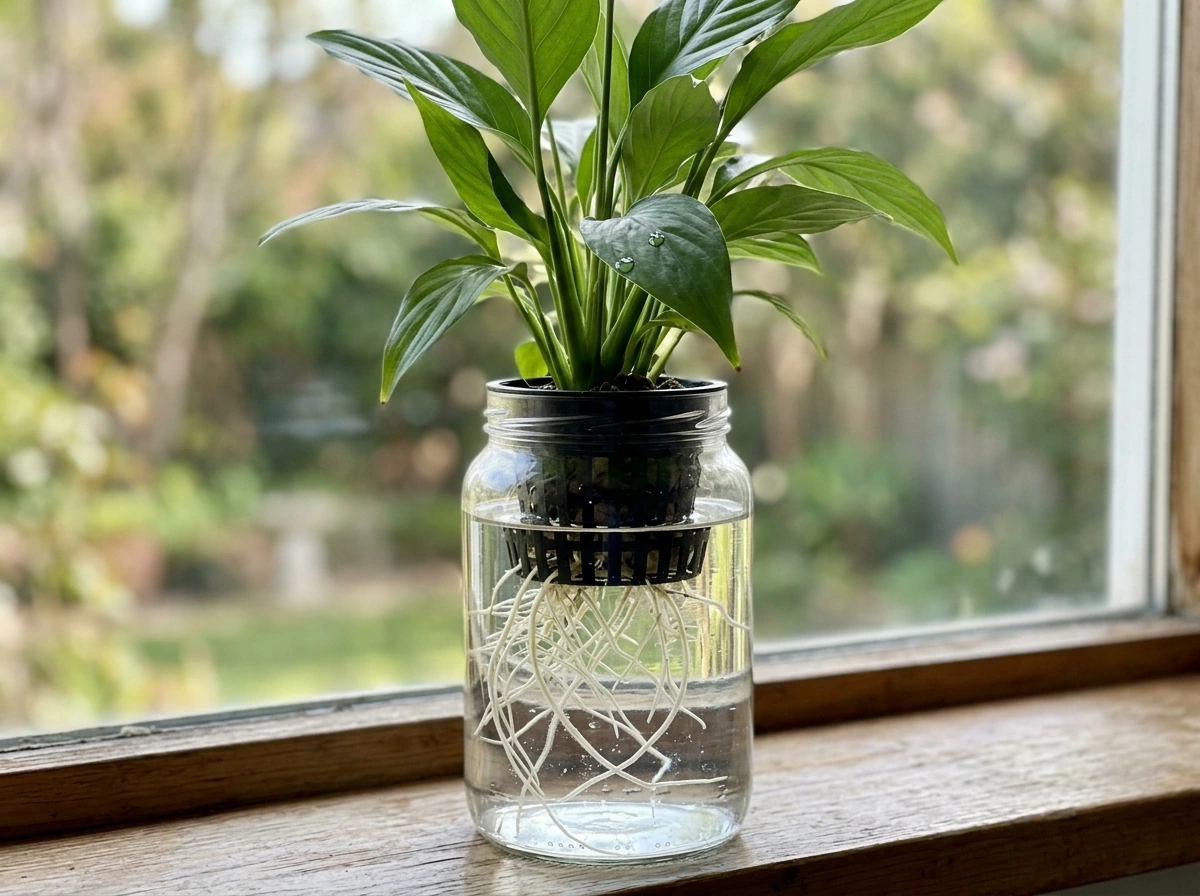
Will Peace Lilies Grow in Water? Steps to Succeed
Learn if peace lilies can grow in water, how to set up water-only care, and fix rot, yellowing, and weak roots.
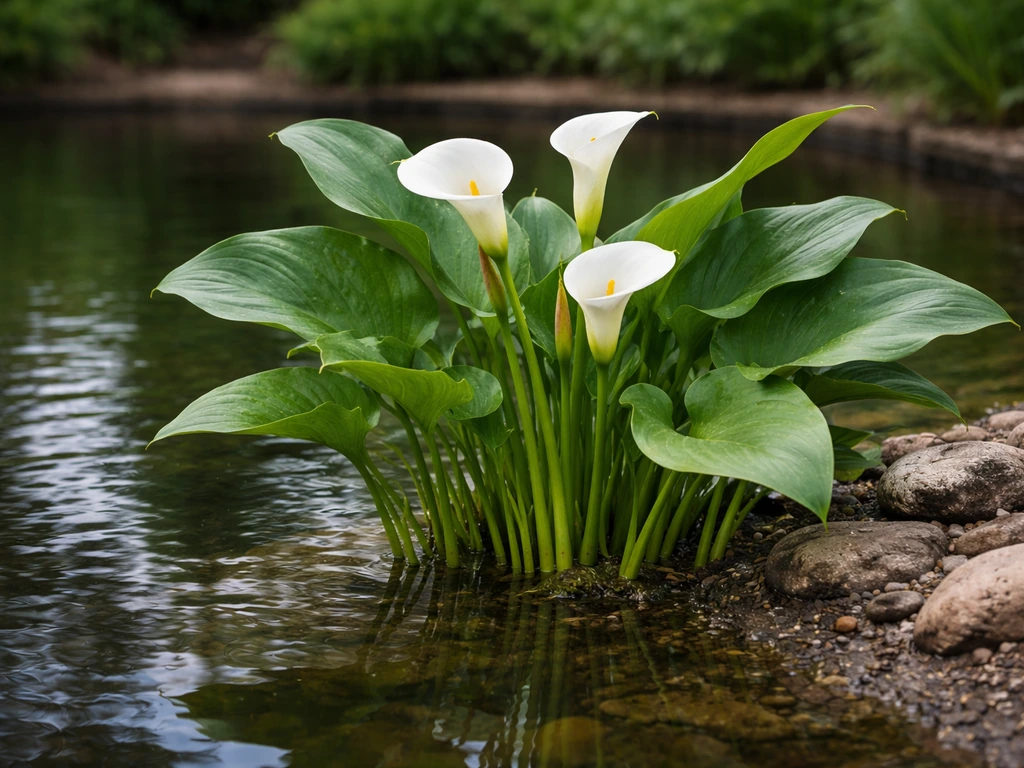
Can Calla Lilies Grow in Ponds? How to Set Up Successfully
Yes, with the right setup: water depth, substrate, anchoring, light, and overwinter care for pond or marginal calla lili
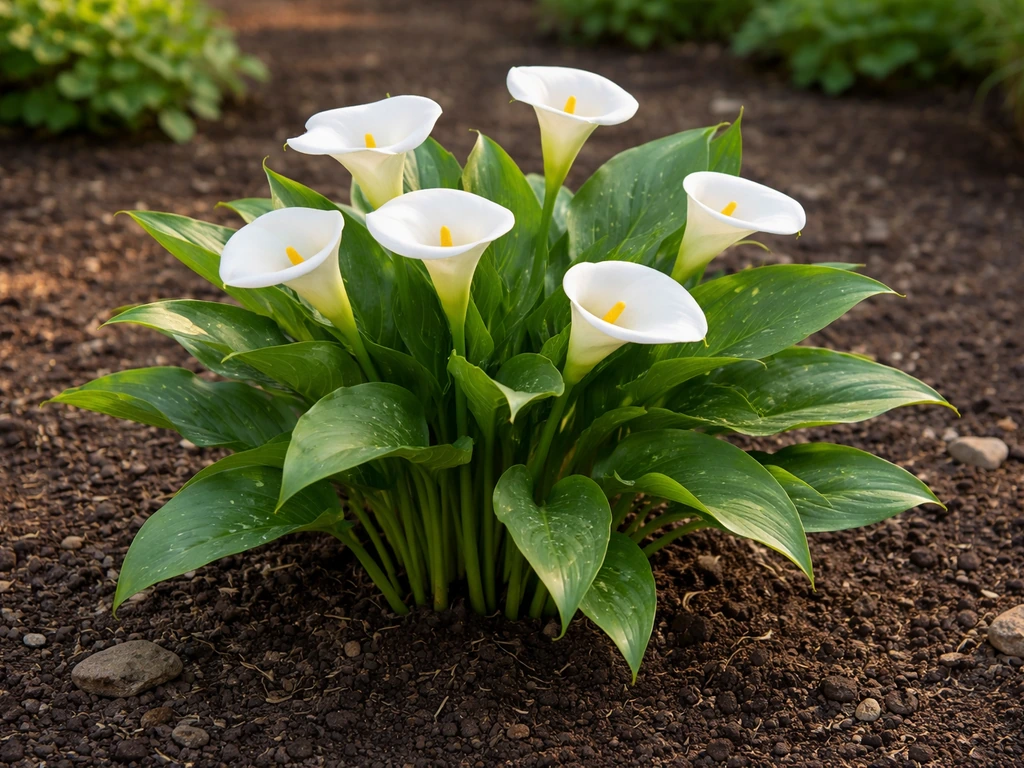
Are Calla Lilies Hard to Grow? Easy Guide for Success
Get a clear answer on are calla lilies hard to grow, plus exact light, temperature, watering, planting, and fixes.