
Yes, peace lilies (Spathiphyllum) can grow outside, but only under specific conditions. The short version: if you live somewhere frost-free and warm year-round, you can grow them outdoors permanently. Bunnings New Zealand also treats peace lilies as primarily houseplants and recommends placing them in a warm spot away from direct sun [warm year-round](https://www. bunnings.
Can Peace Lily Grow Outside? Outdoor Care for Success
Marcus Hendricks
24 Mar 2026
co. nz/diy-advice/garden/planting-and-growing/how-to-grow-and-care-for-a-peace-lily). If you live somewhere with cold winters, like most of the UK, New Zealand's South Island, or much of the US, outdoor growing is a seasonal thing, and you need to bring them back inside before temperatures drop. Push them too far into cold weather and you will lose the plant.
I have seen it happen, and it is not a slow decline, it is a fairly sudden collapse once frost hits.
Peace lily outdoors vs indoors: the yes/no breakdown
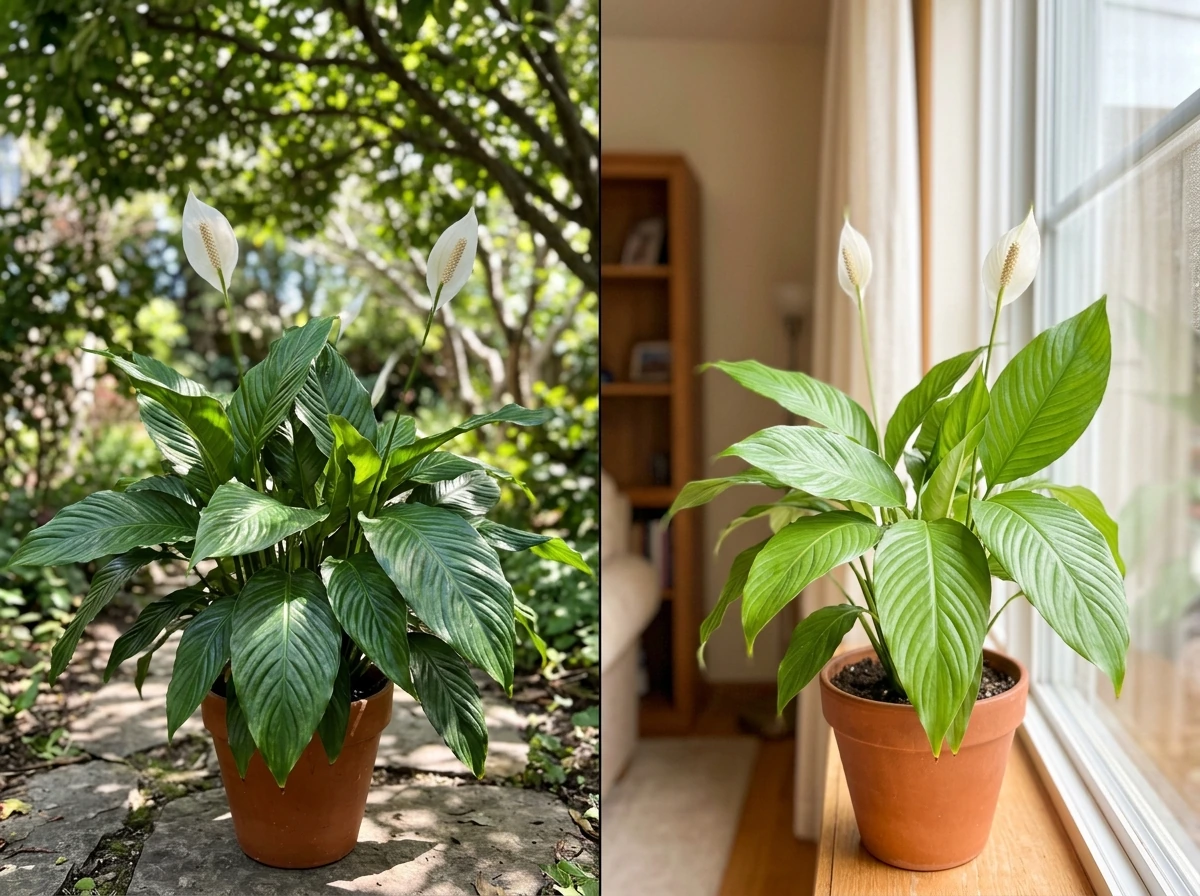
The honest starting point is this: peace lilies are tropical plants, and everything about how you grow them outdoors has to reflect that. They are not like hostas or ferns that shrug off cool nights and bounce back in spring. Outdoors works when your conditions genuinely mimic what they would get in a warm, humid, sheltered tropical environment.
Here is a direct yes/no breakdown based on your situation:
| Your situation | Can you grow outside? | How? |
|---|---|---|
| Frost-free climate, warm year-round (e.g., Florida, Hawaii, tropical NZ north) | Yes, year-round | In ground or containers in a sheltered, shaded spot |
| Mild winters, occasional light frost (e.g., coastal NZ, parts of southern UK) | Yes, but seasonally | Containers only; bring inside when temps drop below 45°F (7°C) |
| Regular frosts or cold winters (e.g., NZ South Island, most of UK, northern US) | Seasonal only, with care | Outdoors in summer in containers; indoors the rest of the year |
| Cold or freezing winters | No for outdoor permanence | Indoor plant with summer patio visits only |
The RHS states clearly that Spathiphyllum wallisii may be grown outdoors only in frost-free conditions, and that guidance holds globally. Peace lilies will not tolerate frost, and even a short freeze can cause serious foliar damage or kill the plant outright.
What New Zealand gardeners need to know (and why it matters everywhere)
New Zealand is a great case study because the climate varies so dramatically from north to south. In Northland, Auckland, and the Coromandel, winters are mild enough that peace lilies can live outside year-round in a sheltered, shaded garden position. Frosts are rare or absent, and temperatures rarely dip below the plant's danger zone. In those areas, outdoor cultivation is genuinely doable on a permanent basis.
Move further south, into Wellington, Canterbury, Otago, or Southland, and the picture changes fast. Winters bring frosts, often hard ones, and peace lilies are not frost-tolerant. NZ plant sources like Jungle Story note that most of Aotearoa's peace lilies are much happier as indoor plants because home temperatures stay stable. That is an honest assessment. If you are in those cooler regions, treat outdoor growing as a warm-weather treat rather than a permanent arrangement.
The same climate logic applies everywhere else. Replace 'Auckland vs Otago' with 'Florida vs Ohio' or 'Cornwall vs Yorkshire' and the principle is identical: your minimum winter temperature is the deciding factor. If it drops below about 45°F (7°C) with any regularity, you need a plan to bring the plant inside.
Getting the light right outdoors
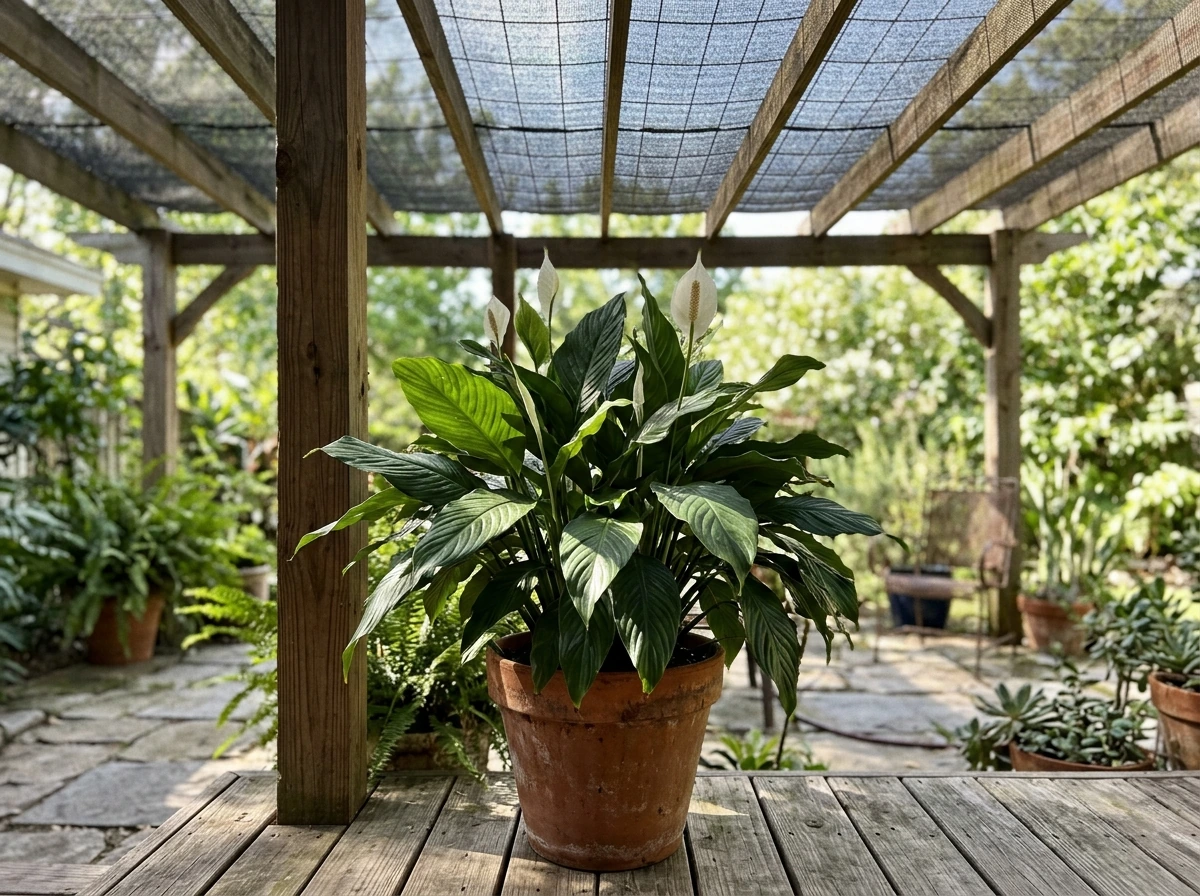
This is where a lot of people go wrong when they first move a peace lily outside. They think 'more light equals better growth' and put it somewhere with full afternoon sun. Within a week the leaves are bleached, scorched, and crispy at the edges. Peace lilies outdoors need the same kind of light they get indoors: bright but indirect, or dappled and filtered.
The ideal outdoor spot is under a tree canopy, beneath a pergola with shade cloth, on a covered patio, or on the east side of a building where they get gentle morning sun and are shaded through the harsh afternoon. Morning sun, roughly before 10am, is generally fine. Direct midday or afternoon sun is not. Think of the light conditions in a tropical rainforest understory, bright but filtered, with no harsh direct rays. That is what you are trying to replicate.
On the other end, too little light stops them blooming. A deeply shaded corner where almost no light reaches will keep the plant alive but you will not see many flowers. Aim for a spot that gets some indirect brightness through most of the day, not a dark corner and not open sky.
Temperature, wind, and what actually kills peace lilies outside
Temperature is the number one outdoor killer for peace lilies. Their comfort zone runs from about 68°F (20°C) at night up to around 85°F (29°C) during the day. They can handle a dip to around 45°F (7°C) for brief periods, but below that you start getting damage, and any frost at all can be fatal. Do not risk it. The Martha Stewart hardening-off principle applies here: if temperatures are forecast to dip below 45°F (7°C), bring the plant in.
Wind is an underrated problem. Cold wind is particularly damaging, combining cold-temperature stress with physical desiccation of the leaves. Even warm wind can dry out the plant faster than you can water it. If you are placing a peace lily on a patio or balcony, make sure it is genuinely sheltered from prevailing winds. A wall, a fence, or surrounding larger plants can make a real difference. An exposed rooftop or windy corner of a garden is not suitable, regardless of the temperature.
Watch out also for sudden temperature swings. Peace lilies dislike dramatic shifts between warm days and cool nights, and autumn weather in most temperate climates delivers exactly that. Once your nights start getting unpredictable, that is your cue to start thinking about moving the plant back inside.
Soil, drainage, and whether to plant in the ground or use a container
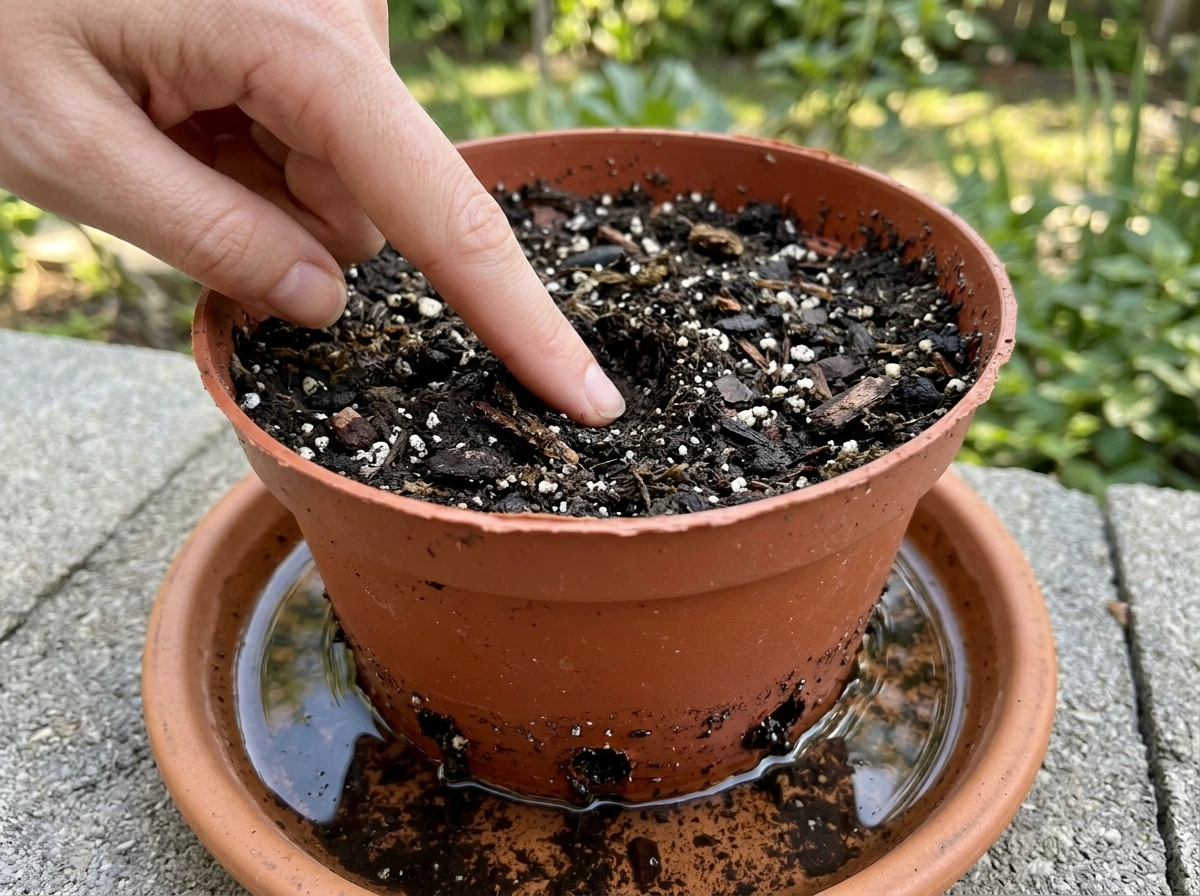
If you are in a genuinely frost-free climate and want to plant a peace lily in the ground, use rich, well-draining soil with plenty of organic matter. They like moisture retention but absolutely cannot sit in waterlogged ground. If you are thinking about alternatives to planting in the ground, you might also wonder will peace lilies grow in water, especially if you want to avoid waterlogged soil outdoors.
For everyone else, containers are the only sensible choice. A container lets you move the plant inside when temperatures drop, which is the whole game for seasonal outdoor growing. If you are wondering whether Miracle-Gro is a good fertilizer choice for a peace lily, focus on a balanced, gentle formula rather than strong feeding during cool weather. Use a good quality peat-free potting mix, or a mix with perlite added for drainage.
The pot must have drainage holes. Root rot from consistently wet soil is one of the most common ways to lose a peace lily, and it can happen even when the top of the soil looks dry. Walter Reeves, who writes extensively about Southern US gardening, specifically warns that soggy soil will rot the roots even when the plant looks like it needs water.
Pot size matters too. Do not go dramatically oversized thinking more soil means more moisture buffer. A pot that is too large holds more water than the roots can use and increases rot risk. Choose a pot that comfortably fits the root ball with a couple of inches of room to grow, not a pot that dwarfs the plant.
Watering and humidity when your peace lily is outside
Outdoor conditions change your watering math. Wind and sun dry out containers much faster than indoor conditions, so you may need to water more frequently than you think. The practical rule from Logee's care guidance is a good one: water when the surface of the potting mix appears dry, but before the plant starts visibly drooping. Do not wait until the leaves droop, that is already mild stress. Check the top inch or two of soil and water when that layer is dry. Gardenia.net recommends watering peace lilies when the top inch of the potting mix is dry.
Rain can help, but do not rely on it blindly. Heavy rain can waterlog containers if drainage is poor, and light rain may not penetrate enough if the soil surface has dried out and formed a slight crust. Keep an eye on the actual soil moisture rather than just watching whether it has rained.
Humidity is the other side of the equation. Peace lilies love humid air, and if you are in a dry climate or going through a dry spell, they will show it through browning leaf tips. Grouping plants together helps raise local humidity, as does sitting the container on a tray of wet pebbles (making sure the pot itself is not sitting in standing water). In the right humid, sheltered outdoor spot, they can actually thrive better than indoors because the ambient humidity is naturally higher.
How to move your peace lily outside (and when to bring it back in)
Do not just take a peace lily that has been sitting in your living room and plunk it on a sunny patio. That is a recipe for scorched leaves and a stressed plant. You need to harden it off gradually, exactly the way you would harden off any tender plant before outdoor life.
Here is how to do it:
- Wait until nighttime temperatures are reliably above 50°F (10°C) before starting the process. In most temperate climates, that means late spring, well after the last frost date.
- Start by putting the plant in a sheltered, shady outdoor spot for just a couple of hours on the first day. A covered patio or the north side of the house works well.
- Bring it back inside overnight for the first week or two. Night temperatures outdoors are where tender plants most often get caught out.
- Gradually increase the time outside each day over two weeks, moving it slightly into brighter (but still indirect) light as it adjusts.
- Watch for any leaf scorch, yellowing, or wilting, which tells you the transition is too fast or the spot is too exposed.
- Once it is fully adjusted and nights are consistently warm, you can leave it outside through the season.
Knowing when to bring it back in is just as important. Do not wait for a frost warning. Start monitoring nighttime temperatures in late summer or early autumn, and once forecasts regularly show dips toward or below 50°F (10°C), start bringing the plant in at night. When nights consistently stay below that threshold, it is time to bring it back inside for good until the following spring.
Before you bring it back in, check thoroughly for pests, especially spider mites, scale, and fungus gnats. Outdoor plants can pick up hitchhikers you do not want introducing to your other houseplants. Rinse the foliage off and inspect the soil. A week or two of isolation from your other plants after the transition back inside is a sensible precaution.
Quick-reference conditions for outdoor success
| Factor | What you need outdoors | What to avoid |
|---|---|---|
| Light | Bright indirect light, dappled shade, morning sun | Direct afternoon sun, deep shade with no brightness |
| Temperature | 65–85°F (18–29°C) ideally; tolerable down to 45°F (7°C) briefly | Frost, freezing temps, or nights regularly below 50°F (10°C) |
| Wind | Sheltered spot with a wall, fence, or surrounding plants | Exposed, windy positions, especially cold or dry wind |
| Watering | Moist but not soggy; check top inch of soil regularly | Waterlogged pots, relying on rain alone, letting it fully dry out |
| Humidity | Naturally humid or grouped with other plants | Dry, arid conditions without compensation |
| Soil/container | Well-draining potting mix; container with drainage holes | Heavy, waterlogging soil; pots without drainage; oversized pots |
If you are deciding between seasonal outdoor growing and keeping your peace lily purely indoors, there is no shame in choosing indoors. These are genuinely excellent houseplants that do well in lower light conditions, and you can explore those options in depth elsewhere on this site. If you want to understand whether a peace lily can grow in low light, check the full guide.
can peace lily grow in low light But if your climate cooperates and you have a sheltered, shady outdoor spot, a peace lily outside in summer is a genuinely beautiful thing, lush, tropical-looking, and often more vigorous than its indoor counterpart because of the natural humidity and airflow. Just stay ahead of the cold and you will be fine. can peace lily grow without sunlight. can peace lily grow in bathroom
FAQ
What is the safest way to move a peace lily outdoors without shock?
Harden it off gradually over 7 to 14 days, starting with a shaded spot protected from wind, then increasing light exposure a little at a time. Keep nights in mind, if evenings are cooling, bring it in or keep it under cover so it does not experience a sudden temperature drop.
Can a peace lily tolerate a light frost (like 32 to 33°F / 0 to 1°C)?
No. Even short freezes can damage foliage or kill the plant. If a freeze is on the forecast, treat it as an emergency and bring the pot indoors before temperatures reach freezing, not after you see damage.
Can I plant a peace lily in the ground outdoors if winters are slightly chilly but not frosty?
Only if your ground stays above the plant’s cold limit. Use raised beds or mounded planting to reduce the chance of cold, wet roots, and make sure soil drains well because waterlogged, chilled soil can rot roots even without frost.
Is it okay to keep a peace lily in a sunny window outside if I see it “wilt” but then recover?
That recovery pattern is often stress, not good tolerance. If leaves bleach or edges crisp, the light is too harsh. Move it to filtered light (tree shade, dappled sun, shade cloth) and keep watering consistent so wilting is not driven by heat or sun rather than lack of water.
How do I know if my outdoor peace lily is getting too much water versus too little?
Check more than leaf droop. Yellowing leaves with a wet, sour-smelling pot or persistent sogginess suggests overwatering and root stress. Underwatering often shows drooping plus dry surface soil; water when the top inch or two dries, not when wilting begins.
My peace lily is in a container outdoors, but the pot dries out fast. Should I water more often?
Yes, but do it based on soil dryness. Containers in wind and sun can dry quickly even if the air feels cool. Water thoroughly until excess drains out, then wait until the top layer dries again, avoiding frequent shallow watering.
What pot size is best for outdoor growing?
Choose a pot only slightly larger than the root ball. An oversized pot holds extra moisture that the roots cannot use quickly, raising the rot risk in cool or rainy weather, which is common in late season transitions.
Can I use rainwater for my outdoor peace lily?
You can, but avoid letting the container stay waterlogged after heavy rain. Good drainage is the priority, if your potting mix compacts or drainage is slow, rainwater can worsen root problems even if the water itself is fine.
How should I protect a peace lily outdoors from cold wind?
Use physical shelter, place it near a wall, fence, or hedge, and avoid exposed corners and rooftops. On colder nights, move it under a cover (like a sheltered patio) and consider clustering with other plants to reduce leaf desiccation from wind.
When should I bring it back indoors if nights start cooling?
Begin transitioning as soon as forecasts show repeated nighttime lows near the plant’s lower limit. A practical approach is to bring it in for the night first when temperatures start hovering around the 50°F (10°C) range, then keep it fully indoors once nights reliably stay below that point.
How can I prevent pests when moving the plant back inside?
Inspect leaf undersides and stems for mites and scale, then check the top of the soil for fungus gnat activity. Rinse the foliage, and isolate the plant from other houseplants for one to two weeks after bringing it in to catch problems early.
If my peace lily does not bloom outdoors, is it always a light problem?
Light is the most common cause, but not the only one. Too much direct sun can also reduce flowering by stressing the plant, and consistently cool nights can delay or prevent blooms. Aim for bright, indirect conditions and avoid letting the plant get near cold stress.
Next Articles
Can Peace Lily Grow in a Bathroom? Yes, If You Do This
Yes, a peace lily can thrive in a bathroom with bright indirect light, proper drainage, and careful watering to avoid ov
Is Miracle-Gro Good for Peace Lily? How to Feed Safely
Yes, with proper dilution and frequency. Safely fertilize peace lily, avoid burn, flush salts, and use better alternativ
Can Peace Lily Grow in Low Light? Care Guide and Fixes
Learn if peace lily grows in low light, what to expect, and step-by-step fixes for blooms, drooping, and yellow leaves.