
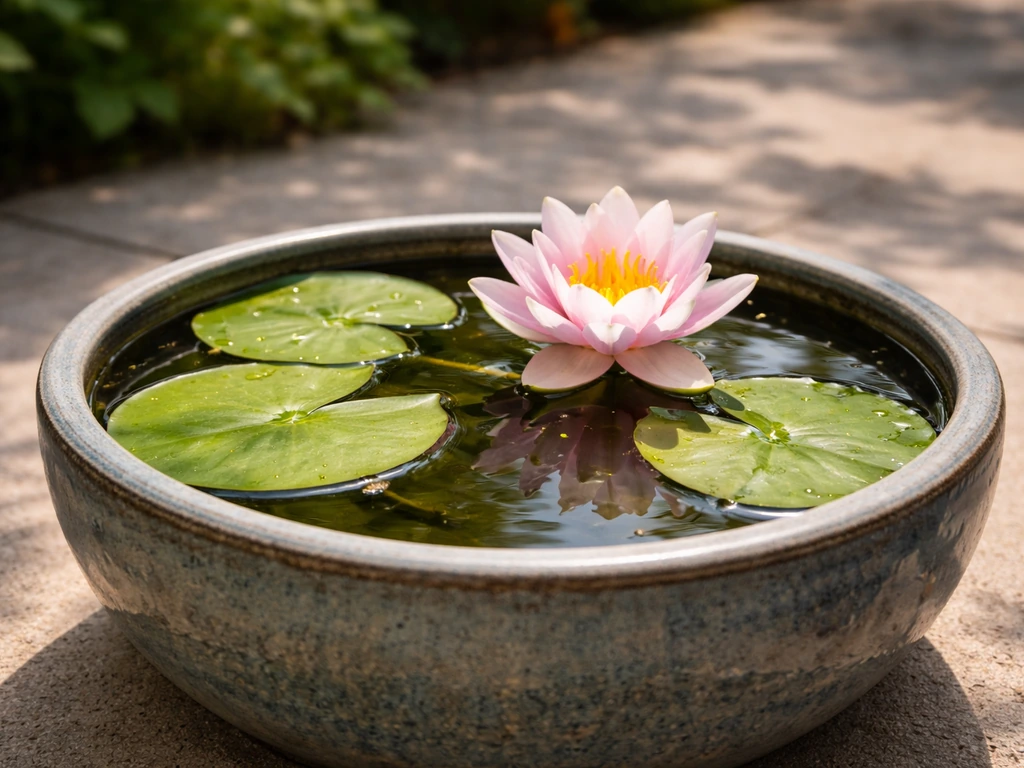
Yes, you can absolutely grow water lilies in a pot or bowl, and plenty of home gardeners do it successfully every season without a pond in sight. If you are asking can you grow lilies in water without a pond, this container setup approach is usually the most reliable starting point. The key is giving them a wide, shallow container, the right aquatic soil, at least 6 hours of direct sun, and water deep enough to keep the crown submerged but not buried. Get those four things right and you will see blooms within a few weeks of planting. If you are also wondering can water lilies grow in saltwater, salt levels and water chemistry become the deciding factor beyond container size and sun.
Can You Grow Water Lilies in a Pot? How to Do It
Marcus Hendricks
23 Apr 2026
Can water lilies actually grow in pots or bowls?
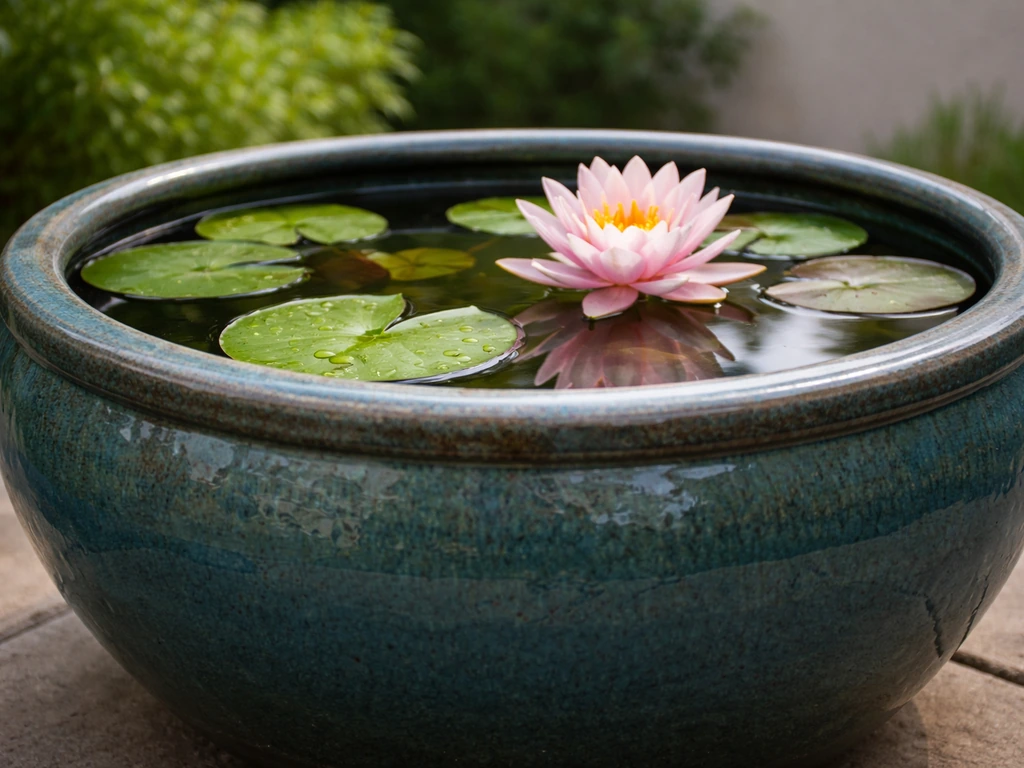
They can, and for gardeners without a pond, a container is often the best option. Hardy water lilies are especially well-suited to pot culture because they grow from a horizontal rhizome that spreads outward rather than downward, which means a wide, shallow container suits them far better than a tall, narrow one. Tropical water lilies can also be grown in containers but they need warmer water and more room, so if this is your first attempt, start with a compact hardy variety. The most frequent mistake home gardeners make, according to extension horticulturists, is simply choosing a container that is too small or the wrong shape, which starves the plant of root room and kills flowering before it starts.
A bowl setup works too, especially for a patio or balcony. A large glazed ceramic bowl, a half whiskey barrel liner, or a purpose-made aquatic planter all do the job. The main thing the container needs to do is hold water without draining it away. No holes in the bottom.
Picking the right container: size, shape, and material
Width matters more than depth. A compact or mini hardy water lily does fine in a container that is 10 to 12 inches wide, but if you want reliable blooming and room for the plant to spread, aim for something at least 14 to 16 inches wide. Aquascape, one of the more well-regarded aquatic gardening suppliers, recommends an aquatic planter around 14 inches by 7 inches as a practical starting point for a single plant. Wider is almost always better: broader pots consistently produce more flowers than cramped ones.
Depth is less critical than most people expect. You do not need a deep bucket. A container that is 7 to 10 inches deep gives the rhizome enough room to anchor without wasting soil volume. Remember, water depth (the water above the pot) is a separate measurement from pot depth. Do not confuse the two.
For material, almost anything that holds water works: plastic tubs, glazed ceramic, fiberglass, or fabric aquatic planters. Avoid unglazed terracotta (it leaches minerals and dries out too fast in a pond setting) and any metal container that might leach rust or chemicals. Dark-colored containers absorb heat, which water lilies actually appreciate because warmer water encourages faster growth and blooming.
| Container Type | Width | Depth | Best For |
|---|---|---|---|
| Small aquatic pot | 10–12 inches | 6–7 inches | Mini or dwarf hardy varieties, small bowls |
| Standard aquatic planter | 14–16 inches | 7–9 inches | Compact hardy varieties, most beginners |
| Half-barrel liner or large bowl | 18–24 inches | 10–12 inches | Full-size hardy lilies, statement containers |
| Large fabric aquatic planter | 16–20 inches | 8–10 inches | Pond baskets, easy repotting |
Water, light, and temperature: what the plant actually needs
Sunlight
Water lilies are full-sun plants. No shade tolerance, no exceptions. They need a minimum of 6 hours of direct sunlight per day to bloom, and 8 hours is better. If you put them in a spot that gets dappled light or afternoon shade, you will get leaves but almost certainly no flowers. This is one of the most common reasons container water lilies fail to bloom, especially in small urban gardens where shade from walls and fences creeps in. Be honest about your site before you invest in a plant.
Water depth
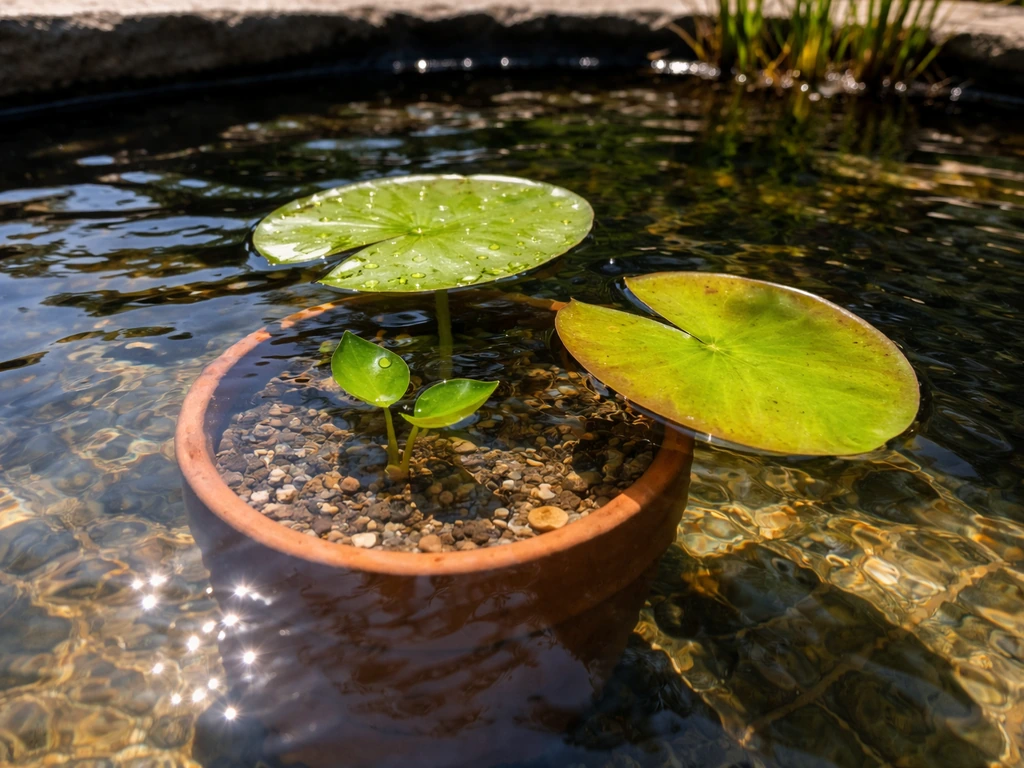
When you sink a potted water lily into a larger container of water, the ideal water depth above the top of the pot is 2 to 6 inches. That keeps the crown and growing tip submerged but not smothered. Some sources express this differently: the crown of the plant should sit at least 2 inches below the water surface. For a standalone bowl (where the pot is sitting in its own water), you achieve this by filling the bowl so the plant is covered to the right depth and the leaves can float up naturally. As the plant grows and stems lengthen, you can lower the pot slightly or add more water.
Temperature
Hardy water lilies start actively growing when water temperatures reach about 60°F and bloom most prolifically between 70°F and 85°F. Tropical varieties need water temperatures of at least 70°F consistently, which in most of the US means they are not actively growing until late May or June. For container gardening outdoors, this just means timing: do not put your potted lily outside in cool spring weather and expect fast results. Wait until daytime temperatures are reliably above 65°F and your water has warmed up.
How to plant a water lily in a pot or bowl
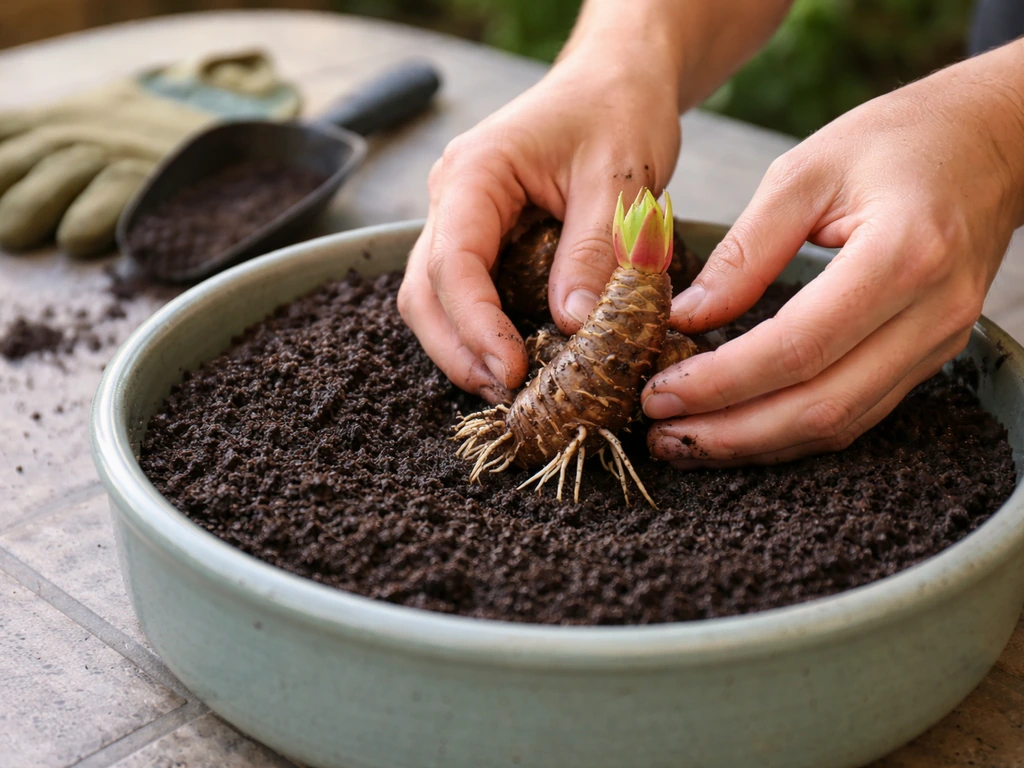
The soil you use matters enormously. Do not grab standard potting mix from your garage. Regular potting soil is too light, floats everywhere, and clouds the water. You want heavy clay loam or a purpose-made aquatic potting media. Garden soil (not amended, not fluffy) from a loamy spot in your yard works too. The weight keeps it in place and holds fertilizer tablets well.
- Fill your container about two-thirds full with heavy loam or aquatic potting media. Do not add perlite, bark, or standard potting mix.
- Make a mound or angled ramp toward one side of the pot. The rhizome will sit against the edge with the growing tip pointing toward the center.
- Place the rhizome at roughly a 45-degree angle: push the cut or older end deeper into the soil and leave the growing tip (the crown, with its tiny leaf buds) projecting about three-quarters of an inch above the soil surface. The crown must not be buried.
- Press soil firmly around the rhizome to hold it in place, but keep the crown clear.
- Top-dress the soil with a one-inch layer of pea gravel or coarse sand. This holds the soil down when you submerge the pot and keeps fish (if any) from digging it up.
- Slowly lower the potted plant into your water bowl or pond so the crown is 2 to 6 inches below the water surface. Go slowly to avoid disturbing the soil.
- Position the container in full sun and wait. New growth usually appears within 1 to 2 weeks in warm conditions.
One thing worth repeating: covering the crown kills water lilies. I have seen this happen repeatedly with new growers who pack soil right up to the top of the rhizome thinking it needs to be buried like a tulip bulb. It does not. Keep that growing tip exposed above the soil, covered only by water, not dirt.
Keeping it going: fertilizing, water management, and growth control
Fertilizing
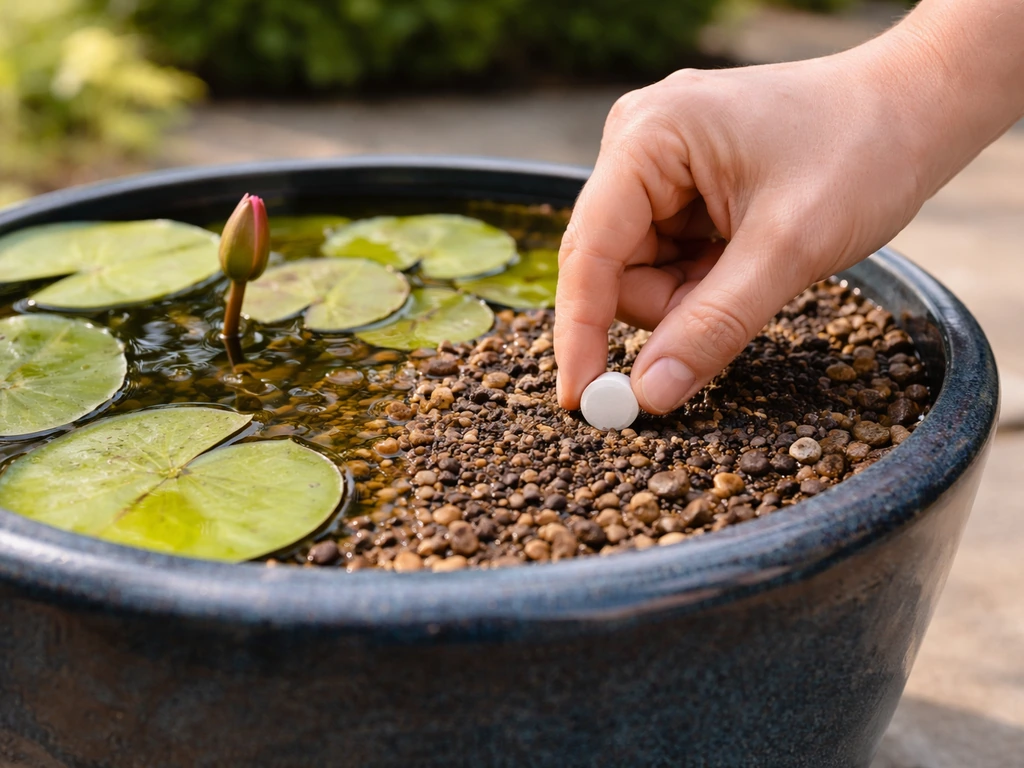
Container water lilies run out of nutrients faster than pond-planted ones because the soil volume is limited. Use slow-release water lily fertilizer tablets, not liquid fertilizer (liquid feeds cloud the water and promote algae). Push one or two tablets deep into the soil near the rhizome every 3 to 4 weeks during the growing season (roughly May through August in most of the US). Start fertilizing about 3 to 4 weeks after planting to let the plant settle first.
Water quality and changes
Stagnant, overheated water is a real issue in small containers, especially dark-colored pots sitting in full sun. Top up evaporated water regularly with fresh water to maintain depth. If the water turns green or smells bad, do a partial water change: remove and replace about a third of the water. You do not need to do full changes. Adding a small oxygenating plant or two to the bowl helps keep things balanced, especially if you have no fish or filtration.
Managing growth
Remove dead or yellowing leaves by pulling them off at the base of the stem rather than cutting them, which leaves hollow stems that rot underwater. As the plant grows through summer, the rhizome may start pushing against the container walls. You will know it is rootbound when growth slows and flowering drops off despite good sun and regular feeding. Repotting into a wider container in spring solves this quickly.
Indoor vs. outdoor growing, and what to do in winter
Outdoor growing
Outdoor container growing is almost always the better option for water lilies. They want full sun and warm temperatures, both of which are much easier to provide outside. A pot or bowl on a sunny patio, deck, or balcony works great from late spring through early fall in most of the US. Place the container where it gets unobstructed sun from morning through mid-afternoon, and top it up with water as needed.
Indoor growing
Growing water lilies indoors long-term is genuinely difficult. The light requirements are the main problem: even a south-facing window rarely delivers the 6 to 8 hours of direct sun these plants need. If you want to try it, you would need a supplemental grow light placed close to the surface. Most home gardeners do not bother with indoor water lily culture during the growing season; instead, they bring the plant inside purely to overwinter it.
Overwintering
Hardy water lilies (zones 3 to 10, depending on variety) can survive winter as long as their rhizomes do not freeze solid. If you are in zone 6 or warmer, you can often leave a potted hardy lily outside in its container as long as the water does not freeze to the bottom. In colder zones, pull the pot out in fall after the first frost kills the foliage, trim the dead leaves, wrap the pot in burlap or place it in a plastic bag, and store it in a cool (not freezing) place like a garage or basement until spring. Do not let it dry out completely: keep the soil barely moist. Tropical water lilies are not frost-tolerant at all and must be brought inside before temperatures drop below 50°F, or treated as annuals.
When things go wrong: fixing common container water lily problems
No flowers
This is the most common complaint. In almost every case, the cause is one of three things: not enough sun (fewer than 6 hours of direct light per day), a container that is too small or too crowded, or no fertilizer. Run through those three before assuming anything is wrong with the plant itself. Also check that the crown is not buried: a covered growing tip stops flowering dead.
Yellowing leaves
Some yellowing of older leaves is completely normal as the plant cycles through growth. If new leaves are also yellowing, you are likely looking at a nutrient deficiency (skip a fertilizer cycle and you will often see this within a few weeks), water that is too cold, or a rootbound plant that has exhausted the soil. Try a fresh fertilizer tablet, check your water temperature, and consider whether it is time to repot.
Cloudy or smelly water
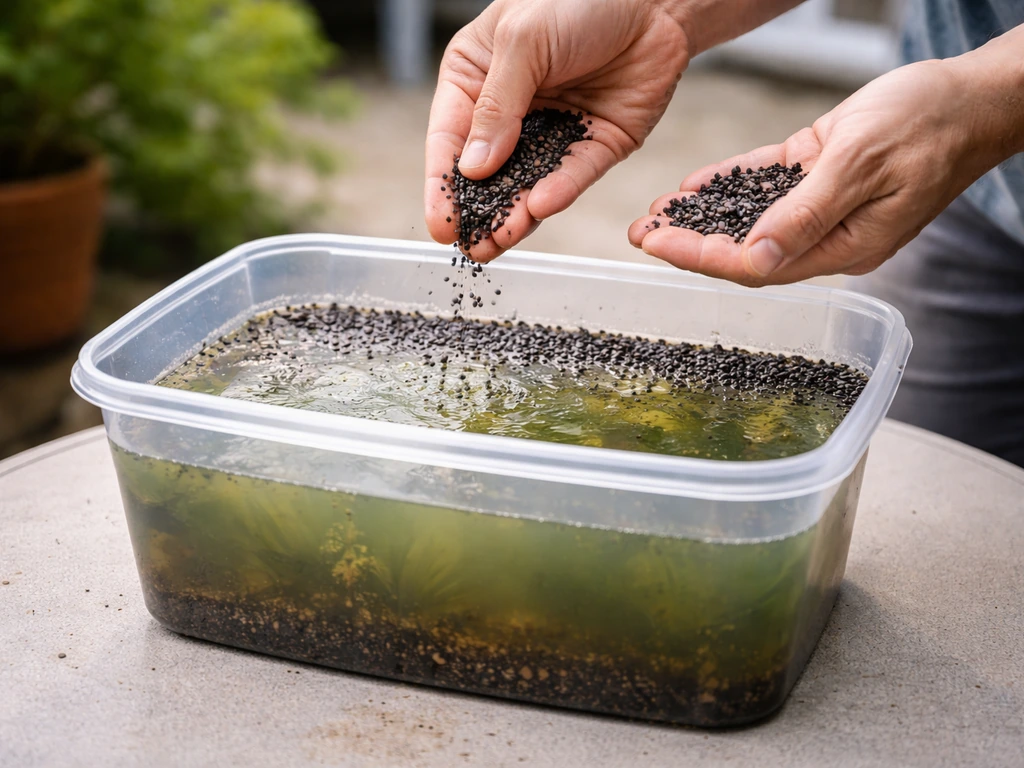
Green or murky water in a small container is almost always algae driven by a combination of nutrients and sunlight hitting the water directly. Top-dressing with gravel helps reduce nutrient runoff. Adding a small floating oxygenating plant competes with algae for those nutrients. If it gets bad, do a partial water change and cut back on fertilizer frequency.
Rhizome floating or shifting
If your rhizome floats up or shifts position, your gravel top-dressing is not heavy enough, or you lowered the pot into water too quickly and disturbed the soil. Fish the rhizome out, re-anchor it properly, press the gravel layer firmly down, and lower the pot back into the water slowly, tilted at a slight angle to let air escape gradually.
One last note: if you are curious whether water lilies can thrive without any soil at all, or in moving water like a fountain, those are slightly different situations with their own considerations worth exploring separately. A quick answer to the related question is that water lilies generally need more than just free-floating in water; they still require a suitable planting setup and growing conditions grow in moving water like a fountain. Container growing in still water with proper aquatic soil, as described here, is by far the most reliable path to your first bloom.
FAQ
Can I grow a water lily in a pot inside a bigger container, instead of planting it directly in the bowl?
If you already have the pot, the easiest way is to plant the lily in its aquatic pot (the one without drainage holes) and then lower that whole pot into the larger bowl or tub. That lets you control the water depth above the planting surface (about 2 to 6 inches) without disturbing the rhizome later.
When should I start fertilizing a potted water lily, and how often should I feed it?
For best results, treat the growing season as “3 to 4 weeks after planting,” then fertilize every 3 to 4 weeks with slow-release fertilizer tablets pushed into the soil near the rhizome. If the lily is not actively leafing yet, pause fertilizing, because cold water slows uptake.
Why won’t my water lily bloom if I accidentally buried the rhizome too deep or covered the crown with soil?
No. The growing tip (the crown area) should stay above the potting media, covered only by water. Even a thin layer of soil over the crown can prevent flowering, while the rhizome may still produce leaves.
What size pot do I need if my water lily keeps outgrowing the container but I can’t move it often?
Choose a diameter that gives room for the rhizome to spread, at least 14 to 16 inches for reliable blooming in a container. If the plant keeps getting rootbound (slower growth and fewer flowers), the fix is repotting into a wider container in spring, not just adding more fertilizer.
How can I tell if my patio spot is getting enough sun for container water lilies?
Start by counting direct sun hours, not total sunlight. “Bright but shaded” spaces, like behind a tall railing or under a partially open pergola, often fall below the 6 hours minimum and produce leaves but no blooms.
My pot water turns cloudy quickly, what should I check first?
Use heavy aquatic soil or heavy loam, and keep the rhizome anchored so it does not float. If you see soil washing out, it usually means the media is too light or the gravel top-dressing layer is not compacted firmly enough.
What’s the fastest way to fix algae in a small water-lily bowl?
Green water with algae is commonly a nutrient plus light problem. Reduce fertilizer frequency, maintain correct water depth, and consider adding a small oxygenating plant, then do a partial water change (about a third) if it gets really bad.
How do I manage water levels in a dark-colored container during hot summer days?
Top up evaporated water promptly to keep the crown submerged at the right depth (about 2 to 6 inches of water above the top of the pot). In very hot weather, check daily, dark containers warm faster and evaporation is more rapid.
Can I leave a potted water lily outside year-round, and how do hardy and tropical types differ?
It depends on variety and temperature. Many hardy lilies can overwinter outdoors if water does not freeze solid to the bottom in your area, but tropical lilies must be brought in before temperatures drop below about 50°F.
What if I want to grow a water lily indoors permanently, can I do it without a pond?
Indoor long-term growing usually fails because most windows cannot deliver consistent direct sun. If you try it anyway, plan on a strong grow light positioned close to the water surface, and still expect slower growth compared with outdoor sun.
My rhizome floated up after I planted it, how do I correct it?
If the rhizome shifts or floats, it usually comes from insufficient top-dressing weight or disturbing the planting when lowering into water. Re-anchor the rhizome, press the gravel top-dressing firmly, and lower the pot slowly to avoid air pockets or soil disruption.
Next Articles
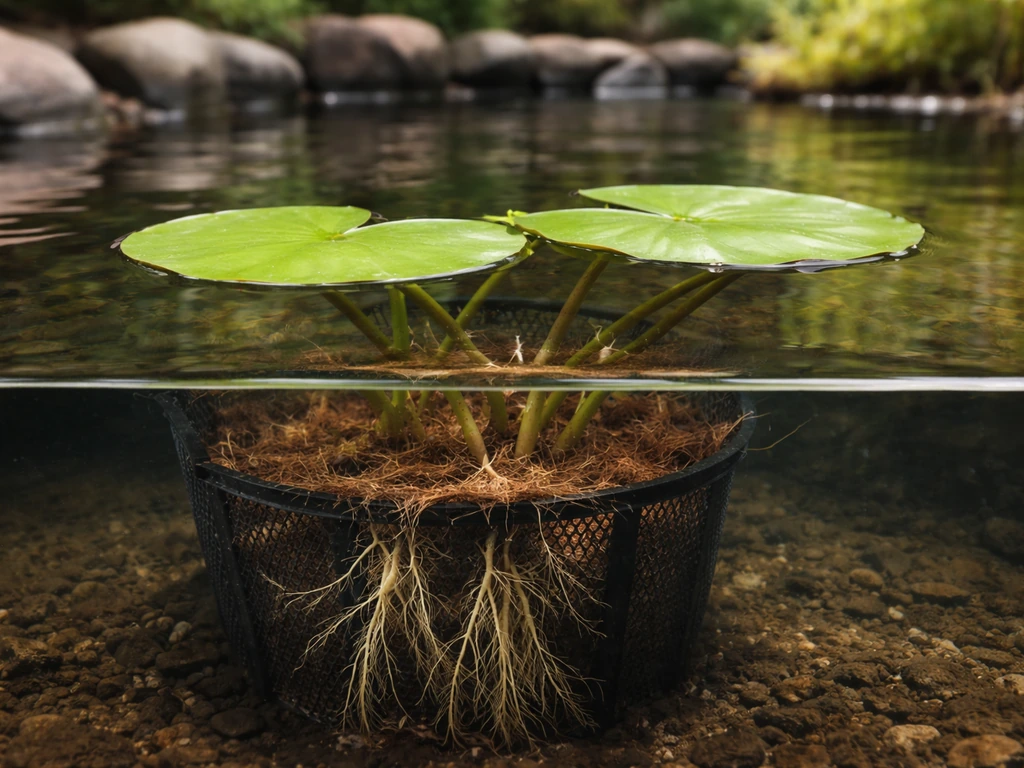
Can Water Lilies Grow in Just Water? How to Set Up
Learn if water lilies can grow in just water, why they fail in moving water, and how to set depth and placement.
Are Calla Lilies Hard to Grow? Easy Guide for Success
Get a clear answer on are calla lilies hard to grow, plus exact light, temperature, watering, planting, and fixes.
Can Calla Lily Grow Outside? Outdoor Care by Climate
Yes, calla lilies can grow outside. Learn climate, light, soil drainage, planting timing, and fixes for no growth.