
Yes, arum lilies can grow in water, but there are important conditions that determine whether they thrive or rot. Zantedeschia aethiopica (the classic white arum/calla lily) is actually classified as a marginal aquatic plant and can tolerate water up to 30cm (about 12 inches) deep over its roots. The other common type, Arum italicum (Italian arum), is a different beast entirely and really belongs in moist woodland soil rather than standing water. Get the species right, keep the crown (the growing tip at the top of the rhizome) above or just at the waterline, ensure good oxygen in the water, and you've got a setup that genuinely works long-term.
Can Arum Lily Grow in Water? Setup, Care and Troubleshooting
Marcus Hendricks
22 May 2026
Which 'arum lily' do you actually have?
This is the most important question before you do anything else, because 'arum lily' is one of those common names that gets glued to several totally different plants. Most gardeners searching this topic have one of two things:
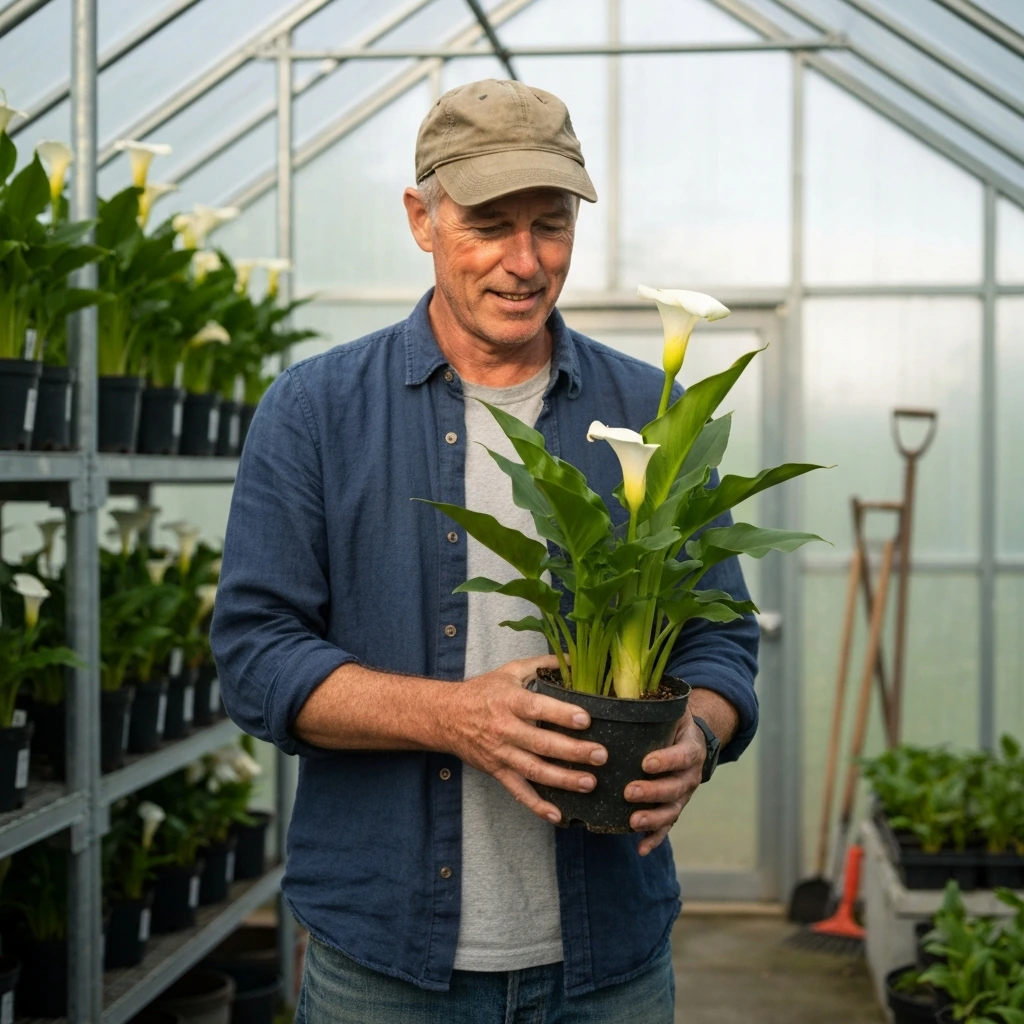
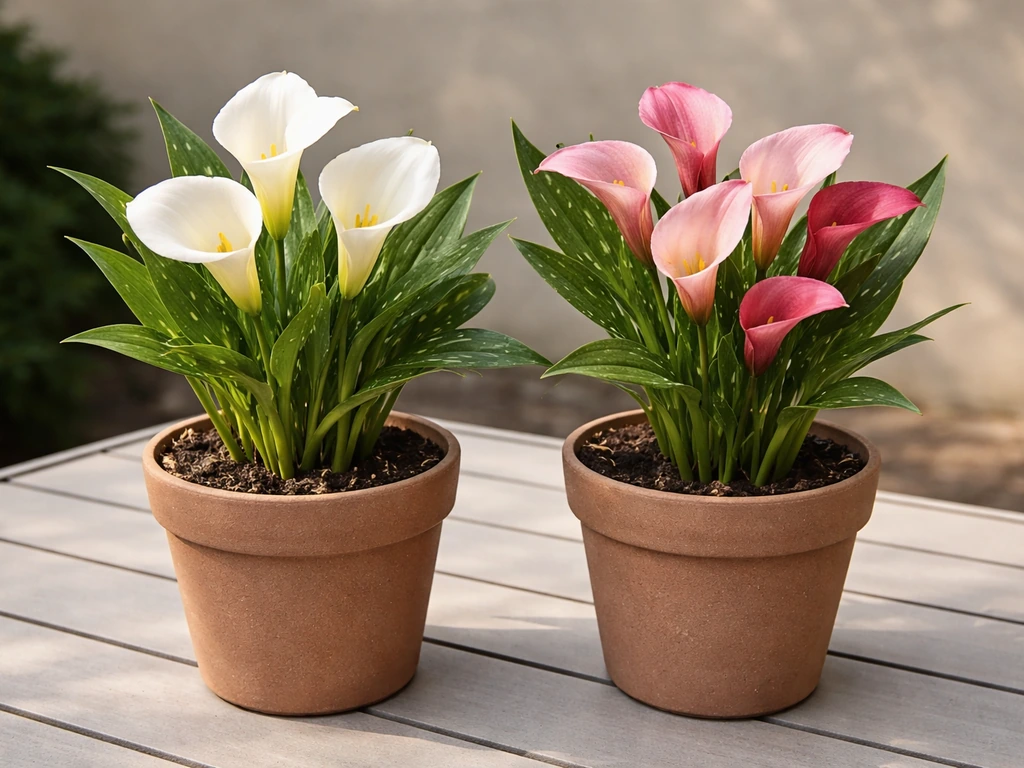
- Zantedeschia aethiopica (white arum lily / calla lily): The big, classic white funnel-flowered plant. This one is native to marshy, seasonally flooded habitats in southern Africa, which is exactly why it handles wet and even pond-margin conditions so well. This is the one you CAN successfully grow in water.
- Arum italicum (Italian arum / Lords-and-Ladies): A woodland perennial with arrow-shaped leaves and red berries in autumn. It goes dormant in summer and re-emerges in autumn/winter. This plant prefers moist, humus-rich soil and is NOT suited to standing water or hydroponic setups.
- Zantedeschia hybrid cultivars (colored callas: pink, yellow, purple): These are derived from different species than Z. aethiopica and are generally less water-tolerant. They prefer moist but well-draining conditions. Proceed with water culture more cautiously with these.
If you have the white arum lily (Z. aethiopica), you're in luck. The rest of this article is primarily written for that plant and its close cousins, since that's where water culture actually makes sense. If you've got Italian arum, keep it in moist garden soil and save yourself the frustration of watching it decline in a water container.
Your three main water-growing options
When people say 'grow in water,' they usually mean one of three things, and each has a different success rate with arum lilies.
Option 1: Roots submerged, crown at or just above the waterline (best choice)
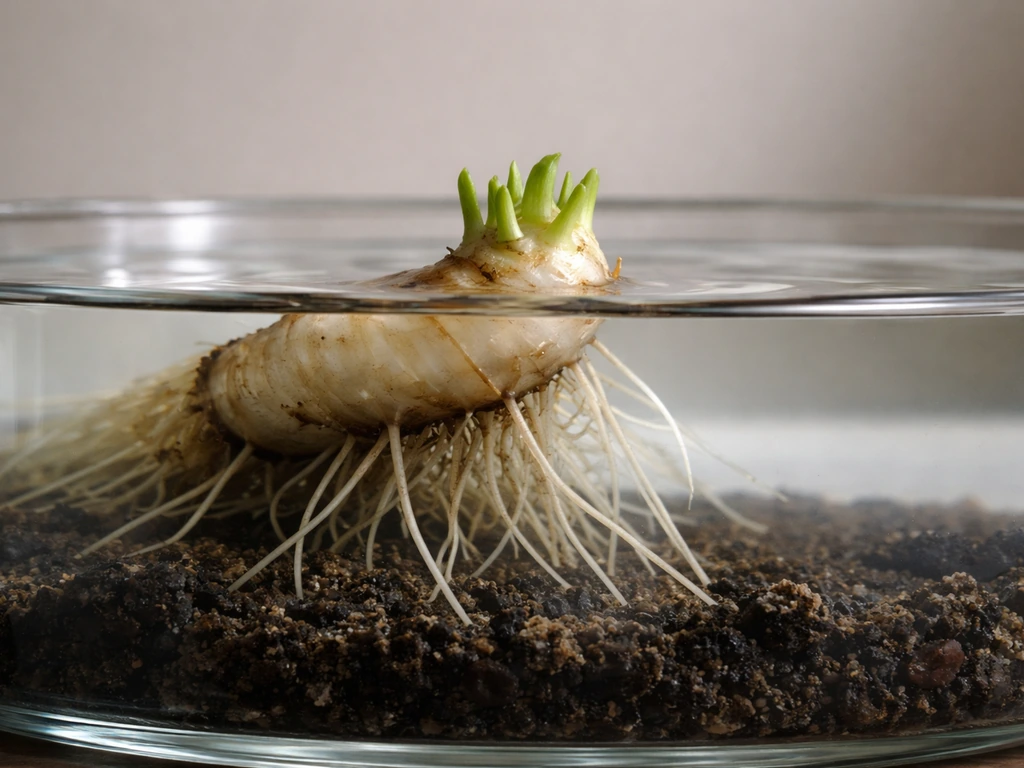
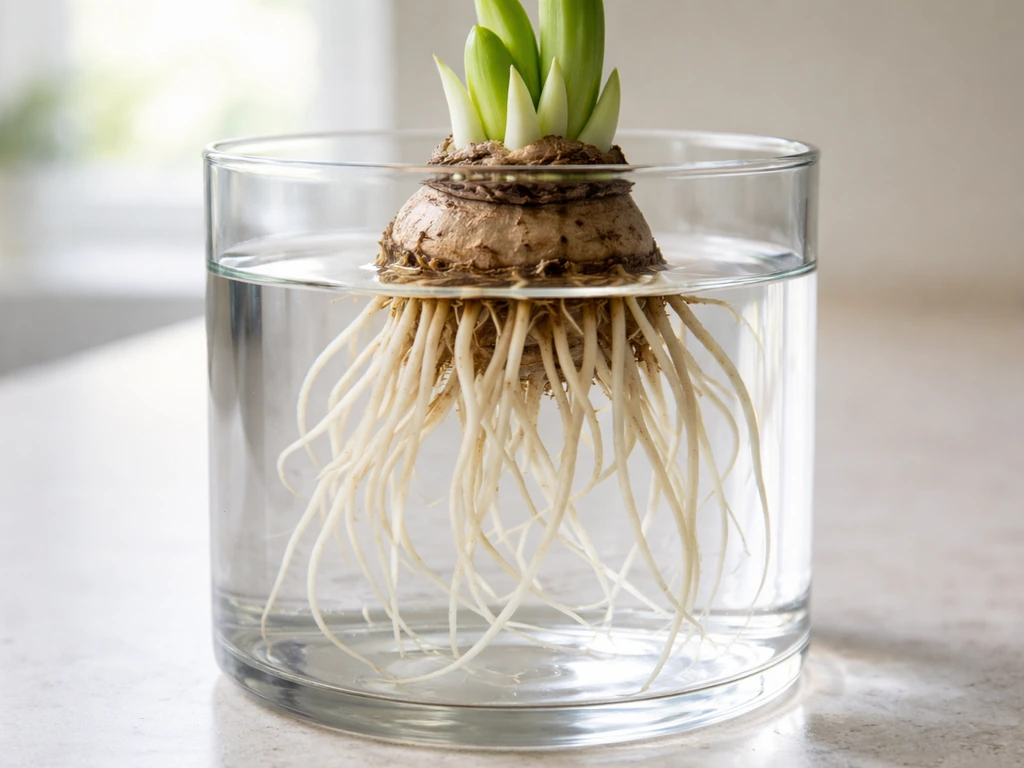
This is the sweet spot for Z. aethiopica and the method recommended by the RHS and commercial aquatic plant suppliers. You sit the rhizome in a shallow container so the roots and base are in water, but the growing crown (the top of the rhizome where shoots emerge) is just at or barely above the water surface. Aim for roughly 8 to 15cm (3 to 6 inches) of water over the crown at most, with the crown itself ideally sitting at the waterline rather than being deeply buried under water. This mimics the plant's natural pond-margin habitat and prevents the stagnant, anaerobic conditions around the crown that cause rot.
Option 2: Pond or water feature marginal planting
This is Z. aethiopica's natural happy place. Planted in a basket or directly in the margins of a garden pond, standing in water up to 30cm (12 inches) deep, these plants can stay in place for years. Thompson and Morgan and the RHS both confirm this depth tolerance. The water itself provides cooling, the roots stay consistently moist, and the plant comes back season after season. If you have a garden pond or patio water tub, this is the most reliable long-term method.
Option 3: Semi-hydroponic or hydroponic-style growing (advanced, indoor)
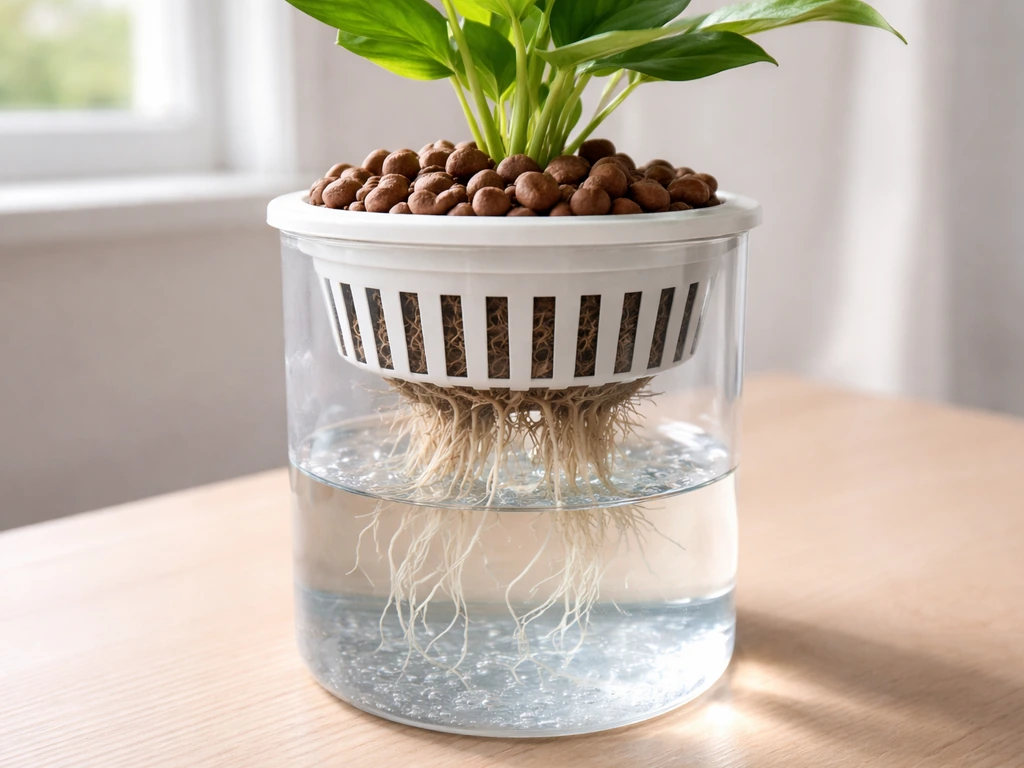
This involves growing the plant in an inert medium (like clay pebbles or perlite) with a nutrient solution instead of soil. Research, including work from semihydroponic and ebb-and-flow growing systems, confirms calla lilies can be grown this way when nutrient and oxygen levels are managed carefully. It's more demanding to maintain than a simple water container, but it works well indoors where you can control conditions. The key variables are pH (aim for the root zone to sit around 6.0 to 6.5), electrical conductivity (EC) of the nutrient solution (starting from clean water around 0 to 0.6 mS/cm and building up with diluted fertilizer), and dissolved oxygen above 6 mg/L using aeration.
Light, temperature, and seasonal timing
Getting these three things right matters just as much as the water setup itself. I've seen people do everything right with the container and water and still end up with a failing, yellowing plant because the conditions around the water setup were wrong.
- Light: Arum lilies need a warm, bright spot. Indoors, place them in the brightest window you have, ideally getting 4 to 6 hours of direct or very bright indirect light daily. Outdoors, a spot with morning sun and afternoon shade works well in hot climates; full sun is fine in cooler regions.
- Temperature: The happy range for active growth is roughly 15 to 25°C (60 to 77°F). Below 5°C (41°F) will kill tender rhizomes, so outdoor water setups need to come indoors before the first frost in cold climates. Water in containers cools fast, which is a bigger risk than soil.
- Dormancy: Zantedeschia rhizomes have a natural dormancy period, typically about 10 to 12 weeks after being lifted or after the growing season ends. Trying to force growth in water during this window will fail, and keeping wet rhizomes in dormancy leads to rot. If your plant seems stuck and won't sprout, check whether it's in a dormancy phase first.
- Seasonal setup outdoors: Start outdoor water container planting in spring after frost risk has passed. In mild climates (USDA zones 8 to 10), Z. aethiopica can overwinter in a pond margin outdoors. In colder zones, lift the rhizome in autumn, let it dry briefly, and store it cool and dry until spring.
Getting the container, water quality, and feeding right
Container choice
For marginal pond planting, use a purpose-made aquatic basket or a wide, shallow container that holds enough soil or gravel to anchor the rhizome while sitting in the water. For indoor semi-hydro setups, any opaque container works (opaque prevents algae growth from light reaching the water). A container that holds 2 to 4 liters per plant gives roots room to expand. Avoid clear glass for long-term setups unless you're prepared to clean algae frequently.
Water quality and changes
Tap water is usually fine, but if your water is high in alkalinity, it can cause nutrient imbalances over time, which shows up as yellowing or poor growth. Oklahoma State University Extension also notes that managing water frequency and chemistry is especially important when high-alkaline water is used, because it can lead to nutrient imbalances over time in hydroponic or reservoir systems. Change or refresh the water every 1 to 2 weeks in warmer months when the plant is actively growing and evaporation is higher. In a pond, natural water circulation handles this. In a static indoor container, partial water changes (replacing about half the volume) help flush out salt buildup and keep nutrient levels stable.
Oxygenation
Stagnant, oxygen-depleted water is the number one cause of root rot in water-grown arum lilies. In a pond, oxygenation comes naturally from surface agitation and aquatic plants. In a static container, you have a few options: a small aquarium air pump with an air stone is the simplest solution, moving the water slightly to maintain dissolved oxygen above 6 mg/L. Alternatively, do more frequent water changes and keep containers in a spot with some air movement. Avoid sealed, still containers with no aeration in warm weather.
Fertilizing in water
In a soil setup, the plant has buffering from the growing medium, but in water culture there's no buffer, so you need to feed regularly but carefully. For a simple water container, use a diluted balanced liquid fertilizer every one to two weeks during active growth. Once buds form, switch to a potassium-rich feed (a diluted tomato fertilizer works well) applied weekly until flowering is over. For hydroponic setups, aim for a roughly equal N:K ratio in the nutrient solution, and monitor EC and pH regularly. Nutrient deficiencies show up as specific leaf patterns (yellowing in distinct patterns depending on which element is missing), so if the leaves look off, that's your first diagnostic clue.
Starting, transplanting, and long-term care (indoor vs outdoor)
Starting from a dormant rhizome in water
The RHS recommends starting dormant rhizomes with the top of the rhizome just showing above the surface, watering sparingly until shoots appear (usually within a couple of weeks in a warm, bright spot). For water culture, I'd suggest starting the rhizome in barely moist, well-draining medium first until shoots are a few centimeters tall, then gradually introducing more water. Plunging a cold, dormant rhizome straight into a water container without any shoot growth is one of the fastest ways to end up with rot.
Transferring from soil to water
If you're moving an established, soil-grown plant to a water setup, rinse the roots thoroughly to remove all soil (trapped soil in water becomes anaerobic quickly and encourages rot bacteria). Let the rinsed roots air-dry for an hour, then place in your water container with the crown at or just above the waterline. Expect a brief adjustment period of one to two weeks where the plant looks slightly stressed before it settles in.
Indoor long-term water culture
Indoors, the main challenges are light and humidity. Keep the container in the brightest spot available, refresh water every one to two weeks, and feed lightly but consistently during the growing season. Watch for root crowding as the plant matures, as a root-bound plant in a small container will decline quickly. Repot (or move to a larger container) every one to two years.
Outdoor water features and patio tubs
In zones 8 and warmer, a patio water tub or pond margin is a low-maintenance long-term home for Z. aethiopica. Plant in spring, allow to establish through summer, and in colder zones bring the container inside before temperatures drop below 5°C (41°F). In zones 9 to 10, plants in a sheltered pond margin can stay outdoors year-round.
Soil vs water growing: an honest comparison
| Factor | Soil Growing | Water/Marginal Growing |
|---|---|---|
| Setup difficulty | Easy, standard potting | Moderate, needs oxygenation and position management |
| Rot risk | Low if well-draining soil used | Higher if crown is submerged and oxygen is low |
| Long-term stability | Very stable with normal watering | Stable outdoors in ponds; needs more monitoring indoors |
| Feeding | Slow-release granular or occasional liquid feed | Regular diluted liquid feed essential (no soil buffer) |
| Best for flowering | Consistent results | Good results if light and nutrients are managed well |
| Overwintering | Lift and store dry | Lift if in a portable container; in-ground pond margins, depends on zone |
| Suitable for Z. aethiopica | Yes | Yes (native habitat!) |
| Suitable for Arum italicum | Yes (moist woodland soil) | Not recommended |
For most home gardeners, soil (or a pond basket with a layer of heavy loam) is the safer starting point. The advantage of water culture is mostly aesthetic (beautiful in a water feature or bowl) and practical in pond settings where the plant has room to grow naturally. If you're indoors and want the water-growing look, go semi-hydro with proper aeration rather than a simple static container.
When things go wrong: diagnosing and fixing the most common problems
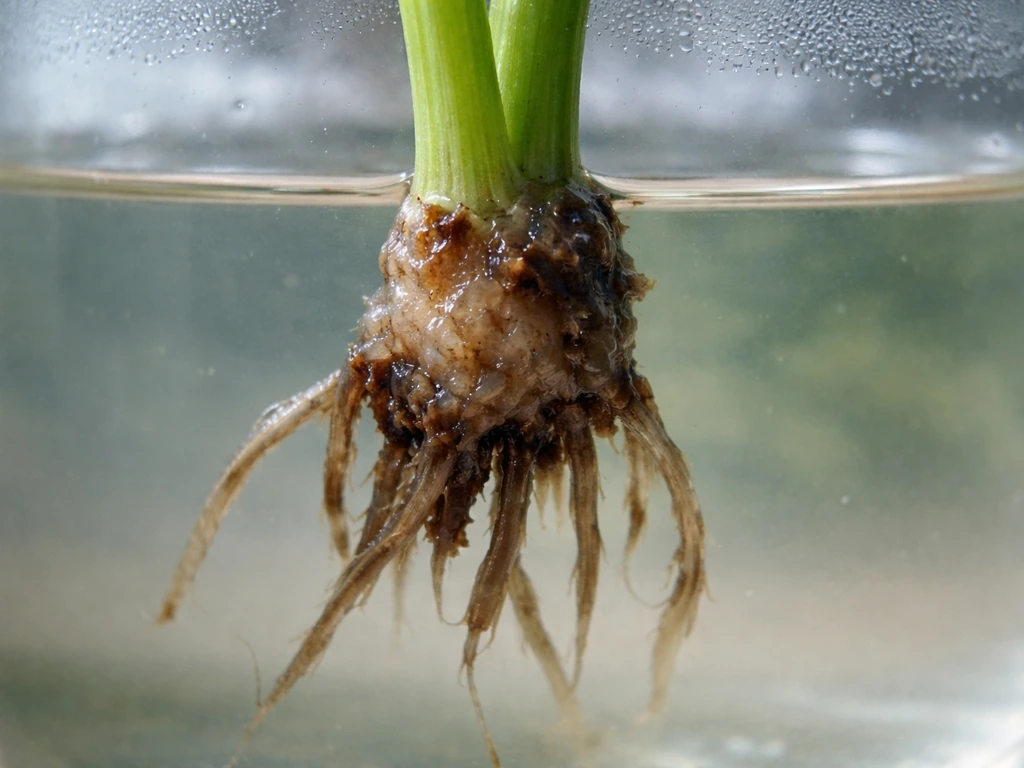
Mushy rhizome or roots with a foul smell
This is bacterial soft rot (Erwinia), and it's the most common water-culture failure. The rhizome or stem base becomes mushy with a fishy, slimy smell. Pacific Northwest Plant Disease Handbooks notes that bacterial soft rot can cause calla lily rhizomes or bulbs to become mushy with a fishy odor and slimy texture, typically starting at the base or rhizome and progressing mushy with a fishy, slimy smell. It usually starts when the crown is constantly submerged in stagnant, low-oxygen water or when a damaged rhizome is placed in water without drying first. Remove the plant immediately, cut away all affected tissue back to firm, healthy growth, dust cut surfaces with sulfur powder or let them air-dry for several hours, and start fresh in clean water with improved oxygenation and the crown positioned above the waterline. If the rot has reached the entire rhizome, the plant is not recoverable.
Yellow leaves
Yellowing has several different causes in water-grown arum lilies, so look at the pattern before acting. Uniform yellowing of older lower leaves is often normal aging, especially as the plant enters dormancy. Yellowing starting between leaf veins (interveinal chlorosis) usually indicates an iron or magnesium deficiency from pH being too high in the water (above 7.0). General pale yellow on new growth points to nitrogen deficiency. Adjust pH downward slightly and add a balanced diluted feed if deficiency is suspected. If yellowing is accompanied by a mushy smell, refer to the rot section above.
No new growth or sprouting
If a healthy-looking rhizome just sits in water without sprouting, the most likely cause is dormancy (the plant simply isn't ready to grow yet), cold water or air temperature, or insufficient light. Zantedeschia rhizomes have a dormancy period of around 10 to 12 weeks. Move the container to a warmer, brighter spot (aim for at least 18°C / 64°F), and give it another two to three weeks. Don't mistake a dormant rhizome for a dead one just because it's not moving. You'll usually see shoots within a couple of weeks once conditions are right.
Crown rot at the stem base
Crown rot (caused by Rhizoctonia or similar fungi) shows up as dark, water-soaked, browning tissue right at the base of the stems where they meet the rhizome. Unlike bacterial soft rot, it often doesn't smell as strongly at first. It's triggered by continuously saturated conditions around the crown with poor airflow. The fix is to reposition so the crown is above the waterline, improve oxygenation, and remove affected tissue. Cottony mold over affected tissue is a warning sign to act fast.
Algae taking over the container
Green algae in the water container is annoying but not directly harmful to the plant. It's caused by light reaching nutrient-rich water. The fix is straightforward: use an opaque container, do more frequent partial water changes, and reduce direct sun hitting the water surface rather than the plant leaves. A small amount of algae in an outdoor pond setup is actually fine and normal.
Pests in water-grown containers
Aphids and spider mites can still colonize the leaves even in water-grown plants, as they attack the foliage rather than the roots. Fungus gnats are less of a problem in water than in soil, but mosquitoes can breed in standing water containers. A small air pump that keeps the water surface moving prevents mosquito breeding. For aphids, a strong spray of water on the leaves or neem oil applied to foliage handles most infestations. Check the undersides of leaves regularly, especially indoors.
If you're exploring water culture for other lily types, the approach and tolerance levels vary considerably. Unlike Z. aethiopica, most lily types such as tiger lilies, rain lilies, or boat lilies have very different relationships with water, ranging from needing excellent drainage to true aquatic conditions, so it's worth checking the specific requirements for whatever you're growing alongside your arum lily. Boat lilies may tolerate or even thrive with their roots in water, but you still need to match the plant's specific depth and oxygen needs boat lilies have very different relationships with water. Rain lilies have different water needs than arum lilies, so check their specific requirements before trying water culture. Tiger lilies can be grown in water, but they are not true arum lily water plants, so you need to check the variety and mimic a pond-margin approach rather than full submersion tiger lilies can grow in water.
FAQ
How deep can I keep the water in a container without risking rot for Zantedeschia aethiopica?
For a water container, keep only the roots and base in the water. The crown (the top of the rhizome where shoots emerge) should sit at the waterline or slightly above, and you should limit water depth over the crown to roughly 8 to 15 cm (3 to 6 in). If you want a higher water level, use a pond margin or basket setup designed for marginal plants rather than a small static bowl.
Is it better to grow arum lily in full immersion or just with wet roots?
For Z. aethiopica, full immersion of the crown is a fast route to bacterial soft rot. The safest approach is “marginal placement,” where the roots are submerged but the crown stays at the surface (or just above it). This mimics the plant’s natural pond edge conditions and keeps the crown from sitting in stagnant, low-oxygen water.
What water should I use (tap, filtered, rain), and do I need to treat it?
Tap water is usually fine, but if your water is very alkaline, nutrient availability can shift over time and show up as yellowing (often interveinal) and weak growth. If you notice repeated yellowing despite feeding, switch to rainwater or a blended source, then monitor pH and adjust gradually rather than making big swings in one go.
How often should I change the water in a static container?
In a static indoor container, refresh the water every 1 to 2 weeks during active growth (more often if the container warms up or you see cloudiness). When you do water changes, replacing about half the volume is often enough to reduce salt buildup without shocking roots with a sudden change in chemistry.
Do I need an aquarium air stone, or can I rely on water changes alone?
You can sometimes get away with frequent partial water changes, but an air stone is the more reliable option for preventing oxygen dips. Aim to keep dissolved oxygen high, especially in warm weather when oxygen naturally drops. If you smell the “sour, fishy” rot odor or see mushy tissue, oxygenation is usually part of the problem.
Why are my leaves yellowing, and how can I tell deficiency from normal aging?
Normal aging is usually older lower leaves turning yellow evenly as the plant approaches dormancy. If the yellowing starts between leaf veins (interveinal pattern), pH is often too high, commonly above 7.0, reducing iron and magnesium availability. If new growth looks pale or yellow early, it can point to nitrogen deficiency, which responds to a balanced, diluted feed rather than more water changes.
My rhizome is firm but not sprouting, what should I check first?
Check dormancy and conditions before assuming failure. Z. aethiopica rhizomes often need about 10 to 12 weeks of rest, then sprout when warmth and light increase. Ensure the container is at least around 18°C (64°F) and bright, and do not start with a cold, fully submerged crown if the rhizome is still in rest.
Can I start with a dormant rhizome directly in water?
It’s risky. A common failure is plunging a dormant, shootless rhizome straight into water, then rot takes hold. A safer approach is to start it in barely moist, well-draining inert medium until shoots emerge a few centimeters tall, then introduce more water while keeping the crown at or near the surface.
What’s the difference between bacterial soft rot and crown rot, and what should I do immediately?
Bacterial soft rot often turns tissue mushy and may smell fishy or slimy. Crown rot looks like dark, water-soaked browning at the stem base where it meets the rhizome, and can progress with less noticeable odor at first. In both cases, remove the plant promptly, cut away to firm healthy tissue, improve oxygenation, and reposition so the crown is not continuously saturated.
Will algae in the water harm the arum lily?
Small amounts of algae usually won’t directly harm the plant, but they signal excess light reaching nutrient-rich water. Algae can foul the water and increase maintenance, so use an opaque container, reduce direct sun hitting the water surface, and do more frequent partial water changes to keep things stable.
How can I prevent mosquitoes in indoor water containers?
Mosquitoes can breed in standing water, so don’t ignore it even indoors near plants. Keep water moving with a small air pump and air stone, or change water on schedule and never let a container sit undisturbed for long periods in warm weather.
Do arum lilies need to be repotted or moved to a larger container over time?
Yes. Even in water culture, roots and rhizomes expand, and crowding reduces vigor. If growth slows or the container becomes root-bound, move to a larger basket or container every 1 to 2 years, keeping the crown positioned at the waterline.
Can I grow Italian arum (Arum italicum) in water the same way?
Generally no. Italian arum is not a marginal aquatic plant like Z. aethiopica, so keeping it in standing water usually leads to decline. If you want a similar look, grow Arum italicum in consistently moist, well-drained woodland-style soil instead of a water bowl or tub.
Next Articles
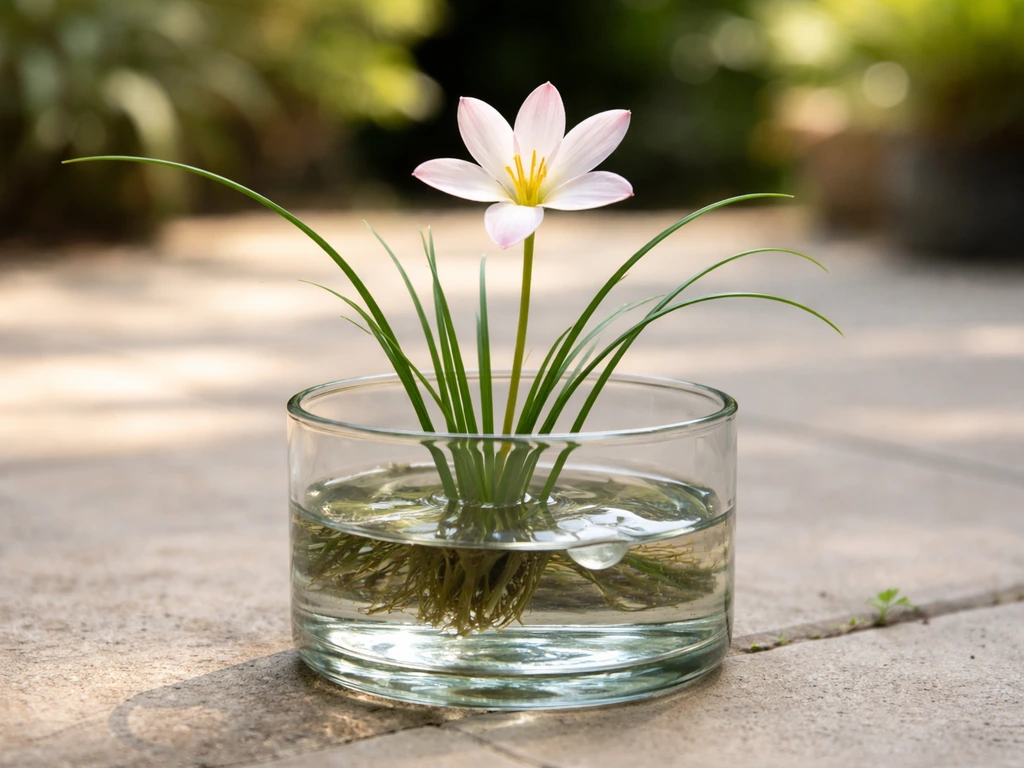
Can Rain Lily Grow in Water? How to Grow It Safely
Yes, rain lily can grow in water. Learn setup, depth, light, dormancy, and fixes for rot, algae, and no blooms.
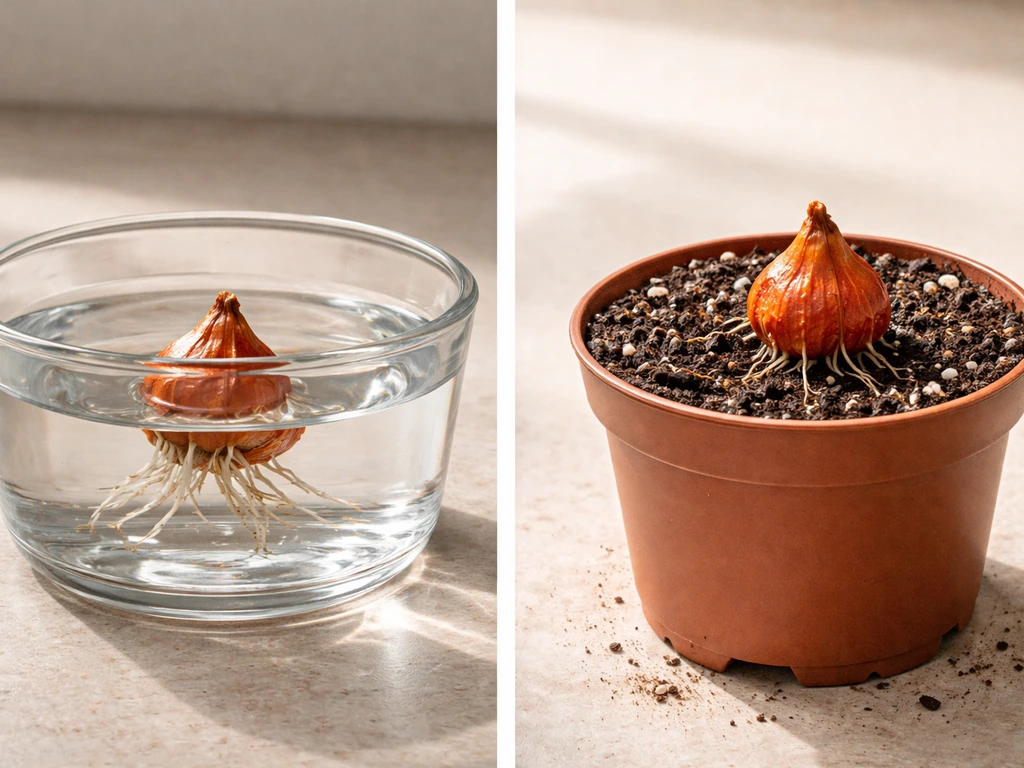
Can Tiger Lilies Grow in Water? Best Methods and Tips
Can tiger lilies grow in water? Learn if submerged bulbs work, risks, fixes, and better soil or hydroponic options.
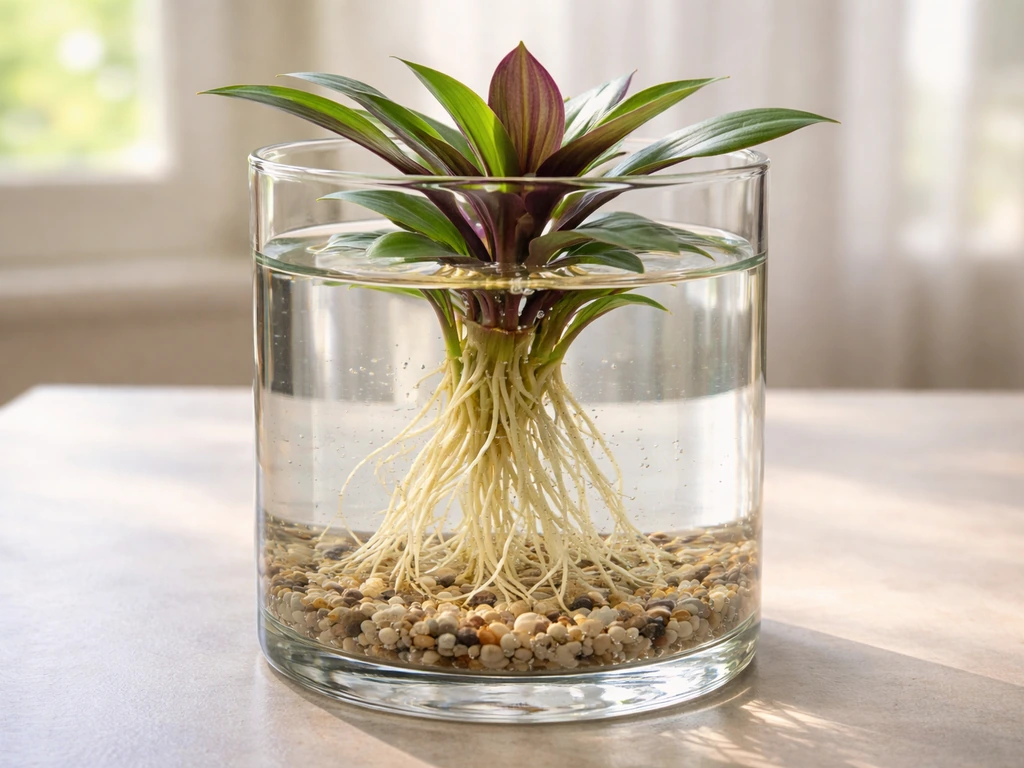
Can Boat Lily Grow in Water? How to Set Up and Care
Yes, boat lily can grow in water. Get setup, light, depth, oxygen care, troubleshooting, and propagation steps.