
Yes, boat lily can grow in water, but the answer depends heavily on which plant you actually have. The name 'boat lily' gets applied to two very different plants, and the water-growing rules are completely different for each. If you have Tradescantia spathacea (also sold as Moses in the Cradle), it is a terrestrial plant that can root and survive in water but is not a true aquatic. If you have Nymphoides peltata (yellow floating heart, sometimes sold as fringed water lily or boat lily), it is a genuine rooted aquatic plant that belongs in a pond or large container of water, with roots submerged and leaves floating at the surface. Get clear on which one you have, and the rest of this guide will make a lot of sense.
Can Boat Lily Grow in Water? How to Set Up and Care
Marcus Hendricks
28 Apr 2026
What 'boat lily' actually means and where the name comes from
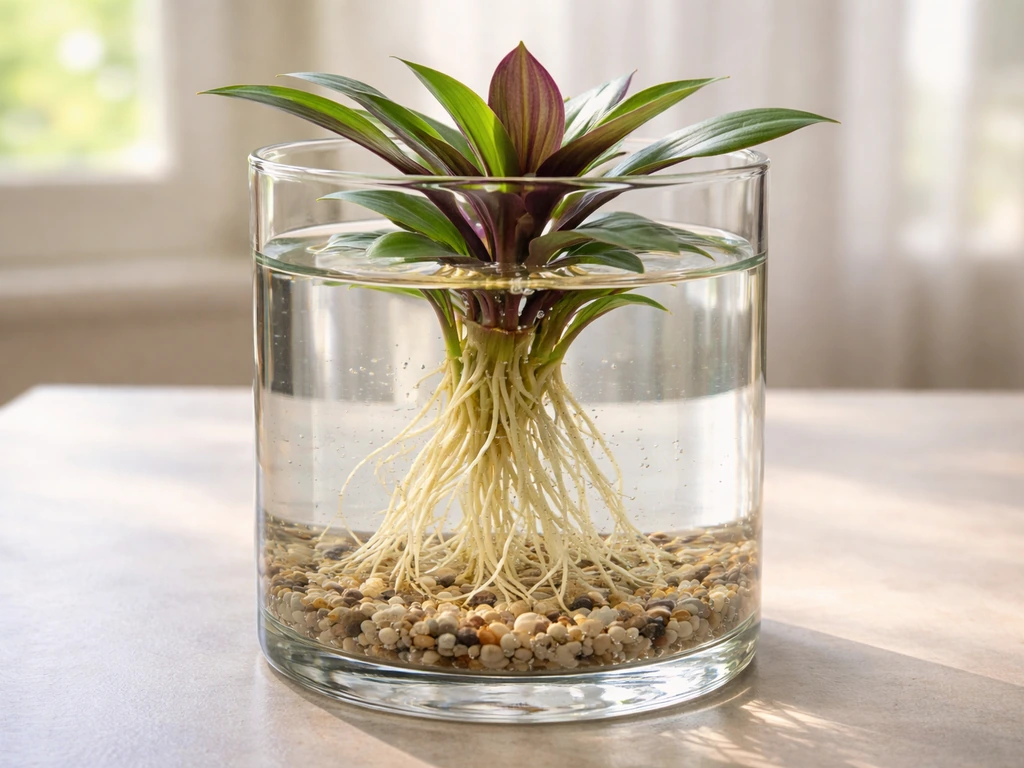
The confusion around this name is real, and you are not alone if you have spent time trying to figure out what you are actually growing. 'Boat lily' most commonly refers to Tradescantia spathacea, a compact, rosette-forming plant with lance-shaped green leaves that have a striking purple underside. It is also sold under the names Moses in the Cradle, Moses in a Boat, and its older trade name Rhoeo spathacea. The 'boat' in the name comes from the way the small white flowers nestle inside paired, boat-shaped bracts at the base of the leaves. This plant is in the Commelinaceae family and is native to Mexico, Belize, and Guatemala. It is popular as a houseplant and a ground cover in warm climates, and it is definitely not a lily in the botanical sense.
The second plant that sometimes carries the 'boat lily' label is Nymphoides peltata, a true aquatic perennial also known as yellow floating heart or fringed water lily. It produces small, round floating leaves and cheerful yellow flowers that sit just above the water surface. This one is in the Menyanthaceae family and is native to Europe and Asia, though it has naturalized across much of North America. It is much closer in growth habit to a miniature water lily than to any terrestrial lily. A quick word of caution here: Nymphoides peltata is listed as invasive in several U.S. states, including Minnesota, and it is actually illegal to plant it in the wild in Northern Ireland and the Republic of Ireland. If you are in a region where it is restricted, check your local regulations before growing it in an outdoor pond.
Submerged vs. just wet: what these plants actually need
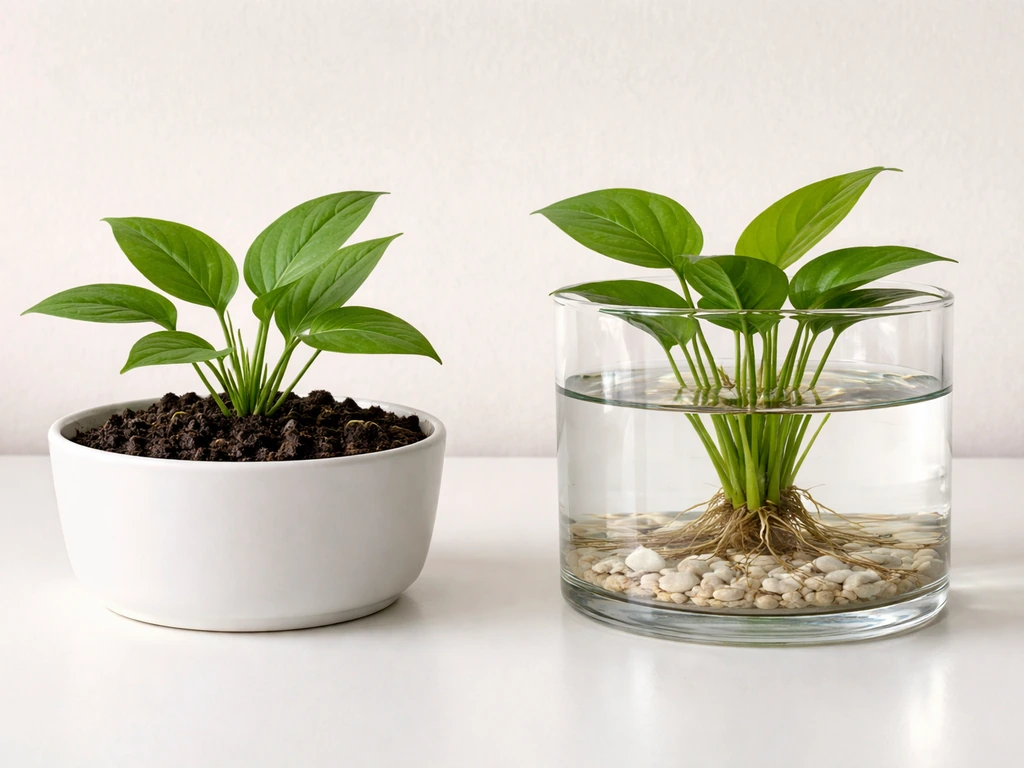
This is the core question, and the answer is different for each plant. If you have Tradescantia spathacea, it is not a water plant and should not be kept fully submerged. The leaves and crown will rot if they are underwater. What it can tolerate is consistently moist soil, and cuttings will root in a glass of water without any problem. A Reddit thread on Tradescantia propagation notes that broken pieces can root in aquarium water based on houseplant experience blank" rel="noopener noreferrer">broken pieces of Tradescantia can root in aquarium water. Think of it more like a pothos cutting than a pond plant. You can keep a cutting alive in water for months, but long-term it really wants soil with good drainage rather than sitting in standing water.
Nymphoides peltata is the opposite. It is a rooted aquatic plant, meaning the roots and rhizomes anchor in soil or a pond basket underwater, while the leaves and flowers float at or just above the surface. The leaves have been documented floating on the surface and occasionally submerged by as little as 1 cm, but the important point is that the shoot and leaves are adapted to surface conditions, not underwater life. The Minnesota DNR notes it can grow in water depths ranging from 0.5 meters to as much as 4 meters deep, which makes it genuinely versatile for ponds of different sizes. However, it will not thrive if the whole plant is pushed underwater. It needs surface access for light and gas exchange.
Light requirements: sun, shade, and indoor vs. outdoor
Tradescantia spathacea is forgiving about light in a way that many houseplants are not. It handles everything from bright indirect light to partial shade, though the purple coloration on the undersides of the leaves is much more vivid when it gets several hours of bright light per day. Indoors, a south- or east-facing window with 4 to 6 hours of light works well. The color tends to fade and growth gets leggy if it is kept in deep shade. Outdoors, it appreciates morning sun and afternoon shade, especially in hotter climates.
Nymphoides peltata is much more demanding about light, and this is actually one of the biggest reasons it can fail in a container setup. It is a competitive surface plant that depends on photosynthesis at the water surface, and research has found that light availability is a key limiting factor for its growth. In pond situations it can actually form dense mats that shade out competitors, which tells you how aggressively it seeks light. For a container or pond setup, aim for at least 5 to 6 hours of direct sunlight per day. If you are trying to grow it indoors, you will need a very sunny south-facing window or a grow light setup that mimics full outdoor sun. Outdoor pond culture is genuinely the better fit for this plant.
Container setup and how to root it correctly
Setting up Tradescantia spathacea in water
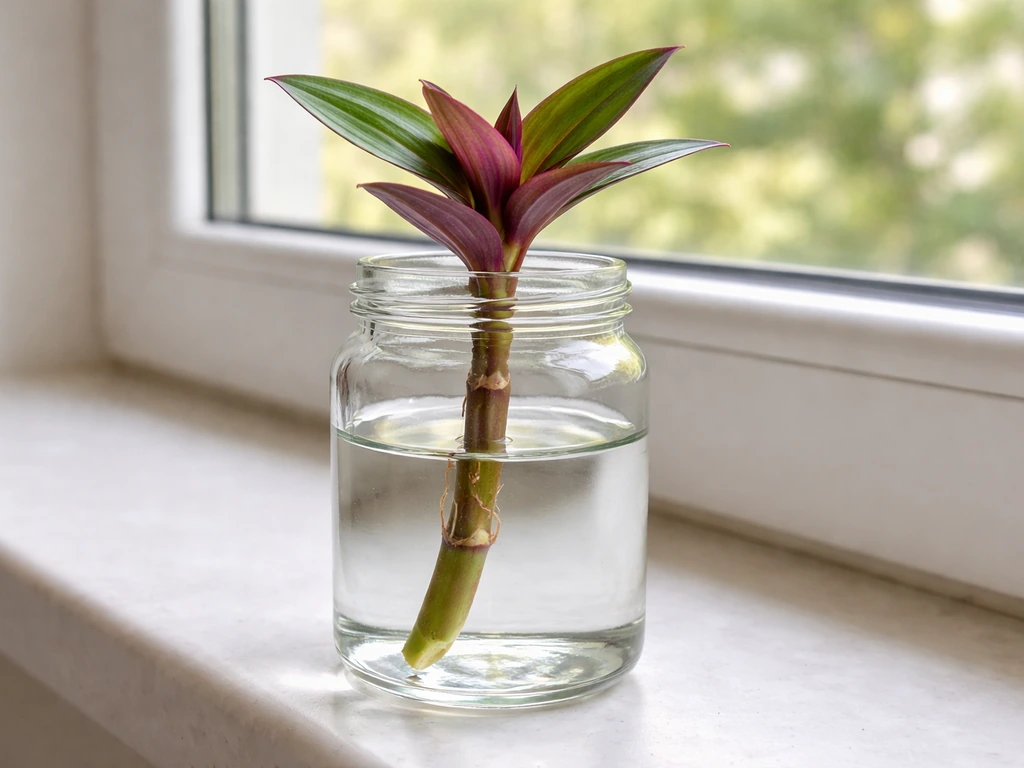
If you want to propagate or temporarily grow your Tradescantia spathacea in water, the process is simple. Take a healthy stem cutting about 10 to 15 cm long, remove the lower leaves so you are not rotting foliage in the water, and place the cutting in a clear glass or jar with enough water to cover the nodes. Keep the cutting in bright indirect light and change the water every few days to prevent it from going stagnant and sour. Roots will typically appear within one to two weeks. This is a great short-term propagation method, but for the plant to thrive long-term, it should be transferred to well-draining potting mix once the roots are 2 to 3 cm long.
Setting up Nymphoides peltata in a pond or container
For Nymphoides peltata, the correct setup involves a pond basket or aquatic planting container filled with aquatic compost or heavy loam, not standard potting mix. Standard potting mix floats and disperses into the water. Place the rhizome into the basket, cover with a layer of pea gravel to hold everything in place, and then lower the basket into the water. The recommended planting depth ranges from about 20 to 75 cm (8 to 30 inches) depending on the source, with some vendors recommending up to 90 cm (35 inches) for deeper ponds. A good starting point is 30 to 45 cm of water over the basket. If the plant is new and has existing foliage, start shallower so the leaves can reach the surface immediately, then gradually lower the basket as the plant establishes longer stems.
Keep the basket away from pond pumps and fountain jets. Water movement near the root zone can disturb the planting medium and stress the roots. Still or very gently moving water is ideal. If you are using a container rather than a natural pond, choose something at least 45 cm wide and deep enough to hold an appropriate water column. A half barrel or a large glazed ceramic pot without a drainage hole works well for a patio setup.
Temperature, seasonality, and where each plant works best
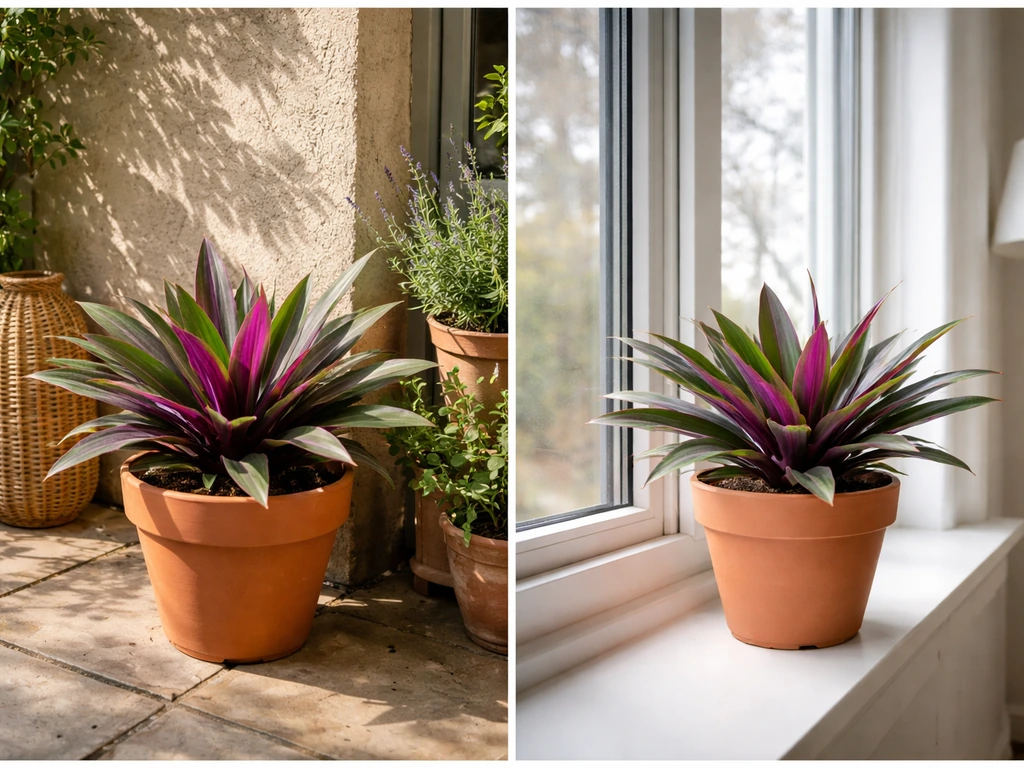
Tradescantia spathacea is a warm-weather plant. It grows outdoors year-round in USDA zones 9 to 12, where frost is rare or nonexistent. In cooler zones it works as a houseplant or a seasonal outdoor container plant that you bring in before temperatures drop below about 10°C (50°F). It does not appreciate cold drafts, air conditioning vents, or temperatures below that threshold for extended periods.
Nymphoides peltata is hardier and more seasonally driven. Its active growing season runs roughly from April or May through late October, depending on your latitude. It overwinters as a dormant tuberous rhizome anchored in the pond bed, and new floating leaves emerge again in spring once water temperatures warm and light levels increase. This makes it well suited to temperate pond gardens in zones 5 through 9. In very warm climates it may remain semi-active through mild winters, and in cold climates the rhizomes typically survive below the ice as long as the water does not freeze solid all the way to the pond bottom. If you are keeping it in a container that could freeze through, move the container to a cool but frost-free location for winter.
Common problems and how to fix them
| Problem | Likely Cause | Fix |
|---|---|---|
| Yellowing leaves (Tradescantia) | Too much direct sun, overwatering in soil, or waterlogged crown | Move to bright indirect light; if in water culture, change water more frequently and keep crown above the waterline |
| Rotting stem base (Tradescantia in water) | Stagnant water or foliage submerged | Change water every 2 to 3 days; keep leaves out of water; add a small piece of activated charcoal to the vessel |
| No floating leaves appearing (Nymphoides) | Basket too deep, insufficient light, or plant still dormant | Raise the basket so leaves can reach the surface; confirm the spot gets 5+ hours of direct sun |
| Algae overtaking the container | Excess nutrients and strong sun with no competition | Reduce organic matter in the planting medium; consider adding a few oxygenating plants; do partial water changes |
| Leaves going brown at edges (Nymphoides) | Low oxygen in water or overheating in a small container | Move to a larger, shadier spot during peak summer heat; ensure the container is not sealed with no air exchange |
| Poor growth despite good light | Wrong season (too early in spring) or compacted basket medium | Wait until water temperature reaches at least 15°C; refresh the basket medium and check for root-bound rhizomes |
Stagnant water is the enemy in any water culture setup. For Tradescantia in a glass of water, this is easy to manage with regular water changes every two to three days. For Nymphoides in a closed container, the plant's own photosynthesis helps oxygenate the water during daylight hours, but adding a few submerged oxygenating plants like Elodea to a container pond will help keep the water balanced, especially in warm weather when oxygen levels drop.
Propagating boat lily and knowing when to replant or move it outdoors
Tradescantia spathacea is one of the easiest plants to propagate. Take stem tip cuttings, root them in water as described above, and pot them up once roots are well established. You can also divide the clumps at the base, separating individual rosettes, each of which will grow into a new plant. If you have been keeping it indoors as a houseplant over winter, move it back outside after your last frost date once nighttime temperatures stay reliably above 10°C. Acclimatize it over a week by starting it in a sheltered, partially shaded spot before moving it to its final location.
Nymphoides peltata propagates naturally through its stolons and rhizomes. King County describes yellow floating heart (Nymphoides peltata) as rooting in underwater sediment and reproducing vegetatively via rhizomes and stolons Nymphoides peltata propagates through its stolons and rhizomes. The plant sends out long, branching stolons that root and establish new plants wherever they anchor, which is part of why it can become invasive in open water. For deliberate propagation, divide the rhizomes in spring or early summer when the plant is actively growing. Each section of rhizome with at least one node can be planted in a new basket and will establish independently. If you have kept the plant in a container over winter, early spring is also the right time to check whether the basket is becoming root-bound. If roots are escaping the basket or the medium has compacted, repot into a slightly larger basket with fresh aquatic compost before temperatures warm up fully.
When moving Nymphoides outdoors after indoor storage, wait until the pond or container water temperature reaches at least 15°C. Cold water slows growth significantly and leaves the plant vulnerable to rotting before it can establish. A soil thermometer is genuinely useful here, and it is a small investment that saves a lot of frustration. Once the water is warm enough and the plant is back in its outdoor spot with full sun access, it will grow quickly and begin producing flowers within a few weeks.
If you have been exploring water growing for other lily-adjacent plants, the story is quite different for each species. Tiger lilies and rain lilies, for example, have very different water tolerance, and even among the plants grouped loosely as 'lilies' there is a wide range of moisture preferences. Rain lilies have their own moisture needs too, so the best approach depends on whether you are keeping them just damp or fully wet can rain lily grow in water. So, can tiger lilies grow in water? In most cases, they need evenly moist soil rather than being kept fully submerged. The key takeaway here is that the name alone will not tell you what a plant needs. Know your species, match the water depth and light conditions to what that species actually does in nature, and you will be set up for success. However, can arum lily grow in water will depend on whether you treat it like a true aquatic plant or keep its roots consistently moist but not fully submerged.
FAQ
Can I keep Tradescantia (Moses in the Cradle) fully submerged in a jar long-term?
Yes for short-term propagation, but don’t keep a Tradescantia spathacea cutting submerged long-term. For the “in water” method, change the water every 2 to 3 days, keep only the nodes under water (not the crown), and move it to well-draining potting mix once roots are a few centimeters long.
How do I tell if my “boat lily” in water is rotting?
If the leaves and crown are underwater, Tradescantia spathacea is likely to rot, even if the cutting initially survives. A fast diagnostic is to check whether new growth is coming from the rosette and whether the base feels firm. If the crown is soft or smells sour, remove it and restart with nodes only in water.
What happens if Nymphoides peltata is kept too deep, with leaves underwater?
For Nymphoides peltata, the goal is surface light and gas exchange, not constant submersion. If you accidentally push the leaves too far under (even briefly), expect slower growth and possible leaf dieback, and then correct by raising the basket or reducing depth so leaves can return to the surface.
Can Nymphoides peltata be grown indoors in a container, and what lighting actually works?
For indoor growing of Nymphoides peltata, “bright window” usually is not enough. It typically needs the equivalent of at least 5 to 6 hours of direct sun, or a strong grow light positioned close enough to provide high intensity at the water surface, with a timer that mimics outdoor day length.
What should I fill a pond basket with for Nymphoides peltata, and can I use regular potting mix?
Don’t rely on standard potting soil in a pond basket. Use aquatic compost or heavy loam meant for water use, then anchor with pea gravel so the medium stays put. Standard potting mix can float, disperse, and cause a stressed root zone.
Will adding other aquatic plants help, and will pond pumps or fountains hurt either one?
Yes, but only with the right plant type and placement. Oxygenators like Elodea can help in warmer, low-oxygen container conditions, but avoid strong jets. Keep oxygenating plants to the margins or in a separate area so they don’t compete for light with the floating leaves.
Is Nymphoides peltata safe to plant outdoors in my area?
If you live in a region with restrictions, it’s safest to avoid outdoor release of Nymphoides peltata. Many places treat it as invasive, so check local rules before planting in the ground or allowing it to escape drainage systems, even if it’s legal to keep in a container.
How should I winter each “boat lily” species, especially in freezing climates?
For Tradescantia spathacea, keep it warm and avoid cold drafts or conditioning vents, since it can stall or decline below about 10°C (50°F). For Nymphoides peltata, overwintering depends on whether the pond freezes solid at the bottom; if it could freeze-through, move the container to a cool but frost-free spot.
Why is my Tradescantia growing slowly or losing its purple underside?
If your Tradescantia looks leggy or color fades, it’s usually a light issue, not a watering issue. Move it to a brighter spot (often south or east window with several hours of strong light) and rotate the pot weekly for even growth.
What’s the quickest way to confirm which plant I actually have before setting up water growing?
The most common mistake is not matching the plant to the water setup. Tradescantia spathacea is a moist-soil or water-propagation plant, while Nymphoides peltata is a true aquatic. If you’re unsure which one you have, confirm by leaf behavior, rosette form (Tradescantia), and whether it naturally produces floating leaves from rooted rhizomes (Nymphoides).
Next Articles
Can Lily Grow in Water? Setup, Care, and Troubleshooting
Learn which lilies grow in water, how to set up lighting and depth, plus care and fixes for yellowing or rot.
Can Calla Lilies Grow in Ponds? How to Set Up Successfully
Yes, with the right setup: water depth, substrate, anchoring, light, and overwinter care for pond or marginal calla lili
Are Calla Lilies Hard to Grow? Easy Guide for Success
Get a clear answer on are calla lilies hard to grow, plus exact light, temperature, watering, planting, and fixes.