
Yes, a peace lily (Spathiphyllum) can survive short-term without roots and, under the right conditions, will regrow a healthy root system. The key word is short-term. Without roots, the plant can't take up water or nutrients, so you're working against a clock. Get the conditions right quickly and most peace lilies will surprise you with how resilient they are. Drag your feet or keep them too wet, too cold, or in direct sun, and you'll lose them within a week or two.
Can a Peace Lily Grow Without Roots? How to Recover It
Marcus Hendricks
28 Apr 2026
Survival vs. regrowth: what you're actually dealing with
There's a difference between a peace lily that can survive temporarily without roots and one that can genuinely regrow roots and thrive again. Survival is possible for a short window, maybe 1 to 3 weeks, if you limit water loss from the leaves and avoid stressing the plant further. Regrowth is a longer game, typically 3 to 6 weeks before you see meaningful new roots, and only if the crown (the base where leaves emerge) is firm and undamaged. If the crown is soft, dark, or smells off, the plant is almost certainly beyond saving. That's the honest truth, and it's worth checking before you invest more time.
One quick note before we go further: peace lily is Spathiphyllum, a tropical plant with no relation to true garden lilies like Asiatic lilies or daylilies. However, if you're really wondering whether lilies grow through rocks, the answer depends on the type of lily and whether it has roots that can penetrate the growing medium. ASPCA Poison Control lists blank" rel="noopener noreferrer">peace lily (Spathiphyllum) as toxic to dogs and cats. It's a common mix-up. Peace lilies grow from crowns and clumps, not bulbs, which actually makes them easier to propagate and re-root than many true lily species.
Figure out which "no roots" situation you actually have
Not all rootless peace lilies are in the same situation, and the fix depends on which one you're dealing with. Here's how to tell them apart.
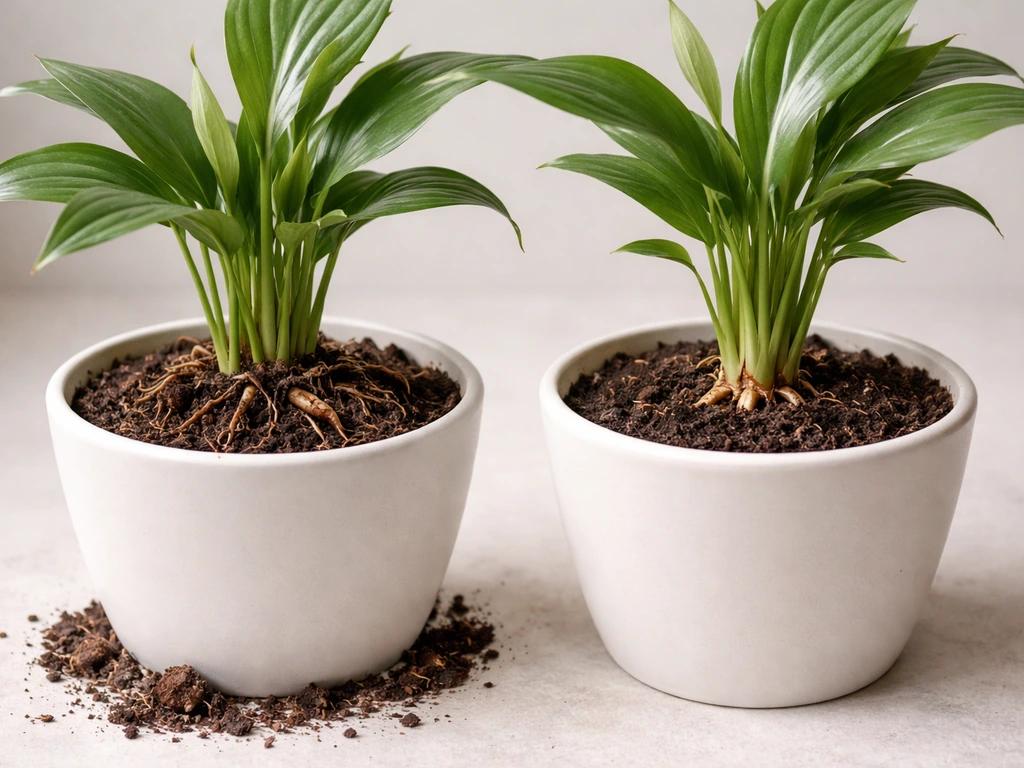
- Repotting damage or broken root ball: You were repotting, the root ball fell apart, or you accidentally snapped most of the roots off. The crown is intact and healthy-looking, but there's little to no root mass left. This is the best-case scenario.
- Root rot from overwatering: The roots have turned black and mushy. You may notice the outer layer of the root slides right off the inner core when you touch it (a classic sign noted by UF/IFAS researchers). The stems near the soil line may be soft or discolored. This is more serious because you need to remove all the rotted material before trying to re-root.
- Water propagation with no roots yet: You've put a crown division or offset into water and you're waiting for roots to form. The plant hasn't failed, it's just in transition. This is normal, and patience plus the right setup will sort it out.
- A division with minimal roots: You divided a peace lily and one section came away with very few roots or none at all. Similar to repotting damage but usually cleaner, since you made the cut deliberately.
To check viability, look at the crown and any remaining stem tissue. Firm and pale green or white means you're in good shape. Soft, dark brown, black, or slimy means rot has set in. Smell it too: rot has a distinct, unpleasant odor. If only the roots are affected and the crown is still firm, you can save it. If the rot has crept into the crown itself, you're better off starting fresh.
How to root a peace lily in water (step by step)
Water rooting works well for peace lilies, especially for small divisions or offsets. It lets you watch root development directly, which is genuinely satisfying and also helpful for catching problems early. Here's exactly how to do it.
- Trim off any dead, mushy, or clearly rotted root tissue with clean scissors or a knife. Cut back to healthy tissue, which should be white or light tan and firm.
- Let the cut surfaces air-dry for 30 to 60 minutes. This helps seal the wound slightly before it goes into water.
- Optional but helpful: dip the base of the crown/stem in rooting hormone powder or gel before placing in water. Research from multiple extension services confirms rooting hormone can shorten rooting time and improve root quantity and quality.
- Fill a clean container with room-temperature water. Use an opaque or amber-colored container if possible, since light promotes algae growth that can foul the water and stress the plant. A clean glass jar wrapped in dark paper works fine.
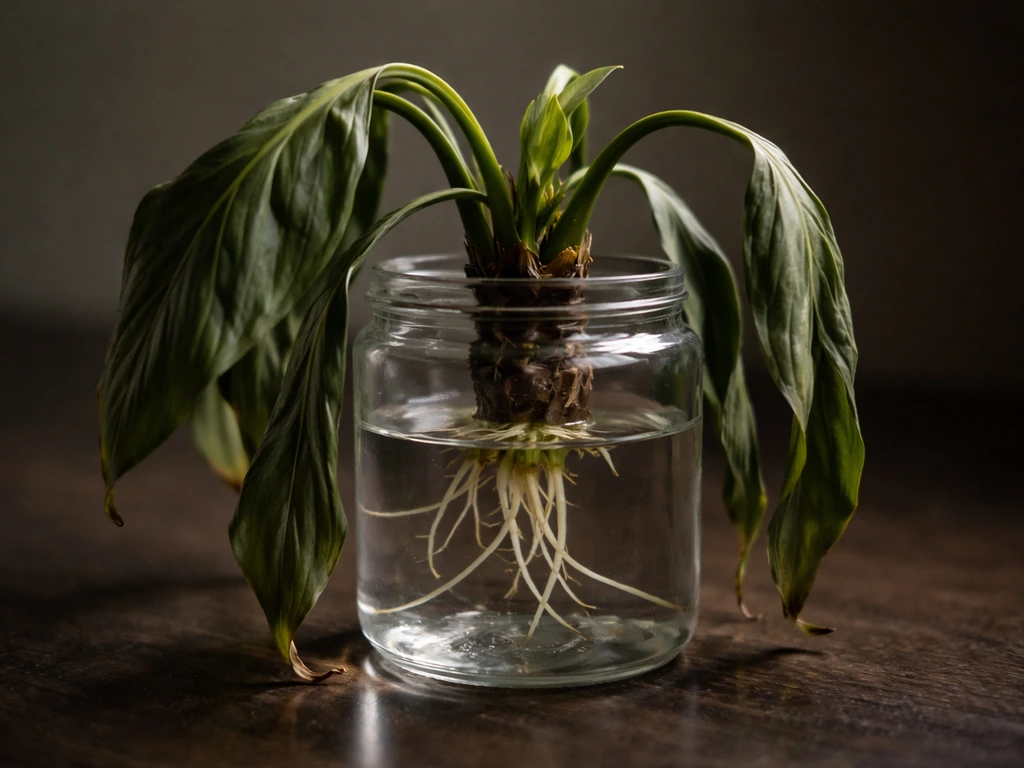
- Place the base of the crown into the water so that the bottom 1 to 2 inches are submerged, but keep the leaves and crown base above the waterline.
- Set the container in a warm spot with bright indirect light. Peace lilies prefer 65 to 85°F (18 to 29°C). Avoid direct sunlight, which will overheat the water and stress the leafy tissue.
- Change the water every 5 to 7 days to keep it oxygenated and clear. Do not add fertilizer at this stage.
- After 2 to 4 weeks, you should see small white root nubs forming at the base. Once roots are 1 to 2 inches long, the plant is ready to move to soil.
Rooting in soil or perlite: when and how to do it
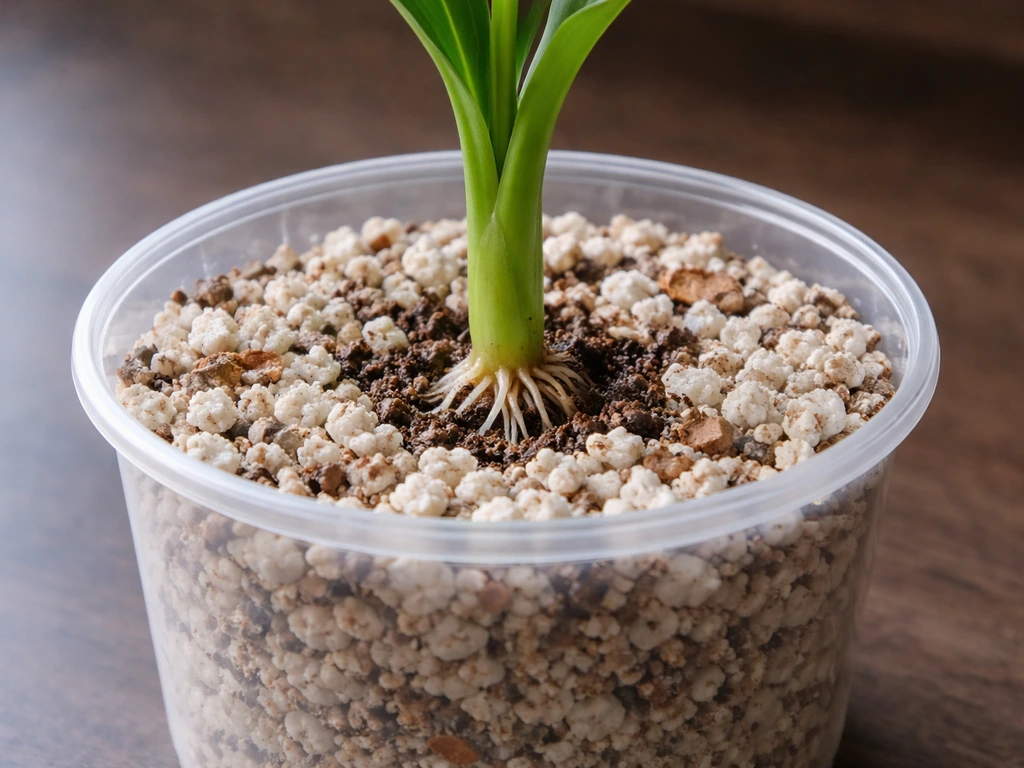
Rooting directly in a growing medium works faster than water rooting in many cases and produces roots that are already adapted to soil conditions, so the transition is less of a shock. I'd recommend this method if you have a larger crown division, if your space is warm and humid, or if your peace lily had root rot and you've already cleaned the roots up.
- Prepare your rooting medium. Pure perlite, a 50/50 mix of perlite and potting mix, or straight moist potting mix all work. The medium needs to hold some moisture while also allowing airflow to the root zone. Pure perlite is forgiving because it's very hard to oversaturate.
- Clean and trim any rotted or dead roots as described above, then let the cuts dry for 30 to 60 minutes.
- Dip the base in rooting hormone powder or gel. This step is optional but speeds things up meaningfully.
- Make a small hole in the medium with a pencil or your finger, then insert the crown so it sits upright with the base buried about 1 inch deep. Firm the medium gently around it.
- Water the medium lightly so it's evenly moist but not waterlogged. Squeeze a handful: it should hold together but not drip.
- Cover the pot loosely with a clear plastic bag or propagation dome to create a humid microclimate around the leaves. This reduces water loss from the leaves while the plant can't take up water through roots. Add a small amount of moisture inside the bag if condensation stops forming, but vent it for a few minutes every day or two to prevent fungal issues.
- Place in a warm spot (70 to 80°F is ideal) with bright indirect light. Avoid cold windowsills in winter.
- Check for rooting by gently tugging the plant after 3 to 4 weeks. Resistance means roots are forming. Once the plant feels anchored, remove the humidity cover gradually over several days.
When to use water vs. soil rooting
| Situation | Better Method | Why |
|---|---|---|
| Small offset or division with no roots | Water | Easy to monitor, low rot risk if water is changed regularly |
| Larger crown division or repotting accident | Soil/perlite mix | More stable, roots adapt directly to soil environment |
| Root rot recovery (roots cleaned off) | Perlite or perlite/soil mix | Better drainage, harder to oversaturate than straight potting mix |
| You want to see root progress | Water | Roots visible through container |
| High ambient humidity already (50%+) | Either | Humidity dome less critical |
| Cold room or dry conditions | Soil with humidity dome | Dome compensates for environmental deficits |
Keeping a rootless peace lily alive while it grows new roots
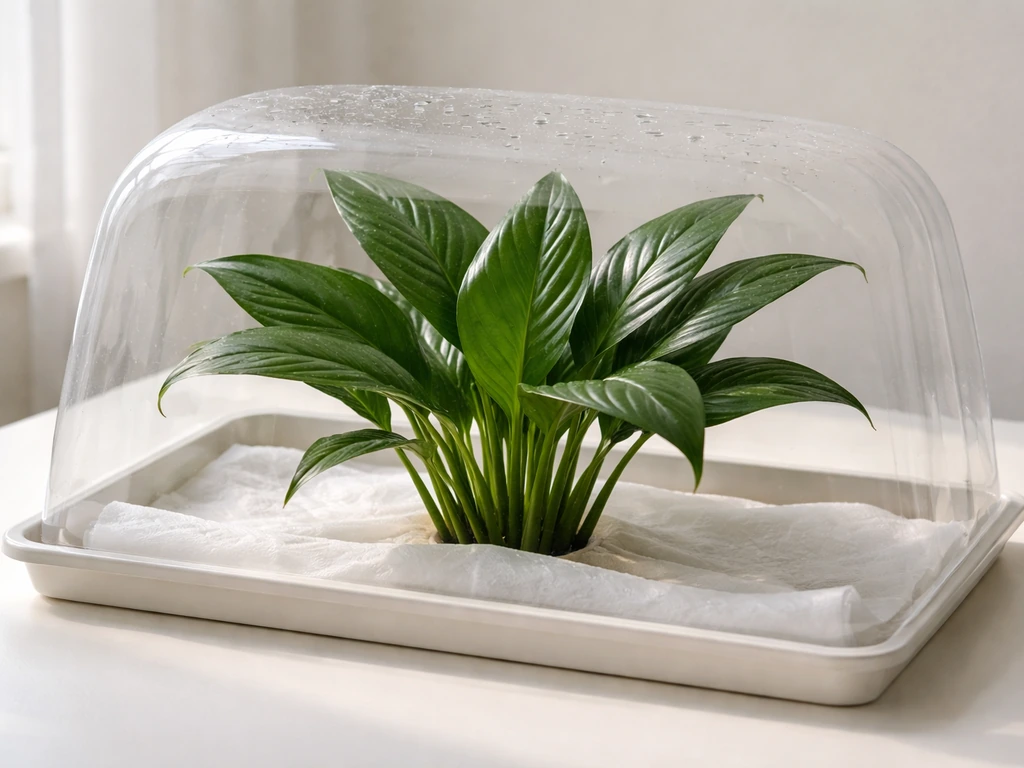
This is where a lot of people lose their plants: they get the rooting method right but ignore the environmental conditions around the plant. Without roots, a peace lily can't regulate its own moisture. Everything it needs has to come from the environment.
Light
Keep it in bright indirect light only. No direct sun. Peace lilies are naturally understory plants that evolved under a forest canopy, and they like diffused, indirect light at all times. Direct sun on a rootless plant will scorch the leaves and increase water loss far faster than the plant can handle without a root system to compensate. A north or east-facing windowsill, or a spot a few feet back from a bright south or west window, is ideal.
Temperature
Aim for 68 to 80°F (20 to 27°C). Root development essentially stalls below 65°F, so cold rooms, drafty windowsills, or rooms with air conditioning blowing directly on the plant will slow or stop rooting entirely. I learned this the hard way one winter when I left a division near a drafty window and wondered why it looked the same six weeks later.
Humidity
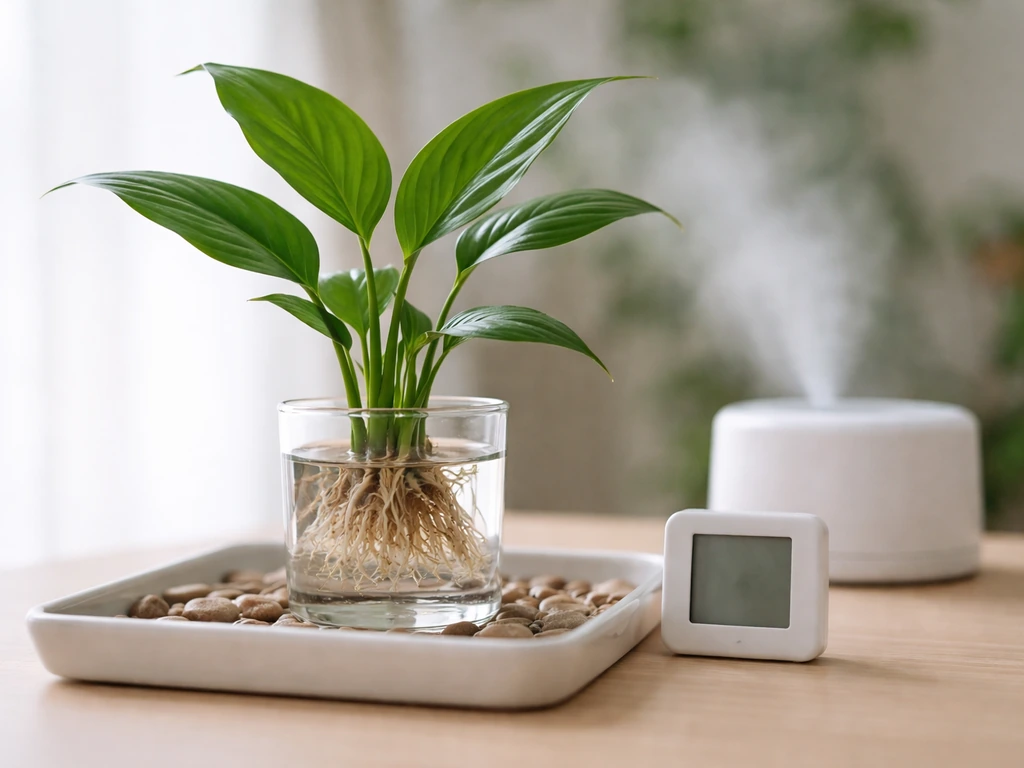
This matters more than most guides admit. Peace lilies can tolerate around 30% relative humidity but do much better at 45 to 65% RH. For a rootless plant, high humidity is especially critical because the leaves are the only route for moisture exchange. Use a humidity dome or plastic bag tent, a tray of water and pebbles under the pot, or run a small humidifier nearby. Grouping the plant with other houseplants also helps raise local humidity modestly.
Watering
If rooting in soil, keep the medium consistently moist but never soggy. More rootless peace lilies die from sitting in wet soil than from drying out a little. The roots that will eventually form need oxygen, not just water. If rooting in water, change the water every 5 to 7 days and keep it at room temperature. Never fertilize during this phase; fertilizer salts can burn the emerging root tissue.
Why rootless peace lilies fail (and how to fix it)
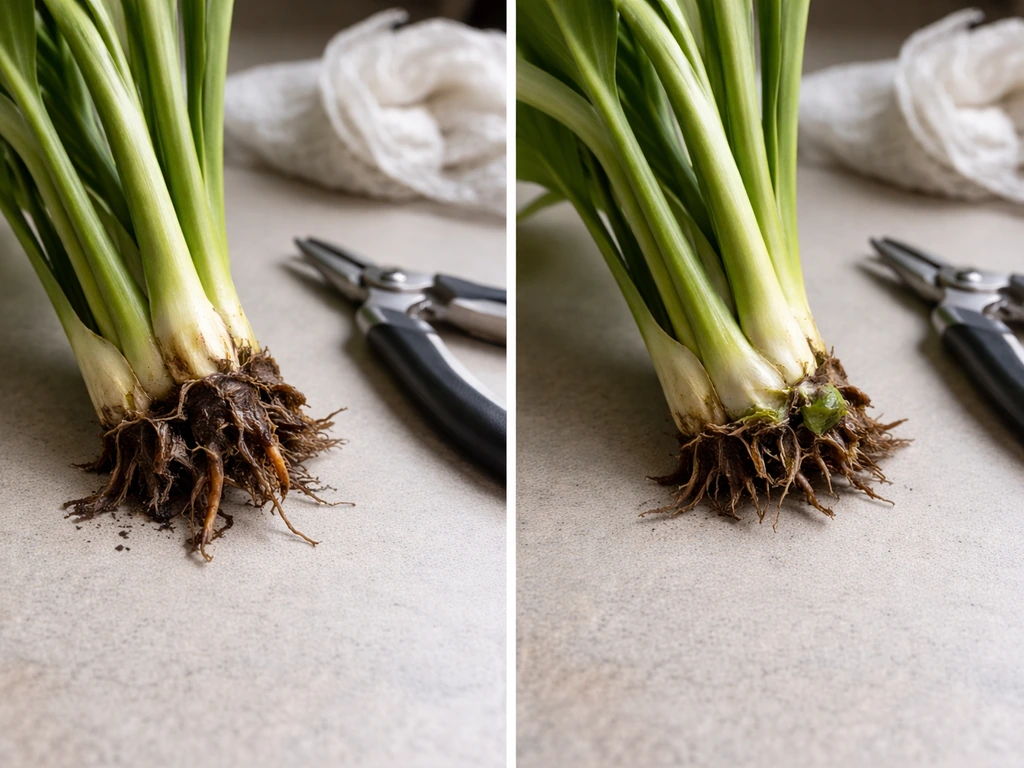
Most failures come down to a handful of predictable problems. Here's what to watch for and what to do about each one.
| Problem | Signs | Fix |
|---|---|---|
| Rot spreading after planting | Soft, dark tissue at crown or stem base; foul smell | Remove all affected tissue with a clean blade, dust cut with cinnamon (a mild antifungal) or sulfur powder, let dry, and restart in fresh medium |
| Crown rot | Crown turns brown/black and mushy, leaves collapse | Usually fatal if crown is fully affected; discard and start over |
| Too soggy | Yellowing leaves, no root progress after 4+ weeks, medium stays wet | Switch to perlite or let medium dry out slightly between checks; improve drainage |
| Too cold | No root development after weeks; leaves look flat but don't rot | Move to a warmer spot, at least 68°F; bottom heat from a seedling mat helps |
| Too much direct light | Leaf edges browning, leaves wilting or bleaching | Move to indirect light immediately |
| Low humidity without a dome | Leaves shriveling or curling despite moist medium | Add a humidity dome or plastic bag tent; mist leaves lightly once or twice a day |
| Algae in water rooting setup | Green slime in water, roots look brownish | Switch to an opaque container; change water immediately and trim any affected root tissue |
| Fungal issues (fuzzy growth on crown) | White or gray fuzz on crown or soil surface | Improve air circulation (vent dome daily), reduce humidity slightly, treat with diluted hydrogen peroxide solution (1 part to 9 parts water) |
Timeline, viability checks, and when to give up
Knowing how long to wait, and when to cut your losses, is just as important as knowing what to do. Here's a realistic timeline and the checkpoints to watch.
| Timeframe | What to Expect | Action |
|---|---|---|
| Days 1 to 7 | No visible roots yet; plant should look stable, not worse | Maintain conditions, don't disturb the plant, check water clarity if water-rooting |
| Weeks 2 to 3 | First tiny root nubs may appear in water; soil-planted crown starts to feel more anchored | Check root progress gently; top up water or mist medium lightly if needed |
| Weeks 3 to 5 | Roots should be 0.5 to 2 inches long in water; resistance to gentle tug in soil | If no progress at all by week 5, consider switching methods or reassessing crown health |
| Weeks 5 to 8 | Water-rooted plants ready to transition to soil; soil-rooted plants settling in | Begin transitioning water roots to soil; reduce humidity dome use gradually over 5 to 7 days |
| Week 8 and beyond | Plant should show new leaf growth as evidence of an established root system | Resume normal watering and begin very light fertilization once per month |
If you're at week 5 or 6 with no root development whatsoever and the crown still looks healthy, switch methods. Move from water to soil, or from soil to water. A change in environment sometimes triggers the plant to finally respond. If the crown has gone soft or dark at any point, stop and discard: crown rot in peace lilies doesn't reverse, and there's no value in waiting it out.
One last viability check worth doing before you invest any time at all: press the crown gently between your fingers. Firm means viable. Any give, softness, or discoloration that extends into the crown itself means the plant is too far gone. It's a hard call to make, but it saves weeks of effort on something that won't recover.
Peace lilies propagate readily from healthy crowns and offsets, so if one plant is unsalvageable, a healthy parent plant will give you another chance quickly. If you’re asking whether lilies grow back, the key is whether the main growing tissue is still alive and undamaged, not whether it had roots at the start Peace lilies propagate readily.
If you’re asking whether will lilies grow through rocks, the answer depends on whether the plant’s growing tissue can access enough moisture and space, similar to how a peace lily needs viable crown tissue to regrow lilies grow back. True garden lilies also form and lose flower petals as part of their flowering cycle, but their ability to return depends on the bulb being healthy and the growing conditions lilies grow back. Think of regrowth questions in the same spirit as broader lily regeneration topics: the plant's ability to bounce back depends entirely on whether the core growing tissue is still intact.
Lilies also have different regeneration timelines depending on what part of the plant is still healthy after petals fall lily regeneration topics. If you’re asking does the liberty lily regrow in grow a garden, the same principle applies as with lilies grow back, where the core growing tissue is what determines whether it can bounce back. If you’re trying to apply that idea to an ember lily, check whether its crown tissue is still firm before expecting new growth regrow in grow a garden. If you also want to know whether certain lilies regrow, focus on whether their growing tissue is still healthy and intact regrowth questions.
Once your peace lily has re-established roots and is actively pushing out new leaves, it's genuinely out of the woods. Move it back to its normal care routine: bright indirect light, consistently moist (not wet) soil, temperatures above 65°F, and humidity above 40% if you can manage it. A plant that re-roots successfully is often more vigorous for a season afterward, as if the stress reset something. That's the payoff for doing the work right.
FAQ
If my peace lily has no roots, should I water it more to “make up” for the missing root system?
No. Rootless plants cannot absorb and regulate water uptake, so extra watering mainly increases the chance of rot in any remaining stem tissue. Instead, focus on moisture control for the leaves (higher humidity) and keep soil or rooting media consistently moist but not soggy.
Can I trim off yellow or damaged leaves to help a rootless peace lily regrow?
You can remove clearly dead leaves, but avoid heavy pruning. Keep the crown and base where leaves emerge intact, and only cut off tissue that is fully brown or mushy, because aggressive trimming reduces the plant’s remaining surface area for moisture exchange.
What should I do if the crown is firm but the plant still refuses to root after several weeks?
First, verify the environment matches the target range, especially warmth (above 65°F) and humidity (45 to 65% RH if possible). If those are right and you have no roots by week 5 or 6, switch rooting methods (water to soil or soil to water) as a trigger.
Is it normal for the plant to look worse before it gets better while rootless?
Some leaf droop is common early, but rapid browning, blackening, or a spreading soft rot at the crown is not. If the crown stays firm and pale while only older leaves decline, you can keep going. If rot marks appear on the crown, stop rather than waiting.
How can I tell the difference between leaf dieback from dehydration versus rot?
Dehydration typically causes limp, dull, or slightly crispy leaf changes while the crown remains firm. Rot usually involves softness, dark brown or black tissue at the crown or stem base, and often a foul odor. Smell tests and crown touch checks are the quickest way to separate the two.
Should I keep a rootless peace lily in a dark place to reduce stress?
No. Lack of light slows recovery because the plant still needs energy to form new roots. Use bright indirect light, not darkness, and avoid direct sun, which can scorch leaves and speed water loss.
Can I use fertilizer to speed up rooting in water or soil?
During the initial rooting phase, no. Fertilizer salts can burn emerging root tissue, and without established roots the plant cannot use nutrients reliably. Resume feeding only after you see active new leaf growth and stable roots.
Is a humidity dome or plastic bag tent enough, or do I need to ventilate it?
You should provide humidity, but also avoid stagnant, wet conditions. If you use a tent or bag, ensure it is not sealed airtight for long periods, and check the crown daily for any condensation-driven rot. The goal is high humidity, not constantly wet surfaces.
My peace lily was rootless and I tried water rooting, but there are roots that look brown. What does that mean?
Brown, mushy, or sloughing roots suggest rot or water conditions that are too cold or dirty. Change the water every 5 to 7 days, keep it at room temperature, and consider switching to soil rooting if browning persists.
Do I need to start over if there are only a few roots remaining?
Not necessarily. If the crown is still firm and new growth is not collapsing, you can keep rooting and stabilize moisture and humidity. The risk starts when rot has moved into the crown, then restarting is usually the most effective option.
How long should I wait before deciding it is not going to work?
Use checkpoints. If you reach week 5 or 6 with no root development at all and the crown remains healthy, switch methods. If the crown turns soft, dark, or smells off at any point, cut your losses since crown rot does not recover.
After it regrows roots and new leaves, how do I avoid shock when returning to normal care?
Transition gradually. Continue bright indirect light and keep soil moist but not wet, and keep humidity above 40% if you can for the first couple of weeks. Sudden drops in humidity or temperature below 65°F can stall new growth even after rooting begins.
Next Articles
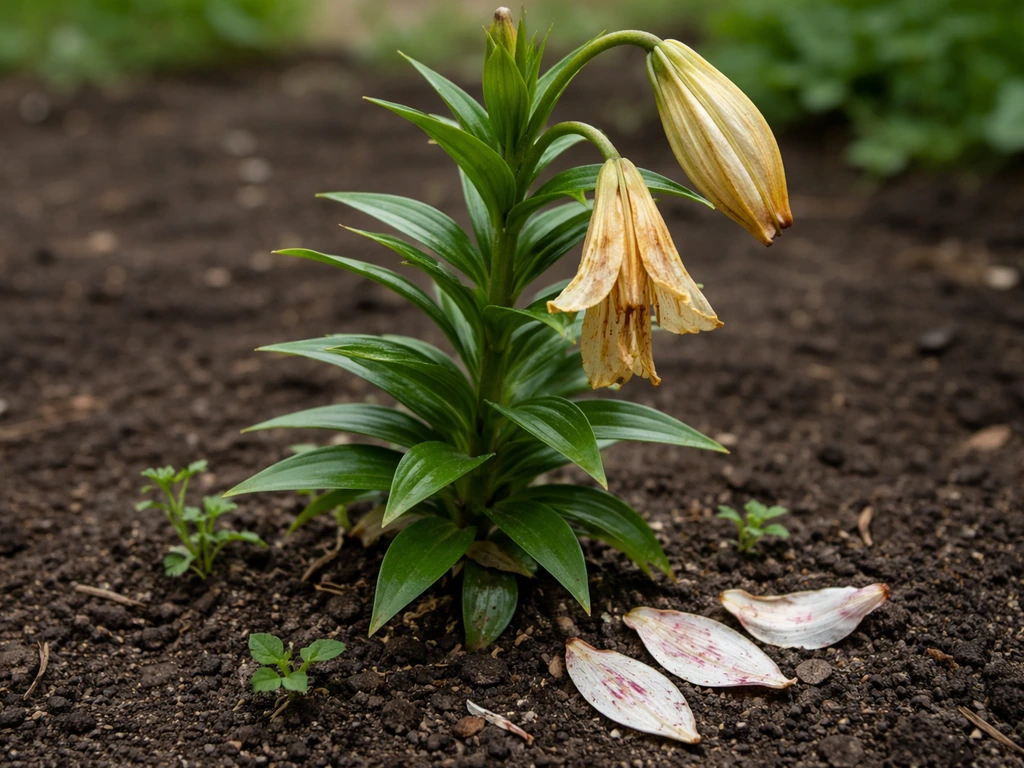
Do Lilies Grow Back After Petals Fall Off? Timing and Care
Learn if true lilies regrow after blooms fade, timing for new shoots, and post-bloom care to boost next flowers.
Do Lilies Grow Back? How to Cut, Care, and Get Blooms
Learn if lilies grow back after cutting or death, plus exact tips for true lilies vs calla lilies and regrowth care.
Do Ember Lilies Regrow in Grow a Garden? How to Get Them Back
Get ember lilies to regrow: check if bulbs return, after-flowering care, winter tips, and fix common regrowth failures.