
Roses, salvia, alliums, coneflowers, phlox, and low-growing annuals like lobularia all grow well with true lilies (the Lilium genus, which covers Asiatic, Oriental, trumpet, and tiger types). The trick is matching the companion to the specific lily you're growing, because the water, light, and soil conditions that suit an Asiatic lily in a sunny raised bed are very different from those that suit a peace lily on a shaded windowsill or a water lily in a pond. Get the conditions right for your lily first, then choose companions that share those exact same conditions rather than just ones that look pretty together in a catalog photo.
What Flowers Grow Well With Lilies: Best Companion Pairings

Marcus Hendricks
1 May 2026
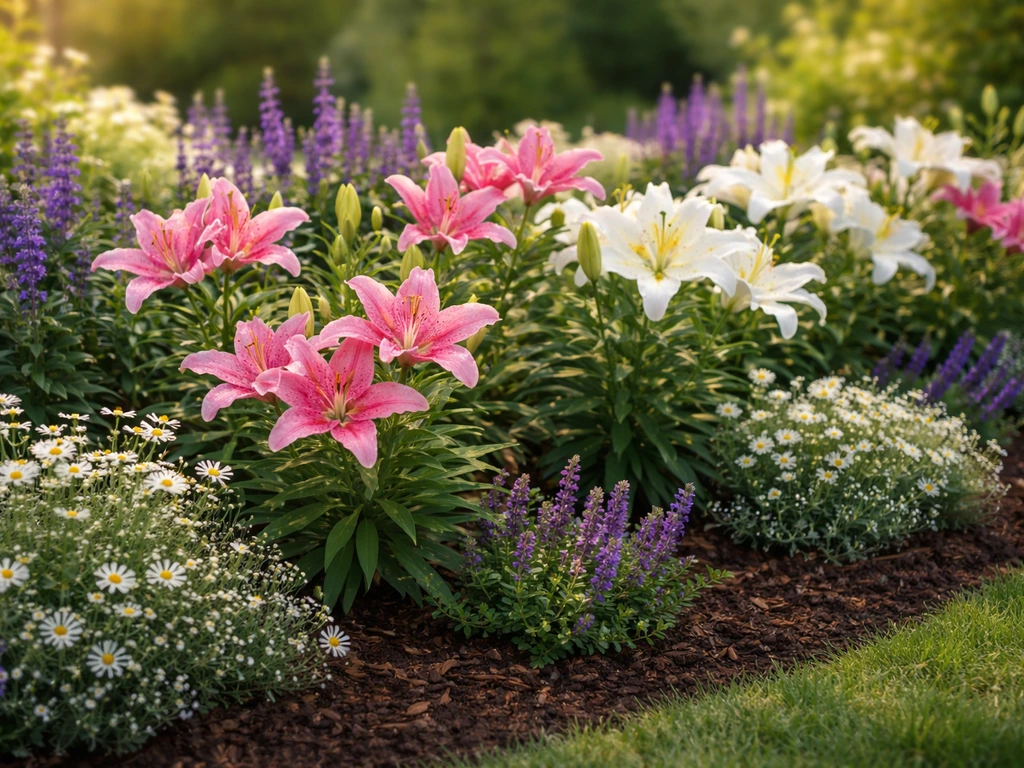
Start by identifying your lily type and growing conditions
Before you pick a single companion plant, figure out exactly which lily you're working with. If you want to go deeper on choosing the best lilies to grow for your light and climate, start by identifying your lily type first. This matters more than most gardening advice lets on, because the word 'lily' gets slapped on a wide range of plants that have almost nothing in common in the garden. True lilies (genus Lilium) are bulb plants that grow outdoors in most climates, need well-drained soil above almost everything else, and produce their blooms once per season. Because lilies are true bulb plants that grow outdoors in most climates with the right well-drained soil, they are generally easy to get established when you match their light and drainage needs are lilies easy to grow. That group includes Asiatic lilies (early summer bloomers), Oriental lilies (late July into August), trumpet lilies like Lilium regale (blooming in July, growing 3 to 5 feet tall), and tiger lilies, which prefer full sun to light shade and will rot in soggy soil just like the rest.
The 'lilies' people commonly confuse with true lilies have completely different needs. Peace lilies are tropical houseplants that need indirect light and consistent moisture. Water lilies live in ponds. Calla lilies prefer consistently moist soil, almost the opposite of Lilium. Daylilies (Hemerocallis) are tough perennials that thrive in similar sun conditions to true lilies but form dense spreading clumps over a few years that can crowd out bulbs. If you're growing one of these, the companion advice for true lilies doesn't directly apply, and you'll want to choose partners suited to that plant's specific world.
For true lilies grown outdoors, nail down three things before you shop for companions: how many hours of direct sun the bed gets (lilies want at least a half-day, ideally 6 or more hours), whether the soil drains freely after rain (if water pools for more than an hour, that's a drainage problem you need to fix first), and whether you're planting in the ground or in containers. Those three factors will determine which companion list applies to you.
Companion planting rules for lilies (light, soil, spacing, water)
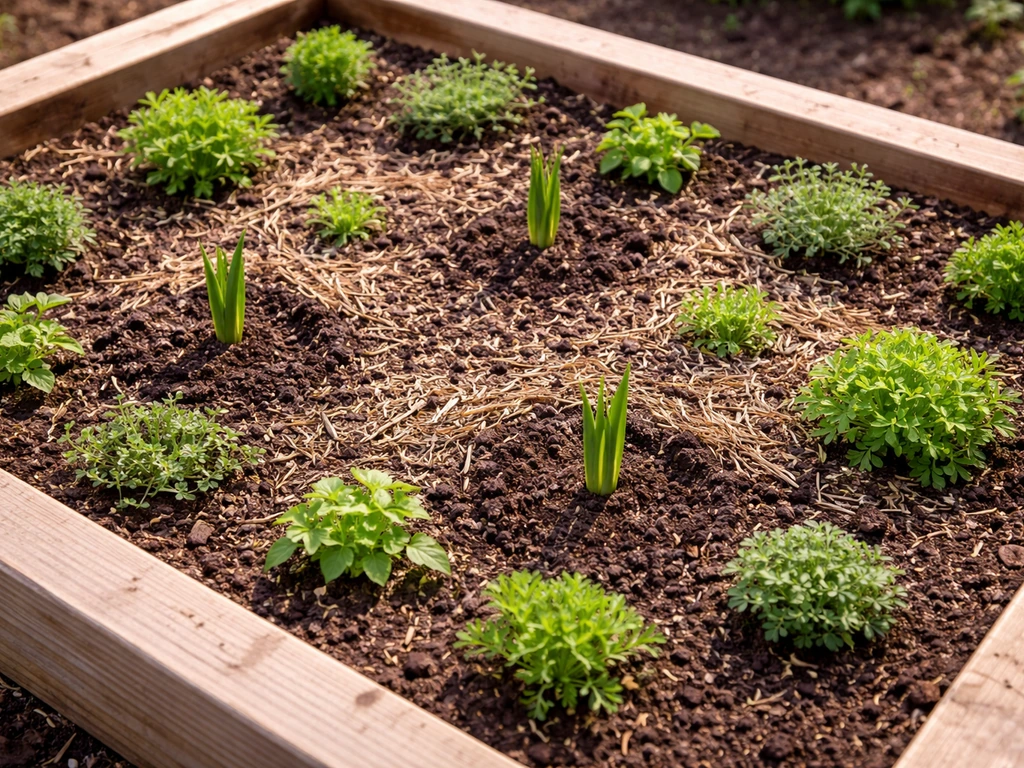
The single most important thing to understand about growing lilies with companions is that drainage is non-negotiable for the lily. Lily bulbs planted in waterlogged soil will rot, full stop. That means every companion you choose needs to tolerate the same well-drained conditions, and you should never pair lilies with plants that need consistently wet or boggy soil. Raised beds are ideal for lily companions because they naturally improve drainage and give you control over soil quality.
Lily foliage is also critical to protect. The leaves fuel the bulb for next year's bloom, so companion plants that create heavy, sustained shade over lily stems and leaves during the growing season will quietly sabotage your display the following year. Low-growing companions planted at the front or between lily stems are ideal, because they don't block light to the foliage above them. Think of it as a tiered system: your companions cover the ground and fill the lower layer while the lily rises above them unimpeded.
Here are the practical rules that apply regardless of which companion you choose:
- Match watering needs: companions should thrive with medium moisture in well-drained soil, roughly 1 inch of water per week during the growing season
- Keep aggressive spreaders away from bulbs: daylilies can form dense masses within a few years and physically crowd lily bulbs out of the soil
- Give lily stems room: avoid planting companions so close that their foliage wraps around or shades lily stems and leaves for most of the day
- Avoid heavy feeders right next to lily bulbs: lilies need good nutrition to fuel tall stems and multiple large blooms, so companions with radically different or very high fertilizer demands can create competition
- Use low-nitrogen fertilizer: a low-nitrogen top-dress in spring suits lilies well, so choose companions that don't need high-nitrogen feeding which would push too much leafy growth at the lily's expense
- Match pH: most true lilies prefer a slightly acidic to neutral soil around pH 5.8 to 6.5, so companions that need the same range are natural fits
Best companion flowers for sunny, well-drained lily beds
This is where most home gardeners are working: a sunny border or raised bed with Asiatic, Oriental, or trumpet lilies. The companions listed below all share the same preference for full sun and well-drained soil, and each one brings something specific to the partnership.
| Companion Plant | Height | Why It Works with Lilies | Bloom Timing |
|---|---|---|---|
| Salvia (perennial or annual) | 1–3 ft | Fills gaps between lily stems, attracts pollinators, tolerates dry spells between watering | Summer through fall |
| Alliums (ornamental onion) | 1–4 ft | Blooms just before or as Asiatic lilies open, dramatic round heads, same drainage needs, repels some pests | Late spring to early summer |
| Purple coneflower (Echinacea) | 2–4 ft | Blooms after Asiatic lilies fade, extends color into late summer, same sun and drainage preferences | Midsummer to fall |
| Phlox (tall garden phlox) | 2–4 ft | Blooms alongside or after Oriental lilies, fragrant, similar moisture needs, keeps border full in August | Midsummer to late summer |
| Catmint (Nepeta) | 1–2 ft | Low-growing, won't shade lily foliage, blue-purple softens lily colors, drought-tolerant once established | Late spring through summer |
| Sweet alyssum (Lobularia) | 4–6 in | Ground-level cover that suppresses weeds without competing with bulbs, reseeds, pollinators love it | Spring through fall |
| Russian sage (Perovskia) | 3–4 ft | Airy blue-silver plumes from midsummer onward, excellent drainage tolerance, pairs beautifully with orange and red Asiatics | Midsummer to fall |
| Roses (shrub or compact) | 2–5 ft | Classic pairing, both prefer well-drained soil and full sun, roses fill visual space as lilies finish | Summer |
| Lavender | 1–2 ft | Extremely well-drained soil needs match lily needs perfectly, low companion that won't crowd bulbs, pollinator magnet | Early to midsummer |
| Shasta daisy | 2–3 ft | Cheerful white blooms complement nearly every lily color, blooms overlap with Oriental and trumpet types | Summer |
Alliums are probably my favorite Asiatic lily companion because their timing is so well coordinated. They peak just as the first Asiatic buds start to open, and the round purple heads against lily foliage look intentional rather than accidental. They also share the same 'plant deep, drain well' requirements, so you're not managing two competing watering schedules. Plant allium bulbs at the same fall planting session as your lily bulbs and you're done.
For tall trumpet lilies that can reach 5 or 6 feet (like the 'Thunderbolt' cultivar), you want companions that won't look swallowed up underneath them. Russian sage, tall phlox, and Echinacea all have enough presence to balance a tall lily visually, while catmint and sweet alyssum work at the front of the border as a low edging. Sweet alyssum performs best when the soil drains very well, which supports healthy garden growth sweet alyssum work at the front of the border.
Best companion flowers for partial shade or woodland-style plantings
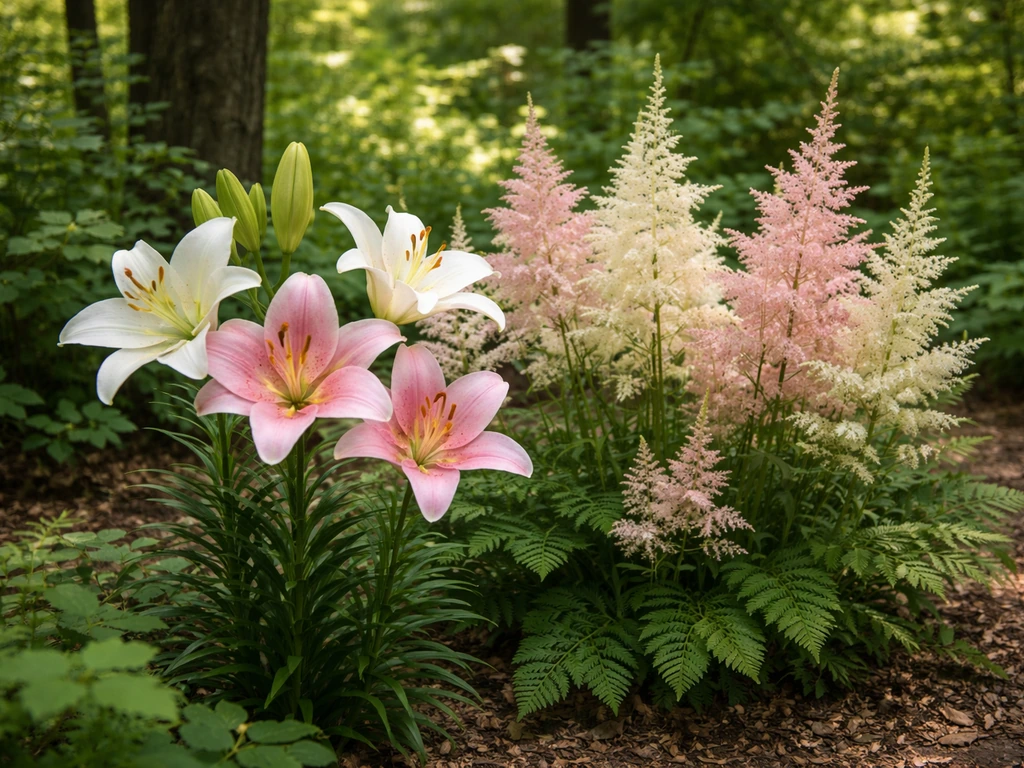
Some lily varieties, including regal trumpet lilies and Oriental hybrids, can handle partial shade especially in hot climates where afternoon sun scorches the blooms. Tiger lilies will also tolerate light shade. NC State Extension notes that lilies (Lilium) generally prefer full sun to afternoon sun for the leaves, while the root zone does best in shade and well-drained, fertile soil blank" rel="noopener noreferrer">Tiger lilies will also tolerate light shade.. Tiger lilies are easy to grow as long as you plant them in well-drained soil and give them plenty of sun Tiger lilies will also tolerate light shade.. If your planting spot gets 3 to 5 hours of direct sun with dappled light the rest of the day, you have a slightly different companion palette to work with, though drainage is still just as critical.
- Astilbe: feathery plumes in pink, red, or white that tolerate part shade and moist but well-drained soil, blooms overlap with Oriental lilies in late July
- Hostas: large, bold foliage fills gaps between lily stems without competing aggressively, tolerates shade, low profile keeps lily foliage unblocked above
- Foxglove (Digitalis): tall spikes in early summer fill vertical space before Oriental lilies take over, then can be cut back once lilies bloom
- Bleeding heart (Lamprocapnos): early-season interest that dies back as lilies come up, actually creating space for lily stems rather than competing with them
- Ferns: excellent texture contrast, suppress weeds, tolerate part shade and reasonable drainage, won't crowd lily bulbs
- Coral bells (Heuchera): colorful foliage plants that work as low companions between lily stems, tolerate part shade and well-drained soil, provide color when lilies aren't blooming
- Japanese anemone: late-season bloomer that takes over visual interest after lilies finish in August through September, partial shade tolerant
Bleeding heart is a particularly smart choice for woodland lily beds because it's what I'd call a 'time-share' companion: it puts on its show in early spring, then naturally dies back just as lily stems are pushing up and need the space. You get two plants in one spot, sequential rather than competing, with minimal management required.
Pairing for container lilies vs in-ground beds
Lilies grow very well in containers, which actually gives you more control than in-ground planting. Asiatic lilies are generally easy to grow when you give them the right light and well-drained soil. You can move the pot to maximize sun or protect it from excessive rain, and you can dial in the drainage exactly. The RHS recommends refreshing the top few inches of compost and adding fertilizer when overwintering container lilies for a second season, so factor that into your companion choices: you want companions you can manage in the same pot without disrupting the bulb below.
For container plantings, shallow-rooted companions work best because they don't interfere with lily bulbs planted 6 inches or so below the surface. Deep-rooted or bulky companions compete for the limited soil volume and can crowd the pot quickly.
| Setting | Best Companion Choices | What to Avoid |
|---|---|---|
| Container (sunny patio) | Sweet alyssum, trailing lobelia, calibrachoa, compact salvia, bacopa | Hostas, daylilies, large perennials with aggressive root systems |
| Container (part shade) | Impatiens, ferns (small varieties), compact heuchera, violas | Astilbe (needs too much water for shared container drainage) |
| In-ground sunny bed | Salvia, alliums, Echinacea, Russian sage, catmint, phlox | Daylilies planted directly adjacent to lily bulbs |
| In-ground part shade bed | Bleeding heart, hostas, Japanese anemone, foxglove, ferns | Plants requiring consistently moist or boggy conditions |
In containers, trailing plants that spill over the pot edge are especially useful because they create visual interest at the base without putting pressure on the bulb below. Sweet alyssum and trailing lobelia are both very shallow-rooted and will stay out of the lily bulb's territory while covering bare soil and suppressing the weeds that would otherwise colonize a pot between lily stems.
One thing to be careful about in containers: don't pack in too many companion plants thinking the pot will look fuller. A crowded container restricts airflow, and poor air circulation around lily foliage can encourage fungal problems. Leave some breathing room between plants, especially for Oriental lilies which can be more sensitive to leaf diseases.
Bloom-time and height layering to keep color going
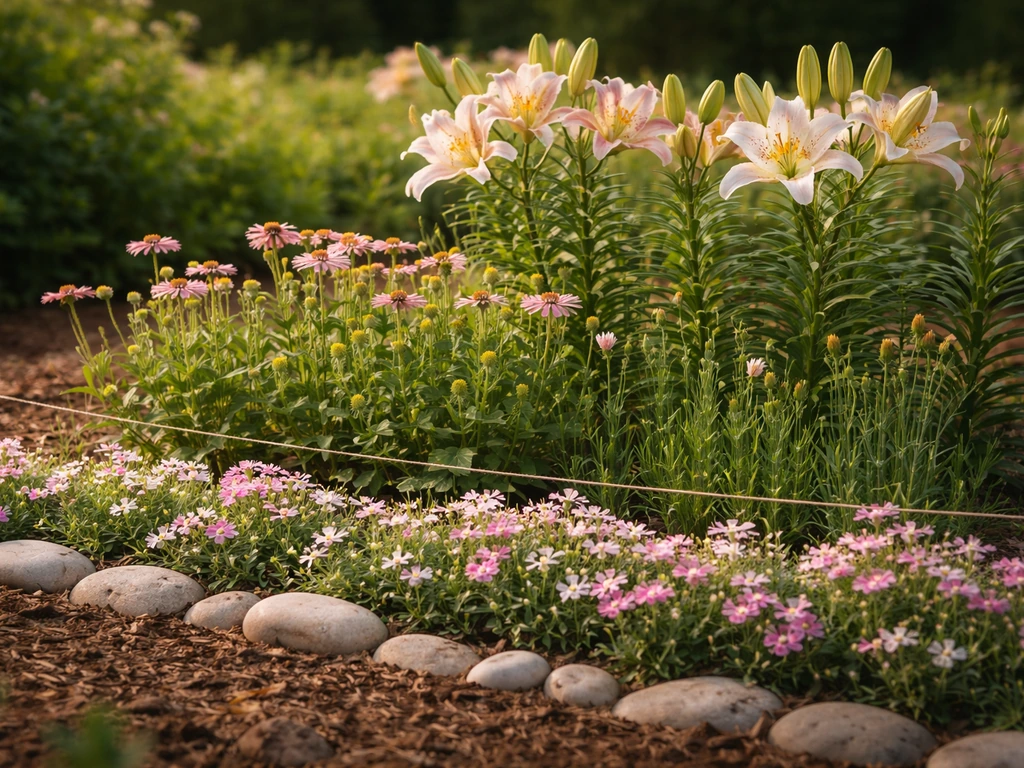
True lilies bloom once per season, and that's actually the main reason companion planting matters so much in a lily bed. Without companions, you have a spectacular two to three week show and then a lot of green stems for the rest of the summer. Pairing with plants that bloom before, during, and after your lily type keeps the border interesting from May through October.
The bloom timeline for common true lily types follows a predictable sequence: Asiatic lilies open in early summer (roughly June in most temperate zones), trumpet lilies follow in July, and Oriental hybrids bring up the rear in late July through mid-August. If you design your companion planting around this sequence, you can use each lily type as the centerpiece of its own moment while surrounding plants provide a consistent backdrop.
- Spring (before lilies bloom): alliums, bleeding heart, foxglove, and catmint provide early color and fill the visual gap while lily stems are still short
- Early summer (Asiatic bloom time): salvia, lavender, and sweet alyssum complement the Asiatic lily display at low levels while roses and shrubs add height nearby
- Midsummer (trumpet and early Oriental bloom): Russian sage, phlox, Shasta daisy, and Echinacea bloom simultaneously with trumpet and early Oriental lilies for peak border drama
- Late summer and fall (after lilies finish): Echinacea, Japanese anemone, fall phlox, and rudbeckia take over as lilies fade, keeping the bed colorful while lily foliage finishes its work
Height layering follows a simple rule: short in front, tall in back, with lily height taken into account. A compact Asiatic lily at 2 to 3 feet belongs in the middle tier of a border, with catmint or sweet alyssum in front and a taller salvia or Echinacea behind. A trumpet lily at 4 to 5 feet can anchor the back of a border, with almost everything else in front of it. Those very tall trumpet cultivars reaching 5 to 6 feet work beautifully against a fence or wall with medium-height companions like phlox and coneflower in front, creating a layered wall of color.
One design tip that often gets overlooked: plan for the lily's post-bloom appearance. The stems and leaves need to stay on the plant until they yellow naturally, because they're feeding the bulb for next year. Companions that grow up and around those aging stems in late summer naturally camouflage them. Tall phlox, fall anemones, and ornamental grasses are all good at doing this gracefully.
Troubleshooting companion failures (competition, drainage, pests and disease)
Your lilies aren't flowering as well as they used to
If lily blooms are getting smaller or fewer over time, look at two things first: foliage and crowding. If companion plants have been shading lily leaves for most of the day during the growing season, the bulbs are slowly being starved. Move or cut back the offending companion so lily foliage gets full light from late spring through late summer. Also check whether a spreading companion like daylilies has crept close to the lily bulbs. Daylilies form dense clumps that can physically displace bulbs over a few seasons. Dig and separate them if they've gotten within 8 to 10 inches of your lily bulbs.
Rotting bulbs and soggy soil
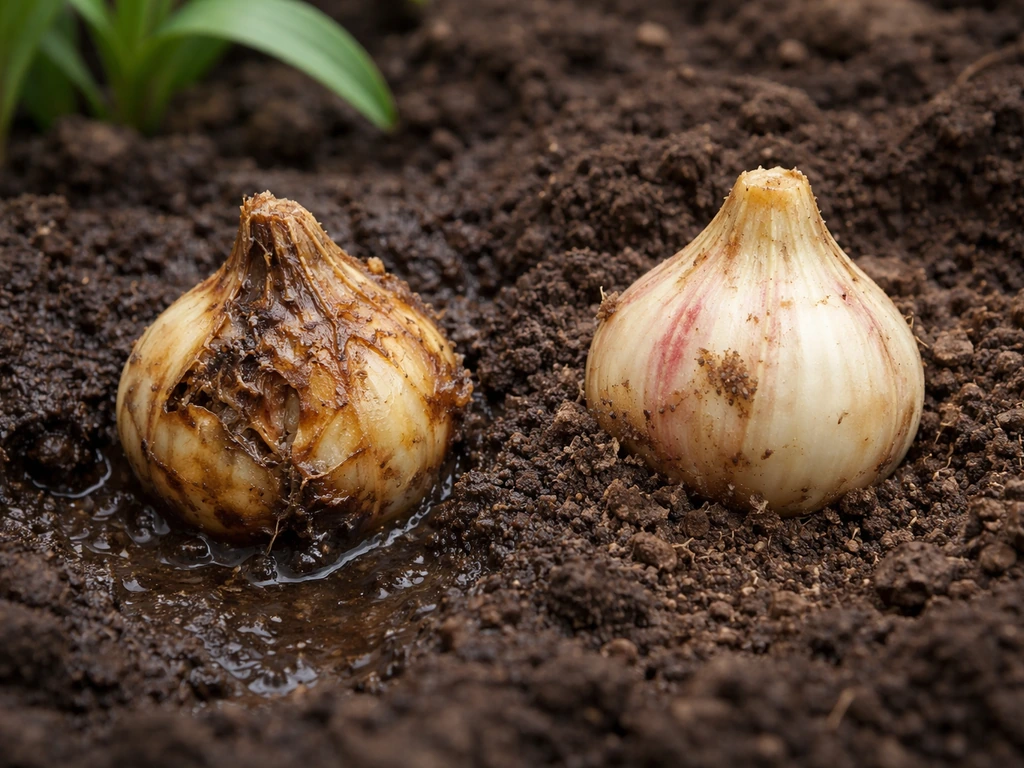
If you're losing lily bulbs to rot, the most likely culprits are drainage failure, not the companion plants themselves. But some companions can make drainage worse: thick groundcovers or densely planted annuals that retain moisture at soil level can keep the area around bulbs consistently wet. If you notice rot problems, switch to companions with more open, airy growth habits that allow the soil surface to dry between waterings. Lavender, catmint, and ornamental grasses all have this quality. Also reconsider whether you're overwatering to keep moisture-loving companions happy, at the expense of lily bulb health.
Lily leaf beetle damage spreading through the bed
Lily leaf beetles are a serious pest across much of North America, and they feed on lily foliage from early spring through late summer, potentially weakening bulbs enough that they fail to flower the following year. Companion plants don't cause beetle problems, but dense plantings can make it harder to spot and hand-pick beetles early in the season when control is easiest. Keep companion plants from becoming so thick around lily stems that you can't clearly see the undersides of lily leaves during your regular garden checks. Early season attacks are the most damaging because undersized bulbs resulting from early foliage loss may not have enough energy to flower the following year.
Wrong companion in wrong conditions
The most common companion failure I see is pairing lilies with plants that need different moisture conditions, usually because both looked good in a catalog without anyone checking their care requirements. If your companion needs consistently moist soil but your lily needs the soil to dry out partially between waterings, one of them will suffer. Always verify that a potential companion shares the same water and drainage needs as your specific lily type before planting. When in doubt, lean toward companions that tolerate occasional dryness rather than ones that need constant moisture, since your lily's drainage needs should always take priority.
If you're still working out whether growing lilies is the right fit for your garden conditions overall, it's worth thinking through your specific growing environment before investing in a full companion planting scheme. Getting the lily itself happy in its spot is step one. Once it's established and performing well, adding thoughtful companions turns a single-season show into a border that's interesting from spring frost to fall.
FAQ
Can I use companion-plant advice if my plant is a peace lily or calla lily, not a true Lilium?
Yes, but only if the “lily” you mean is a true Lilium. Peace lilies, water lilies, and calla lilies have very different light and moisture needs, so their companions from a true-lily planting plan will usually fail or stress them. Use the plant label to confirm genus (Lilium for true lilies), then choose companions that handle the same drainage and sun conditions.
What if one companion plant really needs consistently moist soil, can I still pair it with lilies?
If your lily has to share space with a plant that stays in wet soil (for example, bog plants or heavy irrigation groundcovers), avoid it. Even “once in a while” sogginess can rot lily bulbs. Instead, choose companions that let the soil surface dry between waterings and keep growth airy so water does not sit at the bulb level.
Why are my lilies blooming well the first year, then fewer blooms the next year?
Arrange companions so the lily foliage gets sun from late spring through late summer. If a companion grows into dense shade over the lily leaves, blooms often decline next season even if the first-year flowers look fine. Use spacing or a lower-growing partner at the front, and periodically thin back tall companions.
Do lily companions work differently in containers than in-ground?
Most lily companion issues in containers come from crowding and water management. Leave space between plants for airflow, avoid adding deep-rooted or bulky companions in the same pot, and consider moving the pot to control rain exposure. For disease-prone Oriental lilies, prioritize less crowding and better air circulation.
Which companion types should I avoid putting too close to lily bulbs?
When you want a “neat edge” look without shading the lily leaves, go with shallow-rooted, low plants at the front or between stems, and keep them from creeping onto the bulb zone. In a pot, trailing or mat-forming shallow-rooted plants can cover bare soil while avoiding competition for the deeper bulb layer.
If my lilies are rotting, is it usually the companions’ fault?
If you see rot, first check drainage and watering amount. Once lilies are rotting from waterlogged soil, no companion substitution fully fixes it. After confirming drainage, switch to companions with more open growth habits that do not trap moisture against the soil surface, and reduce watering frequency if you were accommodating moisture-loving companions.
How do I prevent spreading plants from eventually crowding my lilies?
Yes, especially if the companion is a spreading clump that gradually pushes into the bulb area. Dense perennials like daylilies can displace bulbs over time even when they look compatible at planting. Keep clumps at a safe distance and dig and separate if they get within about 8 to 10 inches of the lily bulbs.
Do companion plants affect lily leaf beetles or just make them harder to manage?
For pest control, companions do not “attract” lily leaf beetles directly, but dense plantings can make early detection harder. Thin or select companions so you can regularly check lily leaf undersides and pick beetles by hand early in the season, when control is easiest and damage is most preventable.
What should I do about companions after my lilies finish blooming?
Plan companions around the lily’s post-bloom stage. The leaves must stay until they yellow naturally to feed the bulb, so choose companions that camouflage the yellowing stems without creating heavy shade. Tall phlox, ornamental grasses, or other late-season textures can provide cover while keeping light available to remaining foliage.
Can I plant different lily types together with the same set of companion flowers?
If you want to use a single bed plan across multiple lily types, focus on shared requirements: at least half-day direct sun (ideally 6+ hours) and consistently well-drained soil. Then fine-tune for edge cases like partial shade tolerance for some trumpet and tiger lilies, but do not compromise on drainage.
Next Articles
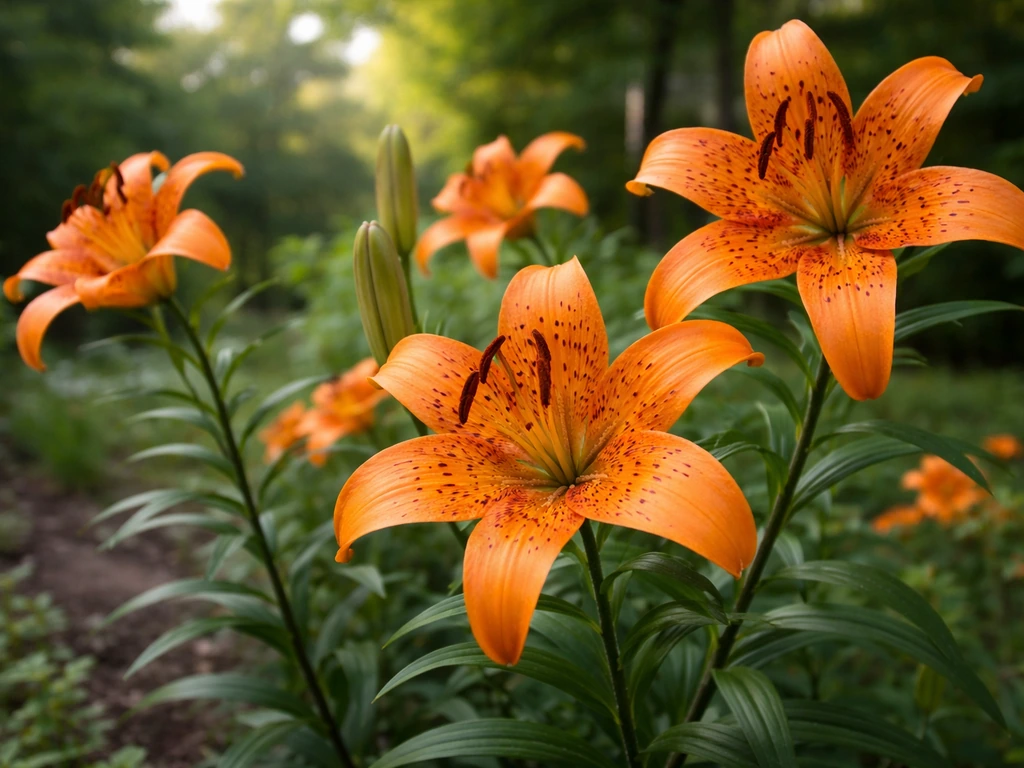
Are Tiger Lilies Easy to Grow? Care Tips for Success
Yes with caveats: tiger lily care essentials for soil drainage, light, planting depth, watering, and trouble fixes indoo
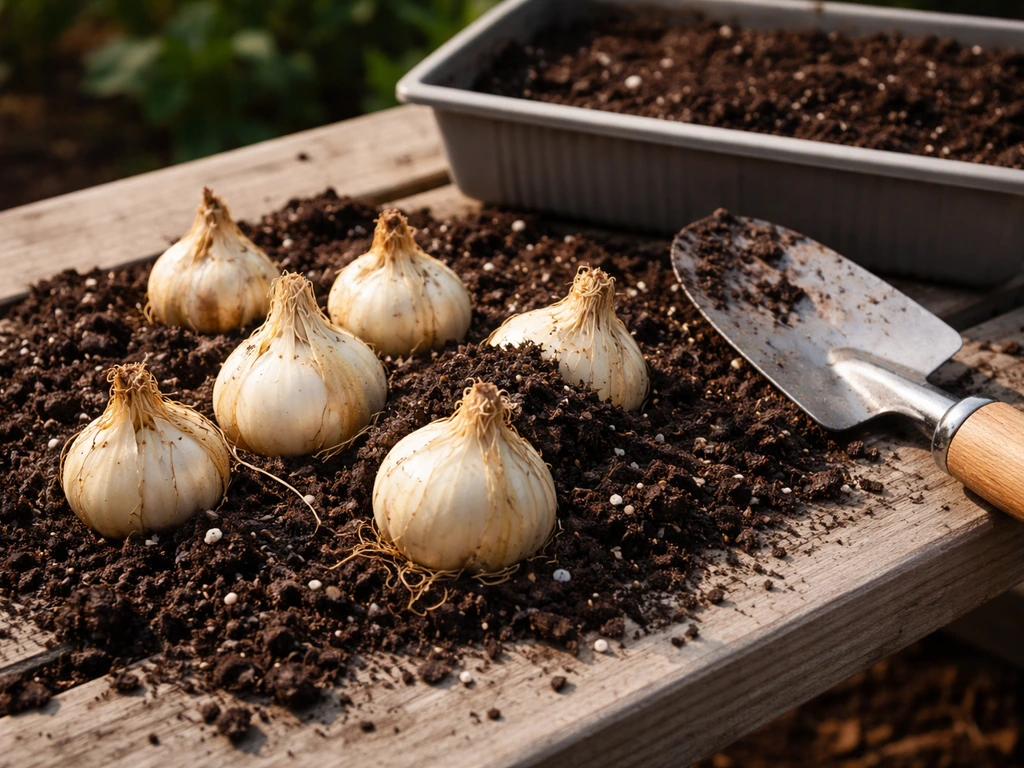
Can You Grow Lilies From a Flower? Realistic Steps
Can you grow lilies from a flower? Get real answers on bulbs, offsets, seeds, and how to grow true lilies.
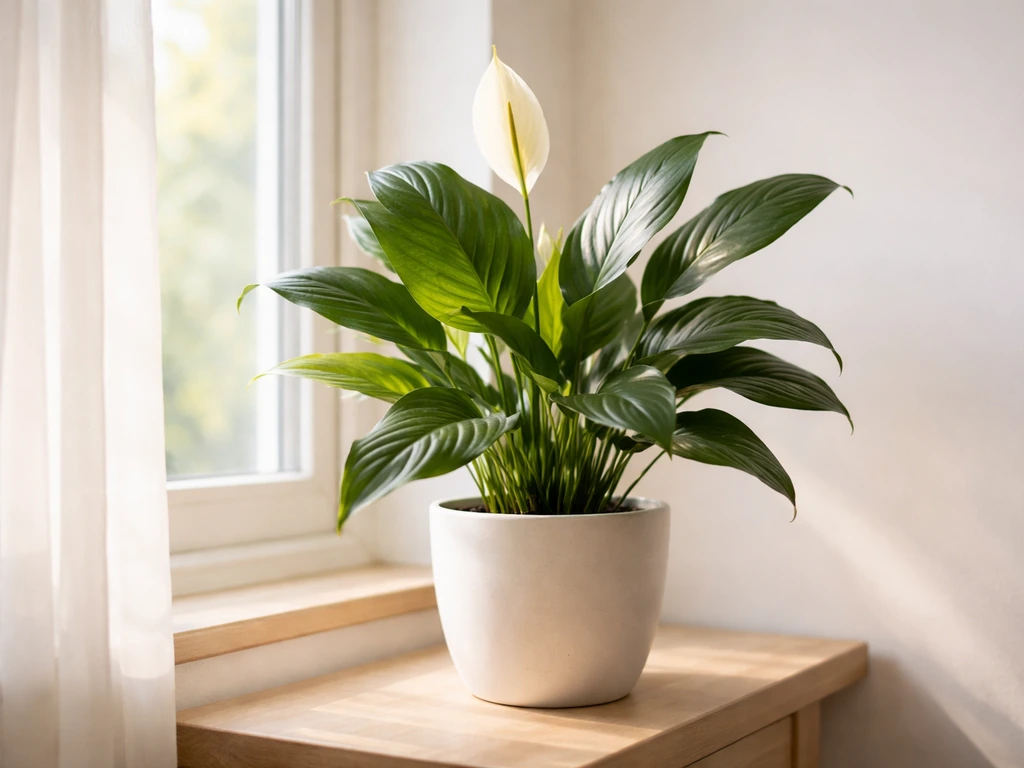
Are Lilies Easy to Grow? Tips for Peace Lilies and More
Practical guide on whether lilies and peace lilies are easy to grow, with fixes for light, watering, soil, and drainage