
Trout lilies grow on the forest floor across eastern North America, from Labrador and Quebec down through the Appalachians and into Georgia, and west to Wisconsin and Minnesota. They thrive in moist, shaded woodlands under deciduous trees, specifically because those trees drop their leaves each fall, giving trout lilies a burst of bright spring sunlight before the canopy fills back in. If you want to find them in the wild or grow them at home, that combination of spring light, summer shade, organic-rich soil, and seasonal moisture is everything. Ginger lily can be a helpful reference point when you are learning where spring ginger lilies like to grow ginger lily where does it grow.
Where Do Trout Lilies Grow: Habitat and Gardening Tips
Marcus Hendricks
7 May 2026
Native range and typical habitats
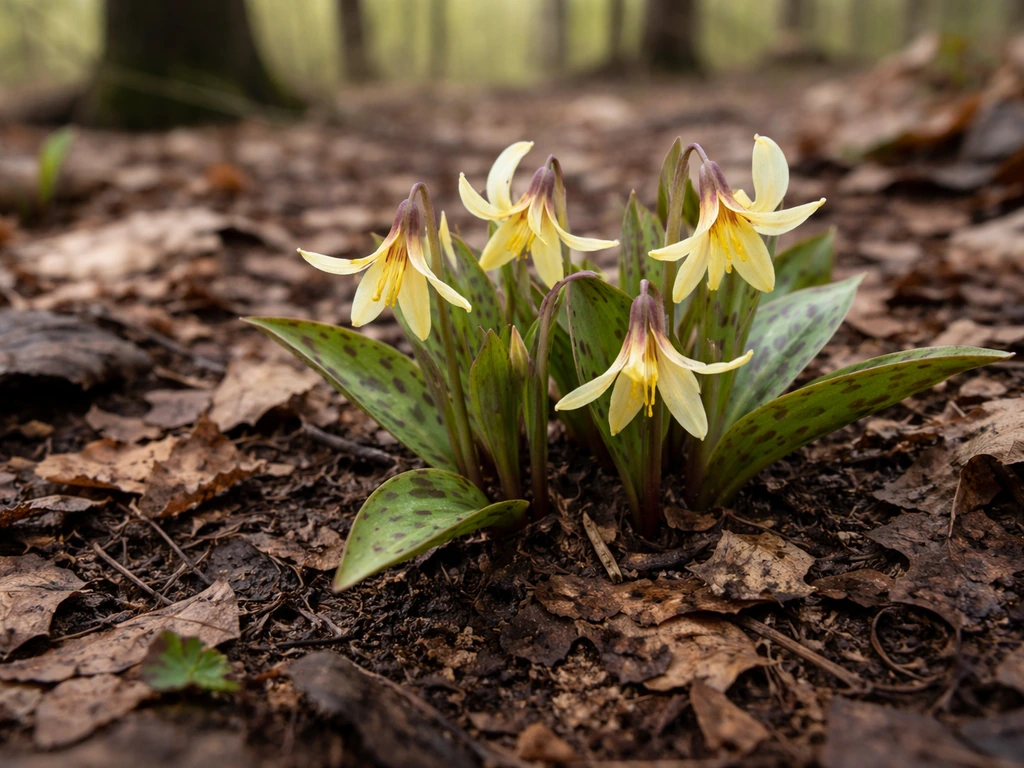
Erythronium americanum, the yellow trout lily, has one of the wider native ranges of any spring wildflower in North America. If you’re wondering where does ginger lily grow, this same idea of a shaded, moist woodland range helps you understand where similar lily relatives tend to thrive. Its documented territory covers most of the northeastern United States and eastern Canada, including Alabama, Connecticut, Delaware, Georgia, Illinois, Indiana, Iowa, Kentucky, Maine, Maryland, Massachusetts, Michigan, Minnesota, Mississippi, Missouri, New Hampshire, New Jersey, New York, North Carolina, Ohio, Pennsylvania, Rhode Island, South Carolina, Tennessee, Vermont, Virginia, West Virginia, and Wisconsin. On the Canadian side, it's found in Ontario, Quebec, Nova Scotia, New Brunswick, Newfoundland, and Labrador. That's a huge range, but it gets thinner toward the southern and western edges.
Within that range, trout lilies stick to specific microhabitats. The classic sites are what botanists call "rich low woods" and "wooded slopes", think the kind of moist, leafy-smelling forest floor you find in a mature hardwood stand near a stream or at the base of a north-facing hillside. You also find them along stream banks and in bottomland woods, especially where the soil stays consistently moist through spring without sitting waterlogged. Open prairies, dry upland slopes, or sunny meadows are not their scene at all.
Forest floor conditions: shade, moisture, and soil
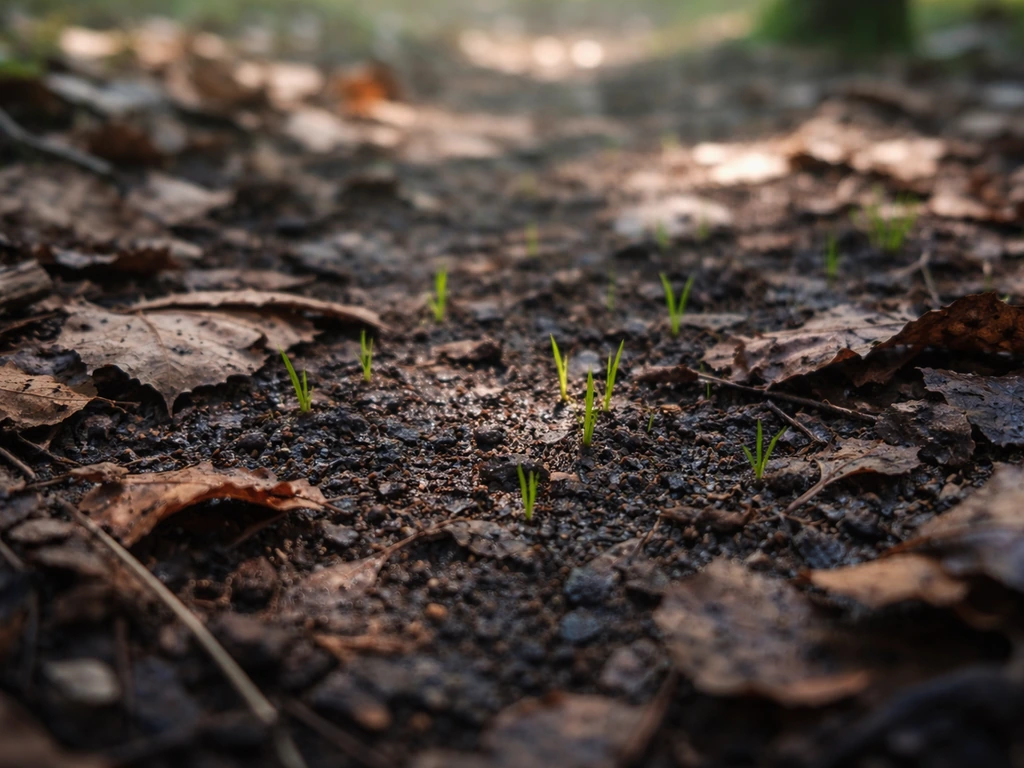
The trout lily's entire life strategy is built around one seasonal quirk: it does all its growing and flowering in a narrow spring window between snowmelt and the moment the trees overhead leaf out. During that window, the forest floor gets surprisingly high light levels, sometimes nearly full sun, because the canopy is still bare. Trout lilies exploit that window completely, pushing up their mottled leaves and nodding yellow flowers in April and May, photosynthesizing hard, and then going completely dormant by early summer once the canopy shade closes in. Gardeners call this behavior "spring ephemeral," and it matters a lot for where you plant them.
The soil they need is deep, moist, and loaded with decomposed organic matter, basically the kind of soil you find under decades of fallen leaves in an undisturbed hardwood forest. It drains well enough that roots aren't sitting in standing water, but it holds enough moisture to stay damp through the spring growing season. Compacted clay, sandy soil with no organic matter, or anything that bakes dry in spring won't work. Think rich, loamy, dark, and crumbly, with plenty of leaf litter on the surface.
Light is the trickiest variable to get right because trout lilies need the opposite of what most shade plants need. They want high light in early spring and deep shade the rest of the year. Under an evergreen canopy, they never get that spring light pulse and tend to struggle. Under deciduous trees, the timing lines up perfectly.
Geographic limits and climate suitability
In terms of hardiness zones, trout lily is genuinely tough on the cold end. It's rated hardy from Zone 3 through Zone 8 or 9 depending on the source, with some references listing cold tolerance down to -40°F (-39.9°C). That means gardeners in Minnesota, upstate New York, Maine, and southern Canada are well within range. The plant actually needs a real winter to trigger the dormancy cycle properly, so if you're in Zone 9 or warmer, it becomes increasingly difficult to grow successfully.
The southern edge of the native range (Georgia, Alabama, Mississippi) represents the plant pushing its heat tolerance. Plants there are typically found at higher elevations or in cooler, moister river valleys, not in hot lowland sites. The western edge, around Wisconsin and Missouri, is where the plant becomes patchier, tied to specific river-bottom woodlands rather than the broad forest presence it has in the Northeast.
Trout lily is a North American native species, so unlike some other lily relatives, you won't find it wild in Europe or Asia. Related Erythronium species grow in western North America and parts of Europe and Asia, but those are different plants with somewhat different needs.
Finding trout lilies in the wild vs in a garden
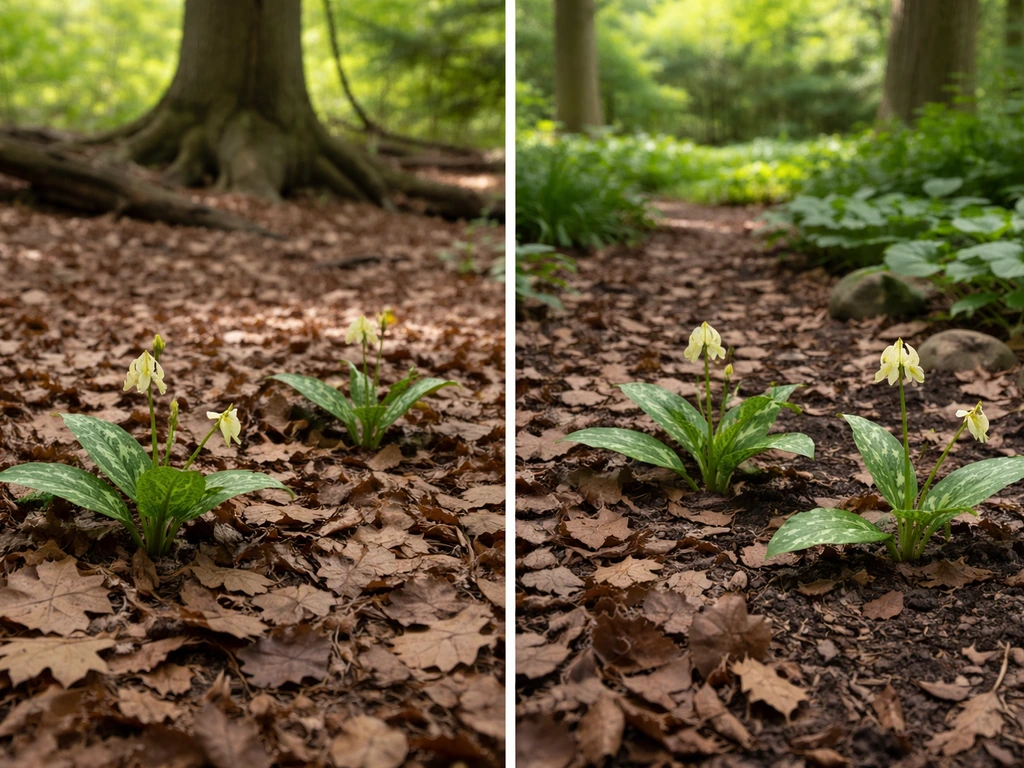
In the wild, you're most likely to find trout lilies in mature deciduous forests with a deep leaf-litter layer, usually on north or east-facing slopes, near streams, or in low-lying moist woodland. They often blank" rel="noopener noreferrer">form large colonies because they spread slowly by offset corms, so when you find one patch, there are usually more nearby. The best time to look is April through early May in most of their range, when the flowers are up. By June the leaves have yellowed and disappeared, and you'd never know the plants were there.
In gardens, trout lilies are a legitimate option for a woodland or shade garden, but you need to source them responsibly. If you're wondering whether pink lily is rare in grow a garden, it helps to know how species-specific the light and habitat needs are, just like with trout lilies. Don't dig them from the wild as that's both ecologically damaging and often illegal. Instead, buy corms from reputable native plant nurseries or specialty bulb retailers. White Flower Farm sells them, and the North American Native Plant Society (NANPS) has vendors who offer them as well. One realistic heads-up: if you grow trout lily from seed, expect 4 to 5 years before it flowers. Buying corms from a nursery gives you a much faster start and is the practical choice for most gardeners.
How to match trout lily conditions at your home site
The ideal home planting site looks like this: under a mature deciduous tree or a group of deciduous shrubs, where the area gets direct or near-direct spring sunlight from roughly late February through April, then transitions to dappled or moderate shade once the tree leafs out by May. The soil should be amended with plenty of compost and leaf mold to get that rich, organic woodland texture. A 2 to 3 inch layer of shredded leaf mulch on the surface helps maintain moisture and mimics the natural leaf-litter environment.
Soil moisture matters most in spring. Trout lilies want consistently moist (not wet) soil during their active growing period from late winter through late spring. After they go dormant in early summer, they can tolerate drier conditions, but don't plant them somewhere that bakes out completely during summer droughts, because the corms still need some moisture to stay viable. A spot that naturally stays a bit more protected, like the north side of a fence or building with deciduous tree cover, can work well.
A few practical steps to set up your site:
- Choose a spot under deciduous trees or large deciduous shrubs, not evergreens.
- Test your soil drainage by digging a hole, filling it with water, and checking that it drains within an hour or two. If it sits for hours, amend heavily with compost and grit.
- Work in several inches of compost and leaf mold before planting corms in fall.
- Plant corms 3 to 4 inches deep, pointed end up.
- Mulch with shredded leaves, not bark chips, to keep moisture in and mimic natural habitat.
- Do not cut or disturb the foliage until it naturally yellows and dies back. The plant is storing energy for next year's bloom during that period.
- Plan for the fact that colonies spread slowly over years, so plant multiple corms close together (6 to 8 inches apart) to get a natural-looking colony effect.
One honest adjustment to make: if your yard is mostly sunny with no mature trees, trout lily is going to be a real challenge. You can grow it in a container placed in a sheltered shady spot, but it's not naturally a container plant, and you'll need to simulate the spring-light-then-shade cycle carefully. For most gardeners without a woodland setting, creating even a small understory pocket with a few native shrubs or a young deciduous tree is a better long-term investment than fighting the plant's fundamental nature.
Look-alikes to know before you search or plant
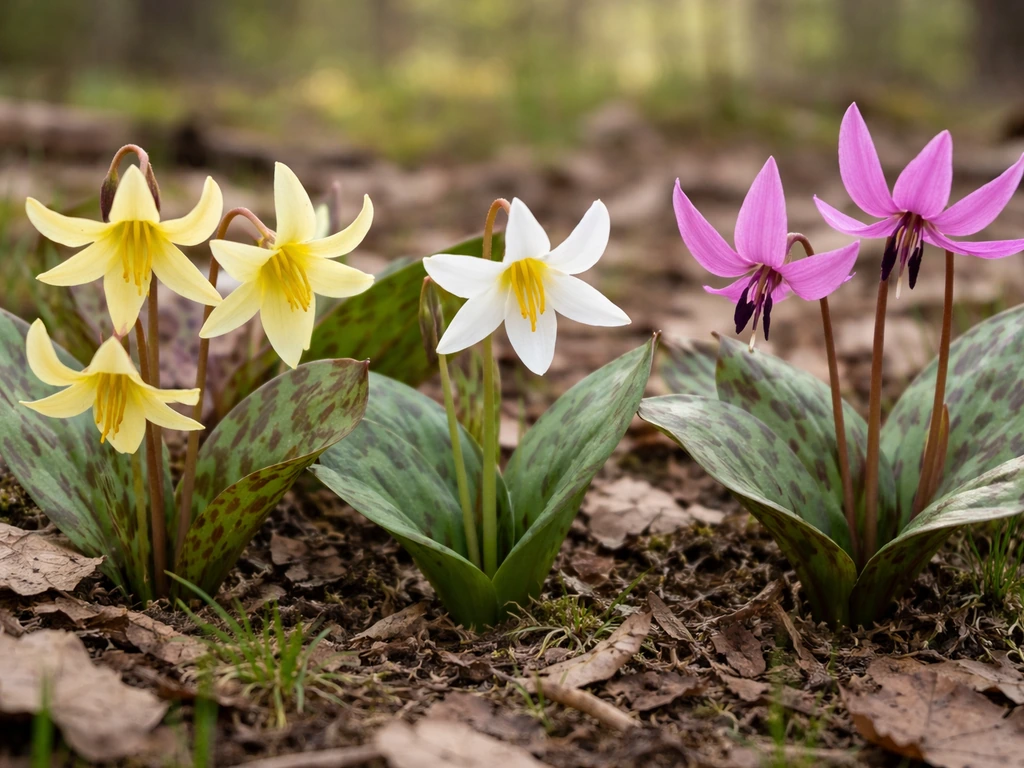
Before you go hunting trout lilies in the wild or buy what you think are trout lily corms, it's worth knowing there are a few closely related plants that can cause confusion.
| Species | Common Name | Flower Color | Key Habitat Difference |
|---|---|---|---|
| Erythronium americanum | Yellow trout lily | Yellow, nodding, reflexed tepals | Moist eastern woodlands, the most common species in the Northeast |
| Erythronium albidum | White trout lily | White to pale lilac, nodding | Similar moist woodland habitats; range overlaps in Midwest; leaves nearly identical to E. americanum |
| Erythronium mesochoreum | Prairie trout lily | Bluish-white | More open, drier habitats; less shade-dependent than E. americanum |
| Erythronium revolutum | Pink fawn lily | Pink to rose | Western North American species; damp spring soil under deciduous/shrubby cover; not native to the East |
The most reliable field identification for Erythronium americanum comes down to two things: the mottled leaves and the flower. The leaves are elliptical with gray-green coloring marked with brown or purplish blotching that genuinely does look like trout markings, which is where the common name comes from. The flower is a single, nodding, yellow bloom with strongly reflexed (swept-back) tepals, sometimes with reddish-purple spots or dots inside. If the flower is white or pinkish, you're looking at a different species. For a quick comparison, you can also look into where do pink lilies grow, since their needs may differ from trout lilies.
The trickiest confusion is between E. americanum and E. albidum (white trout lily), because the leaves are nearly identical. If you're in the Midwest and not sure which species you're dealing with, wait for the flowers. White trout lily has white to very pale lilac flowers, yellow trout lily has distinctly yellow flowers. For gardening purposes both species have similar habitat needs, but it's worth knowing which you have. If you're sourcing plants from a nursery, ask specifically for Erythronium americanum to get the yellow-flowered species.
One more thing worth mentioning: other spring woodland plants like spring beauty (Claytonia virginica) or cut-leaved toothwort (Cardamine concatenata) often grow alongside trout lilies and share very similar habitat requirements. If you're scouting a site and see those plants thriving, it's a very good signal that the conditions are right for trout lily too.
FAQ
If I find a patch of trout lilies, how do I tell whether the exact spot matches what they need?
Trout lilies are tied to forest-floor conditions that stay reliably cool and moist in spring. If a place has only sporadic shade, or the sun hits the ground before snowmelt and dries quickly, they usually fail. Look for leaf litter or a natural understory near hardwood trees, stream bottoms, or north-facing slopes where spring moisture persists.
Can trout lilies grow in woodland clearings or do they need continuous canopy shade?
Yes, in the sense that woodland openings can work, but only if the ground gets a strong spring light pulse and then shifts to dappled shade by May. In practice, that means you want low-angle winter sun through bare deciduous branches, not year-round sun like open fields or evergreen cover.
What is the best time of year to plant trout lily corms, and does timing affect success?
Planting in the fall is often more successful than waiting until spring because it gives corms time to settle into the soil before the short growth window. Avoid disturbing the soil heavily, and mulch over lightly so the corms stay evenly moist as temperatures drop and rise.
Why do trout lilies keep failing in my garden if the area stays shady all year?
A common mistake is placing them in deep evergreen shade. Even if the site is cool, they typically lack the high light they require between snowmelt and leaf-out. If your yard is mostly evergreen, you will usually need a different plant, or you must find a spot under deciduous cover.
What should I do if my region has dry springs, can trout lilies still work?
If your spring is dry, amend to improve both moisture holding and structure, then mulch with shredded leaves. The goal is consistently moist soil during growth, not soggy ground. If you cannot keep the soil from drying out during March to May, a container in a sheltered, consistently moist microclimate can be a better stopgap than planting in ground.
Can I transplant trout lilies after they finish blooming?
Avoid replanting or transplanting them once the leaves have yellowed in early summer. By then they are transitioning to dormancy, and movement can break the underground corm cycle. If you must divide, do it when you can do minimal root disturbance and are confident about keeping the soil evenly moist right after.
How long does it take for trout lilies to form a visible colony in a garden?
They spread slowly by offset corms, so it is normal not to see big clumps immediately. If your soil is right, expect gradual expansion over multiple seasons. If nothing changes after a couple of years, check light timing first, then soil organic matter, then spring moisture consistency.
If I grow trout lilies from seed, when will they bloom and is it harder than using corms?
Yes, but it changes expectations. Seed-grown plants typically take several years before they flower, and seedlings also depend on very similar woodland moisture and leaf-litter conditions. Buying corms generally gives a much faster first bloom.
How do I know whether my soil is “too wet” or “too dry” for trout lilies?
In-ground planting is best when your soil stays moist through spring without staying waterlogged. If you have heavy clay that holds water or dry sandy soil that bakes out, you may need substantial compost and leaf mold incorporation, plus careful site drainage. Otherwise, corms can rot in wet winters or fail during spring drought.
What is the safest and most responsible way to source trout lilies for my property?
Wild digging is both harmful and often regulated, even when plants look abundant. Use only legally sourced nursery stock or reputable native plant suppliers, and if you want to scout, observe and photograph rather than remove. When identifying in the wild, do not assume based on habitat alone, confirm with leaf spotting and flower color.
How can I be sure I’m getting yellow trout lily (not white trout lily) when buying?
Because trout lily leaves can look similar between yellow and white trout lily, the most reliable clue is the bloom color during April and May. For gardening decisions, ask nurseries for the exact species name, Erythronium americanum, if you specifically want the yellow-flowered form.
If other woodland spring plants are thriving, does that guarantee trout lily will also succeed?
Many look-alikes that share woodland habitat, like spring beauty and toothwort, are more tolerant of general shade, so their presence does not guarantee the exact moisture and spring-light timing is right for trout lily. Treat them as a positive signal, then still verify you have deciduous spring light and rich leaf-litter soil.
Next Articles
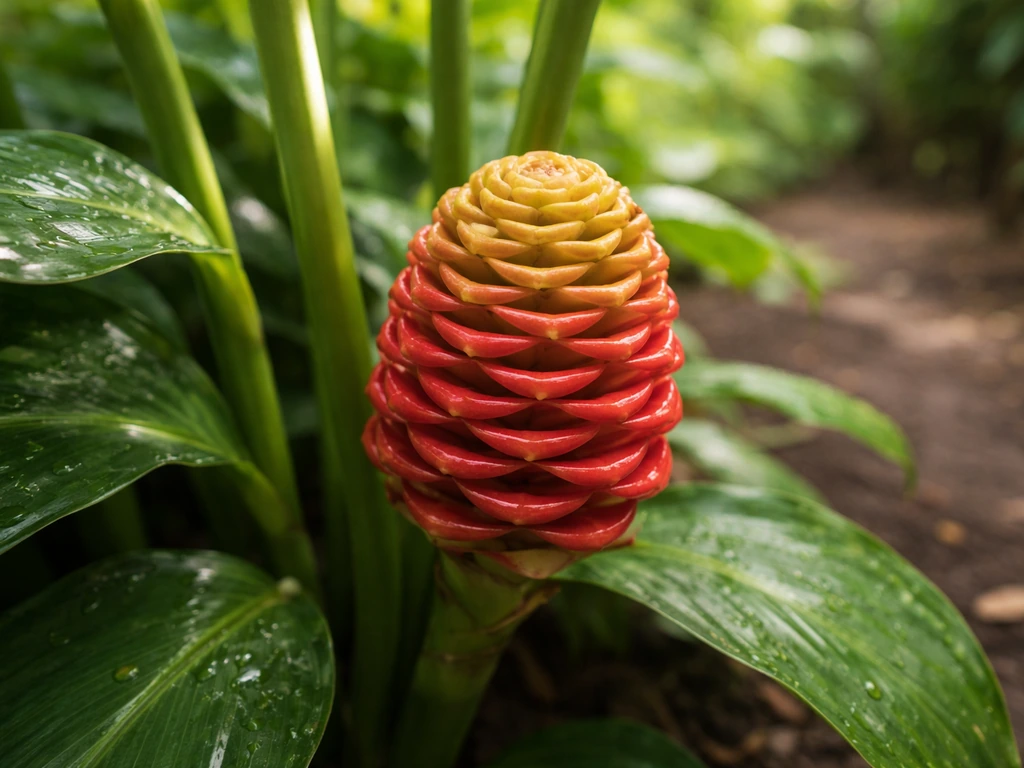
Shampoo Ginger Lily: Where It Grows and Best Placement
Find the right shampoo ginger lily and where it grows, including climate, light, moisture, soil, and best placement.
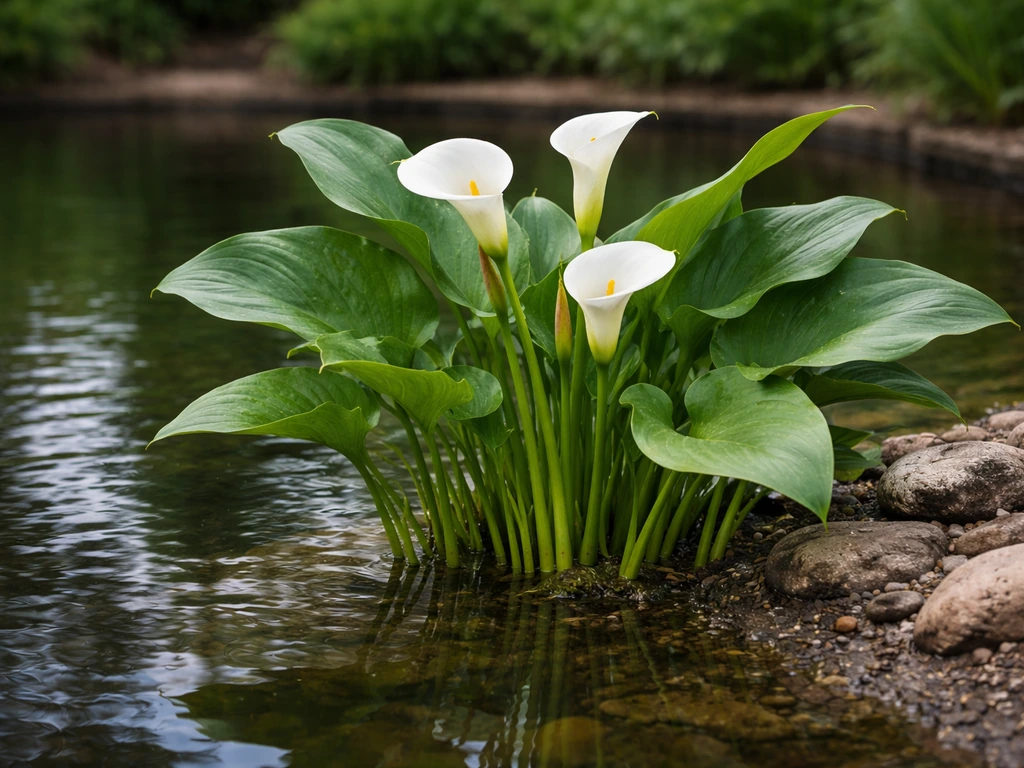
Can Calla Lilies Grow in Ponds? How to Set Up Successfully
Yes, with the right setup: water depth, substrate, anchoring, light, and overwinter care for pond or marginal calla lili
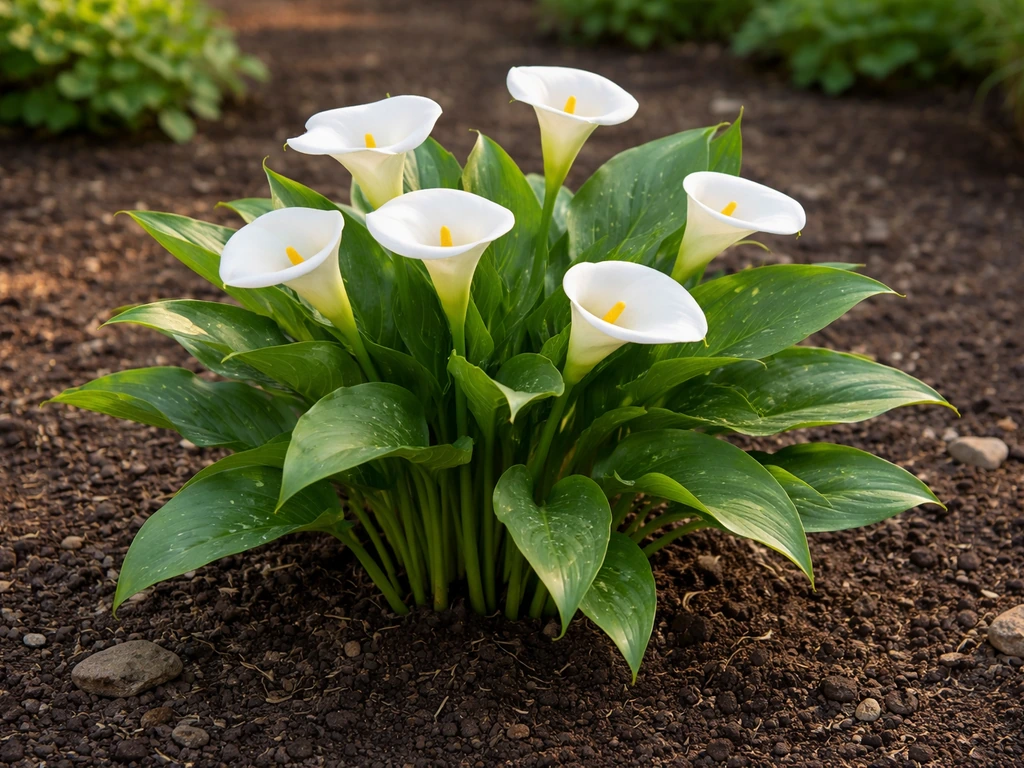
Are Calla Lilies Hard to Grow? Easy Guide for Success
Get a clear answer on are calla lilies hard to grow, plus exact light, temperature, watering, planting, and fixes.