
Yes, water lilies grow in mud, and that is actually how they prefer to root in nature. However, water lilies do not grow on land; they need muddy or submerged conditions to root and photosynthesize. The rhizome (the thick, horizontal root stem) anchors into soft, muddy sediment at the pond bottom and draws nutrients directly from it. What gets more complicated is the difference between the mud they root into and muddy, turbid water above them. Dirty water is a separate problem, and too much of it will block the light water lilies need to thrive. So the short version: mud at the bottom, fine. To answer the question directly, you generally do need soil or a soil-like substrate to help water lilies root and grow well mud at the bottom. Murky brown soup all the way up to the surface, not so fine. Here is how to work with both.
Do Water Lilies Grow in Mud? Planting and Care Guide
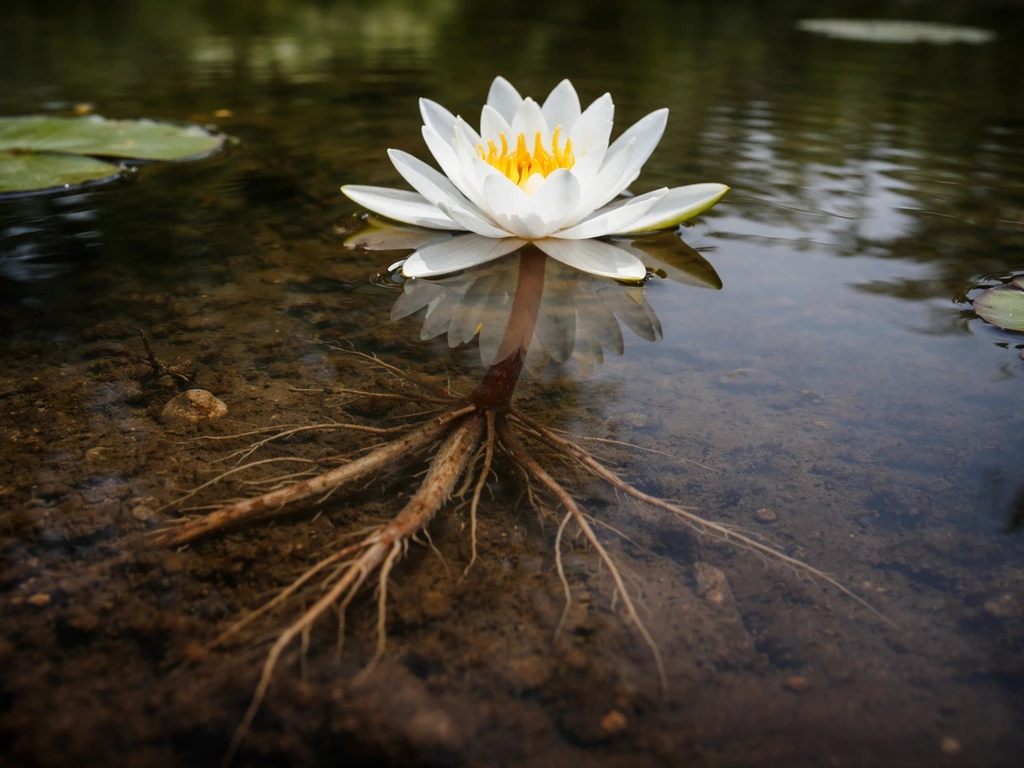
How water lilies actually root (mud vs. substrate)
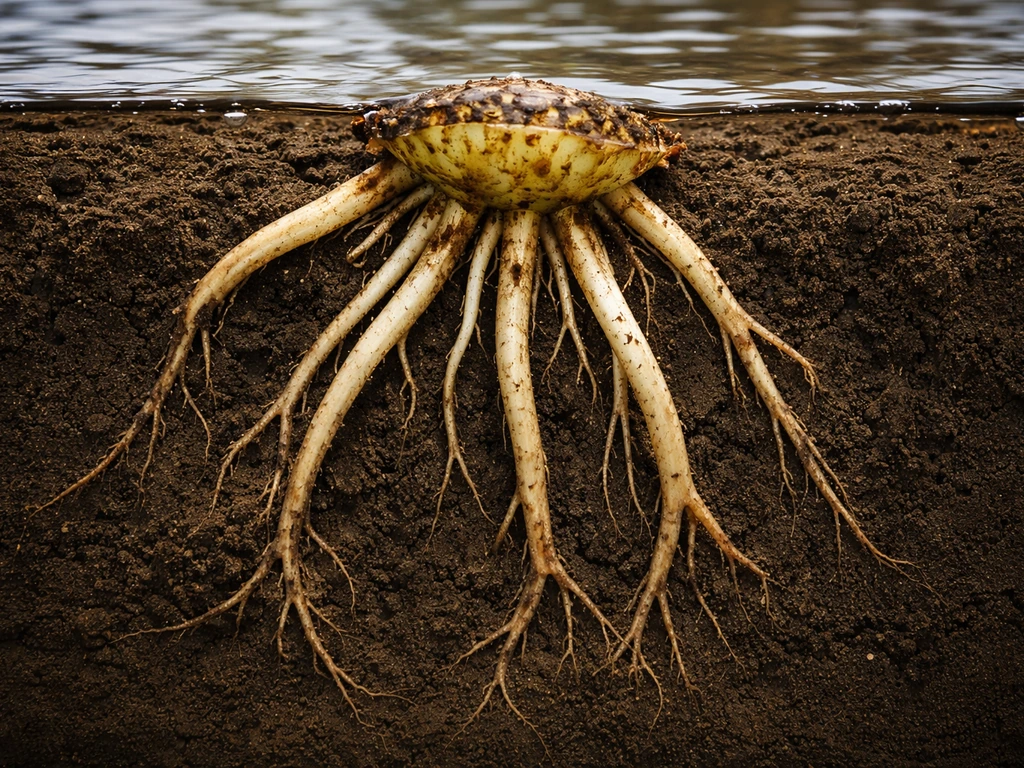
Water lilies are not floating plants. They root firmly in the substrate below the water, and they do it best when that substrate is heavy, dense, and nutrient-rich, which describes mud pretty well. In natural ponds and lakes, the rhizome sits in silty, clay-heavy sediment. The roots drive down into it, and the stems and pads extend upward through the water column to reach the surface.
When you grow water lilies in a container (a mesh aquatic basket or a solid planter), you replicate that muddy bottom with a purpose-built mix. The RHS recommends peat-free aquatic compost or heavy clay-based loam packed into the basket. Regular potting mix is too light and will float out or break down into fine particles that cloud the water. Clay loam holds the rhizome in place, stays put, and provides a steady slow release of nutrients without causing algae explosions the way rich organic garden compost would.
The planting position matters. The crown, which is where the rhizome meets the growing tips and emerging leaf stems, should sit right at the compost surface, not buried beneath it. Pack a thin layer of pea gravel over the compost surface to keep it from drifting, but leave the crown exposed. Then lower the whole basket into the pond so the crown is covered by 15 to 25 cm (roughly 6 to 10 inches) of water when you are getting started. As the plant grows and you gain confidence, you can move it deeper to the pond shelf at its final depth.
Do water lilies tolerate dirty or muddy water
This is where gardeners get tripped up, because muddy water and muddy substrate are two very different things. Penn State Extension makes a useful point here: muddy or turbid pond water is usually only an aesthetic problem in ponds used for fish or recreation, and newly constructed ponds almost always have murky water until grass establishes around the banks. That is reassuring up to a point. But water lilies need light to photosynthesize, and light is exactly what turbid water blocks. Because water lilies rely on photosynthesis, they generally cannot grow well without sunlight or enough light reaching the leaves water lilies need light to photosynthesize.
U.S. Forest Service research confirms that increasing sediment and turbidity in water directly reduces primary production, meaning plants grow more slowly and struggle to reproduce. If your pond water is so cloudy that you cannot see more than a few inches into it, your water lily pads will be working at a serious disadvantage. They may still root and survive, but you will see weak, spindly growth and very few flowers, if any. A practical test: use a Secchi disk (a simple black-and-white disc lowered into the water on a string) to gauge how far light penetrates. If visibility is under about 30 cm (12 inches), you have a turbidity problem worth addressing before planting.
What mud depth and type they actually need
Natural pond bottoms
If your pond has a natural earth bottom with existing sediment, water lilies can root directly into it without any basket at all. If you want a water lily to grow without soil, you still need a heavy, nutrient-rich planting medium like an aquatic basket mix. A soft, silty, clay-heavy bottom is ideal. Sandy bottoms are harder to work with because the rhizome does not anchor well and sand provides almost no nutrients. If your natural pond bottom is mostly sand or gravel, you are better off using containers with aquatic compost placed on the pond shelf. If you are wondering why water lilies struggle in desert-like conditions, the issue is that their rhizomes need heavy, moisture-holding substrate, not dry sand sand or gravel. The sediment layer should be at least 15 to 20 cm (6 to 8 inches) deep for the roots to establish properly.
Lined ponds and containers
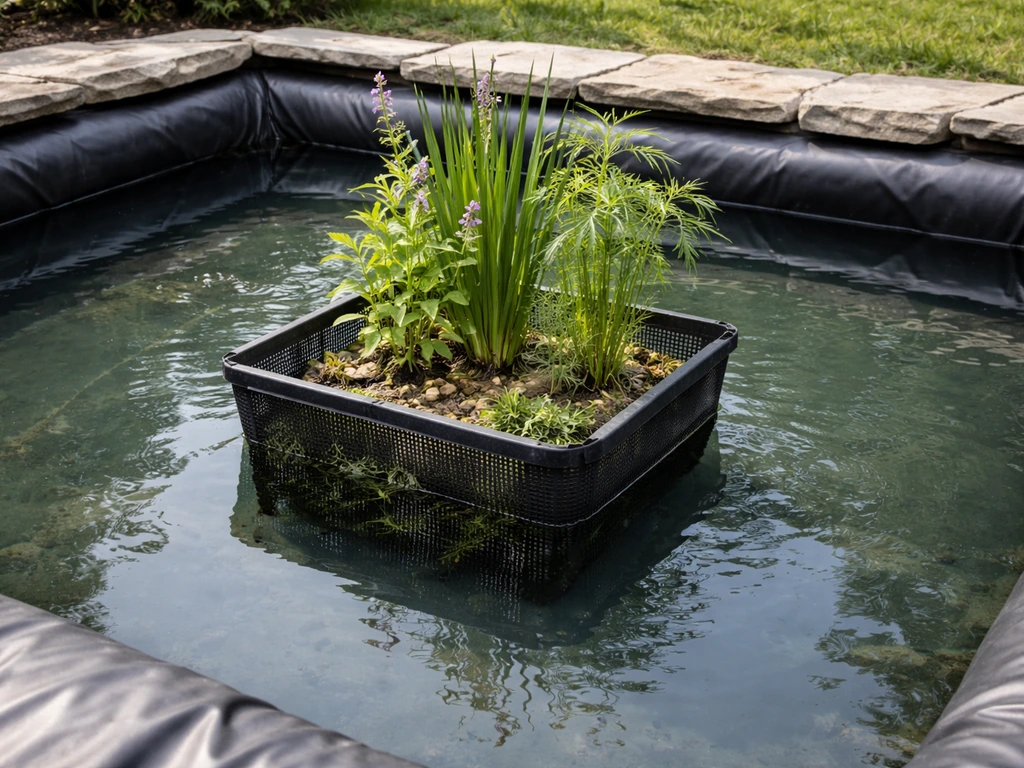
Most backyard ponds have a rubber or PVC liner, which means there is no natural sediment at all. Here you work entirely with aquatic baskets. Use a mesh basket large enough for the variety (miniature types do fine in a 2 to 3 litre basket, while large hardy varieties want a basket of 10 to 15 litres or more). Fill it with heavy clay-based aquatic compost, plant with the crown at the surface, cap with gravel, and place on a submerged shelf or brick stack at the right depth. The basket approach also makes it easier to lift the plant for division and winter care.
Tubs and stock tanks
A half barrel, stock tank, or any watertight container at least 45 cm (18 inches) deep can work for smaller varieties and miniature water lilies. The principle is the same: basket with aquatic compost, crown at compost level, covered with water. In a small tub, water quality matters even more because there is less volume to buffer nutrient swings and the water heats up faster in summer.
Step-by-step planting setup for a muddy or dirty pond
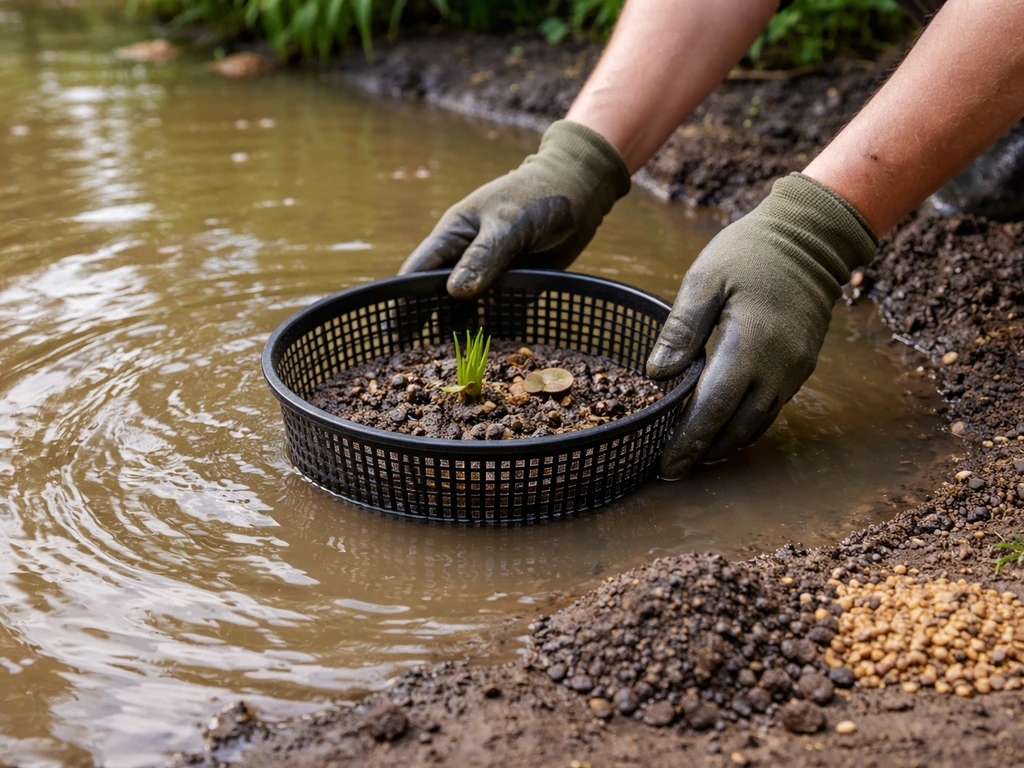
- Identify your pond type first. Natural earth bottom, lined pond, or container? This determines whether you plant directly or use a basket.
- If the water is very turbid, let it settle for a week or partially drain and refill before planting. Eliminating the source of turbidity (runoff, disturbed sediment, or overfeeding fish) is the most important first step, according to NC State Extension's pond management guidance.
- Choose a mesh aquatic basket sized to your variety. Fill it to about two-thirds with damp, heavy clay-based aquatic compost or peat-free aquatic planting mix. Do not use regular garden soil or rich compost.
- Position the rhizome so it rests horizontally on the compost with the cut end toward the basket edge and the growing tip pointing toward the centre. For a bare-root plant, spread the roots gently down into the compost.
- Top up the compost to within about 2 cm of the basket rim, keeping the crown at or just above the compost surface. Never bury the crown.
- Cover the compost surface with a 1 to 2 cm layer of coarse grit or pea gravel to prevent the soil from clouding the water.
- Lower the basket carefully onto a submerged shelf or brick stack so the crown is initially only 15 to 25 cm below the water surface. As the plant establishes and leaves reach the surface, you can gradually move it deeper (40 to 60 cm for most hardy varieties, shallower for miniatures).
- Choose a spot that receives at least 4 to 6 hours of direct sun per day. This is non-negotiable. A shady location will produce leaves but few or no flowers, even in perfect water.
Troubleshooting poor growth in muddy water
Algae blooms and green water
Algae and water lilies compete for the same resources: light and nutrients. Clemson HGIC explains that green water conditions are usually caused by a nutrient imbalance, typically too many nutrients from fish waste, overfeeding, or decomposing organic matter, combined with too few plants to absorb them. Oklahoma State University Extension offers a practical target: aquatic plants (including water lilies) should shade 50 to 75 percent of the pond surface to effectively outcompete algae. If your pond is mostly open water, you need more plants, not just better chemicals.
If you have recently added water lilies and still have a green water algae bloom, give it time before panicking. Once water lily pads spread and cover a substantial portion of the surface, they shade out the algae and the water often clears naturally within a few weeks. Avoid using algaecides near water lilies without confirming the product is safe for aquatic plants.
Rhizome rot
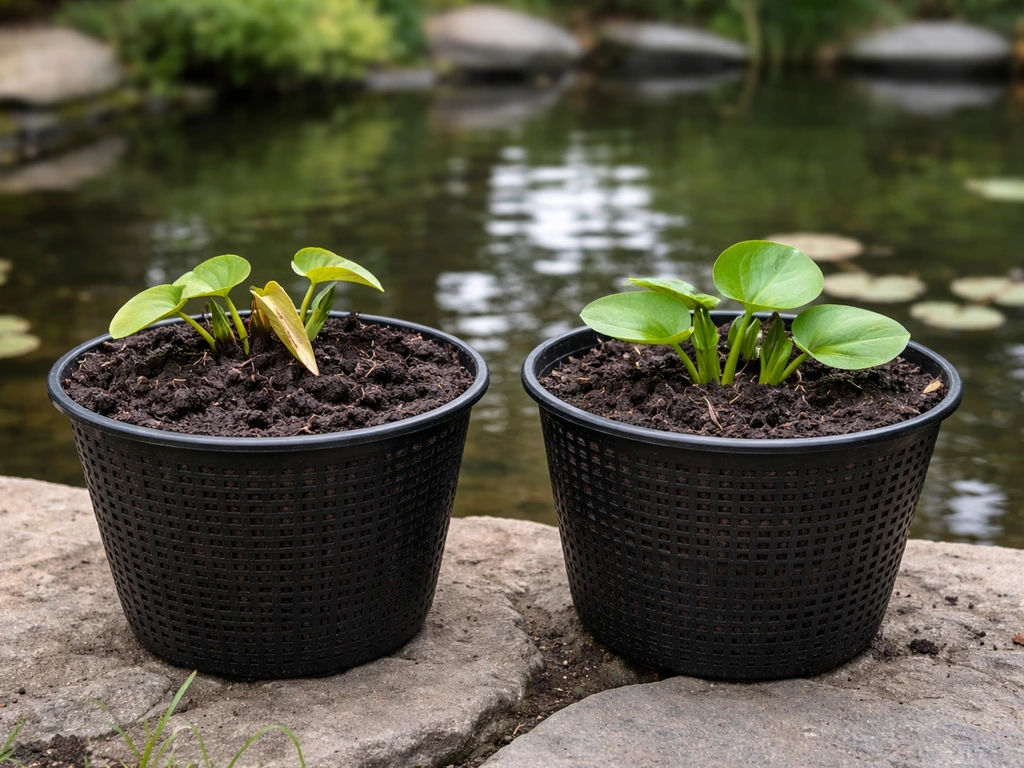
Rot is the most common killer of newly planted water lilies in muddy or organically rich conditions. It usually happens when the crown is buried too deep in the compost, when the water temperature is too cold at planting time, or when the compost is too rich in nitrogen (from garden compost or manure). If you pull up a plant and the rhizome is soft, brown, and mushy, that is rot. Cut back to healthy white tissue with a sharp, clean knife, dust the cut end with powdered sulfur or let it dry for an hour, repot in fresh aquatic compost, and replant. Make sure the crown is sitting at the compost surface, not underneath it.
Leaves yellowing or no flowers
Yellow leaves in a water lily almost always point to one of two things: not enough sun or nutrient deficiency. Check sunlight first. A minimum of 4 hours of direct sun daily is needed for basic survival; 6 or more hours produces flowers. If sun is adequate, the plant may be pot-bound or sitting in depleted compost. Aquatic compost tabs (slow-release fertilizer tablets made for water plants) pushed into the basket near the roots can help without polluting the water column.
Low light from turbid water
If the water itself is very murky and light cannot penetrate, even a healthy rhizome will struggle to push leaves to the surface with enough energy for strong growth. The fix here is addressing the turbidity itself: reduce runoff entering the pond, reduce fish stocking density, stop overfeeding fish, and add more surface-covering plants. In extreme cases, a partial water change with tap water left to dechlorinate can help reset water clarity while you address the underlying cause.
Variety and climate considerations
The two main groups of water lilies behave quite differently, and picking the wrong one for your climate or water conditions is one of the most common beginner mistakes.
| Feature | Hardy Water Lilies | Tropical Water Lilies |
|---|---|---|
| Climate suitability | Zones 4 to 10, overwinter in place if pond does not freeze solid | Zones 9 to 11 year-round; treat as annuals or overwinter indoors elsewhere |
| Preferred water temp | Will tolerate cool water, start growing from about 10°C (50°F) | Need water above 21°C (70°F) to thrive; sulk in cold water |
| Flower timing | Daytime blooms only | Day-blooming and night-blooming varieties available |
| Planting depth | Crown 40 to 60 cm below surface at maturity | Can be somewhat shallower, 30 to 45 cm typical |
| Muddy water tolerance | Moderate; more forgiving of murky water than tropicals | Lower; need good light penetration to flower well |
| Container/tub use | Miniature hardy varieties (e.g., 'Pygmaea') do well in half barrels | Compact tropicals work in large tubs with warm water |
| Winter care | Rhizome must not freeze; move basket to deepest part of pond | Must be lifted and stored above freezing if not in a warm climate |
For most home gardeners dealing with a muddy natural pond, a hardy water lily is the more forgiving starting point. They are tougher, they tolerate a wider range of water conditions, and you do not have to redo your whole setup every spring. If you are working with a tub or container pond in a warm climate, a compact tropical variety gives you spectacular flowers and often a longer blooming season. Just do not try to grow a tropical water lily in a small tub in zone 5 and expect it to survive winter outdoors.
Keeping the water clean enough without obsessing over it
Water lilies do not need crystal-clear water, but they do need water clear enough for light to reach their leaves and for the crown to stay healthy. Here are the habits that make the biggest difference without turning pond maintenance into a second job.
- Aim for 50 to 75 percent surface coverage with aquatic plants combined, including water lilies, to naturally shade out algae and absorb excess nutrients.
- Do not overstock with fish. Fish waste is a major nutrient driver for algae. A rough starting guide is no more than 25 cm of fish per 1,000 litres of water.
- Remove decaying leaves and dead plant material before it sinks and decomposes into sludge. A long-handled net makes this easy.
- Use aquatic fertilizer tabs pushed into the basket compost rather than liquid fertilizers added to the water. This feeds the plant directly without feeding algae.
- If sludge builds up on the pond bottom over time (more than 5 to 10 cm), plan for a partial cleanout every two to three years. You do not need to drain the whole pond, just scoop out the worst accumulation.
- For hardy water lilies in cold climates, move the basket to the deepest part of the pond before the first hard freeze so the rhizome stays below the ice layer. Do not let it freeze solid or dry out.
- In early spring, as water temperatures climb above 10°C (50°F), move baskets back to their growing depth and begin feeding again to kick off the season.
The goal is not a sterile, perfectly clear ornamental pool. It is a balanced pond where the plants have enough light, the nutrients are being taken up rather than feeding algae, and the rhizomes are sitting in stable, supportive substrate. Get those three things right and water lilies are genuinely low-maintenance once established, even in a pond that starts out looking like a muddy mess.
FAQ
My pond water is cloudy, but the bottom is mostly sand, will water lilies still grow?
If the water looks muddy brown but the pond bottom is exposed or sandy, water lilies usually struggle because the rhizome cannot anchor and there are few nutrients in the substrate. Treat it as a substrate problem (use a heavy clay-based basket mix or place containers on a shelf), not a “water color” problem.
How deep should I bury the crown when planting a water lily in mud?
Even when using containers, do not bury the crown under compost or gravel. The growing tips need to sit at the compost surface so they can launch leaves and avoid crown rot, especially in cool weather.
Can water lilies grow in mud without a basket?
Yes, but you must keep the rhizome in heavy, moisture-holding medium. If you plant directly into a muddy bottom, test that the sediment is at least 15 to 20 cm deep, otherwise use baskets with aquatic compost to recreate the depth and stability.
Can I use regular potting soil in a water lily container?
No. Potting mix is typically too light and often breaks down into fines that float around and cloud the water. For baskets, use heavy aquatic compost or clay-based loam that stays dense and reduces sediment washout.
What causes rotting water lily rhizomes even when they are planted in mud?
Not if the crown is buried or if the compost is too nitrogen-rich. Rot is more likely when you plant into very rich organic compost, manure, or when the crown sits below the medium surface. Use aquatic compost and keep the crown at the top edge of the medium.
What happens if the pond is too muddy for sunlight to reach the leaves?
They can survive short periods of murkiness, but if visibility is very low, growth slows and flowering drops. Use the visibility check (for example, Secchi disk) before planting, and address turbidity first by reducing runoff and feeding stressors.
My water lily is newly planted and the water is green, should I use an algaecide right away?
A lot of people overcorrect algae with chemicals when they have only recently planted. If pads are still establishing, algae often improves after coverage increases. If you use any algaecide, confirm it is safe for aquatic plants near active water lilies.
Is any mud fine, or do I need clay-heavy sediment?
Silt and clay-heavy mud are ideal because they provide both nutrients and anchoring. Sandy or gravelly bottoms are harder for rhizome stability and provide little nutrition, so you typically need baskets or a shelf strategy rather than direct rooting.
Do water lilies in small tubs need different care than those in pond basins?
Yes, but expect more sensitivity in smaller volumes. Small containers warm up faster and nutrient swings show up quickly, so use the right basket medium, cap it with gravel, and control feeding or organic buildup in the tub.
How do I choose the right container size for a water lily variety?
Use the pot size to match the variety. Miniature types can start in smaller baskets, while hardy or larger varieties need larger volumes to avoid being root-bound and to reduce nutrient depletion in the medium.
My water lily leaves are turning yellow, is it always a sun problem?
If sunlight is strong enough, yellow leaves often indicate nutrient shortage or depleted/compacted compost, or the plant is pot-bound. Add aquatic fertilizer tabs in the basket near the roots rather than dumping fertilizer into the pond water.
What should I do first if the pond stays cloudy even after planting?
If visibility is under about 30 cm, your priority is to improve clarity so light can reach the leaves. Beyond planting more plants, practical fixes include reducing fish stocking density and overfeeding, and limiting runoff so fines are not constantly stirred up.
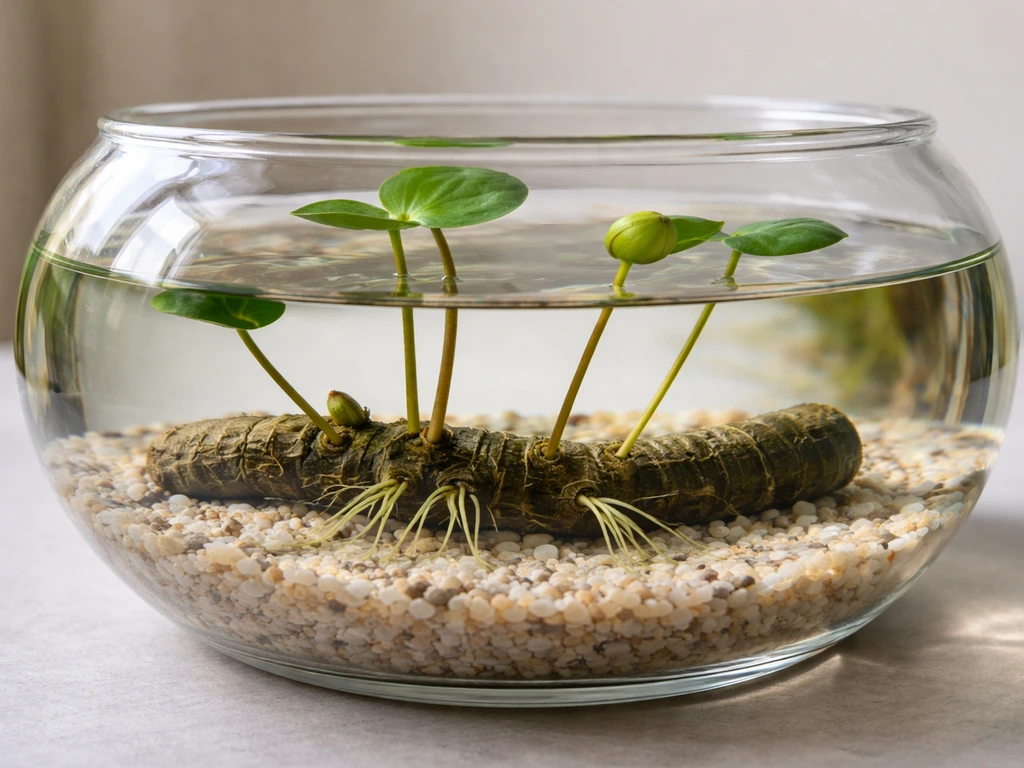
Learn if water lilies can grow without soil and follow a bowl step-by-step method with light, depth, water quality, and
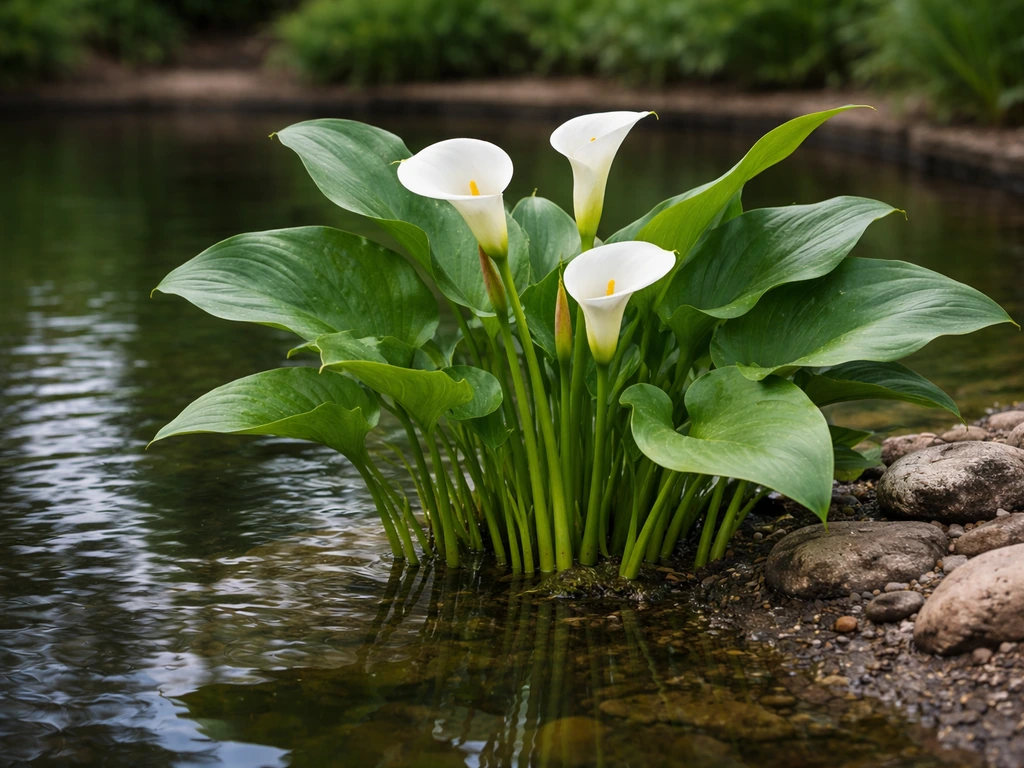
Yes, with the right setup: water depth, substrate, anchoring, light, and overwinter care for pond or marginal calla lili
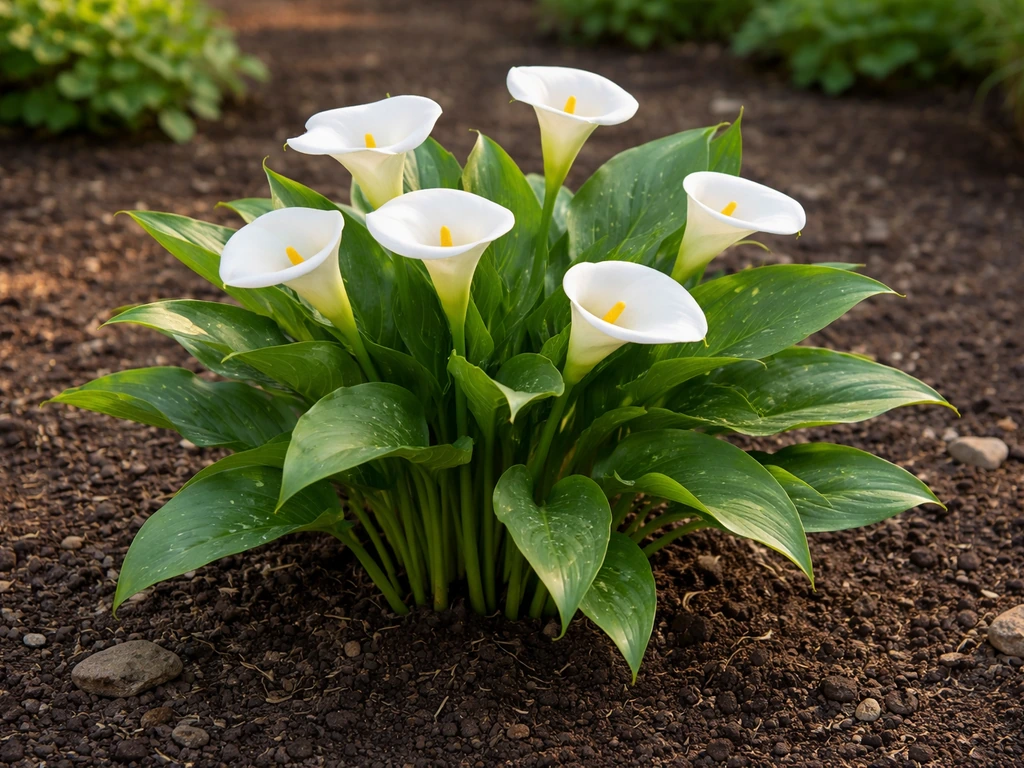
Get a clear answer on are calla lilies hard to grow, plus exact light, temperature, watering, planting, and fixes.